
Have you ever looked at a travel Nile River itinerary and wondered if you’d actually see Egypt — or just tick through temples between buffet meals and bus rides? It’s a fair question. Many travelers leave the Nile with a camera full of photos but a foggy memory of what any of it meant. The rhythm of big-ship tourism can blur the sacred into the routine — docking, queuing, visiting at noon, moving on.
Yet the stretch between Luxor and Aswan holds some of the most powerful places on Earth — not only for what they show, but for how they make you feel when time slows and crowds thin. Whether you drift past small villages at dawn or stand beneath the painted ceilings of Dendera or Kom Ombo, the river reminds you that this journey is older than tourism itself.
These 5 stops aren’t just sites to tick off. They’re the points where Egypt’s ancient heartbeat still syncs with the Nile’s flow — if you take the time to listen.
Why Travel Nile River Between Luxor and Aswan?
Before we reveal the 5 must-see stops, you need to understand why this specific 200-kilometer stretch deserves your time, attention, and intention.
- The Highest Concentration of Sacred Sites on Earth: In this single corridor, you’ll encounter more temples, tombs, and archaeological wonders than perhaps any other 200-kilometer stretch in human history.
- The Gateway to Nubia: As you are traveling toward Aswan, you’re not just moving through Egypt—you’re transitioning toward Nubia, a distinct and powerful African civilization. By the time you reach Aswan, you’ve entered a different cultural landscape. This journey traces the historical meeting point of Egyptian and Nubian worlds.
- Authentic Upper Egypt Culture: Sailing up or downstream this way and you encounter living culture—not as tourists observing from behind glass, but as travelers moving through communities that have lived along these banks for millennia. Nubian villages, local markets, family homes, the rhythms of daily life tied to the river’s seasons. This is Egypt as it actually exists, not as it appears in guidebooks.
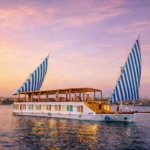
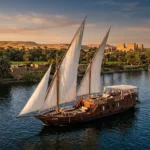
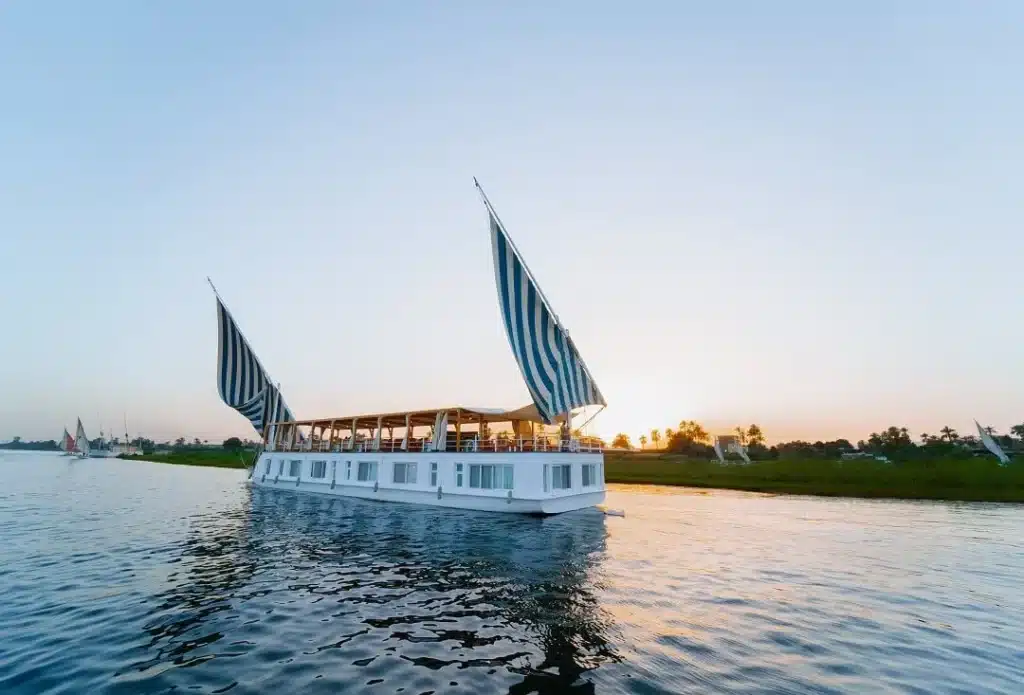
- The Journey Itself as Sacred Practice: Doing this tour on a Dahabiya—a traditional sailing vessel—you’re not just moving between sites. You’re participating in a form of travel unchanged for centuries. The sail catches wind. The bow cuts through water. You move at human pace, not cruise-ship speed. This journey, day after day, becomes meditative. Transformative. Sacred in ways you won’t understand until you’re living it.
The 5 Must-See Stops: Your Complete Nile River Journey
When you travel with Turquoise Dahabiya, these are the 5 stops that transform a vacation into an awakening.
Stop 1: Karnak Temple — The Blueprint of Divine Power
Why It’s Essential:
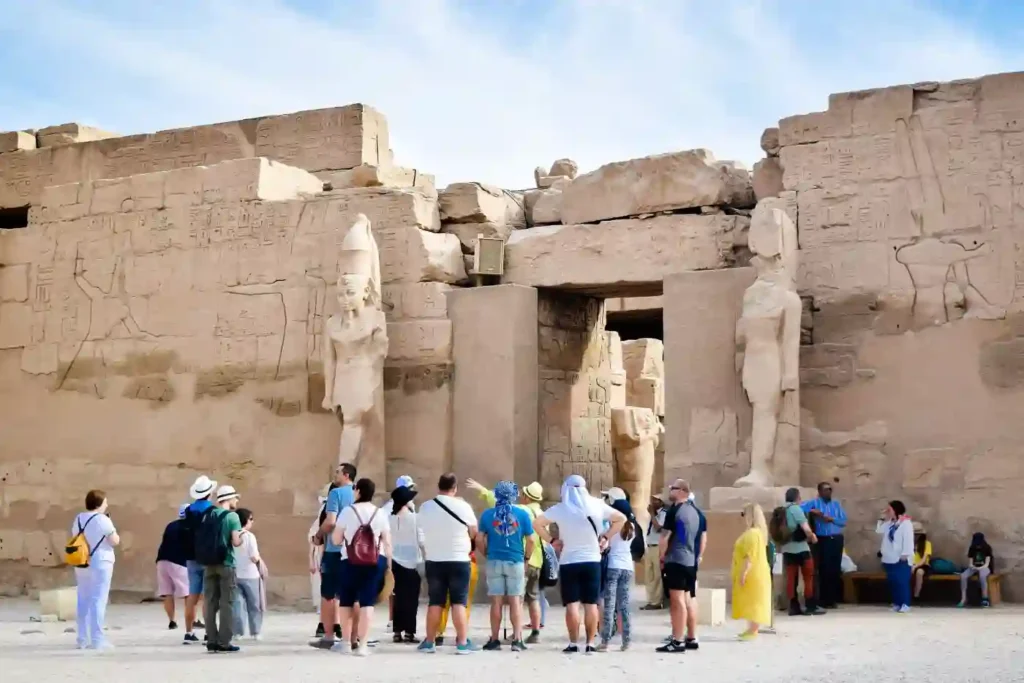
Karnak Temple isn’t just a site; it’s the memory palace of ancient Egypt. Stretching over 200 acres, this vast complex was built, rebuilt, and expanded by more than thirty pharaohs across thirteen centuries. At its heart lies the Great Temple of Amun-Ra — the spiritual center of Thebes and the largest religious structure ever constructed by human hands. To stand in Karnak is to witness how belief shaped architecture, politics, and power.
What You’ll Experience:
The first impression is scale — then silence. You enter the Hypostyle Hall, and the world narrows to light and stone. One hundred and thirty-four columns rise around you like a petrified forest, each carved with hieroglyphs still sharp after three millennia. When sunlight filters through the papyrus-shaped capitals, it paints the walls in honey and shadow. Deeper inside, reliefs record coronations, battles, and offerings to gods whose names once ruled the wind. And yet, the place still feels alive — each echo of a footstep a reminder that worship here never truly ended.
Karnak is also a working archive. Archaeologists continue to restore its sanctuaries, reconstruct fallen obelisks, and digitally map inscriptions. It’s a living dialogue between the ancient and the present, proof that preservation can be as sacred as creation.
Best Time to Visit:
Early morning (6:30–8:30 AM) when the temple opens — the light cuts horizontally through the Hypostyle Hall, revealing details you’ll miss later in the day. Alternatively, arrive just before closing to see the sun sink behind the sacred lake — the reflection turns gold, and the heat softens into stillness.
Time Needed:
Allow 2–2.5 hours to absorb Karnak properly. If you’re sailing on a Dahabiya or private cruise, consider scheduling a dedicated Egyptologist visit — the symbolism of the site deserves explanation as much as observation.
Connection to Your Journey:
Karnak defines everything that follows downstream. It was the spiritual axis of the Nile, the place from which festivals began and deities processed toward Luxor. Every temple between Luxor and Aswan carries traces of Karnak’s blueprint — its columned language, its alignment with the sun, its dialogue between god and ruler. To travel south without understanding Karnak is to read Egypt without knowing its alphabet.
Stop 2: Valley of the Kings — Descent Into the Underworld
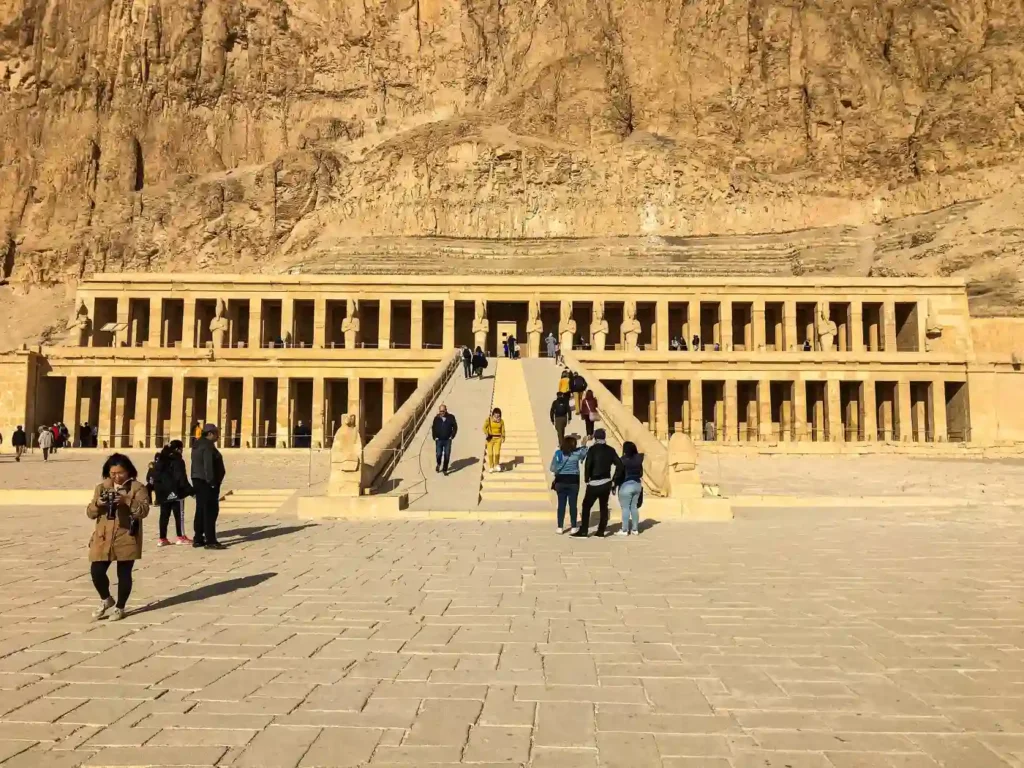
Why It’s Essential: If Karnak Temple shows you pharaonic power in the world of the living, the Valley of the Kings shows you what the ancients believed came after. These aren’t temples—they’re tombs, gateways to the afterlife. Over 60 pharaohs were buried here, their chambers carved deep into desert rock, decorated with scenes meant to guide souls through the underworld.
What You’ll Experience: The Valley is approached on foot or by shuttle through barren, dramatic desert hills. You descend stairs into carved chambers lit by shafts of light. Inside, thousands of hieroglyphs cover walls—spells, instructions, scenes of the pharaoh’s journey through the Duat (Egyptian underworld). In some tombs, the pigments remain vibrant—blues and golds still singing after 3,000 years.
The Valley is also a lesson in what endures and what’s lost. Some tombs are partially preserved, others heavily damaged. You see mummies removed, treasures taken. Yet the spiritual intent remains palpable—the ancients poured their deepest beliefs into these chambers.
Best Time to Visit: Early morning (6:00–8:00 AM). The heat builds rapidly—by midday, the desert sun is punishing. Bring water, sun protection, and comfortable shoes (paths are rocky and steep).
Key Detail: Most tours show you only 3 of the most famous tombs (Ramesses I, Ramesses III, IV, Tawsert & Set-Nakht I etc.). If you travel with Turquoise Dahabiya’s guides, they can access lesser-known tombs with fewer crowds. These quieter chambers often feel more spiritually alive precisely because they’re less touristed.
Time Needed: 2 hours including travel time. Plan a full morning. Most Nile River cruises build this into their itinerary.
Connection to Your Journey: The Valley of the Kings shifts your understanding from “great architecture” to “cosmology made tangible.” You begin to see that the ancients didn’t just build monuments—they built maps of their consciousness, their fears, their hopes for eternity. This perspective will deepen everything you experience at the temples that follow.
Stop 3: Edfu Temple — The Complete Temple
Why It’s Essential: If you Sail along the Nile and visit only one temple, make it Edfu. This is the most completely preserved major temple in Egypt. While others are damaged, partially rebuilt, or missing sections, Edfu stands nearly intact—a functional time machine. Walk into Edfu and you’re stepping into the sacred space as an ancient priest would have experienced it 2,000 years ago.
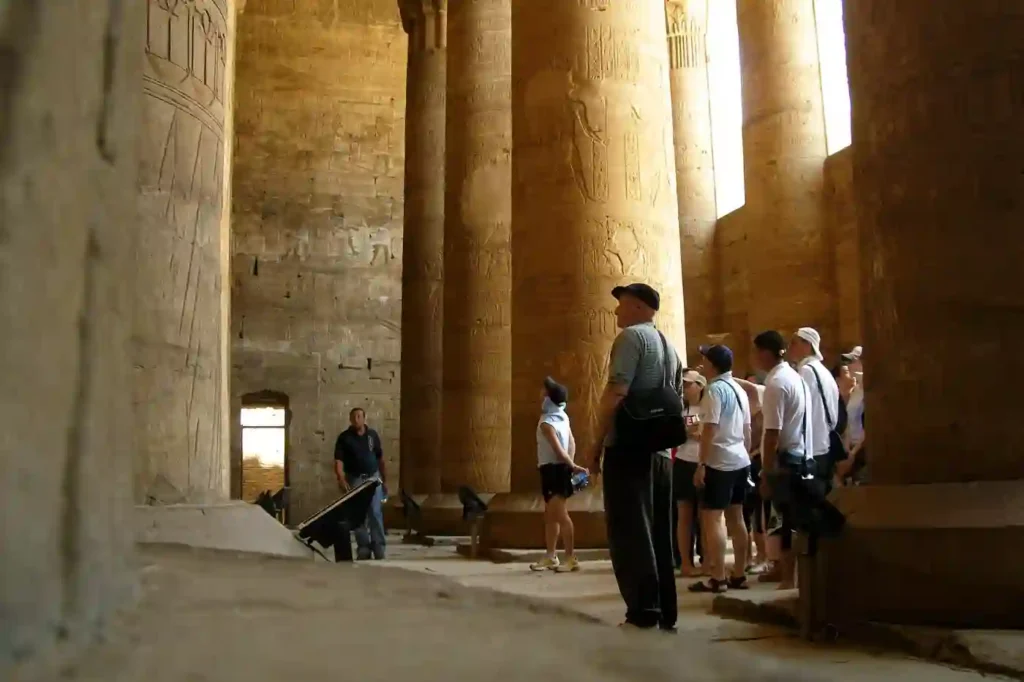
What You’ll Experience: Edfu Temple is dedicated to Horus, the falcon god. The architecture is breathtaking—a massive pylon entrance carved with reliefs of the pharaoh striking enemies (a metaphor for chaos subdued by order). Behind it, columns rise in a forest of stone. Hieroglyphic texts cover every available surface, telling the story of Horus, his battles, his triumph.
What makes Edfu extraordinary is the redundancy of detail. Unlike damaged temples where you must reconstruct the original intention, Edfu shows you. You see the complete decoration, the functioning temple infrastructure, the logic of ritual space.
Best Time to Visit: Early morning (7:00–8:30 AM) for golden light and minimal crowds. Edfu receives enormous tour groups—arriving early makes a profound difference.
Key Detail: Most visitors rush through the main courtyard and hypostyle hall. The real treasure is the sanctuary—the innermost chamber where the sacred barque (boat of the god) rested.
Time Needed: 2 hours for a thorough exploration. Turquoise Dahabiya passengers with guides should allow enough time for the mythological narrative to fully sink in.
Connection to Your Journey: Edfu teaches you the grammar of Egyptian temple design. Every subsequent temple will reference or build upon Edfu’s structure and symbolism. Understanding Edfu well means understanding all Egyptian temples more deeply.
Stop 4: Aswan and Philae Temple — Journey’s Sacred Destination
Why It’s Essential: Aswan marks the southern boundary of ancient Egypt and the gateway to Nubia. Journey up the Nile River to Aswan and you’ve reached the natural end point—historically, militarily, culturally. Philae Temple, relocated to an island after the Aswan High Dam flooded its original location, is Egypt’s most romantic temple. It sits on an island surrounded by water, accessible only by small boat. It’s the visual climax of your Nile River journey.
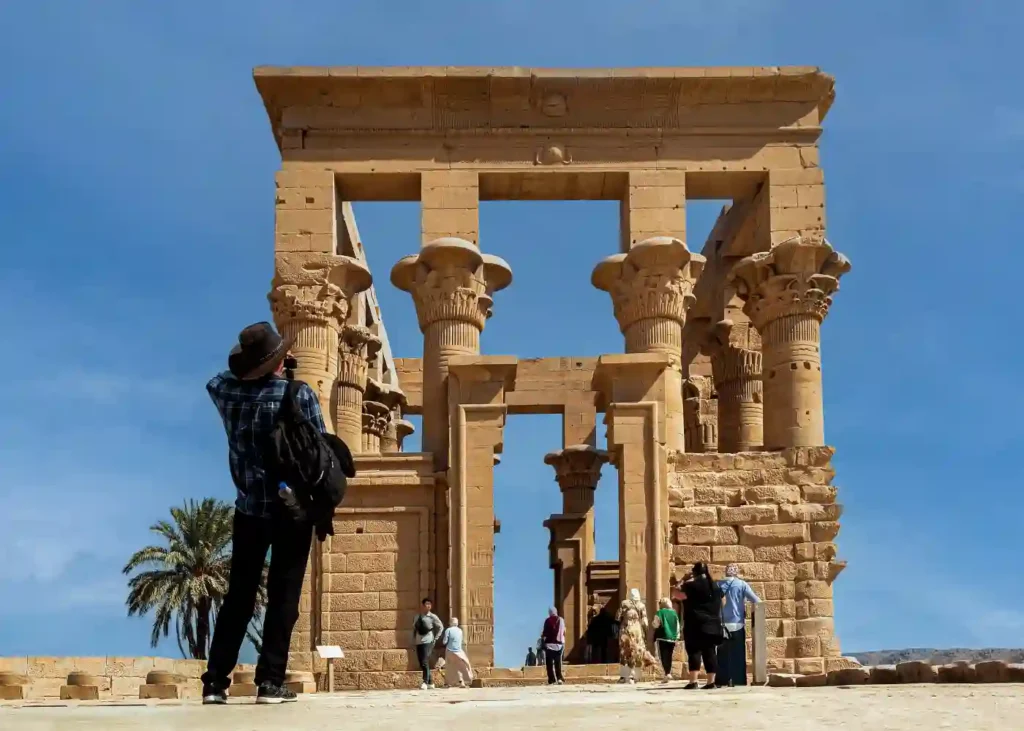
What You’ll Experience: Philae Temple dedicated to Isis was built during the Ptolemaic period (Greek rulers of Egypt). It’s beautifully proportioned, exquisitely decorated, and set in one of the world’s most stunning locations. Approach by boat and the temple rises from water, palm trees framing it perfectly. The romantic quality isn’t accidental—it’s the result of deliberate architectural placement and the island setting.
The temple was saved from total flooding by an extraordinary UNESCO engineering project. It was dismantled, moved to higher ground, and reconstructed stone-by-stone in the 1980s. Standing here, you’re witnessing both ancient Egypt and modern preservation heroism.
Best Time to Visit: Late afternoon (3:00–5:00 PM) when light is softer and the island becomes magical. Many Turquoise Dahabiya itineraries include an evening visit for sunset at the temple, followed by dinner on the water. It’s transcendent.
Key Detail: Most visitors visit Philae during daylight. If your Dahabiya schedule allows, experience the temple at dusk—the magic intensifies dramatically.
Time Needed: 1.5–2 hours including boat transfer and time on the island.
Connection to Your Journey: Philae is your journey’s destination, both literally and spiritually. Philae is where the journey completes—and where you realize the journey has transformed you.
Stop 5: Nubian Culture & Local Experience — The Living Nile
Why It’s Essential: This isn’t a temple or a tomb. It’s something equally important: the living culture that makes the Nile River sacred today, not just historically. When you travel Nile River, you encounter Nubian people, villages, traditions, food, and worldview. This final stop is about honoring the living present alongside the ancient past.
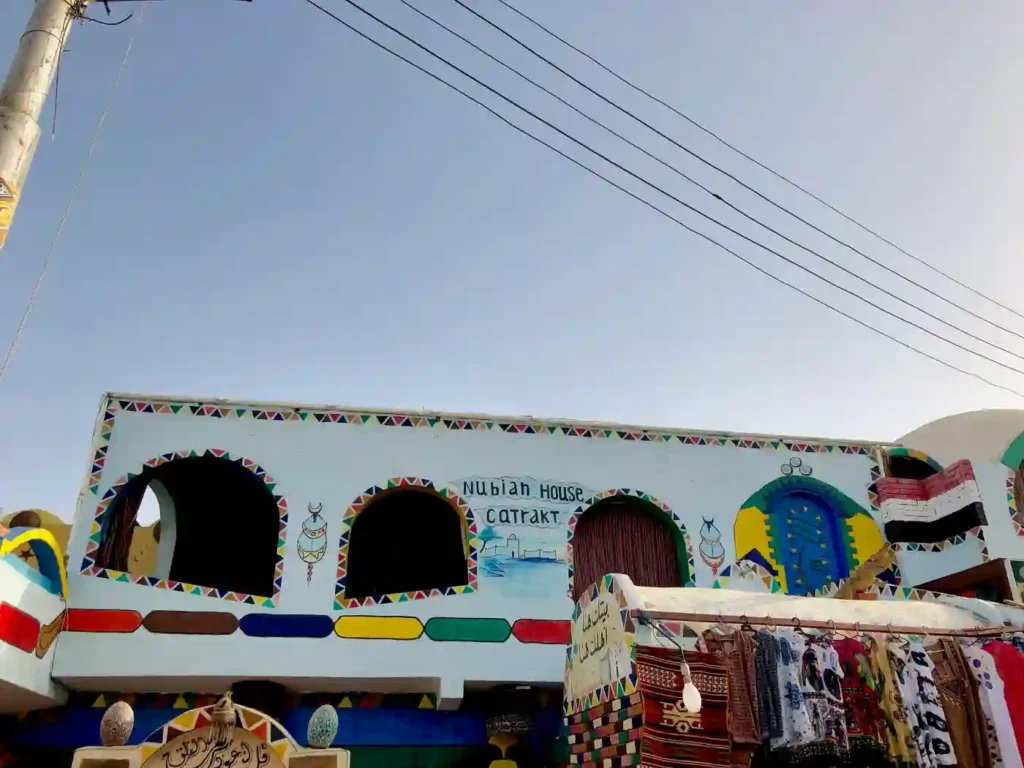
What You’ll Experience: Depending on your itinerary, this might be a visit to a Nubian village, a meal with a local family, a market visit, a felucca sail on traditional sailboats, or a visit to the Nubian Museum in Aswan. You meet people whose ancestors have lived along these banks for millennia. You taste traditional Nubian food. You see how modern Egyptians and Nubians relate to the sacred geography you’ve been exploring.
This experience contextualizes everything. The temples aren’t artifacts in a museum. They’re part of living history. The Nile isn’t just an ancient wonder. It’s home to communities that continue ancient traditions in modern forms.
Best Time to Visit: Afternoon, when light is warm and communities are active. Markets buzz in late afternoon. Meals are shared at dusk.
Key Detail: Choose guides and experiences carefully. The best Nubian experiences are with local people sharing their own culture, not packaged tourist performances. Turquoise Dahabiya partners with authentic local guides who share genuine hospitality.
Time Needed: 2–4 hours depending on the activity and depth of engagement.
Connection to Your Journey: This final stop transforms your journey from archaeology to anthropology. You stop observing the past and start witnessing the present. The Nile River becomes not just a historical artifact but a living reality. You leave Egypt not as someone who saw temples, but as someone who understood a living culture.
Travel Nile River with Turquoise Dahabiya: Why This Choice Matters?
When you decide to Cruise the Nile between Luxor and Aswan, you’re making an intentional choice about how to spend time, money, and presence on this earth.
Thousands of travelers float through Egypt annually—checking boxes, accumulating photos, adding stamps to passports. They return home saying they “did” Egypt.
Fewer choose to truly experience it.
When you voyage through Egypt’s Nile with Turquoise Dahabiya, you’re joining that smaller circle. You’re choosing:
- Authenticity over tourism: Traditional sailing vessels, genuine local connections, schedules optimized for experience not efficiency
- Intimacy over crowds: 16 guests, not 150. Your guide knows your name, your interests, your pace
- Flexibility over rigidity: Early morning temple visits when light is perfect. Afternoon felucca sails when wind and tide align. Time to linger, not rush
- Presence over documentation: Yes, photograph. But also sit. Reflect. Absorb. Let Egypt change you
- Excellence over adequacy: Egyptologist guides with deep expertise. Luxury accommodations with character. Meals prepared with care. Service that anticipates your needs
This is the difference between traveling the Nile River and experiencing it.
Conclusion: Rediscover the Magic When You Travel Nile River
To travel Nile River between Luxor and Aswan is more than a journey through Egypt — it’s a voyage through time itself. Each temple, tomb, and village whispers stories of gods, kings, and timeless human devotion to the river that shaped civilization. Yet the true beauty of this journey lies not just in what you see, but in how you feel when the sails rise and silence falls across the water.
If you long for a slower, more soulful way to explore Egypt — one that honors both history and the present — then it’s time to sail with Turquoise Dahabiya. Experience the Nile as it was meant to be traveled: gracefully, intimately, and authentically.
Join Turquoise Dahabiya Nile Cruise today and let the river write your own chapter in Egypt’s eternal story.
FAQ: Travel Nile River Questions Answered
1. What is the best way to travel the Nile River between Luxor and Aswan?
The most authentic and comfortable way is by Dahabiya — a small, traditional sailboat offering privacy and elegance.
Enjoy slow, peaceful travel with direct access to quiet moorings and flexible schedules that large ships can’t offer.
Smaller groups allow personal interaction with your Egyptologist and local hosts.
For example, sail at sunrise and dock privately near Edfu before crowds arrive.
Choose Turquoise Dahabiya to experience Egypt at human pace — intimate, unhurried, and deeply meaningful.
2. How long does a Nile cruise between Luxor and Aswan take?
The ideal journey lasts 4 to 5 days, balancing sightseeing with rest and reflection.
Each day reveals a new temple, landscape, or local encounter without rushing.
You’ll have time for photography and quiet river moments.
A 5-day Turquoise Dahabiya cruise covers Luxor, Edfu, Kom Ombo, and Aswan comfortably.
Book 4–5 days to let the Nile’s rhythm transform your travel into something truly restorative.
3. When is the best time of year to travel the Nile River?
October to April is perfect for comfortable sailing and temple visits in pleasant 20–30°C weather.
Cool mornings and mild afternoons make exploration enjoyable and photography ideal.
Summer can exceed 40°C — less suitable for outdoor touring.
Many guests prefer December for crisp air and fewer crowds.
Sail during the cooler season for comfort, clarity, and breathtaking golden light on the temples.
4. Are all Nile cruises the same?
No — Dahabiya cruises differ completely from large cruise ships. Dahabiyas carry 10–16 guests, focusing on intimacy, flexibility, and authentic connections. and you’ll avoid fixed group schedules and noisy docks.
While large ships rush, Dahabiyas linger for sunset tea or quiet temple visits.
Choose a Dahabiya for depth, peace, and personal service instead of mass tourism.
5. What temples and sites are included on the Luxor to Aswan route?
The classic route includes Karnak, Luxor Temple, Valley of the Kings, Edfu, Kom Ombo, and Philae Temple.
This 200-km stretch holds Egypt’s highest concentration of sacred monuments.
Dahabiya itineraries also feature local markets and Nubian villages.
For instance, Turquoise Dahabiya includes private access to lesser-visited tombs.
Sail this route to experience Egypt’s spiritual and cultural essence beyond typical sightseeing.
8. Is a Dahabiya cruise suitable for families or older travelers?
Yes — Dahabiya cruises are relaxed, safe, and comfortable for all ages, the pace is unhurried, with shaded decks and attentive crew assistance and the Cabins are spacious, and meals are freshly prepared.
Families enjoy sailing together; older travelers appreciate easy access and storytelling. Dahabiyas suit travelers seeking comfort, culture, and calm in equal measure.