
Have you ever wondered why two statues standing silently for over 3,400 years were once said to “sing” at sunrise? The Colossi of Memnon Luxor Egypt have fascinated travelers and historians alike—not just for their massive size, but for the mysterious melodies that echoed from one of the statues long ago. Discover their history, secrets, and how to experience these iconic monuments during a luxury Nile cruise.
Quick Facts Table
| Fact | Information |
|---|---|
| Location | West Bank of Luxor, Egypt |
| Built by | Pharaoh Amenhotep III |
| Date | Around 1350 BC |
| Height | 18 meters (60 ft) each |
| Material | Quartzite sandstone |
| Purpose | Guardians of Amenhotep III’s mortuary temple |
| Famous Mystery | One statue produced a “singing” sound at sunrise |
| Nearby Attractions | Valley of the Kings, Hatshepsut Temple, Medinet Habu |
What Are the Colossi of Memnon?
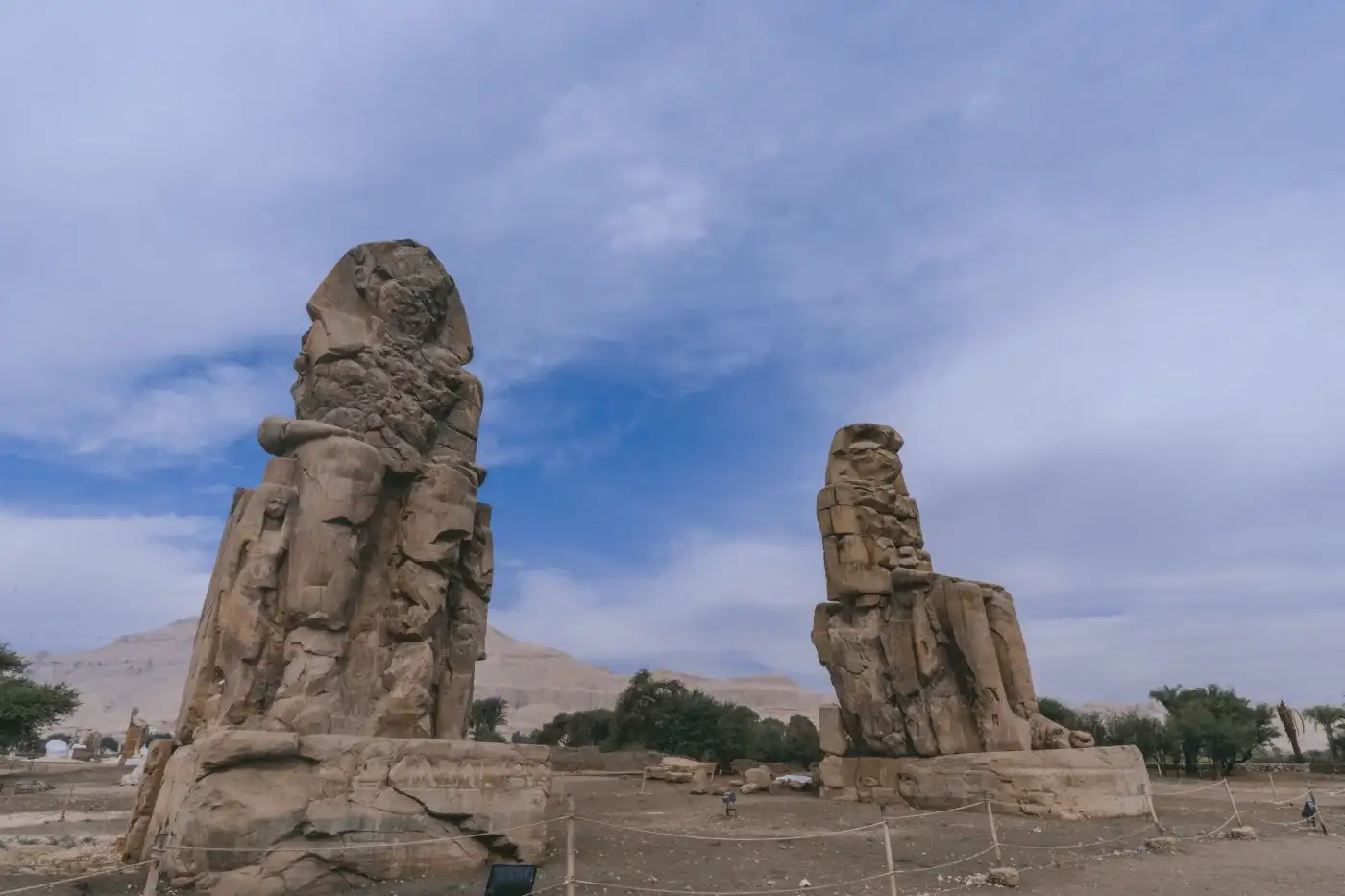
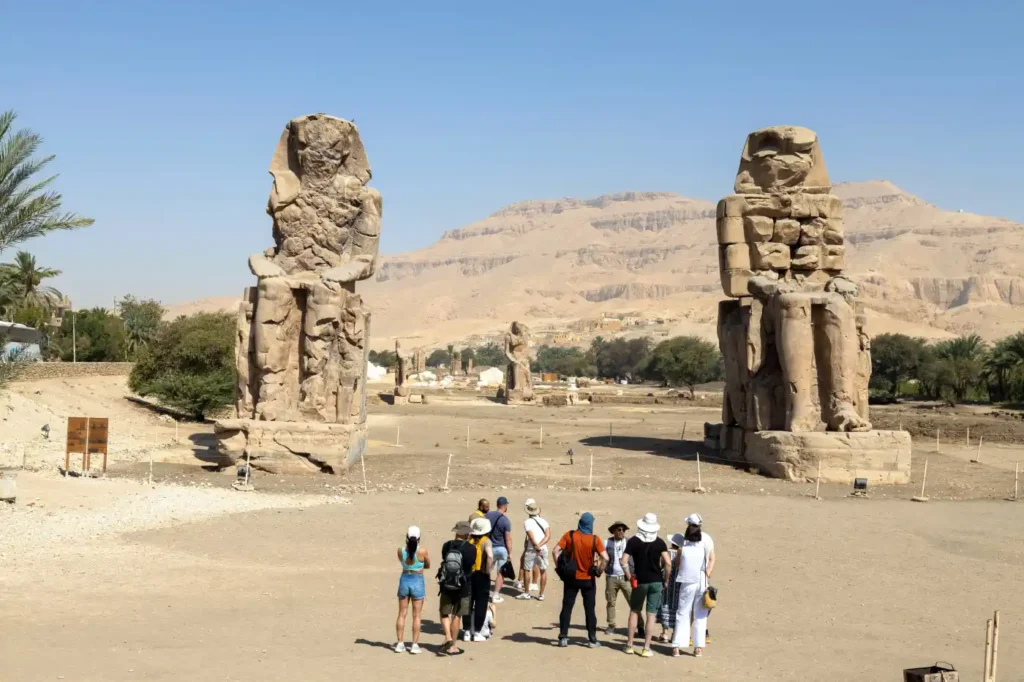
The Colossi of Memnon are two monumental statues representing Pharaoh Amenhotep III, one of ancient Egypt’s most powerful rulers. Carved from single blocks of quartzite sandstone, each statue stands about 18 meters tall and weighs hundreds of tons.
Originally, they marked the entrance to Amenhotep III’s massive mortuary temple, now mostly ruined. For over 3,400 years, these statues have overlooked the Nile floodplain, becoming a symbol of ancient Egypt’s grandeur and ingenuity.
Visiting the statues gives travelers a glimpse of the scale and craftsmanship of the New Kingdom period before exploring deeper into Luxor’s archaeological treasures.
Why Are the Colossi of Memnon Famous?
The Colossi gained fame for two reasons:
- Their immense size and historical significance – they are among the oldest standing monuments in Luxor.
- The mysterious “singing” statue – centuries ago, visitors reported hearing a strange sound at sunrise, believed to be the voice of the mythological hero Memnon greeting the dawn.
This unusual phenomenon attracted travelers from all over the ancient world, making the Colossi an early “tourist attraction” in history.
Why Did the Colossi “Sing”?
The northern statue developed cracks after an earthquake in 27 BC. When the morning sun heated the stone, trapped air in the fissures created a whistling or humming sound.
Ancient Greek and Roman travelers thought this was Memnon’s voice. After Roman Emperor Septimius Severus repaired the statue in the 3rd century AD, the mysterious sound disappeared.
Today, the “singing” is a fascinating story that adds a unique layer to the visitor experience.
What to See Around the Colossi of Memnon
The statues are the perfect starting point for exploring Luxor’s West Bank. Nearby must-see sites include:
- Valley of the Kings – Royal tombs of Pharaohs including Tutankhamun.
- Mortuary Temple of Hatshepsut – Stunning terraced temple of Egypt’s famous female pharaoh.
- Medinet Habu – Mortuary temple of Ramses III with impressive wall reliefs.
- Valley of the Queens – Tombs of royal family members.
Stopping at the Colossi allows travelers to frame the West Bank visit, giving perspective before entering other historical sites.
Best Time to Visit the Colossi of Memnon
- Early morning – soft light, fewer tourists, dramatic shadows for photography.
- During a Nile cruise stop – combines convenience and comfort.
- Spring and autumn – mild weather, perfect for walking and guided tours.
Visiting the Colossi on a Luxury Nile Cruise
Many travelers explore the Colossi of Memnon as part of a guided luxury Nile cruise itinerary between Luxor and Aswan. This experience includes:
- Comfortable transport from the cruise dock to West Bank monuments.
- Expert guides explaining history, legends, and architectural details.
- Stopovers at nearby temples and tombs for a complete cultural experience.
- Opportunity to photograph sunrise or sunset over the Nile with the statues as a backdrop.
Luxury cruises make visiting the West Bank relaxed, memorable, and fully guided, especially for first-time visitors to Egypt.
Are the Colossi Worth Visiting?
Absolutely. While simpler than massive temples or tombs, the statues’ size, history, and mysterious singing story make them a must-see.
Visitors often take 30–60 minutes to explore, capturing photos and absorbing the grandeur of Amenhotep III’s mortuary complex. Stopping at the Colossi is a highlight of any West Bank tour and provides a dramatic introduction to Luxor’s ancient world.
FAQs
Where are the Colossi of Memnon located?
On the West Bank of the Nile in Luxor, Egypt, near the Valley of the Kings.
How old are the Colossi of Memnon?
Built around 1350 BC during Pharaoh Amenhotep III’s reign, over 3,400 years old.
Why did the Colossi sing?
Temperature changes in cracks caused by an ancient earthquake produced whistling sounds at sunrise, disappearing after Roman repairs.
How tall are the Colossi?
Each statue is approximately 18 meters (60 ft) tall and weighs hundreds of tons.
Can I visit them as part of a Nile cruise?
Yes, luxury Nile cruises often include guided stops at the Colossi, making exploration easy and enjoyable.
Experience the wonders of Luxor in comfort and style. Many travelers visiting the Colossi of Memnon choose a luxury Nile cruise to explore the West Bank’s iconic monuments, enjoy expert guides, and capture the perfect sunrise over these ancient statues.
Book your luxury Nile cruise today and make your visit to Luxor unforgettable.