
What if the most luxurious way to experience the Nile is also the most sustainable? The Nile moves as it has for millennia—slow, purposeful, eternal. At dawn, mist rises from water that reflects palm fronds and distant temple columns. The only sounds are the gentle lap of current against the hull, the rustle of canvas catching wind, and perhaps a fisherman’s morning greeting from his felucca. This is how the river was meant to be experienced: quietly, respectfully, without the diesel rumble of massive engines or the crowded chaos of mass tourism. For travelers who seek connection rather than consumption, the Turquoise Dahabiya offers something increasingly rare—an eco-friendly Nile cruise experience that honors both ancient traditions and modern environmental responsibility. Here, sustainability isn’t a marketing buzzword but the natural outcome of sailing as Egyptians have for thousands of years: harnessing wind, embracing slowness, and moving through this sacred landscape with reverence rather than disruption.
What Is an Eco-Friendly Nile Cruise Experience?
Understanding what makes Nile travel truly sustainable requires looking beyond surface claims to examine how vessels actually interact with the river, its communities, and its fragile ecosystems.
Eco-friendly Nile cruising means choosing travel methods that minimize environmental impact while maximizing cultural respect and local benefit. In Egypt specifically, this involves considering fuel consumption, noise pollution, waste management, passenger capacity, and the preservation of archaeological sites facing mounting pressure from overtourism.
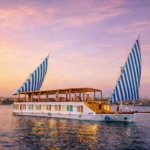
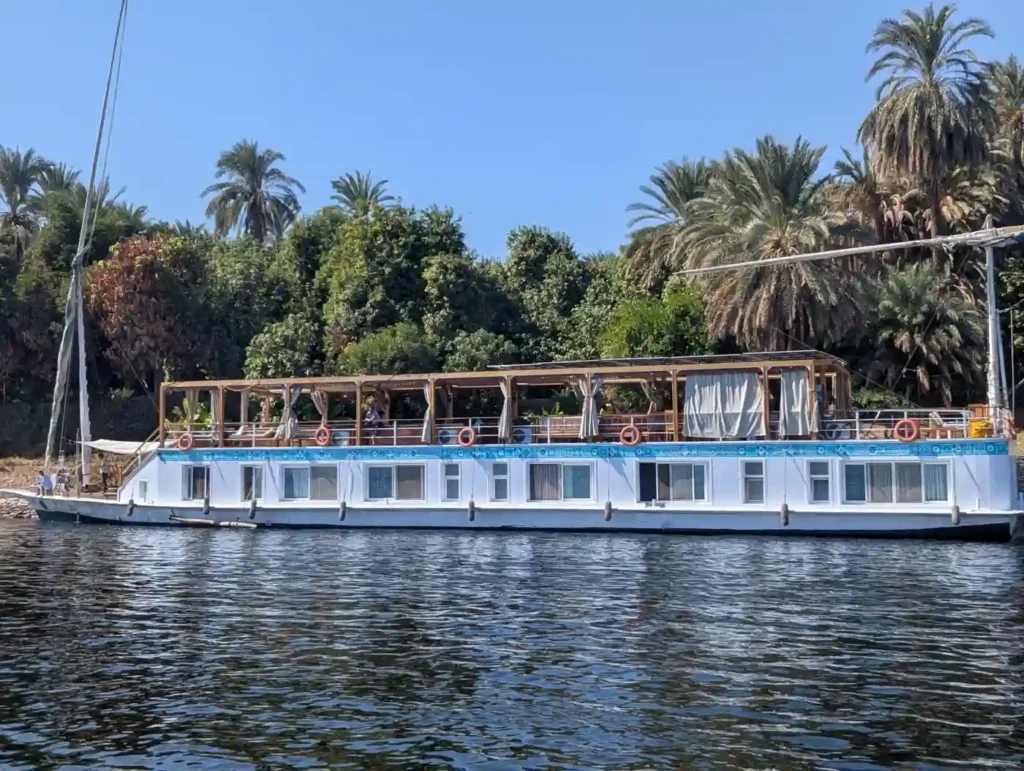
The Dahabiya itself represents Egypt’s original sustainable vessel design. For centuries before steam engines and diesel motors, these elegant wooden sailboats carried passengers along the Nile using nothing but wind and current. Their shallow draft prevented riverbank erosion. Their silent passage left wildlife undisturbed. Their small capacity meant manageable waste and intimate cultural exchanges.
Modern Dahabiyas like Turquoise Dahabiya revive this traditional approach while incorporating contemporary environmental awareness. Unlike massive cruise ships—some carrying 200+ passengers, generating substantial waste—the Turquoise Dahabiya returns to inherently sustainable principles: small group travel, locally sourced provisions, and a pace that allows for genuine observation and respect.
The contrast becomes visceral when you witness both types. Large cruise ships dock in long lines, generators humming continuously. Tour groups of fifty overwhelm temple sites, creating bottlenecks that serve neither travelers nor preservation efforts.
The Turquoise Dahabiya approaches differently. The vessel accommodates just eight to sixteen guests. Waste streams remain manageable. The silence itself becomes a form of respect—for ecosystems, communities, and ancient sites deserving contemplative appreciation.
Discover how Turquoise Dahabiya redefines sustainable Nile travel and experience wind-powered, small-group cruising.
5 Eco-Conscious Features That Make Turquoise Dahabiya Different
Small-Group Slow Travel With Minimal Environmental Disruption
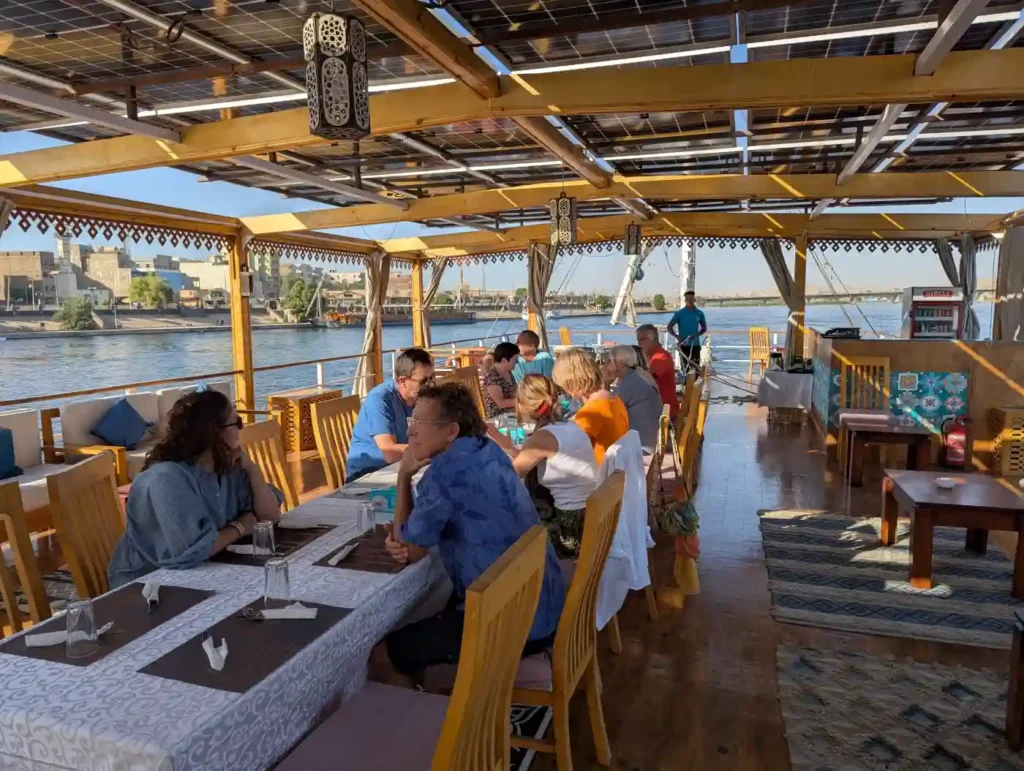
Turquoise Dahabiya limits capacity to eight to sixteen guests, dramatically reducing environmental footprint. Waste generation remains minimal. Energy needs to stay modest. Shore excursions never overwhelm sites or communities—your group arrives as respectful visitors, not an intimidating wave.
Locally Sourced Ingredients and Community-Supportive Purchasing
Every meal reflects commitment to local agriculture. Rather than importing provisions, the galley sources produce grains, and proteins from Nile Valley farms and markets. Fresh vegetables come from riverside gardens. Fish arrives from local fishermen. This reduces transportation emissions while supporting rural economies forming the Nile’s living cultural fabric.
Low-Waste Onboard Practices
Single-use plastics are eliminated in favor of filtered water systems and reusable containers. Food waste is minimized through careful planning. Waste is sorted and disposed of responsibly at proper facilities—never discharged into the river. Cleaning protocols prioritize biodegradable products. Linens are laundered only as needed, conserving water and energy.
Culturally Respectful Itineraries Designed to Benefit Local Heritage Sites
Itineraries are timed to visit temples during off-peak hours, reducing pressure on fragile structures. Small capacity allows access to lesser-known sites where visits provide economic support without overwhelming infrastructure. Expert guides ensure interactions with communities are dignified exchanges rather than voyeuristic intrusions.
Explore our sustainable itineraries and see how each day balances cultural immersion with environmental responsibility.
Why a Low-Impact Dahabiya Cruise Is the Most Responsible Way to Explore the Nile?
The environmental case for traditional Dahabiya sailing extends beyond reduced emissions to encompass a fundamentally different relationship with the river ecosystem.
The emotional and sensory experience of silent sailing matters profoundly. When engine noise disappears, you notice what it masked: plovers feeding along mudflats, fish breaking surface at dusk, farmers guiding water buffalo, papyrus rustling in marshes. This quietness allows genuine observation—village life unfolds naturally, wildlife behaves undisturbed, the Nile reveals itself as a living ecosystem.
Ecological preservation benefits directly from low-impact methods. Large vessels create significant wake that erodes banks, destabilizes archaeological foundations, and disrupts nesting sites. The Turquoise Dahabiya’s shallow draft and modest size generate minimal wake, reducing mechanical stress on fragile riparian zones. Additionally, minimal engine operation means no petrochemical residue accumulates in waters sustaining both human communities and wildlife.
Perhaps most importantly, low-impact cruising models sustainable tourism practices desperately needed. Every traveler choosing Turquoise Dahabiya signals market demand for responsible alternatives, encouraging industry transformation and demonstrating that sustainability can coexist with luxury.
Request a custom sustainable journey quote tailored to your values and interests.
Sustainable Tourism in Egypt: Why Your Travel Choices Matter
Egypt faces a fundamental challenge: sharing extraordinary archaeological treasures while preserving them for future generations and supporting local communities.
Mass tourism has created mounting problems. Popular sites face damage from millions of annual visitors—humidity accelerates wall painting deterioration, foot traffic wears ancient floors. Large cruise ships concentrate hundreds in limited spaces during narrow windows, creating bottlenecks stressing both sites and visitors.
Egypt’s tourism sector increasingly recognizes that quality over quantity offers a more sustainable path. Initiatives encouraging smaller groups, longer stays, and deeper engagement benefit preservation while providing better experiences and meaningful economic support.
Choosing Turquoise Dahabiya directly supports this shift. Your investment flows to a small Egyptian operator employing local crew, purchasing from local suppliers, and operating with environmental awareness. Your Egyptologist guide receives fair compensation. Villages benefit from economic relationships not dependent on mass-market exploitation. Temples visited at carefully planned times face less cumulative pressure.
Learn more about our commitment to responsible tourism and how your journey supports Egyptian communities.
Turquoise Dahabiya: A Meaningful, Low-Impact Way to Experience the Nile
Quiet Sailing, Responsible Travel, Authentic Egypt
Morning arrives without alarm—just gradually brightening light and gentle water motion. You emerge onto deck to find coffee prepared, steam curling in cool air. The Turquoise Dahabiya glides past a village waking: fishermen launching boats, farmers leading animals to drink, children walking riverbank paths. Your presence passes quietly enough that life continues naturally.
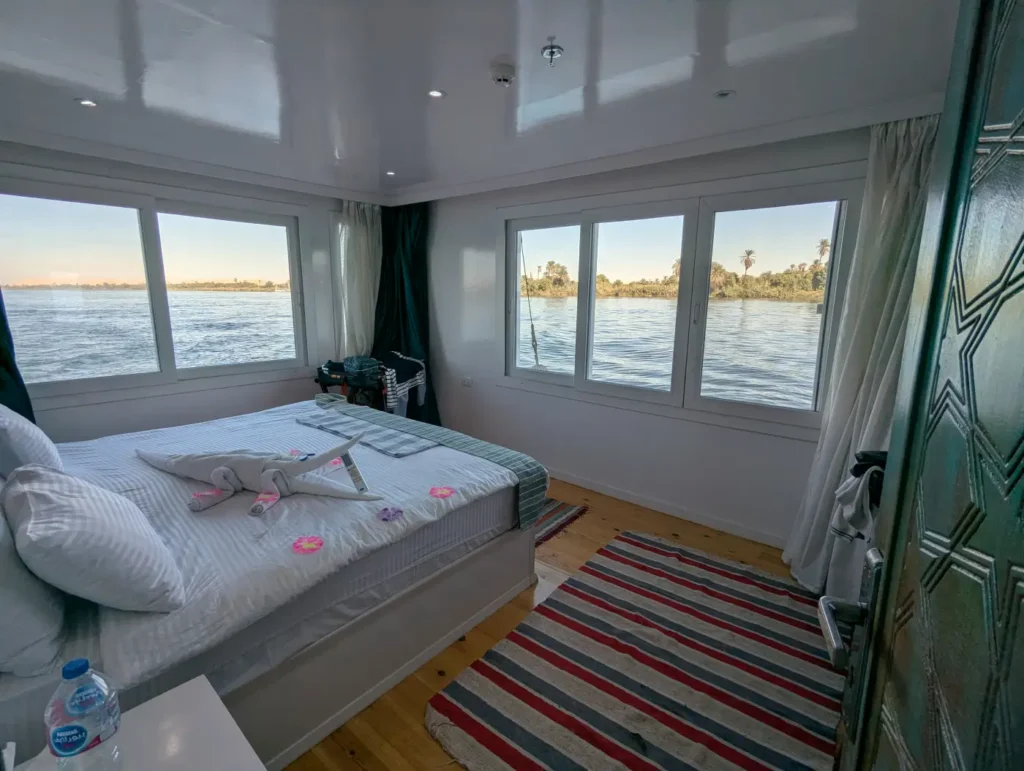
This is the essence of the Turquoise Dahabiya experience—presence without intrusion, luxury without excess, exploration grounded in respect. The vessel embodies these principles through thoughtful design honoring traditional sailing while incorporating modern environmental awareness. Comfortable accommodations provide genuine luxury—plush bedding, modern bathrooms, air conditioning—without resource-intensive excess.
Every element reflects eco-conscious intention. Breakfast features bread baked from local flour, eggs from nearby farms, honey from Nile Valley apiaries. The chef explains supplier relationships—connecting your table to the living agricultural landscape beyond the rail.
You explore temples during carefully chosen hours without crushing crowds. At Edfu’s Horus Temple, your small group moves through columned halls peacefully. Your Egyptologist guide shares insights impossible to hear over mass tourism’s noise. You touch stone carved three thousand years ago, sit in courtyards absorbing atmosphere, photograph without competing. This respectful intimacy allows temples to reveal themselves as sacred spaces worthy of contemplation.
Shore excursions extend the same approach beyond monuments. You visit villages where traditional pottery techniques persist. Artisans share genuine knowledge, demonstrating methods unchanged since pharaonic times. Your purchases support families directly without intermediary exploitation—genuine cultural exchange rather than transactional tourism.
Sailing afternoons unfold with the river’s rhythm. Sometimes conversation flows—sharing observations, asking about hieroglyphics. Sometimes silence feels appropriate—reading in deck shade, watching landscapes transform, simply being present. This flexibility, this absence of rigid scheduling, allows for reflective travel that changes perspective.
Evenings gather everyone for meals that feel like gatherings among friends. The crew serves dishes balancing traditional Egyptian flavors with international techniques. After dinner, many remain on deck under stars, the same stars that guided ancient navigators.
You feel the difference between consuming a destination and connecting with it. The Turquoise Dahabiya’s approach—small scale, slow pace, quiet passage—creates space for genuine relationship with place. You leave understanding what the Nile feels like, sounds like, smells like. You carry memories of sunrise sails and sunset conversations, of temple moments and village encounters.
Explore Turquoise Dahabiya’s eco-conscious itineraries and discover how traditional sailing transforms Nile exploration into meaningful connection.
Tips for Making Your Nile Journey More Eco-Friendly
Beyond choosing responsible operators, individual choices amplify sustainable impact.
Pack sustainably: Reusable water bottles, cloth bags, reef-safe sunscreen, rechargeable batteries. Practice respectful behavior: Ask permission before photographing, dress modestly, never touch archaeological elements. Conserve water: Shorter showers, reuse towels. Minimize single-use items: Decline straws and unnecessary packaging. Support local artisans directly: Buy from craftspeople using traditional techniques. Choose genuinely sustainable operators like Turquoise Dahabiya with documented commitment. Offset travel emissions through verified programs. Share experiences to inspire others toward sustainable choices.
Sail the Nile the Way It Was Meant to Be Experienced
The river that birthed civilization deserves travelers who approach with reverence rather than consumption. The Turquoise Dahabiya offers an eco-friendly Nile cruise experience that honors both ancient traditions and modern environmental responsibility, delivering genuine luxury through quality rather than excess, creating meaningful connection through intimate scale and slow pace.
When you choose to sail with wind rather than diesel dominating, when you explore temples in respectful numbers, when you support communities through thoughtful relationships, when you move through this landscape quietly enough to hear its stories—you participate in tourism’s transformation from extractive to regenerative. You discover that sustainability and luxury enhance each other. The deepest rewards come from genuine presence and authentic connection.
The Nile moves as it always has—slow, purposeful, eternal. The question is how you choose to move with it: noisily or quietly, hurriedly or patiently, consuming or connecting.
Begin your eco-friendly Nile cruise experience with Turquoise Dahabiya—where traditional sailing meets environmental awareness, where luxury means leaving places better than you found them, where every sunset reminds you that meaningful journeys honor the places they explore.
Book your sustainable Dahabiya journey today or contact our team to design your perfect eco-conscious Nile adventure.
FAQ
1) What makes an eco-friendly Nile cruise different from a regular cruise?
It uses low-impact sailing, minimal fuel, and responsible operations that protect the Nile while offering more cultural depth and a quieter, more personal journey.
2) How do dahabiya boats minimize environmental impact?
They sail mainly by wind, use small engines, carry fewer passengers, and create less shoreline disturbance—reducing pollution and protecting the Nile’s ecosystem.
3) Are eco-friendly Nile cruises more expensive?
Slightly, because they offer boutique service, small groups, and sustainable operations—but the value is higher, more private, and more culturally rich.
4) What sustainable practices are used on eco-friendly Nile cruises?
Expect refillable water, reduced plastics, local sourcing, natural products, and sometimes solar or hybrid power—practices designed to protect the river.
5) Are wind-powered dahabiya cruises safe and comfortable?
Yes. Traditional sails are supported by small engines for stability, ensuring smooth, quiet, and reliable navigation with experienced captains.
6) Does choosing an eco-friendly Nile cruise support local communities?
Absolutely. These cruises hire local staff, buy from regional suppliers, and include visits that directly benefit villages—keeping your travel spending in Egypt.