Quick answer: The ibex is the best-documented Egyptian New Year animal, a symbol of good luck and renewal found on ancient New Year gifts. The scarab beetle stood for rebirth and appears on amulets carrying explicit New Year wishes. Ancient Egypt never used a Chinese-style cycle that assigned one animal to each year.
What Are Egyptian New Year Animals?
Egyptian New Year animals are creatures associated with ancient Egyptian ideas of renewal, protection, prosperity and the beginning of a new year. Among them, the ibex holds a particularly important place, appearing on ancient amulets and gifts connected with New Year wishes. Scarab beetles were also associated with regeneration, while other sacred animals represented divine powers and protection.
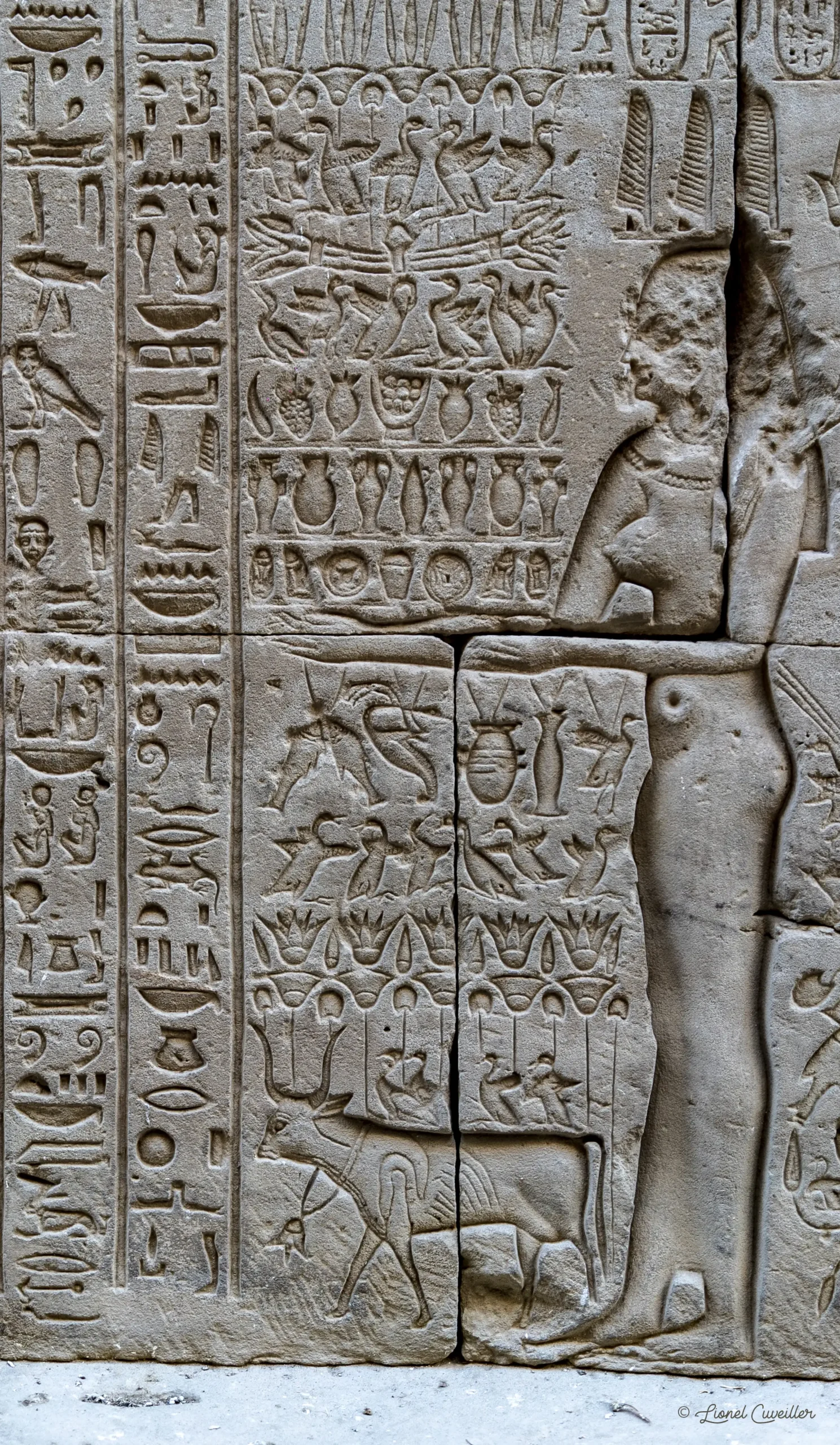
Unlike the Chinese zodiac, ancient Egypt did not have a documented annual system in which each year was assigned a particular animal. Its religious symbolism was far more complex. Animals appeared in temple reliefs, sacred objects, hieroglyphic writing and representations of gods and goddesses.
One of the most revealing examples is an ibex-shaped amulet dating to approximately 1550-1300 BCE, preserved at the Metropolitan Museum of Art in New York. The museum explains that ibex figures were associated with good fortune and renewal and frequently appeared on New Year’s gifts.
1550-1300 BCE
Date of the ibex amulet in the Metropolitan Museum
Wepet Renpet
The “Opening of the Year”
365 days
Length of the Egyptian civil calendar
To understand the meaning of Egyptian New Year animals, it helps to explore the ancient calendar, the religious importance of the Nile and the symbolic creatures that appeared in Egyptian art. If you would rather see that landscape than read about it, a New Year Nile cruise follows the very river that shaped the Egyptian year.
Wepet Renpet: The Ancient Egyptian New Year
The ancient Egyptian New Year was known as Wepet Renpet, meaning the “Opening of the Year.”
Its original significance was closely associated with the seasonal rhythm of the Nile and the reappearance of Sirius, known to the ancient Egyptians as Sopdet.
For agricultural communities, the annual inundation brought water and fertile sediment to the land. Consequently, the beginning of the year was associated with the expectation of renewed fertility, agricultural productivity and the continuing cycle of life.

Ancient Egypt developed a civil calendar consisting of:
12
months of 30 days each
3
agricultural seasons: Akhet, Peret and Shemu
5
additional days at the end of the year
365
days in total
Because the civil calendar did not include the additional fraction of a day needed to remain aligned with the solar year, its New Year’s Day gradually shifted through the seasons. Therefore, the Egyptian civil New Year did not always coincide with the actual Nile flood or the rising of Sirius.
New Year wishes could be expressed through objects bearing religious symbols and hieroglyphic inscriptions. Some surviving examples explicitly ask for divine protection or a good year.
The Ibex: The Most Distinctive Egyptian New Year Animal
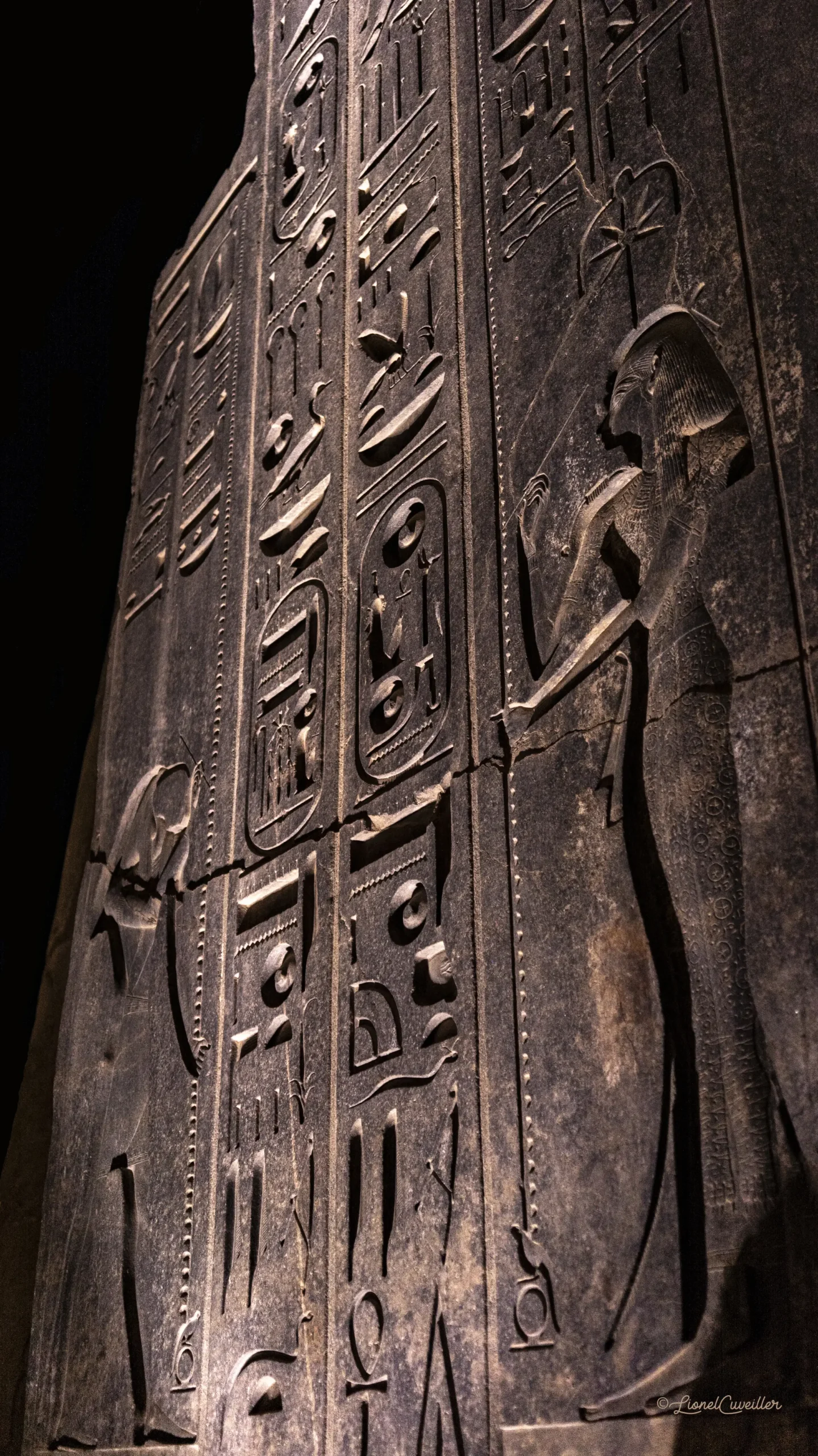
The ibex, a wild mountain goat distinguished by its curved horns, is among the clearest examples of an animal directly connected with Egyptian New Year symbolism.
Its importance is not simply a modern interpretation. Archaeological objects provide tangible evidence of its association with seasonal renewal and good wishes.
Why Was the Ibex Associated With the New Year?
The Metropolitan Museum of Art identifies the ibex as an ancient Egyptian symbol of good luck and renewal. Ibex figures appeared on New Year’s gifts, and the animal could serve as a hieroglyphic representation associated with the word “year.”
One particularly interesting museum object is a small faience amulet from Egypt’s Eighteenth Dynasty. It depicts an ibex and includes engraved representations of a crocodile and fish. The amulet is approximately 1.2 centimetres high and was pierced to allow it to be worn as part of a ring.
A tiny amulet only 1.2 cm high could carry a wish for an entire year.
The ibex amulet, Eighteenth Dynasty
This small surviving object illustrates how Egyptians could communicate hopes for the coming year through portable decorations and personal ornaments.
Did the Ibex Represent Good Luck?
Yes. The museum evidence directly supports the association between ibex imagery, good fortune and renewal.
However, there is an important distinction between saying that ibexes appeared on New Year’s objects and claiming that every ancient Egyptian New Year celebration involved ibex rituals. The former is supported by archaeological evidence. A universal festival ritual involving ibexes cannot be established from these objects alone.
The Scarab Beetle: A Symbol of Rebirth and Transformation
Another important creature in Egyptian religious symbolism was the scarab beetle.
Ancient Egyptians observed dung beetles rolling balls across the ground and connected this activity with the sun’s daily movement across the sky.
The scarab became associated with Khepri, a manifestation of the rising sun, and with ideas of emergence, transformation and regeneration. This made scarabs particularly meaningful symbols of renewal and continued existence.
Were Scarabs Used for New Year Wishes?
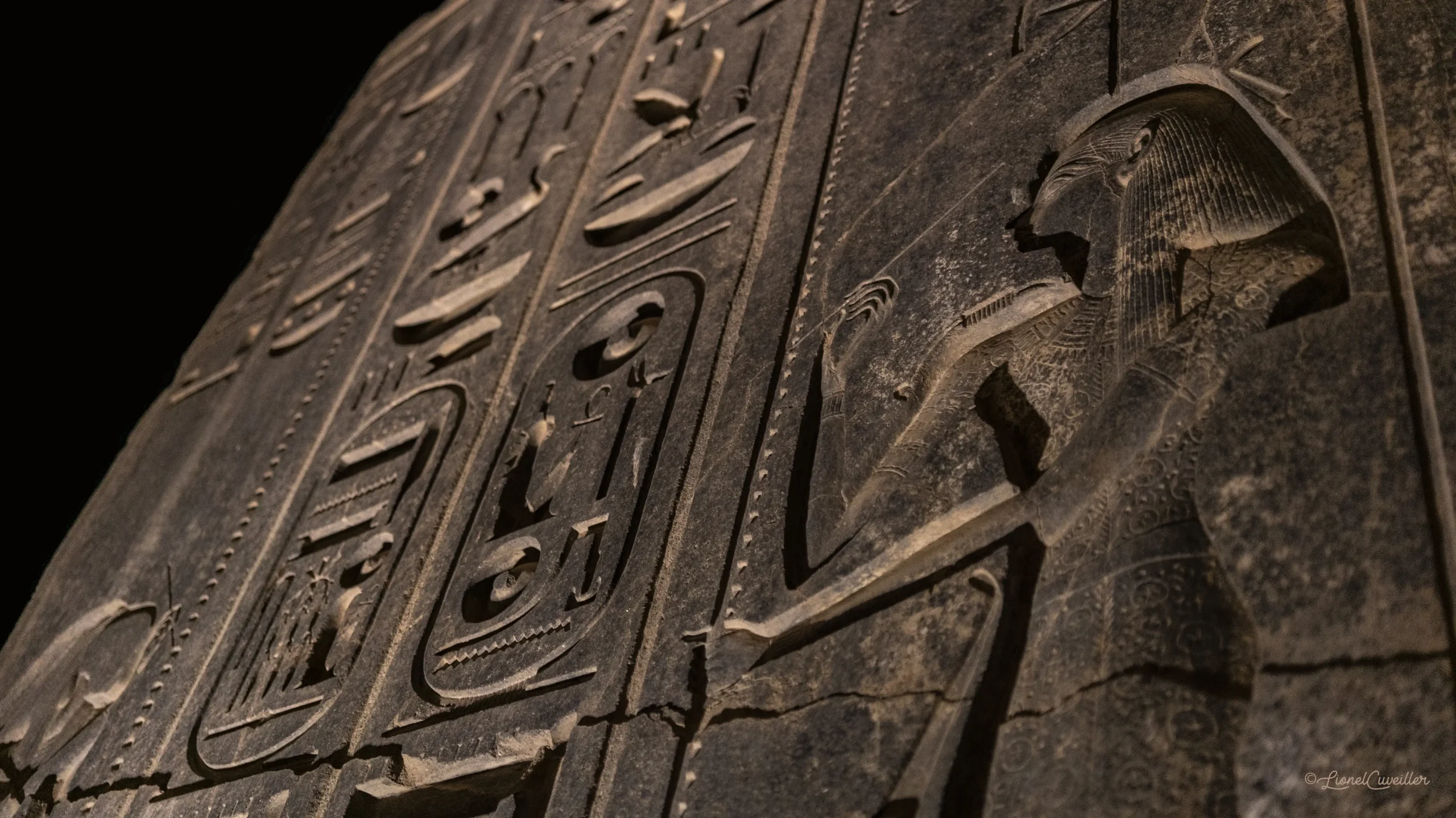
Yes. An object in the Walters Art Museum, dated to approximately 1070-525 BCE, provides direct evidence. This scarab bears an inscription requesting good fortune for the New Year, and the museum identifies it as an amulet with regenerative associations.
The Metropolitan Museum of Art also holds a faience scarab inscribed with a New Year’s blessing, dated to approximately 1080-664 BCE. Such objects demonstrate that animal imagery was not merely decorative. It could form part of a meaningful written and religious expression of hope for the coming year.
Other Sacred Animals in Ancient Egyptian Symbolism
Not every animal important in Egyptian mythology was specifically associated with the New Year. Nevertheless, understanding their religious meanings helps explain the wider symbolic world in which New Year amulets were created.
| Animal | Associated deity or concept | Principal symbolic significance |
|---|---|---|
| Ibex | Good wishes and renewal | New Year blessings and good fortune |
| Scarab beetle | Khepri | Rebirth, regeneration and the rising sun |
| Cat | Bastet | Protection and prosperity |
| Falcon | Horus | Kingship and divine authority |
| Jackal | Anubis | Embalming and protection of the dead |
| Crocodile | Sobek | Water, fertility and divine power |
| Lioness | Sekhmet | Fierce divine power and protection |
| Cobra | Wadjet | Royal protection and sovereignty |
| Ram | Amun and Khnum | Divine creative power and fertility |
| Bull | Apis and other divine forms | Strength, vitality and sacred kingship |
These associations reflect Egyptian religious traditions generally; they should not be interpreted as a historical list of ten official Egyptian New Year animals.
The Cat and Bastet
Cats are among the most recognizable animals of ancient Egypt. The goddess Bastet could be represented as a cat or a woman with a feline head. She was associated with protection and prosperity, and cats were sacred to her.
Many surviving cat statuettes were dedicated at temples. Their significance belongs to the broader religious life of Egypt rather than to a uniquely documented New Year custom.
The Crocodile and Sobek
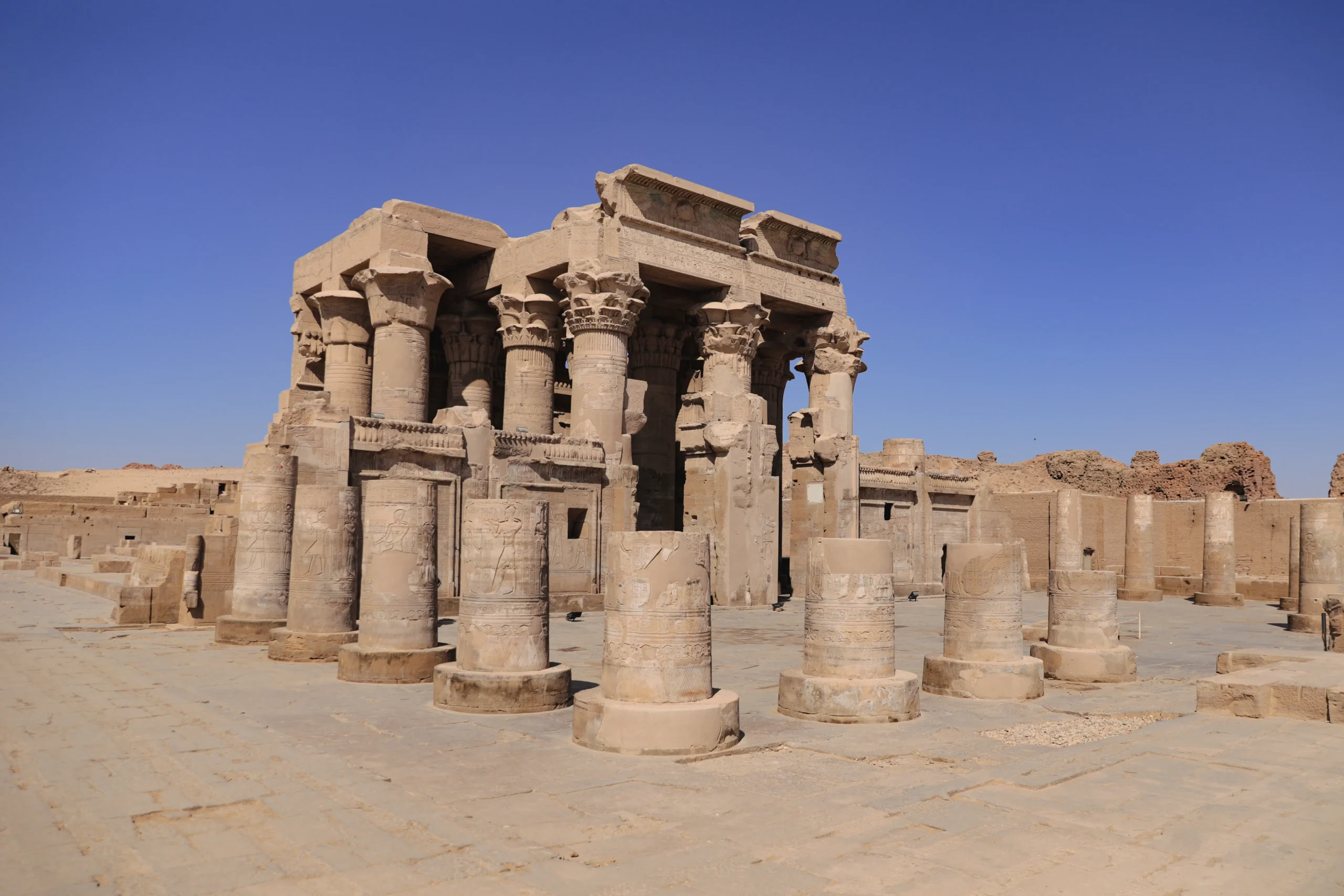
The Nile crocodile was closely associated with Sobek, a powerful deity connected with water and fertility.
The Metropolitan Museum preserves a New Kingdom scarab depicting Sobek with a crocodile head and religious attributes. Crocodile imagery expressed the relationship between the natural world and divine power.
Travelers can still feel that connection at Kom Ombo, a Nile temple dedicated in part to Sobek.
The Falcon, Jackal and Lioness
Falcon: Horus
The falcon was closely connected with Horus, an important god of kingship.
Jackal: Anubis
The jackal or jackal-headed Anubis was associated with funerary practices and the protection of the deceased.
Lioness: Sekhmet
The lioness, particularly in representations of Sekhmet, expressed tremendous divine power.
These examples show that animal symbolism depended on the particular deity, religious setting and historical period. A creature could represent protection in one context and a different religious concept in another.
Animals on Ancient Egyptian New Year Gifts
Archaeological evidence shows that New Year gifts could contain meaningful combinations of animal imagery, plant motifs and written blessings. One remarkable example is a Late Period faience vessel known as a New Year’s Bottle, dating to approximately 664-525 BCE.


The Metropolitan Museum of Art describes a bottle inscribed for a priest named Amenhotep, decorated with floral patterns and two baboons positioned on either side of its neck. Its inscriptions ask several Egyptian deities to grant protection and a happy New Year. The vessel may originally have contained perfume, oil or Nile water.
Other objects carry similar wishes. An oval plaque in the same museum contains hieroglyphs forming a blessing for the opening of a good year. These objects are particularly valuable because they connect our understanding of Egyptian New Year celebrations with surviving, dated material evidence.
Egyptian Zodiac Animals: Are They the Same as New Year Animals?
A common source of confusion is the relationship between Egyptian sacred animals, the Egyptian zodiac and the annual New Year celebration. They are three different concepts:
Sacred animals
Linked to gods, religious concepts and ritual practices across all periods of Egyptian history.
Zodiac figures
Constellation signs that appeared in Egypt in the Greco-Roman period, shaped by Mediterranean astronomy.
Modern “Egyptian zodiac”
Birthday-based animal charts that are contemporary inventions, not Pharaonic calendar systems.
The ancient Egyptians used animals extensively in religious art and hieroglyphic writing. Their astronomical traditions also included star groups and timekeeping systems. However, the familiar twelve-sign zodiac found in later Egyptian monuments developed through interaction with wider Mediterranean astronomical and astrological traditions, particularly during the Greco-Roman period.
There is no reliable evidence that ancient Egyptian New Year celebrations assigned everyone an animal sign based on their birthday or birth year. Modern websites sometimes offer Egyptian zodiac personality charts, compatibility calculations and birthday-based animal identities. These should not automatically be treated as authentic Pharaonic calendar systems.
The Dendera Zodiac and Its Animal Symbols

One of the most fascinating surviving examples of Egyptian astronomical art is the Dendera Zodiac. Created around 50 BCE, this circular sandstone relief originally decorated a chapel dedicated to Osiris within the Temple of Hathor at Dendera. The monument combines representations of the zodiac constellations with planets and other celestial figures.
Its imagery illustrates the integration of Egyptian religious traditions with astronomical concepts circulating around the Mediterranean during the Ptolemaic period. The original relief is now housed in the Louvre in Paris, where it is recorded under inventory number E 13482. Although the zodiac includes animal figures, it should not be confused with a calendar assigning an animal to each Egyptian New Year.
Exploring Egyptian Astronomy at Dendera
For travelers interested in Egyptian astronomy, mythology and sacred symbols, Dendera Temple Complex offers a meaningful connection between the historical material and the monuments that survive today. Its religious and astronomical decorations help visitors understand how celestial phenomena were represented in Egyptian temple art.
If you are planning to explore Dendera during your journey through Egypt, you can contact Turquoise Dahabiya to enquire whether a visit to the temple can be incorporated into your travel arrangements.


Sail the Nile Where These Symbols Come Alive
A private dahabiya takes you to the temples where ibexes, falcons, crocodiles and scarabs still watch over the river.
Frequently Asked Questions About Egyptian New Year Animals
What animal symbolizes the ancient Egyptian New Year?
The ibex is one of the best-documented animals associated specifically with Egyptian New Year wishes. Surviving ibex amulets and decorations demonstrate its connection with good fortune and renewal.
What does the ibex mean in ancient Egypt?
The ibex could symbolize renewal and good luck. It also appeared in hieroglyphic contexts associated with the word for “year.”
Was the scarab beetle a New Year symbol?
Yes. Scarabs represented regeneration and transformation, and surviving scarab amulets contain explicit New Year blessings.
What is Wepet Renpet?
Wepet Renpet means the “Opening of the Year.” It refers to the beginning of the ancient Egyptian year and had important connections with calendar traditions, agriculture and religious celebrations.
Did ancient Egyptians have twelve animal zodiac signs?
The twelve-sign zodiac appeared in Egypt during the Greco-Roman period, but it was not a traditional Egyptian New Year animal cycle comparable to the Chinese zodiac.
What is the Egyptian zodiac animal for my birthday?
There is no established ancient Egyptian birthday-to-animal calculation equivalent to the Chinese zodiac. Modern online systems may use contemporary interpretations rather than historically documented Egyptian practices.
What animal represented rebirth in ancient Egypt?
The scarab beetle is among the clearest animal symbols of rebirth and regeneration because of its association with Khepri and the rising sun.
Which Egyptian animals represented protection?
Cats associated with Bastet, cobras associated with Wadjet and falcons associated with Horus could carry protective religious meanings, depending on the context.
Were animals worshipped in ancient Egypt?
Certain animals were considered sacred manifestations of divine powers, and some received ritual care, offerings or burial. Egyptian religious practices varied across regions and historical periods.
What animals appeared on Egyptian New Year gifts?
Surviving examples include ibex figures, scarab amulets and New Year’s bottles decorated with baboons. These objects do not establish an exhaustive list of festival animals.
What is the difference between Egyptian zodiac animals and sacred animals?
Sacred animals were associated with gods, religious concepts and ritual practices. Zodiac figures represented constellations and astrological concepts. The two traditions could overlap artistically without having identical meanings.
Did ancient Egyptians celebrate New Year on January 1?
No. The ancient Egyptian civil calendar followed a different system, and its New Year’s Day gradually shifted relative to the solar year because the calendar lacked a regular leap-day correction.
Conclusion: Understanding the Animals of the Egyptian New Year
The story of Egyptian New Year animals offers a fascinating introduction to the relationship between religion, nature and the passage of time in ancient Egypt. The ibex stands out as an especially significant New Year symbol, connected with renewal and good fortune. Scarab beetles expressed regeneration and transformation, while many other sacred animals embodied divine protection, fertility and authority.
What makes these traditions particularly compelling is that their meanings survive in physical objects: tiny amulets, inscribed scarabs, decorated bottles and monumental temple reliefs. For travelers fascinated by ancient Egyptian symbolism, exploring archaeological collections and surviving temples can bring these ideas into a clearer historical perspective.
Ready to see these monuments for yourself? Browse our Egypt New Year tour, compare the Luxor to Aswan dahabiya cruise and the Aswan to Esna dahabiya journey, or read more about how to celebrate the New Year in Egypt.
Sources consulted: museum collection records of the Metropolitan Museum of Art, the Walters Art Museum and the Louvre.
Plan Your New Year in Egypt
New Year Nile Cruise
Welcome the year on a private dahabiya. See the cruise
Egypt New Year Tour
A private tour built around the Nile. View the tour
Life on Board
Cabins, meals and daily rhythm on a dahabiya. See life on board
Glimpses of the Nile Aboard a Dahabiya


What Travelers Say About Turquoise Dahabiya
Read recent reviews from guests who have sailed with us, as shared on Tripadvisor.


Plan Your Nile Journey with Turquoise Dahabiya
Tell us your dates and interests, from Dendera and Kom Ombo to a New Year sailing, and our team will reply with a tailored proposal.