
Why do some travelers return from Egypt transformed while others feel underwhelmed, even after seeing all the “must‑dos”? The difference isn’t what you visit—it’s how you experience it. Picture sunset on the Nile as temples glow along the riverbank: that unhurried rhythm defines a meaningful Luxor West Bank tour. After guiding thousands, we’ve learned that timing, expert guidance, and depth of exploration turn a crowded checklist into a profound encounter. Mass‑market buses rush through the Valley of the Kings and Hatshepsut’s Temple on rigid schedules. The smarter choice is a small‑group, Egyptologist‑led tour that beats the crowds, lingers where it matters, and reveals the stories behind the stones. This guide shows how to choose—and why discerning travelers favor thoughtfully paced, expert‑led West Bank experiences.
Why Visiting Luxor’s West Bank Matters?
The West Bank isn’t just another archaeological site—it’s the key to understanding how ancient Egyptians conceived of death, eternity, and the cosmos itself. Skip it, and you’ve missed the emotional and spiritual heart of ancient Egyptian civilization.
Here’s why the West Bank should be non-negotiable on any Egypt itinerary:
- Unmatched concentration of pharaonic tombs: The Valley of the Kings alone contains 63 royal tombs, including Tutankhamun’s nearly intact burial chamber and Ramesses VI’s astronomical ceiling that still dazzles with original colors preserved for millennia.
- Artistic masterpieces in their original context: Unlike museum artifacts removed from their settings, West Bank tombs present ancient Egyptian art exactly as intended—wall paintings and reliefs telling complete mythological narratives in the very chambers they were designed to protect.
- Archaeological significance that changed history: This is where Howard Carter discovered Tutankhamun in 1922, where every major Egyptological breakthrough of the 19th and 20th centuries occurred. You’re walking where history was made.
- Intimate scale impossible at East Bank temples: While Karnak and Luxor temples overwhelm with monumental scale, West Bank sites feel personal. You’re descending into individual tombs, connecting with specific pharaohs rather than abstract power.
- Essential context for understanding Egyptian belief: The elaborate tomb decorations aren’t mere art—they’re functional magical texts, spells from the Book of the Dead, star charts for navigating the afterlife. Understanding these transforms your comprehension of everything else you’ll see in Egypt.
Without the West Bank, you’ll see Egypt’s monumental achievements but miss the intimate human story—the pharaohs’ desperate hope that art, magic, and architecture could grant eternal life.
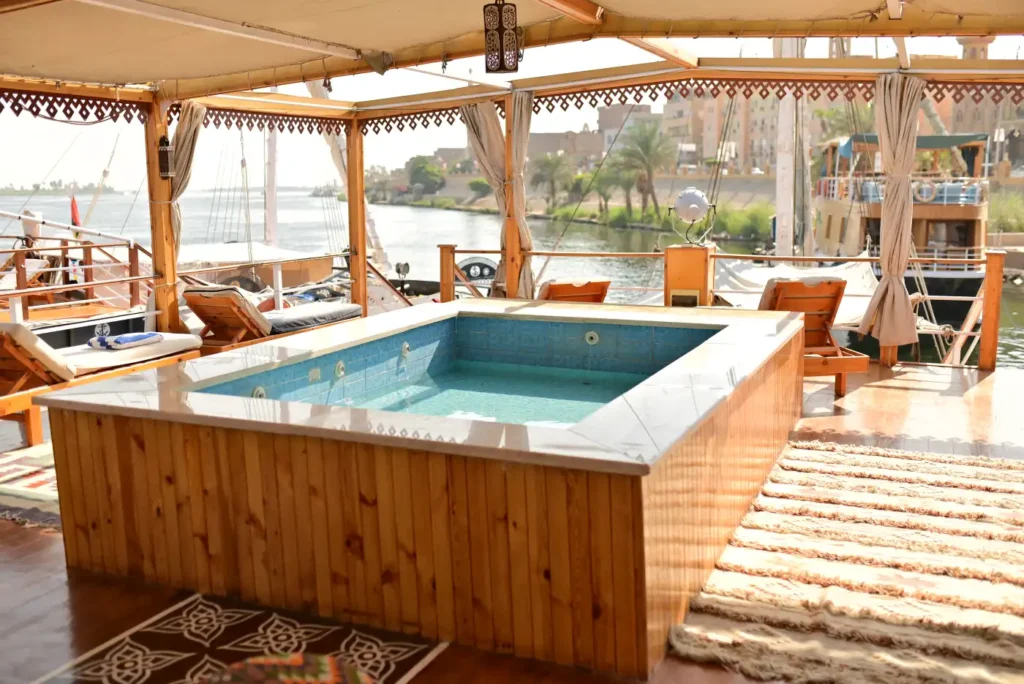
Short on time but want a refined Nile experience? Explore Egypt in effortless style on our 4 day Dahabiya Nile cruise—a compact, luxurious journey between Luxor and Aswan.
The “Sweet Spot” Window: When to Experience the West Bank at Its Best
Timing isn’t just a practical consideration—it fundamentally changes what you experience on the West Bank.
What You’ll Feel & Experience During the Ideal Window?
- Dawn arrivals (6:00-8:00 AM) when golden light illuminates cliff faces and temperatures remain comfortable for tomb exploration, typically 70-80°F versus midday’s brutal 100°F+
- Near-empty tombs before tour bus convoys arrive around 9:30 AM, giving you contemplative silence in spaces designed for eternal peace
- Optimal photography conditions with angled morning light creating dramatic shadows on hieroglyphics that flatten in harsh overhead sun
- Alert, engaged guides who haven’t yet exhausted themselves explaining sites to multiple groups throughout a scorching day
- Physical comfort that allows genuine appreciation rather than just enduring heat while rushing through mandatory stops
Who Should Choose Early Morning West Bank Tours?
- Photography enthusiasts who understand that light quality determines whether images capture atmosphere or just document presence
- History lovers who want time to study ceiling details and ask in-depth questions without feeling rushed
- Families with children who need to complete sightseeing before midday heat becomes dangerous
- Senior travelers or those with heat sensitivity for whom comfortable temperatures aren’t luxury but necessity
- Anyone who’s been disappointed by crowded tourist sites and craves authentic encounters with ancient spaces
Insider Tip:
Book a tour that begins at sunrise rather than joining group tours departing at 9:00 AM. The two-hour timing difference transforms your entire experience—you’ll have the Valley of the Kings nearly to yourself, photograph without crowds blocking shots, and complete major sites before heat becomes oppressive. When you sail with us on the Nile, we specifically arrange early-access West Bank shore excursions that prioritize optimal timing alongside deep historical expertise.
Luxor West Bank at a Glance — Summary Table & Highlights
Valley of the Kings
Significance: 63 royal tombs; Tutankhamun was discovered here in 1922.
Duration: 2–3 hours.
Photography Highlights: KV9’s astronomical ceiling; beautifully decorated tomb corridors.
Essential Tip: Standard tickets include 3 tombs; Tutankhamun requires an extra ticket.
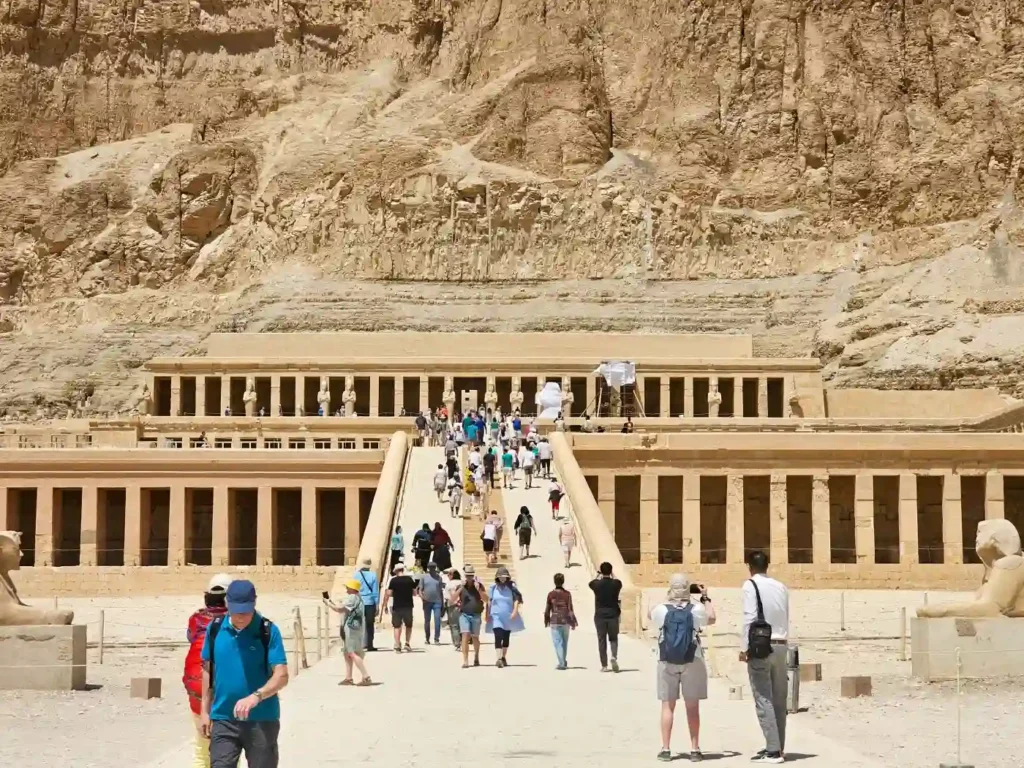
Hatshepsut Temple
Significance: Mortuary complex of Egypt’s famous female pharaoh; dramatic cliff backdrop.
Duration: 45–60 minutes.
Photography Highlights: Terraced colonnades, especially stunning at sunrise.
Essential Tip: Arrive early before the exposed terraces heat up.
Medinet Habu
Significance: Ramesses III’s mortuary temple; home to Egypt’s best-preserved reliefs.
Duration: About 45 minutes.
Photography Highlights: Detailed battle scenes carved on the outer walls.
Essential Tip: Often skipped by rushed tours—be sure to include it.
Deir el-Medina
Significance: Village of the artisans who built the royal tombs.
Duration: 30–45 minutes.
Photography Highlights: Vivid scenes of daily life, contrasting with royal imagery.
Essential Tip: Offers crucial context for understanding the creators of the royal tombs.
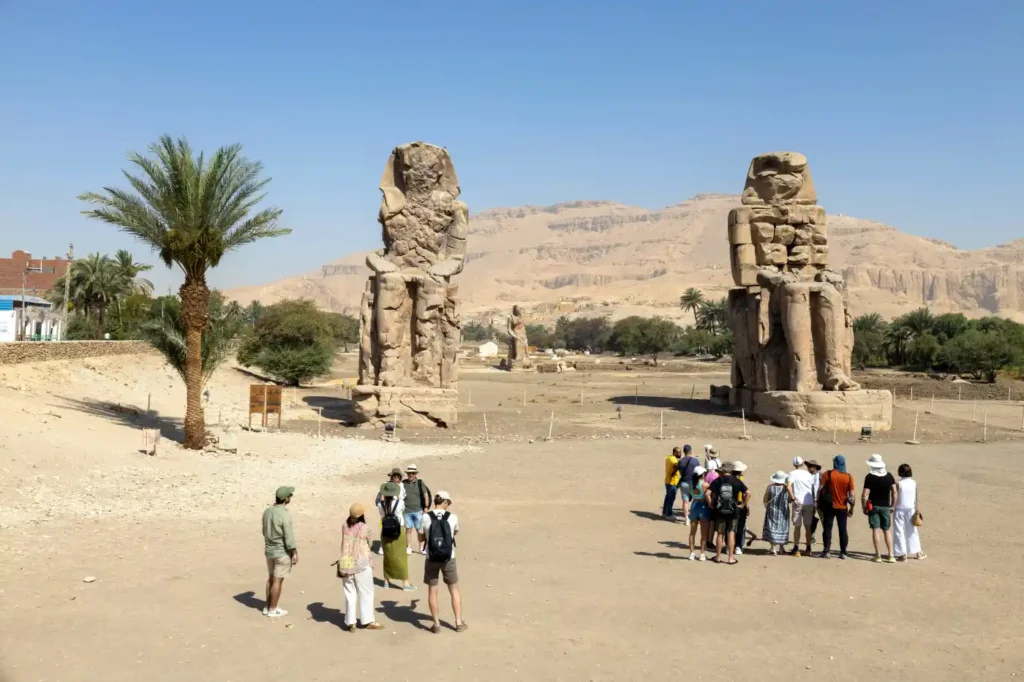
Colossi of Memnon
Significance: Two massive statues of Amenhotep III.
Duration: 10–15 minutes.
Photography Highlights: Beautiful sunrise or sunset shots that emphasize their scale.
Essential Tip: A quick stop, but historically significant.
Critical Note: Standard Valley of the Kings tickets include three tombs of your choice from approximately 10-15 currently open. Not all 63 tombs are accessible—rotation happens for preservation. Expert guides know which currently-open tombs deliver the most spectacular art. This is why guided tours dramatically outperform independent visits.
Want enough time to explore Luxor properly—without rushing? Choose our 5-day Turquoise Dahabiya cruise for a graceful balance of sailing, culture, and premium comfort.
Sites That Elevate Your Luxor West Bank Tour
Beyond standard highlights, certain elements transform competent sightseeing into extraordinary encounters:
KV62: Tutankhamun’s Tomb—Small Space, Massive Historical Weight
Yes, Tut’s tomb is smaller and less artistically impressive than others. But you’re standing where Howard Carter stood in 1922 when he glimpsed “wonderful things”—the 20th century’s greatest archaeological discovery that captivated the world.
The tomb’s significance isn’t just what you see (though viewing the pharaoh’s actual mummy holds undeniable power). It’s understanding what Carter found: over 5,000 artifacts crammed into four small rooms. If Tutankhamun—a minor pharaoh who died young—was buried with such wealth, imagine what major pharaohs possessed.
Expert guides elevate this visit by explaining the tomb’s unusual architecture, the forensic evidence of ancient robberies, and why Carter’s meticulous excavation set archaeological standards still followed today.
KV9: Ramesses VI’s Astronomical Ceiling—Where Art Meets Cosmology
This is what most visitors imagine when thinking of Egyptian tombs: corridors covered floor-to-ceiling with vibrant paintings in blues, golds, reds, and yellows that look impossibly fresh despite being 3,150 years old. The burial chamber’s astronomical ceiling depicts the Book of Day and Book of Night—star charts showing the sun god’s journey through the underworld.
The preservation is extraordinary because the tomb stayed sealed until 1888. Colors remain vivid, protected from moisture and vandalism. Your guide should allow adequate time here—10 minutes is insulting; 20-30 minutes lets you actually absorb what’s been preserved.
Medinet Habu: The Fortress Temple Most Tours Skip
While everyone rushes to Hatshepsut’s temple, Medinet Habu often gets cut from itineraries—a tragic mistake. This mortuary temple complex of Ramesses III contains some of Egypt’s best-preserved relief carvings, including detailed battle scenes showing naval warfare against the Sea Peoples.
What makes Medinet Habu special is intimacy without crowds. Pylons still reach original height. Wall colors remain vivid. You’ll often have vast sections entirely to yourself—a luxury impossible at more famous sites.
The outer walls depict graphic battle scenes with incredible detail: soldiers in hand-to-hand combat, prisoners with bound arms, enemy dead being counted by severed hands. This is Egyptian propaganda at its most effective, designed to proclaim Ramesses III’s military might for eternity.
Deir el-Medina: Where the Tomb Builders Lived
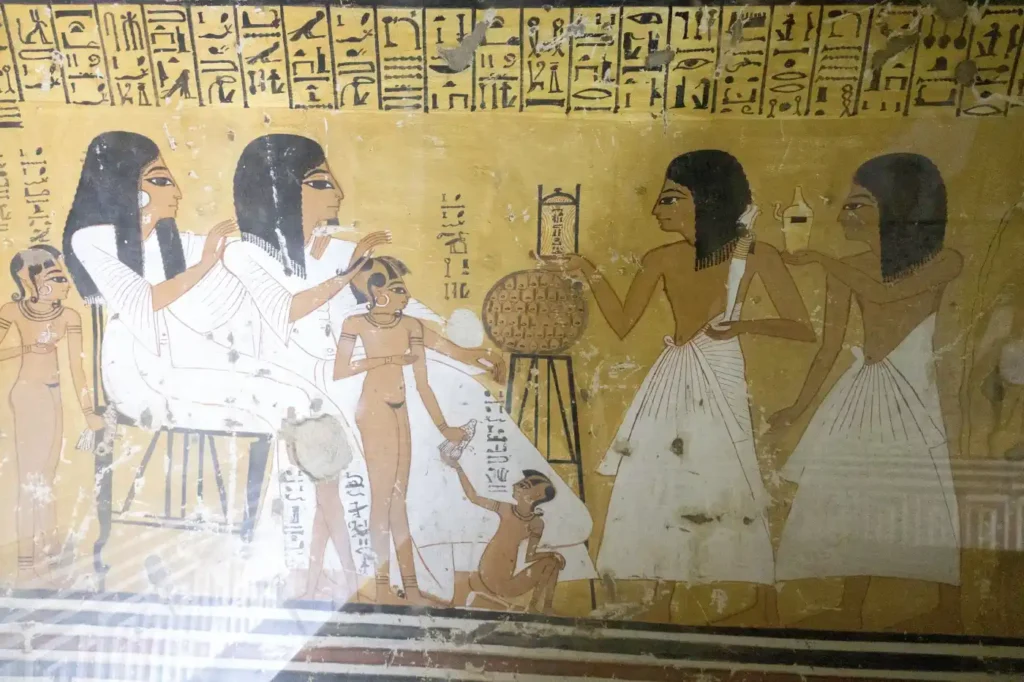
This workers’ village housed the artisans, painters, and scribes who created royal tombs. Unlike royal tombs obsessed with divine transformations, workers’ tombs show farming, fishing, banqueting, music, family life—reminding you that behind the monumental civilization were ordinary people with ordinary concerns.
The site includes intact mudbrick houses where you can walk through actual living spaces. Combined with the tombs, Deir el-Medina answers questions other sites can’t: How did ancient Egyptians actually live? What did non-royal people value?
For families with curious children, Deir el-Medina often engages more effectively than royal tombs because the relatable scenes spark questions and connections.
How to Plan Your Luxor West Bank Tour?
Now that you understand what makes the West Bank extraordinary, let’s get practical:
Define Your Priority
Best for first-time Egypt travelers: Full-day West Bank tour covering Valley of the Kings (3-4 tombs including Tutankhamun if budget allows), Hatshepsut Temple, Medinet Habu, and Deir el-Medina. This provides comprehensive coverage without overwhelming you.
Best for history enthusiasts: Focus on Valley of the Kings (4-5 tombs) with an Egyptologist guide who can read hieroglyphics and explain religious symbolism in detail. Spend 4-5 hours just on royal tombs for depth versus breadth.
Best for photographers: Sunrise tour beginning at 6:00 AM, prioritizing sites with best morning light: Hatshepsut Temple at dawn, Medinet Habu’s detailed reliefs with angled light, and Valley of the Kings before crowds.
Best for families: Half-day tour (6:00 AM – 11:00 AM) focusing on accessible, engaging sites: Valley of the Kings (2-3 tombs), Hatshepsut Temple, and Deir el-Medina where daily life scenes resonate with kids. Complete before heat becomes dangerous.
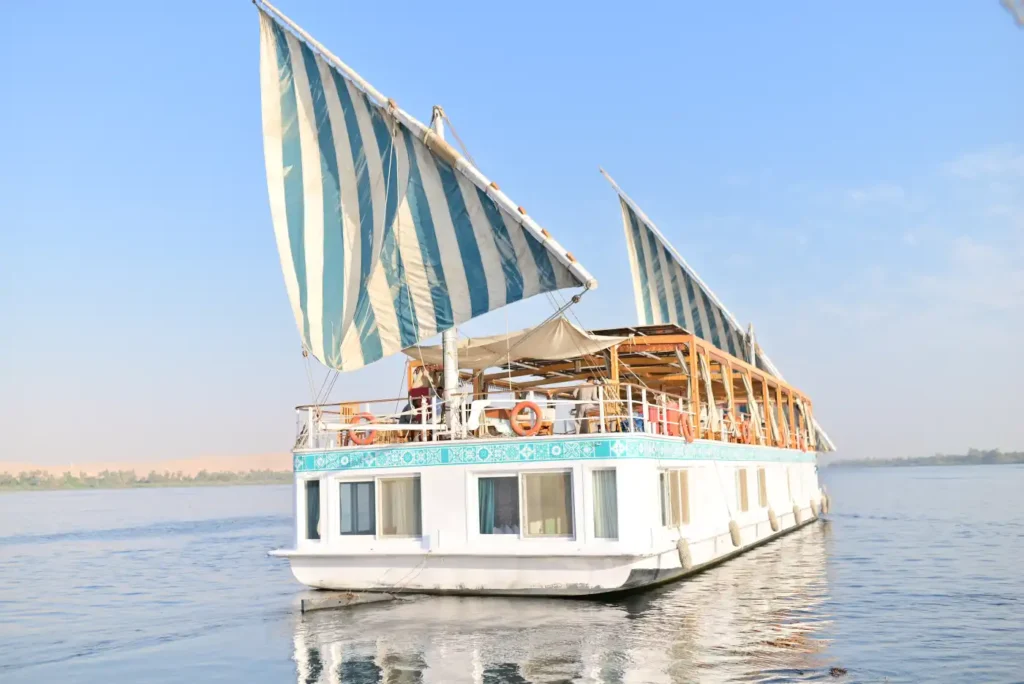
Best combined with Nile cruising: When sailing the Nile aboard a dahabiya, your West Bank visit integrates seamlessly with your journey. Our Turquoise Dahabiya itinerary includes expert-guided West Bank exploration as part of a comprehensive Nile experience—combining the intimacy of traditional sailing with scholarly archaeological guidance.
Strategic Timing & Booking Considerations
Limited daily access to premium tombs: Nefertari’s tomb admits only 150 visitors per day. Seti I’s tomb sometimes closes without warning. Book with operators who have current access information and can adjust itineraries based on real-time openings.
Weather impact on experience quality: Luxor’s summer (May-September) sees temperatures regularly exceeding 110°F. The West Bank has minimal shade. October-April offers comfortable temperatures; book early-morning tours for summer visits.
Photography limitations: Flash photography is prohibited in all tombs (damages paintings). Some tombs charge separate camera fees. Nefertari’s tomb allows no photography whatsoever.
For travelers seeking the ultimate Nile journey, our 13-night Cairo and Dahabiya nile cruise offers unparalleled depth—hidden temples, private moorings, and the most luxurious sailing experience on the river.
Luxor West Bank Travel Tips
What to Pack
- Minimum 2 liters of water per person in insulated bottles—dehydration happens faster than you expect
- High-SPF sunscreen (50+) and lip balm with UV protection—Egypt’s sun is brutal; reapply every 90 minutes
- Wide-brimmed hat or sun scarf—baseball caps don’t protect your neck and ears
- Battery pack for phones/cameras—heat drains batteries faster
- Cash in small Egyptian pound notes—for restroom attendants (5-10 EGP) and tipping tomb guardians (20-50 EGP)
What to Wear?
Footwear is critical: Wear broken-in, closed-toe walking shoes with good support and tread. You’ll descend steep staircases into tombs and walk on uneven ancient surfaces. Sandals risk turned ankles.
Lightweight, breathable clothing: Cotton or moisture-wicking fabrics in light colors. Long, loose pants beat shorts—they protect from sun while keeping you cooler through airflow.
Shoulder coverage: Many sites request modest dress. Bring a lightweight scarf that can cover shoulders when needed.
Best Photography Times
Golden hour (6:00-7:30 AM) delivers dramatically better light than midday sun. For tomb interiors, use high ISO (1600-3200) rather than flash. Modern cameras handle high ISO well. Brace against walls for longer exposures.
Heat Management
Drink before you’re thirsty. Sip water consistently every 15-20 minutes. Watch for heat exhaustion symptoms: excessive sweating, weakness, dizziness, nausea, or headache. Take tomb breaks strategically—the cooler interiors provide natural air conditioning.
Final Recommendation & Next Steps
The West Bank isn’t optional if you’re visiting Luxor. This is why you came to Egypt—to stand where pharaohs were laid to rest, to see the finest ancient art in its original sacred context, to understand how humanity’s first great civilization conceived of death and eternity.
But experiencing the West Bank properly requires more than just showing up. The difference between a frustrating visit and a transformative encounter comes down to three factors:
- Expert guidance that reads hieroglyphics, explains religious symbolism, and chooses which currently-open tombs deliver the most spectacular preservation
- Strategic timing that prioritizes early-morning visits before crowds arrive and heat becomes oppressive
- Thoughtful integration with your broader Egypt journey—whether that’s a dedicated day tour or part of a comprehensive Nile experience
When you sail with Turquoise Dahabiya, your West Bank exploration becomes part of a deeper journey through ancient Egypt. Our Egyptologist guides hold advanced degrees and lifetime expertise. We begin at sunrise when the Valley is nearly empty. We include sites most rushed tours skip while covering all essential highlights. And we maintain the intimate group sizes (8-12 guests maximum) that ensure everyone can hear, ask questions, and set the pace.
For photography enthusiasts, our early access means unobstructed shots with golden sunrise light—empty tomb corridors and Hatshepsut Temple’s terraces without tourists in every frame.
For history lovers, our guides explain the Book of the Dead spells painted on tomb walls, identify which gods appear in which contexts, and reveal the political propaganda encoded in temple reliefs.
For families, our morning schedule completes major sightseeing before heat endangers children, and our guides excel at making ancient history engaging through stories rather than dry facts.
The pharaohs believed the West Bank—where the sun dies each evening—symbolized passage into the afterlife. They spent fortunes preparing tombs that would ensure their eternal survival. Three thousand years later, their investment paid off. These tombs have made them immortal—and now they’re waiting for you.
Discover Your Perfect Dahabiya Journey
Ready to experience Egypt with expert guidance and the elegance of traditional Nile sailing? Explore our 3, 4, 6, and 13-night Turquoise Dahabiya cruises and choose the journey that matches your travel rhythm.
Frequently Asked Questions
How long does a Luxor West Bank tour take?
A full West Bank tour takes 5–7 hours, covering Valley of the Kings, Hatshepsut Temple, Medinet Habu, and Deir el-Medina. A half-day express visit lasts 3–4 hours but skips depth.
Do I need a guide for the West Bank?
Yes. A guide helps you choose the best open tombs, explains the meanings behind the art and hieroglyphics, and manages tickets and timing—greatly improving your visit.
What’s the best time of day to visit?
Sunrise (6–8 AM) is ideal: cooler temperatures, fewer crowds, and better light for photography. Tombs fill up after 9:30 AM.
Is the West Bank suitable for families or seniors?
Yes. Kids enjoy the stories, and seniors can manage most sites with slow pacing and breaks. Some tombs have steep stairs, so morning visits are recommended for all.
What should I absolutely not miss?
Don’t miss Valley of the Kings (KV9), Hatshepsut Temple, Medinet Habu, and Deir el-Medina. If open, Nefertari’s Tomb is a world-class highlight.
How does a West Bank tour fit with Nile cruising?
It pairs perfectly. Most Nile cruises—including dahabiyas—include expert-guided West Bank tours, making it a seamless part of the Luxor experience.