

There Is a Particular Sound You Only Hear on a Dahabiya
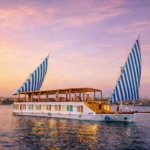
There is a particular sound you only hear on a dahabiya. It is not an engine. It is water moving along a wooden hull, a sail shifting overhead, and someone on the bank calling to a child three fields away. Most travellers come to Egypt expecting temples. Very few expect the silence between them.
That silence is the entire point of a dahabiya Nile cruise in Egypt.
We are Turquoise Dahabiya, and we sail a traditional wooden boat along the stretch of river that has carried travellers, traders and archaeologists for more than a century. This page is here to help you work out whether this style of Nile journey suits you — and which of our routes fits the time you have. We will cover the boat, the routes, what is included, when to travel, and what you should ask us before you commit to anything.
What Is a Dahabiya Nile Cruise, Exactly?
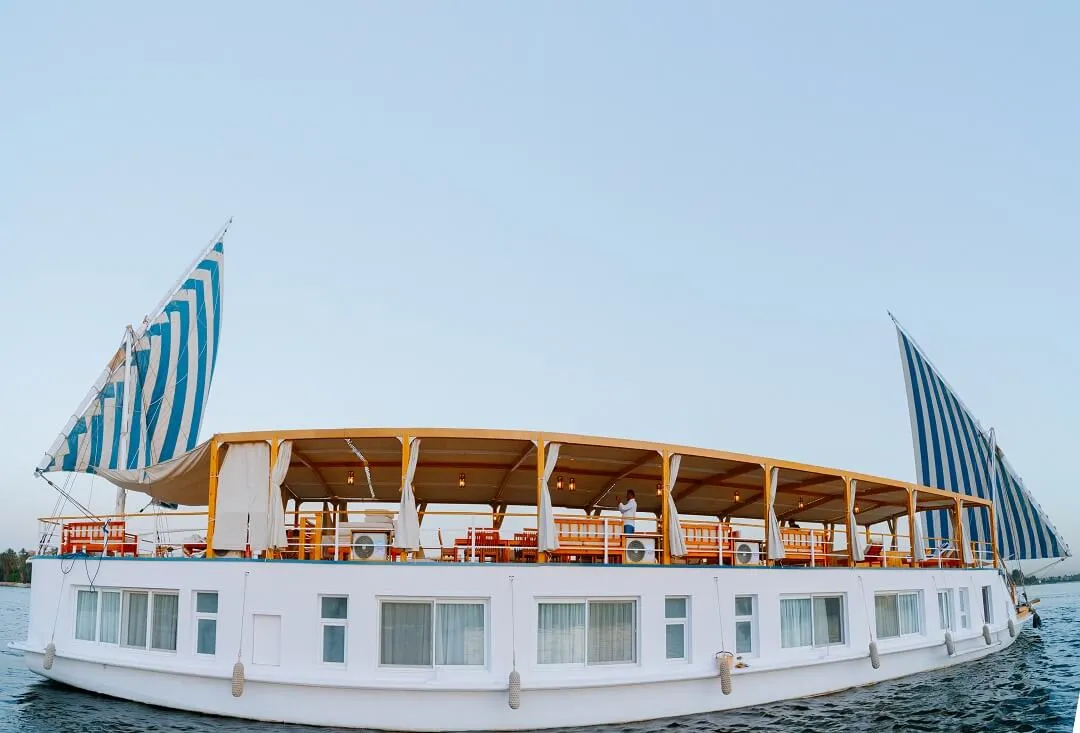
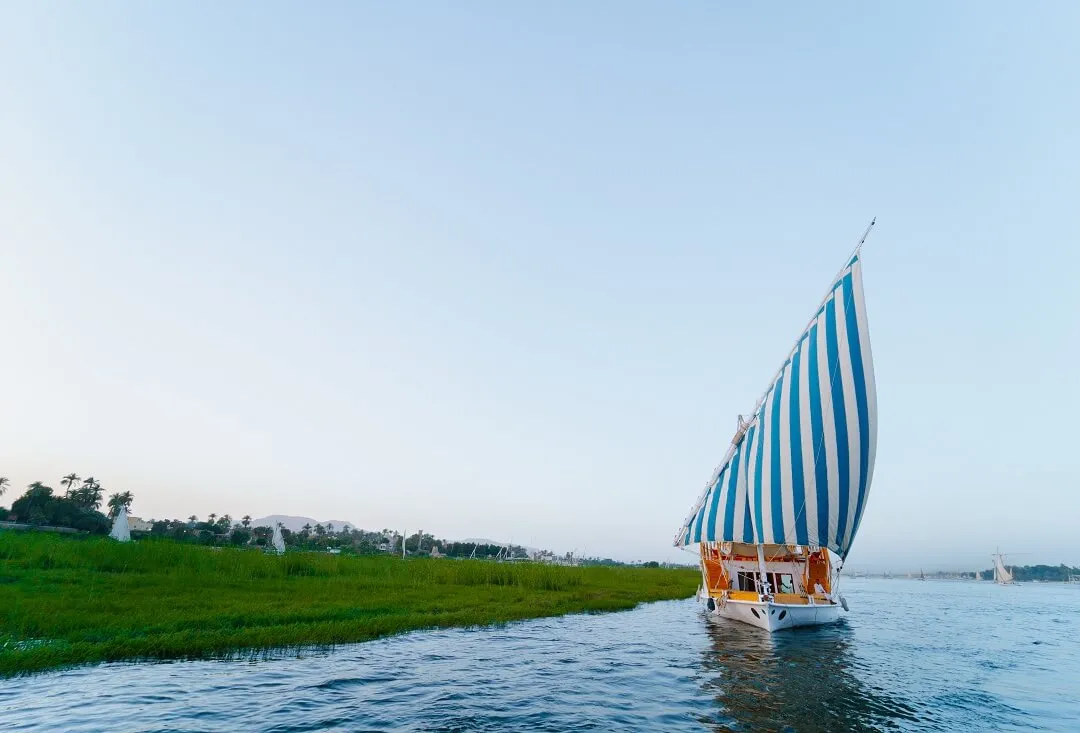
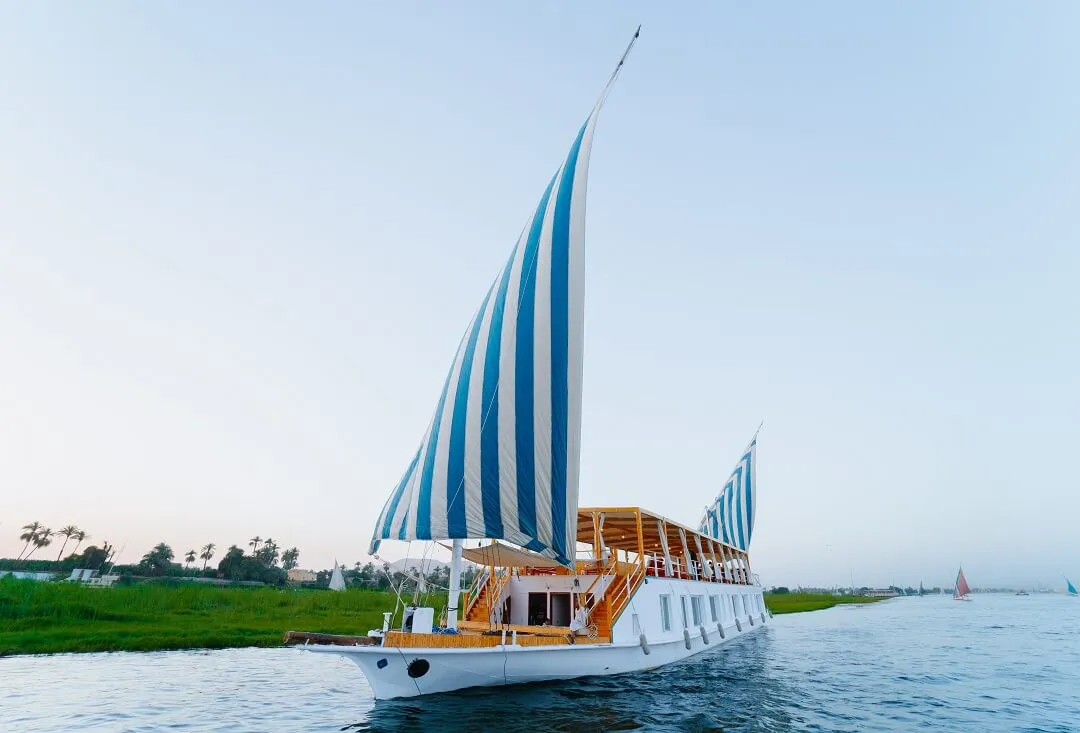
A dahabiya is a traditional Egyptian wooden sailing boat that has been used on the Nile since the nineteenth century. Modern dahabiyas carry roughly 8 to 14 guests in air-conditioned en-suite cabins, with a chef on board and a sun deck — making them a private, intimate alternative to the large Nile cruise ships.
That number matters more than anything else on this page. Fourteen guests is not a small version of a cruise ship. It is a different holiday altogether.
A dahabiya means just 8 to 14 guests, a flexible itinerary, a private Egyptologist guide, and access to villages and riverbanks that no large ship can reach — the closest thing to how nineteenth-century explorers actually sailed the Nile. You are not queuing for a buffet. You are not waiting for ninety other people to finish photographing a pylon.
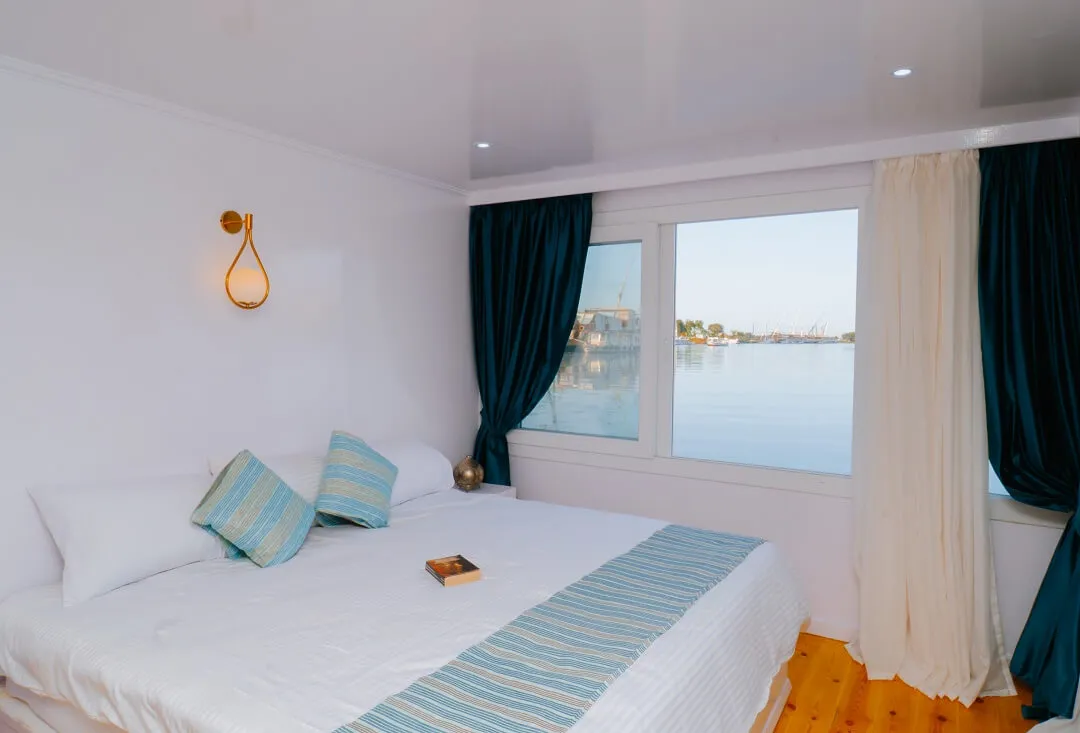
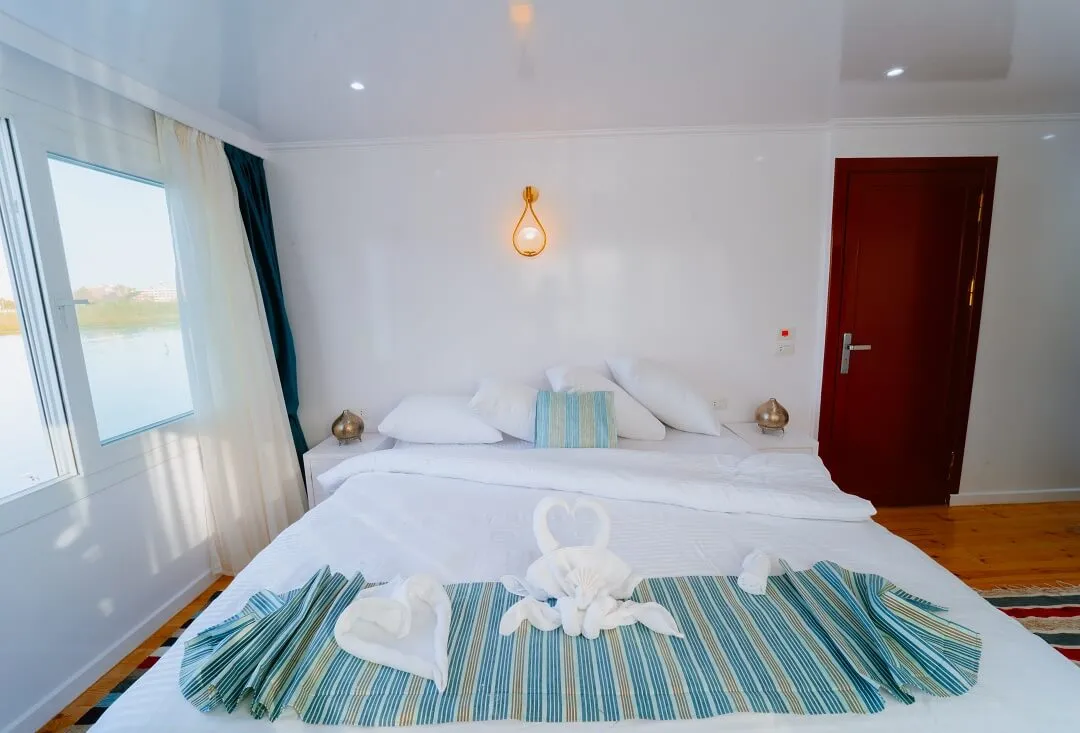
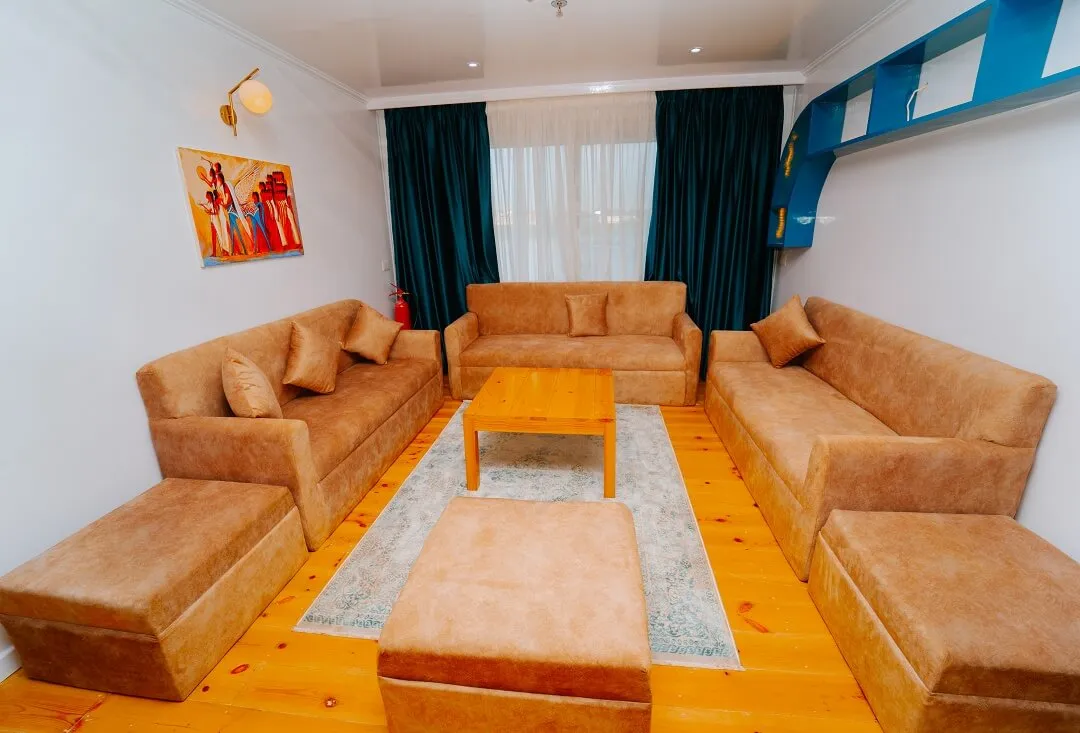
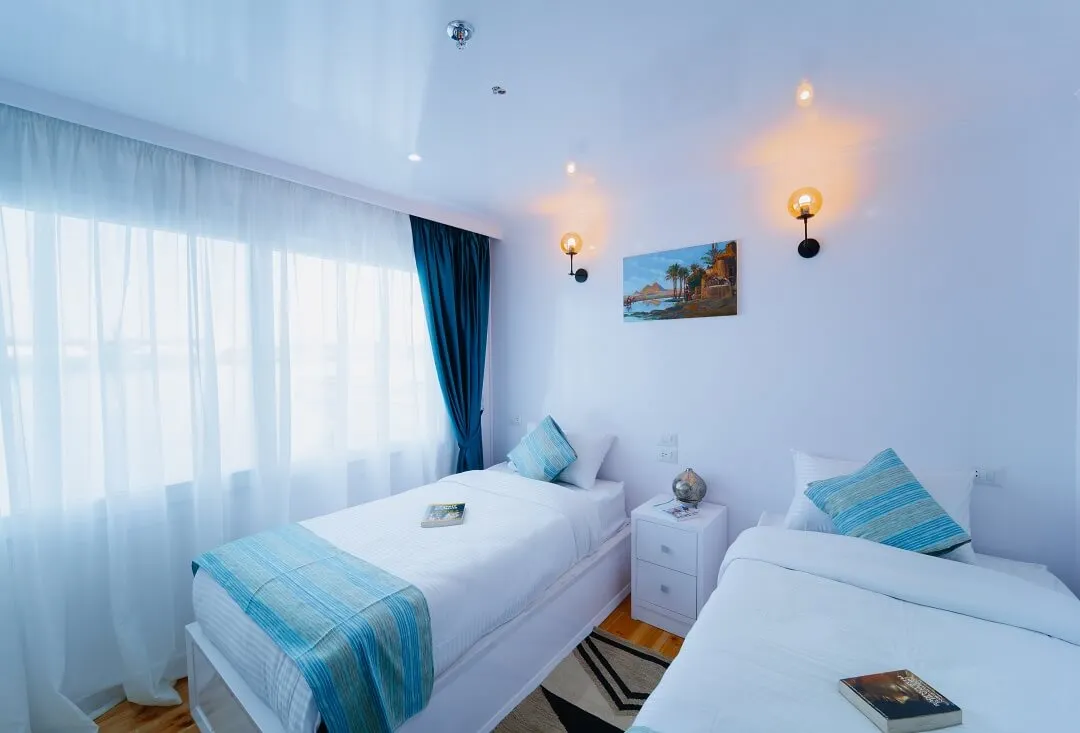
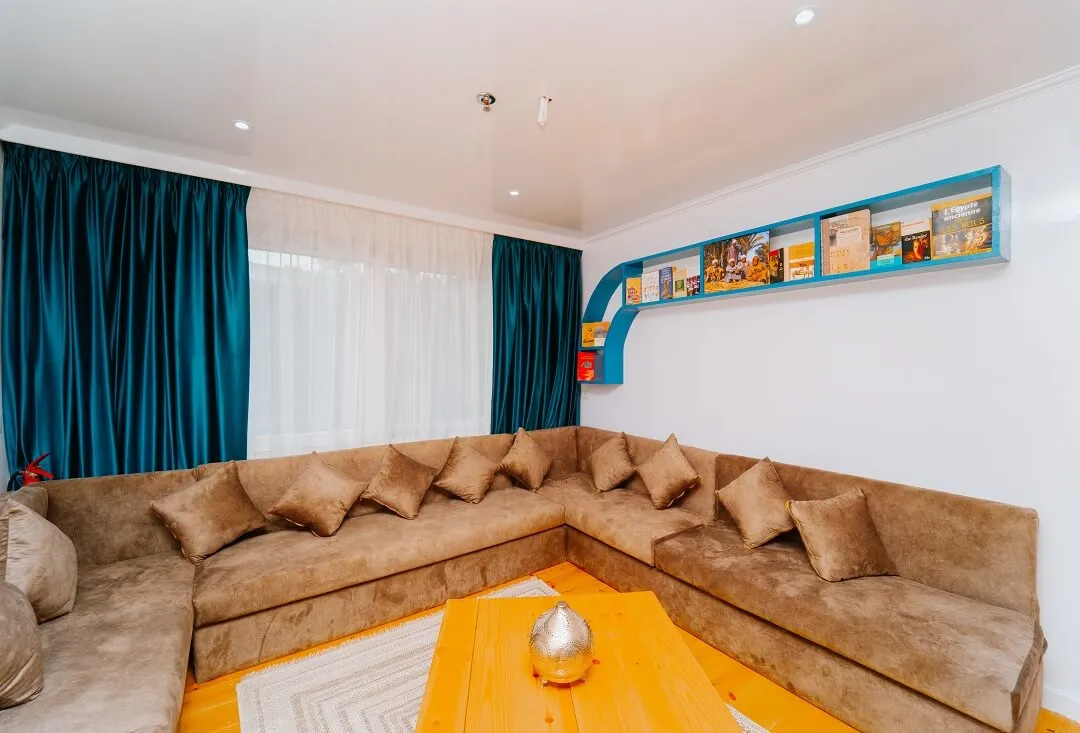
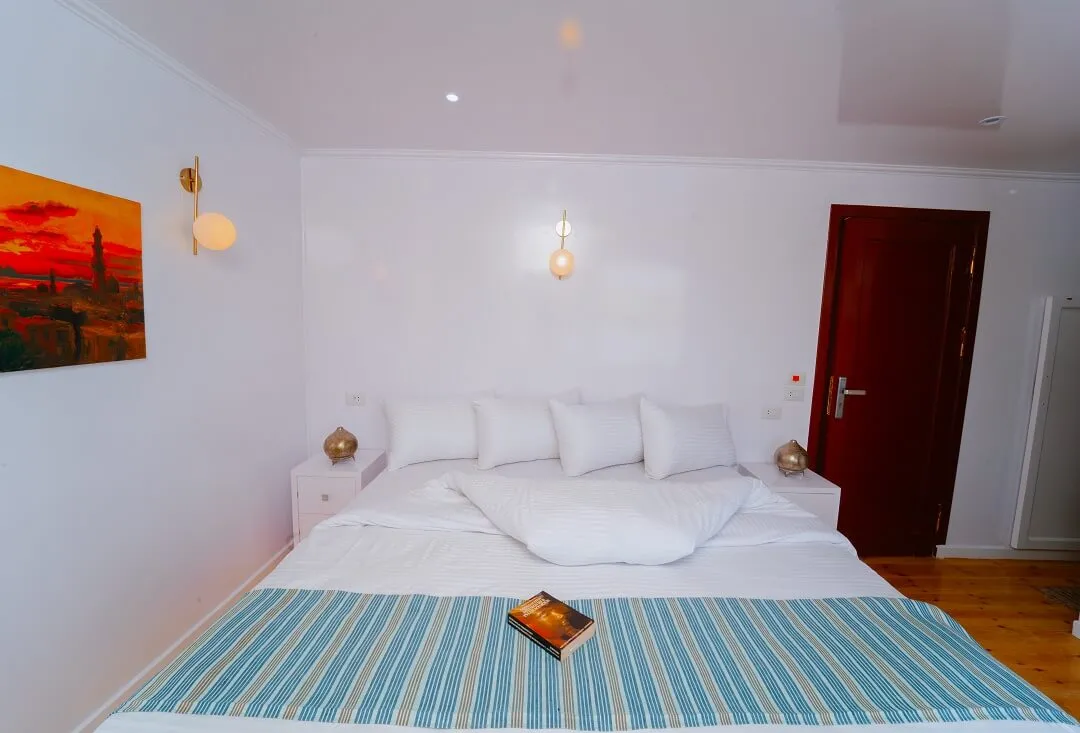
Our own boat reflects that scale. It features a select number of spacious, beautifully furnished cabins, each with panoramic Nile views — and on deck, the space is yours rather than shared with a crowd.

Dahabiya or Cruise Ship? An Honest Comparison
We will not pretend the large ships have no place. They do. Here is the real difference, side by side.
| Dahabiya with us | Large Nile cruise ship | |
| Guests on board | 8–14 | Often 150+ |
| Itinerary | Flexible | Fixed schedule |
| Guiding | Private Egyptologist | Group tours |
| Mooring access | Villages and riverbanks large ships cannot reach | Main docks only |
| Dining | Freshly made Egyptian and international dishes, daily | Buffet |
| Pace | Set by wind, current and your interest | Set by the timetable |
| Cost | From €750 per person for 4 days | Large ships start around $400–$600 for a 4-day Luxor–Aswan trip |
The large ships offer comfortable rooms, buffet meals and group tours — less personal, but solid value for a first-time visitor on a tight schedule. If your priority is covering ground cheaply, that is a reasonable choice, and we would rather tell you that than sell you the wrong boat.
But if you want the river itself to be part of the holiday — not just the corridor between temples — keep reading.
Our Routes and Durations
We run journeys from four days up to two weeks, in both directions along the river, and northward all the way to Cairo. Our longer programmes run 7 days Luxor–Qena–Aswan, 11 days Luxor–Cairo, and 14 days Aswan–Cairo.
| Journey | Route | Best for | From |
| 4 days | Aswan ↔ Esna | The key temples between Aswan and Esna | €750 per person |
| 5 days | Esna → Aswan | Our most requested sailing | €1,500 per person (5–7 day band) |
| 7 days | Luxor – Qena – Aswan | A more complete Luxor–Aswan experience | €1,500 per person (5–7 day band) |
| 11 days | Luxor → Cairo | Adding Abydos, Dendera and Cairo’s pyramids | Confirm with us |
| 14 days | Aswan → Cairo | The full Nile journey | €3,500 per person |
On the shorter side, we also offer 3-, 4- and 5-night itineraries between Luxor and Aswan, taking in Karnak, Kom Ombo, Edfu and Philae, with time built in to simply relax and watch the Nile scenery go past.
A quick word on direction. Aswan-to-Luxor and Luxor-to-Aswan cover broadly the same monuments in reverse order. Which one suits you usually comes down to your flights and where you want to end up. Tell us your arrival and departure cities in the enquiry form and we will tell you which direction makes your trip simpler.
Inside a 5-Day Dahabiya Cruise: Esna to Aswan, Day by Day
This is our four-night, five-day sailing, and it is the clearest illustration of how a dahabiya day actually unfolds.
Day 1 — Luxor, Karnak, Valley of the Kings, then Esna
We collect you around 7:30 a.m. from your Luxor hotel or the airport, and your guide joins you on the way to the first stop: Karnak Temple. Karnak is the largest religious site in the world, a sprawl of temples, pylons and chapels built across the Twelfth to Twentieth Dynasties, on ground believed to be where creation itself began.
Then to the Valley of the Kings — the principal burial ground for Egypt’s royal pharaohs, from Thutmose I through to Ramesses X or XI.
Afterwards you are driven to Esna, about 50 km and roughly an hour away, where you meet the boat, check in, and we set sail for Aswan.
Day 2 — El Kab, Edfu, Bassao Island
Breakfast happens mid-river, while we sail toward the El Kab Necropolis — known in antiquity as Nekheb. It is the city of the goddess Nekhbet, known for rock-cut tombs that open a window onto the early Eighteenth Dynasty and the unification of Egypt; among the most notable are the tombs of Ahmose son of Ibana, Paheri and Setau.
From there we sail on to Edfu and the Temple of Horus — dedicated to the falcon god and preserved almost entirely in its original form, with intricately carved reliefs, imposing columns and intact statues.
The night is spent moored at Bassao Island, stargazing on deck with nothing but the sound of the water.
Day 3 — Bassao, Gebel el-Silsila, Kom Ombo, El Herdiab
The morning is spent on Bassao Island itself, meeting residents and learning how life works there — weddings, fishing, schooling, making a living. This is the part of the trip guests tend to describe first when they get home, and it is not available to a ship that can only dock in town.
Then to Gebel el-Silsila, the sandstone quarries and chain of mountains that supplied the stone for most of Egypt’s great temples.
Back aboard, we sail to Kom Ombo — the double temple, built perfectly symmetrically on a promontory at a bend in the Nile, dedicated to both Horus the falcon god and Sobek the crocodile god, and one of the best-preserved temples in Egypt. We moor for the night at El Herdiab Island.

Day 4 — Daraw, Philae, Aswan
We sail to Daraw, a busy market town best known for its camel market — genuinely not a sight you will stumble across twice.
Then on to Aswan and Philae Temple, moved from its original island to save it from the rising water. It is dedicated to Isis — goddess of healing, birth and magic — as well as Osiris and Horus, and its walls carry the scenes of Isis restoring Osiris to life, giving birth to Horus, and mummifying Osiris after his death. Your final night is on board.
Day 5 — Aswan
A farewell breakfast in Aswan, where the desert meets the riverbank, then a transfer to Aswan airport or your hotel.
The five-day sailing also takes in the narrowest passage of the Nile at Gebel el-Silsila, where the river squeezes between huge sandstone cliffs, and Aswan itself offers active souks, the Nubian Museum, and an optional excursion to Abu Simbel before you fly out.
The Longer Journeys: 7, 11 and 14 Days
If you have more than a week, the river opens up considerably.
11 days, Luxor to Cairo. Day one begins in Luxor at 8:00 a.m. with Karnak Temple and the Valley of the Kings, before you check into your cabin and sail north toward Qena with lunch on deck, afternoon tea on the sun deck, and dinner as the light turns. Further north you visit Dendera Temple and its astronomical ceiling, sail beneath the Nagaa Hammadi Bridge and its historic railway crossing, explore Tell El Amarna — the revolutionary city of Akhenaten — along with the necropolis of Tuna El Gabal, the rock-cut tombs of Beni Hassan, and the city of Minya.
The programme includes full-board accommodation, expert-led sightseeing and all soft beverages. It does not include international or domestic flights, or gratuities for crew and guides, which are left to your discretion.
14 days, Aswan to Cairo. This one starts in Aswan with Philae Temple and the High Dam before you board the dahabiya in the afternoon and sail toward Kom Ombo. It combines Cairo’s pyramids, the Sphinx, grand museums and bazaars with temples reachable only by small boat.
7 days, Luxor–Qena–Aswan sits between the two: enough time for the full Luxor–Aswan corridor without rushing, in the same price band as the 5-day sailing.

What’s Included on Board
Every cruise includes full-board accommodation, guided sightseeing, soft drinks, and personal service from our crew. Premium packages may also include private tours and airport transfers.
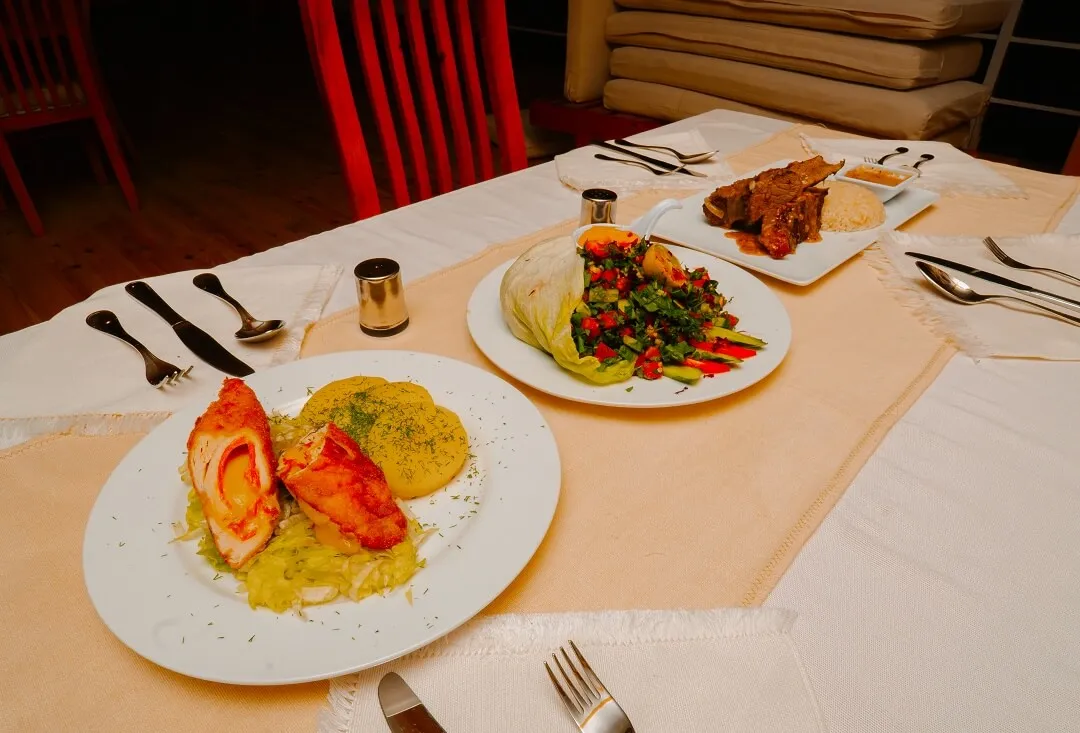
On food: our chef prepares freshly made Egyptian and international dishes every day. Not a heated tray in sight.
On guiding: a private Egyptologist accompanies the journey, which on a boat this size means you can actually ask questions and get answers, rather than following a raised umbrella.
On departures and flexibility: our cruises run on guaranteed departures, with elegant cabins and tailor-made itineraries for a genuinely private Nile experience.
A note on honesty here. Anything not listed above — Wi-Fi, alcoholic drinks, single supplements, specific cabin configurations, deposits and cancellation terms, child policies, or dietary arrangements such as vegetarian, vegan or halal menus — we will confirm to you directly rather than publish a promise we cannot guarantee for your specific dates. Ask us in the enquiry form and you will get a straight answer.
Who a Dahabiya Cruise Actually Suits
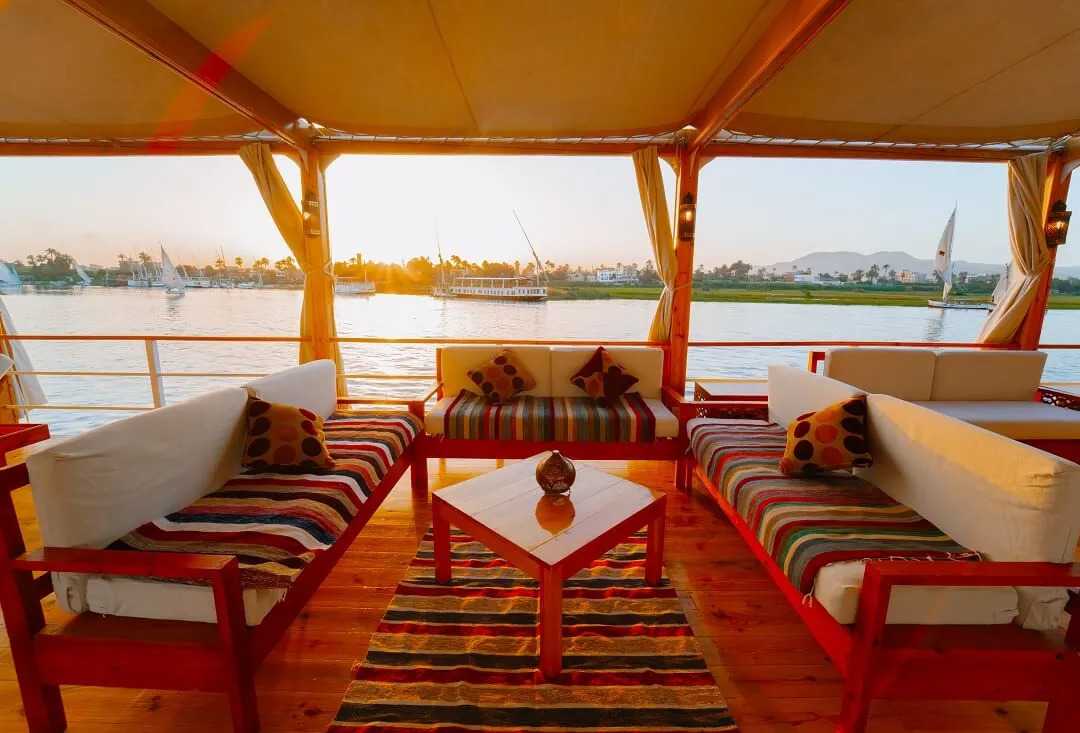
Couples and honeymooners. Sunsets from a private deck, candlelit dinners on the river, and waking up beside Kom Ombo Temple with no crowds in sight — no large ship offers that level of romance and privacy at this price.
Families and small groups. The boat can be exclusively chartered for private journeys, honeymoons, family celebrations or small group retreats.
Travellers who want the river, not just the sites. If a village walk and an afternoon of doing absolutely nothing on deck sounds like the best part of your holiday rather than dead time, this is your boat.
Chartering vs booking cabins. Booking individual cabins means sharing the boat with a handful of other guests. Chartering means the whole dahabiya is yours, with the itinerary shaped around your group. Tell us your group size and we will tell you which works out better for you.
When to Sail
| Season | Conditions | Notes |
| October–April | Around 20–28°C | The ideal window — mild weather for both sightseeing and sailing |
| December–January | Peak of the peak | Book 2–3 months ahead |
| May–September | Hotter, 35–42°C | Quieter and more affordable; air-conditioned cabins and a shaded deck make it manageable if sightseeing is scheduled for early morning and late afternoon |
Summer is not the disaster people assume, provided you accept the rhythm: temples early, deck and shade in the middle of the day, temples again as the light softens. The river is also noticeably emptier.
Frequently Asked Questions
What is a dahabiya Nile cruise?
A traditional Egyptian wooden sailing boat, in use on the Nile since the nineteenth century, carrying 8 to 14 guests in air-conditioned en-suite cabins with an onboard chef and a sun deck.
How is it different from a regular Nile cruise ship?
Scale and access. Eight to fourteen guests instead of hundreds, a flexible itinerary, a private Egyptologist, and mooring points large ships simply cannot reach.
How much does a dahabiya Nile cruise cost?
From €750 per person for four days. Longer routes run from €1,500 for 5–7 days, up to €3,500 for the 14-day Aswan-to-Cairo journey.
How many days is a typical cruise?
Our core itineraries are 3, 4 and 5 nights between Luxor and Aswan, with 7-, 11- and 14-day options for longer trips.
What’s the best route?
Four days covers the key temples between Aswan and Esna. Five to seven days between Luxor and Aswan gives a more complete experience. With more time, 11 to 14 days adds Abydos, Dendera and the pyramids at Cairo.
Do dahabiyas sail from Luxor or Esna?
Both, depending on the itinerary. On our five-day sailing, sightseeing starts in Luxor and you transfer roughly an hour by road to Esna — about 50 km — to board.
Does the cruise visit the Valley of the Kings?
Yes, on day one of the five-day Esna-to-Aswan itinerary, and on day one of the 11-day Luxor-to-Cairo journey.
Does it visit Edfu and Kom Ombo?
Yes — the Temple of Horus at Edfu on day two, and the double temple at Kom Ombo on day three.
Are meals included?
Yes, all cruises are full board, and meals are freshly prepared Egyptian and international dishes.
Are drinks included?
Soft drinks are included. Anything beyond that, ask us and we will confirm.
Is an Egyptologist guide included?
Yes — a private Egyptologist guide is part of the experience.
Can I charter the whole boat?
Yes. The dahabiya can be exclusively chartered for private journeys, honeymoons, family celebrations or small group retreats.
What cabins are available?
Spacious, beautifully furnished cabins, each with panoramic Nile views. We offer both suites and standard rooms. Send us your party size and we will confirm exactly what is available for your dates.
Is it suitable for a honeymoon?
Yes — honeymoons are one of the reasons guests charter the boat.
What’s the best time of year?
October to April, when temperatures sit between 20 and 28°C.
How far in advance should I book?
For December and January, two to three months ahead. For other months, get in touch and we will tell you honestly what is still open.
Are transfers included?
Premium packages may include airport transfers and private tours. Confirm yours with us before you book flights.
Where does the cruise end in Aswan?
You disembark after a final breakfast in Aswan and transfer to Aswan airport or your hotel.
Is Wi-Fi available? What about air conditioning?
Cabins are air-conditioned. For connectivity on your specific dates, please ask us — we would rather confirm it than guess.
What should I pack, and what should I wear at the temples?
Ask us in the enquiry form and we will send guidance suited to your travel month, since a December sailing and a July sailing call for very different luggage.

The Next Step
A dahabiya Nile cruise in Egypt is not a booking you make in ninety seconds between meetings, and honestly, it shouldn’t be. The right route, the right direction, the right month and the right boat arrangement all depend on details only you know — how long you have, who is travelling, where you fly in and out, and what you most want from Egypt.
So here is what we suggest.
Fill in the enquiry form on this page. Tell us roughly when you want to travel, how many of you there are, and how many days you can give the river. We will come back to you with the available options for your dates, what is confirmed and what is not, and a clear answer on pricing, cabins and inclusions for your specific journey — no pressure, no obligation.
The Nile has been carrying travellers this way for two hundred years. There is no rush. But the good weeks in December and January do go early, so a short message now saves a long wait later.
Send us your dates. We will take it from there.

Plan Your Dahabiya Journey
Tell us roughly when you want to travel, how many of you there are, and how many days you can give the river. We’ll come back with the available options for your dates, what is confirmed and what is not, and a clear answer on pricing, cabins and inclusions.