
Picture a sunlit riverbank, a flash of red embroidery against crisp white cotton, and a woman in a black, see-through gown whose delicate patterns catch the light as she walks. That is often the first thing travelers remember about the Nile in the Nubian south: the clothing speaks before anyone says a word.
Nubian traditional clothing is far more than a pretty outfit. It is a visual language. Color, stitching, layering and jewelry all carry meaning, from who you are to where you belong. At turquoisedahabiyas, we love helping you understand these details before you travel, because once you can “read” what people are wearing, every Nile encounter feels richer.
In this guide, we walk you through what Nubian dress looks like, what each piece is called, what the colors and embroidery mean, and what is worn at weddings. You’ll also find simple tables to keep it all straight. When you finish reading, you’ll know exactly what to look for, and what to ask us about when you plan your own journey.
What Is Nubian Traditional Clothing?
Nubian traditional clothing refers to the distinctive garments worn by the Nubian people of southern Egypt and northern Sudan. It is characterized by colorful embroidery, flowing robes and cultural accessories that reflect a deep Nile heritage.
You may see it described in many ways: Nubian dress, Nubian attire, Nubian folk dress, Nubian heritage clothing or Nubian cultural clothing. They all point to the same idea: clothing that carries identity.
Here is the quick version:
- Flowing robes and gowns, made for comfort and movement
- Bright, expressive embroidery, especially in geometric patterns
- Layered pieces and accessories that complete the look
- Everyday simplicity and celebration-day color, both with a purpose
Think of it like a family crest you can wear. Only here, it’s stitched, draped and beaded rather than painted on a shield.
Why Nubian Dress Matters to Travelers
Many visitors to Egypt focus on temples, tombs and the river itself. That’s understandable. But the people along the Nile are part of the story too, and their clothing is one of the easiest ways into their culture.
Knowing a little about Nubian cultural attire helps you:
- Recognize what you’re seeing instead of just admiring it from a distance
- Ask better, more respectful questions when you meet local people
- Appreciate festivals and celebrations, where the clothing is at its most vivid
- Understand how Nubian identity differs from other parts of Egypt
And honestly, it makes for better photos too, because you’ll know why that red thread, that black overlay or that sash is there. If you want to see where this culture lives today, our guide to the Nubian village in Aswan is a good place to start.
The Main Pieces of Nubian Women’s Dress
If you take only one section away from this page, make it this one. Traditional Nubian women’s dress is built from several layers, and each layer has a name.
The Gemis
The gemis is the gown-like top. It forms the base of the outfit.
The Gurubaba
The gurubaba is a waist wrap. It’s one of the key pieces in the look, and as you’ll see below, it takes center stage in bridal wear.
The Tob
The tob (you may also see it written as tobe or thobe) is a decorative sash that adds to the layered effect.
The Jarjar
The jarjar (also spelled gergar) is a black transparent tulle dress worn over the other garments. It is decorated with stylized drawings in the same color, which gives it a subtle, tone-on-tone elegance. It symbolizes modesty and cultural identity, and it is one of the most recognizable features of Nubian women’s clothing.
Here’s everything in one place:
| Piece | What it is | Why it matters |
| Gemis | Gown-like top | The foundation of the outfit |
| Gurubaba | Waist wrap | A key layer, central in bridal wear |
| Tob | Decorative sash | Adds color and detail |
| Jarjar | Black transparent tulle dress with stylized drawings in the same color | Symbolizes modesty and cultural identity |
When you picture a Nubian black tulle dress layered over color, you’re picturing the jarjar at work. The contrast between the dark, light-catching tulle and the brighter layers beneath is a big part of why this style stands out.

What Do Nubian Men Wear?
Men’s clothing is simpler in structure, but it’s every bit as much a part of the tradition.
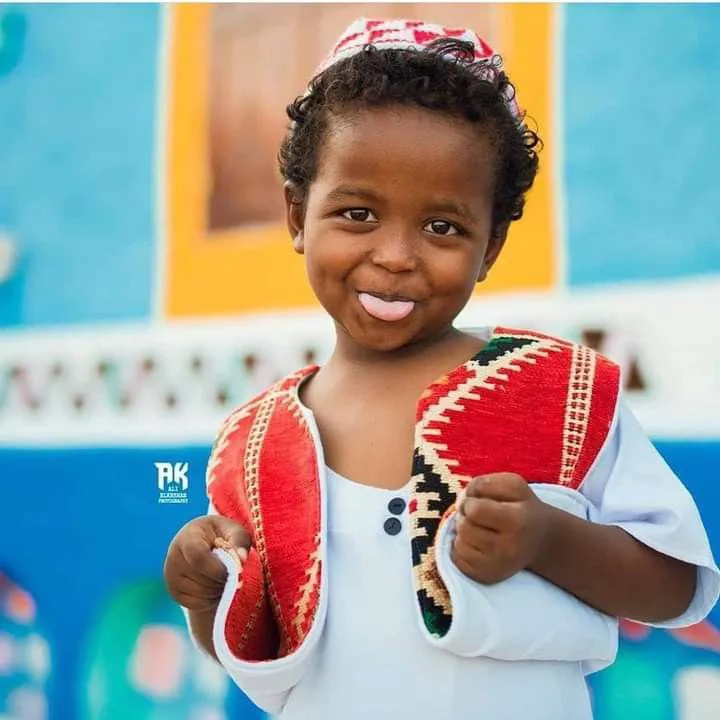
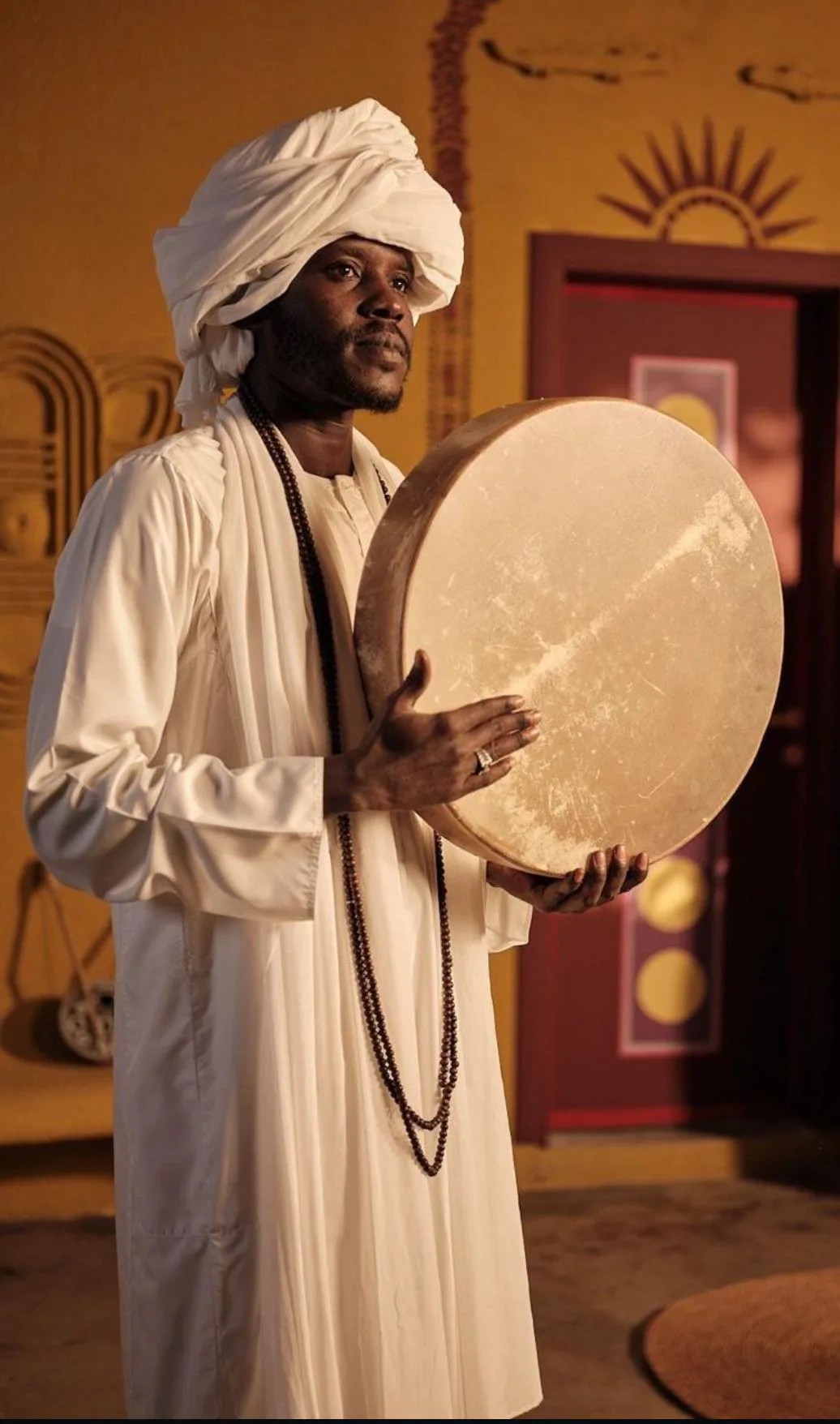
Nubian men traditionally wear the jalabiya or kanzu, a long, loose-fitting white robe. You’ll see the same garment spelled several ways, including jellabiya, galabiya or gallabiya. It’s the kind of outfit that makes immediate sense in the heat: loose, light and easy to move in.
To finish the look, men often add one of these:
- A turban
- A tarboosh (a felt cap)
- A headscarf
For footwear, traditional sandals are called nila for men (and ndala for women).
| Men’s item | Description |
| Jalabiya / kanzu | Long, loose-fitting white robe |
| Turban | Head covering |
| Tarboosh | Felt cap |
| Headscarf | Head covering |
| Nila | Traditional sandals |

The Colors: Why White Comes First
Color is where Nubian dress really sings, but there’s a practical logic behind it.
White is essential for daily wear because it reflects sunlight. It’s simple, smart and suited to life by the river.
Then come the celebrations. For festivals and special occasions, vibrant colors such as red, blue, green and indigo take over. That’s when you’ll see Nubian festival clothing and Nubian celebration attire at its most striking, and when indigo-dyed fabrics and bold embroidery stand out against everyday white.
| Occasion | Typical color approach |
| Daily wear | White, to reflect sunlight |
| Celebrations and festivals | Vibrant red, blue, green and indigo |
| Married women’s dress | More elaborate, colorful embroidery |
It’s a bit like the difference between a weekday and a holiday. Same person, same place, completely different energy.

Embroidery: The Language in the Stitches
If color is the headline, Nubian embroidery is the fine print, and it’s worth reading.
Embroidery patterns and colors can indicate social status, age and marital status. That means the stitching isn’t only decoration. It communicates something about the wearer.
- Unmarried women wear delicate designs
- Married women wear bold, vivid embroidery, especially in red
Compared with other styles of dress in Egypt, Nubian clothing is known for its bright colors and intricate geometric embroidery. Once you spot the patterns, you’ll start noticing them everywhere. For a wider look at Egyptian dress traditions, see our guide to Egyptian traditional clothes.
| Wearer | Embroidery style |
| Unmarried women | Delicate designs |
| Married women | Bold, vivid, often red |

Accessories and Jewelry: The Finishing Touches
No Nubian outfit is complete without its accessories. These small details add texture, sparkle and meaning.
Common pieces include:
- Suksuk: beaded necklaces, bracelets and anklets
- Wadi: red thread braided into the hair
- Silver jewelry
- Ndala: traditional sandals for women
- Nila: traditional sandals for men
So when you see Nubian traditional jewelry, such as suksuk, it’s part of the full picture rather than an afterthought. The beads, the red hair thread and the silver all work with the garments to complete the look.
| Accessory | What it is |
| Suksuk | Beaded necklaces, bracelets, anklets |
| Wadi | Red thread braided into the hair |
| Silver jewelry | Traditional jewelry pieces |
| Ndala | Women’s sandals |
| Nila | Men’s sandals |

Nubian Wedding Attire
Weddings are where Nubian ceremonial dress reaches its fullest expression.
Nubian brides wear a colorful gurubaba with a white loose dress and a sari-like cloth. The bright gurubaba against the white dress makes the bride instantly recognizable.
Grooms and other men wear stark white, textured cotton jalabiyas with embroidered caps. It’s a clean, striking contrast: the bride in color, the men in crisp white.
| Wedding role | What they wear |
| Bride | Colorful gurubaba, white loose dress, sari-like cloth |
| Men | Stark white textured cotton jalabiya, embroidered cap |
If you’re traveling as a couple or planning a honeymoon, this is a lovely piece of culture to know about. It shows how deeply clothing is tied to life’s biggest moments.

How Nubian Clothing Differs From Other Egyptian Dress
You might be wondering how this compares with what you’ve seen elsewhere in Egypt. Here’s the short answer.
Nubian clothing stands out for its bright colors, intricate geometric embroidery and the distinctive black jarjar overlay. By contrast, the traditional dress common in other Egyptian regions tends to be the simpler white galabiya.
| Feature | Nubian dress | Other Egyptian traditional dress |
| Color | Bright and varied | Simpler, often white |
| Embroidery | Intricate and geometric | Less elaborate |
| Signature layer | Black jarjar overlay | Not a defining feature |
Is Nubian Traditional Clothing Still Worn Today?
Yes. Nubian traditional attire is still worn during special occasions, festivals and weddings, and it remains a symbol of cultural identity and connection to Nile heritage.
So you’re not stepping into a museum. This is living culture, and the clothing is part of how it’s passed on. For more on Nubian heritage in the region, see our article on the Nubian Museum in Aswan, and if you’re curious about rural life along the river, read about countryside Egypt.

Nubian Clothing at a Glance
Need a fast reference? Here’s your cheat sheet.
| Question | Quick answer |
| Who wears it? | The Nubian people of southern Egypt and northern Sudan |
| Women’s main pieces | Gemis, gurubaba, tob, black tulle jarjar |
| Men’s main pieces | Jalabiya or kanzu, with turban, tarboosh or headscarf |
| Everyday color | White, to reflect sunlight |
| Celebration colors | Red, blue, green, indigo |
| What embroidery tells you | Social status, age, marital status |
| Key accessories | Suksuk, wadi, silver jewelry, ndala and nila sandals |
| Worn today? | Yes, at special occasions, festivals and weddings |
Why Learn This Before You Travel With turquoisedahabiyas?
We believe the best journeys are the ones where you understand what you’re looking at. A little knowledge about Nubian dress, Nubian textiles and Nubian traditional fashion turns a pleasant trip into a meaningful one.
When you travel with us at turquoisedahabiyas, you’re not just ticking sights off a list. You’re stepping into a living culture along the Nile, and we want you to feel confident, curious and welcome while you do it.
A few simple ways to put this guide to use:
- Look for the layers. Spot the gemis, the gurubaba and the black jarjar.
- Notice the embroidery. Delicate or bold? It tells a story.
- Pay attention to color. White for everyday life, brighter shades for celebration.
- Ask with respect. People are usually glad to share what their clothing means.
Ready to Plan Your Nile Journey?
If this guide has made you curious about Nubian culture and what it’s like to experience the Nile with a team that cares about the details, the next step is easy.
Fill out the enquiry form on this page to get more information, check the available details for your dates and talk through your journey with the turquoisedahabiyas team. Tell us who’s traveling, what you’d love to see and any questions you have. We’ll take it from there.
Your Nile story starts with a single message. Send us your enquiry today. You can also read our Egypt Nile cruise tips or browse the Egypt travel blog for more inspiration.
What is Nubian traditional clothing?
It refers to the distinctive garments worn by the Nubian people of southern Egypt and northern Sudan, characterized by colorful embroidery, flowing robes and cultural accessories that reflect their Nile heritage.
What are the main components of traditional Nubian women’s dress?
It typically includes the gemis (gown-like top), the gurubaba (waist wrap) and the tob (decorative sash), often layered with a black tulle jarjar over the top.
What do Nubian men traditionally wear?
Men traditionally wear the jalabiya or kanzu, a long, loose-fitting white robe, often paired with a turban, tarboosh (felt cap) or headscarf.
What colors are common in Nubian traditional clothing?
White is essential for daily wear to reflect sunlight, while vibrant colors like red, blue, green and indigo are used for celebrations. Married women often wear more elaborate, colorful embroidery.
What is the significance of embroidery in Nubian dress?
Embroidery patterns and colors indicate social status, age and marital status. Unmarried women wear delicate designs, while married women wear bold, vivid embroidery, especially in red.
What is the jarjar in Nubian clothing?
The jarjar is a black transparent tulle dress worn over other garments by Nubian women. It is decorated with stylized drawings in the same color and symbolizes modesty and cultural identity.
What accessories are worn with Nubian traditional dress?
Common accessories include suksuk (beaded necklaces, bracelets and anklets), wadi (red thread braided into the hair), silver jewelry, and traditional sandals called ndala for women and nila for men.
What is worn at Nubian weddings?
Brides wear a colorful gurubaba with a white loose dress and a sari-like cloth, while men wear stark white textured cotton jalabiyas with embroidered caps.
How does Nubian clothing differ from other Egyptian traditional dress?
It stands out for its bright colors, intricate geometric embroidery and the distinctive black jarjar overlay, in contrast with the simpler white galabiyas common in other Egyptian regions.
Is Nubian traditional clothing still worn today?
Yes. It is still worn during special occasions, festivals and weddings, and it remains a symbol of cultural identity and connection to Nile heritage.