
Christmas in Egypt tells a story that is both familiar and distinctly Egyptian. You may recognize the decorated trees, twinkling lights, stars, and images of the Nativity, but the country’s Christmas traditions also reflect centuries of Coptic Christian worship, local customs, and cultural heritage.
The most meaningful Egypt Christmas symbols include the Coptic cross, the Star of Bethlehem, Nativity images, religious icons, candles, and church incense. Modern decorations sometimes incorporate ancient Egyptian motifs, including pyramids, scarabs, and the ankh, although these are not traditional Christian symbols of the Nativity.
For travelers spending Christmas in Egypt, understanding these distinctions reveals a celebration that goes far beyond seasonal decorations. It is an opportunity to discover how faith, history, family, and Egyptian identity come together during one of the country’s most important Christian festivals.
Egypt Christmas Symbols at a Glance
- Coptic cross – the central, year-round symbol of Egyptian Christianity.
- Star of Bethlehem and Nativity scenes – images that recall the birth of Jesus and the journey of the Magi.
- Icons, candles and incense – the sacred atmosphere of Coptic worship.
- Trees, lights and Baba Noël – modern festive customs shared with the wider world.
- Ankh, pyramids and scarabs – ancient Egyptian motifs used as decoration, not as religious symbols.
- January 7 – the date of the Coptic Orthodox Christmas feast.
What Are the Main Christmas Symbols in Egypt?
Egyptian Christmas symbolism can be understood through three overlapping traditions: Coptic Christian religious symbols, international Christmas decorations, and Egyptian-inspired festive designs.
| Symbol | Meaning or significance | Where you may encounter it |
|---|---|---|
| Coptic cross | Christian faith, Christ’s sacrifice and resurrection | Churches, religious artwork, ornaments |
| Star of Bethlehem | The star associated with the journey of the Magi | Nativity scenes, Christmas trees |
| Nativity scene | The birth of Jesus Christ | Churches and festive displays |
| Coptic icons | Sacred images of Christ, Mary, and saints | Coptic churches |
| Candles | Light, prayer, and devotion | Churches and religious observances |
| Incense | Worship and prayers rising to God | Coptic liturgies |
| Christmas tree | International festive tradition | Homes, hotels, and commercial spaces |
| Baba Noël | Egyptian name for Father Christmas | Seasonal decorations and celebrations |
| Ankh, pyramids, scarabs | Ancient Egyptian cultural imagery, sometimes adapted into ornaments | Souvenirs and themed decorations |
| Fanoos lantern | Egyptian decorative tradition, especially associated with Ramadan | Lantern displays and occasional festive designs |
These symbols do not all have the same religious status. The cross, Nativity images, and icons belong to Christian religious traditions, while ancient Egyptian-inspired ornaments are primarily decorative expressions of cultural identity.
Why Does Egypt Celebrate Christmas on January 7?
One of the most distinctive aspects of Christmas in Egypt is its date.
January 7
The Coptic Orthodox Church celebrates the Nativity of Christ on January 7, corresponding to 29 Kiahk in the Coptic calendar in the present calendar period.
December 25
Many Western Christian churches observe Christmas on December 25 using the Gregorian calendar. The difference is rooted in calendar traditions rather than a different understanding of the birth of Jesus.
This gives the Christmas season in Egypt two recognizable dates. December 25 is observed by some Christian communities and is visible in international holiday celebrations, while January 7 is the major Christmas feast for Egypt’s Coptic Orthodox community.
For visitors, this means that festive displays may appear during December, while important Coptic religious celebrations continue into early January.
The Coptic Cross: A Central Symbol of Egyptian Christianity
The Coptic cross is among the most recognizable symbols of Christianity in Egypt.
Different cross designs appear in Coptic art, church architecture, manuscripts, textiles, and devotional objects. Some are intricately carved, while others feature geometric or floral patterns.
The cross represents the crucifixion and resurrection of Jesus Christ, central beliefs of Christianity. At Christmas, its presence connects the celebration of Christ’s birth with the wider Christian understanding of his life and mission.
Visitors exploring Egyptian churches will notice that the cross is not limited to Christmas. It is a year-round religious symbol, appearing prominently in church interiors and religious artwork.
Is the ankh the same as the Coptic cross?
No. Although both are sometimes called Egyptian crosses, they come from different historical and religious contexts.
The ancient Egyptian ankh
The ancient Egyptian ankh, identifiable by its looped upper section, was associated with life in the religion and art of ancient Egypt.
The Christian cross
The Christian cross represents Christian beliefs concerning Jesus Christ.
Their similar shapes have inspired cultural and artistic comparisons, but they should not be treated as interchangeable religious symbols.
The Star of Bethlehem and Egyptian Nativity Scenes
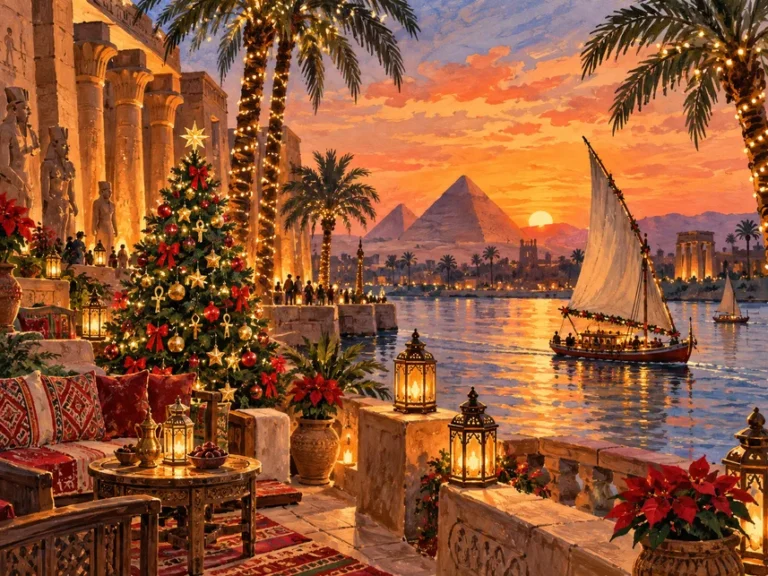
The Star of Bethlehem is another familiar Christmas symbol in Egypt.
In the Gospel of Matthew, a star guides the Magi toward the child Jesus. Christian Christmas traditions subsequently adopted the star as a visual symbol of the Nativity.
In Egypt, star-shaped decorations can appear above Christmas trees, in church-related displays, and in festive arrangements.
The Nativity scene also represents an important element of the celebration. Typical Christian Nativity imagery includes Mary, Joseph, the infant Jesus, shepherds, and angels.
These images help tell the biblical story of Christmas through visual art.
The role of the Virgin Mary in Coptic tradition
The Virgin Mary holds a particularly important position in Coptic Orthodox worship.
The Coptic Church honors Mary as the Theotokos, meaning Mother of God. The period preceding Christmas includes special hymns and praises devoted to her, particularly during the Coptic month of Kiahk.
For travelers interested in Egyptian Christian history, images of Mary and the infant Jesus offer a meaningful introduction to Coptic religious art.
Coptic Icons, Candles, and Incense in Christmas Worship
While Christmas decorations outside churches may resemble those found around the world, Coptic worship has a distinctive visual and ceremonial character.
Coptic religious icons
Icons are an essential part of Coptic Christian artistic tradition. They depict Christ, the Virgin Mary, saints, angels, and religious events.
They are not simply seasonal decorations. Within Orthodox Christian tradition, they have a devotional and instructional role.
Candles and light
Candles appear in Coptic churches as expressions of prayer and reverence.
Light also carries a wider Christian association with Christ, making candles especially meaningful within the Christmas season.
Church incense
Incense is a characteristic feature of Coptic liturgy.
During services, priests use censers to burn incense, accompanied by prayers and hymns. Incense is associated symbolically with prayers rising toward heaven.
For visitors attending a permitted church service, the combination of icons, candlelight, incense, and Coptic hymnody can provide insight into the church’s living religious traditions.
Egyptian Christmas Decorations: Trees, Ankhs, Pyramids, and Lanterns
Egypt’s modern Christmas decorations often combine familiar international designs with visual references to Egyptian culture.
Christmas trees and festive lights
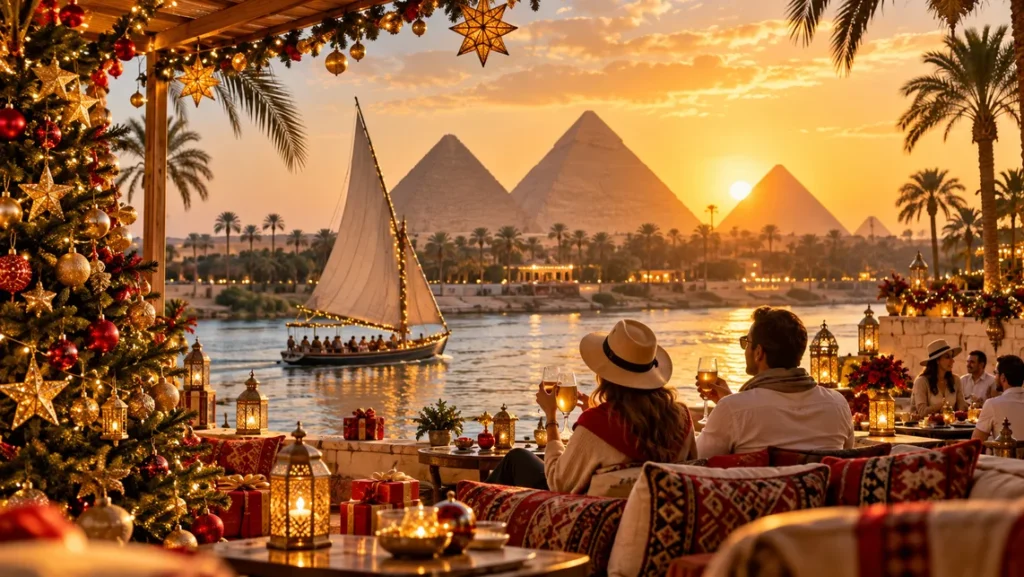
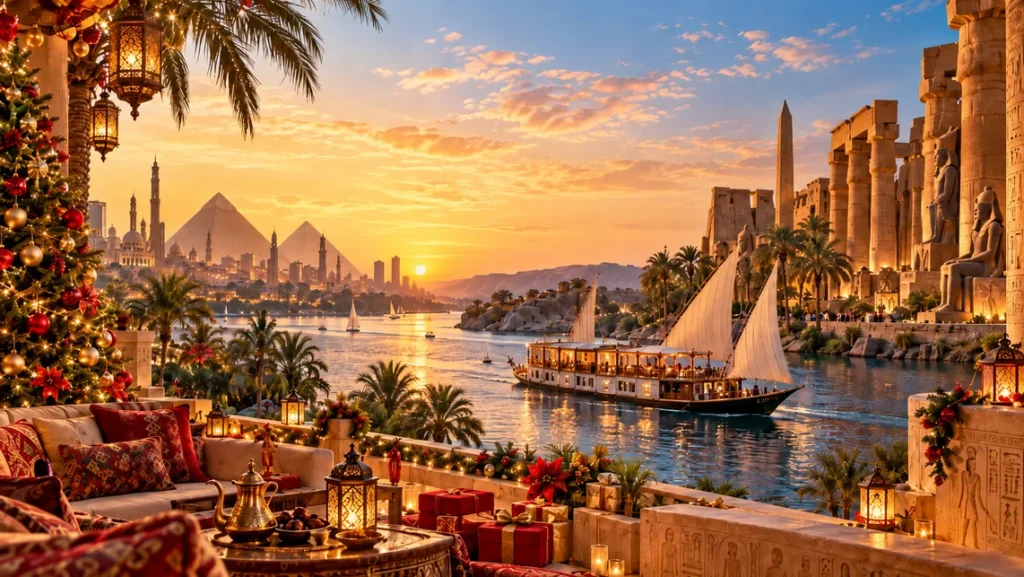
Christmas trees are a recognizable feature of the holiday season in many Egyptian hotels, shopping centers, and Christian homes.
Decorations may include colored lights, stars, baubles, ribbons, and artificial snow.
These belong largely to modern international Christmas culture rather than ancient Egyptian religious practice.
Ankh Christmas ornaments
Ankh-shaped ornaments combine an instantly recognizable Egyptian historical motif with modern holiday decoration.
They can be interesting souvenirs for travelers who enjoy ancient Egyptian art. However, the ankh itself should not be described as a traditional Coptic Christmas symbol.
Pyramids, scarabs, and pharaoh ornaments
Egyptian-themed decorations may feature miniature pyramids, pharaonic figures, scarab beetles, and hieroglyph-inspired designs.
Such objects reflect Egypt’s archaeological identity rather than traditional Nativity imagery.
A scarab ornament, for example, references the beetle’s significance in ancient Egyptian culture; it does not carry an established Christian Christmas meaning.
Are fanoos lanterns Christmas symbols?
The fanoos is a traditional Egyptian lantern, particularly associated with Ramadan celebrations.
Its colorful glasswork and decorative metal designs can also inspire broader festive displays. However, it would be inaccurate to present the fanoos as one of the principal historic Coptic Christmas symbols.
This distinction matters when interpreting Egyptian festive culture: not every Egyptian decorative object is specifically associated with Christmas.
Egyptian Christmas Traditions Beyond Decorations
Christmas in Egypt is not defined by ornaments alone. Its deeper significance lies in the religious observances and family traditions surrounding the feast.
The 43-day Holy Nativity Fast
Before celebrating Christmas, Coptic Orthodox Christians traditionally observe the Holy Nativity Fast, a 43-day period of spiritual preparation.
During the fast, observant believers follow dietary restrictions that generally exclude meat, dairy products, and eggs, with specific rules and exceptions governed by church practice.
Prayer, repentance, and special hymns are also important aspects of the season.
The fast gives Christmas an additional meaning: the celebration follows a period of preparation and religious reflection.
Coptic Christmas Eve services
On January 6, worshippers gather for the Christmas Eve liturgy.
The service includes prayers, biblical readings, hymns, and the celebration of the Eucharist. The use of incense, religious icons, and distinctive Coptic melodies makes the observance particularly recognizable.
The liturgical celebration leads into the January 7 feast, when families gather to celebrate the Nativity.
Traditional Egyptian Christmas food
After the Nativity Fast, food becomes an important part of family celebrations.
One of the best-known festive dishes is Egyptian fattah, or fatta, prepared with rice, bread, meat, and a seasoned sauce.
Sweet biscuits known as kahk may also be shared during the holiday period.
These foods illustrate how Egyptian Christmas combines Christian religious traditions with familiar Egyptian culinary customs.


Baba Noël: The Egyptian Father Christmas
Baba Noël, meaning Father Christmas, is the Egyptian name commonly used for the familiar Santa Claus figure.
Like Santa Claus elsewhere, Baba Noël is associated with gifts, festive decorations, and children’s celebrations.
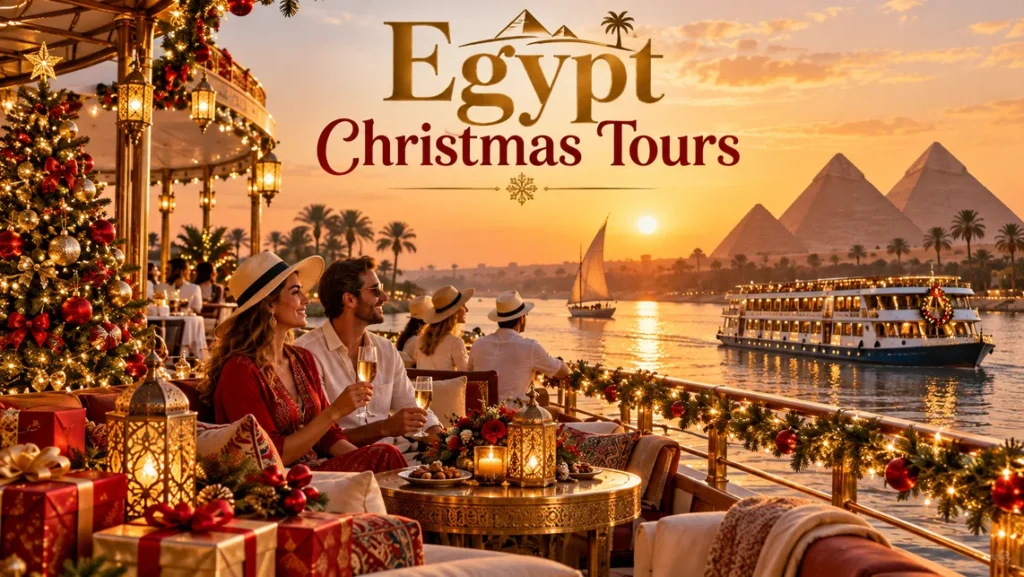
However, Baba Noël belongs primarily to modern popular Christmas culture. He should not be confused with the religious symbols of Coptic Christmas, which center on the Nativity and worship.
Where Can Travelers Experience Christmas Traditions in Egypt?
Egypt’s Christmas traditions are easiest to appreciate in places where Christian heritage and everyday life meet. These are the destinations that offer the richest context.
Coptic Cairo
Historic churches, icons, and religious architecture make this one of Egypt’s most valuable destinations for understanding Christian heritage. Visitors should distinguish ordinary sightseeing from active religious services.
Alexandria
Alexandria has a long Christian history closely associated with Saint Mark and the development of the Coptic Church. Its religious heritage offers another perspective on Egyptian Christianity.
Luxor and the Nile Valley

Travelers spending the holiday period in Upper Egypt can combine their interest in seasonal traditions with visits to ancient Egyptian sites, museums, and Nile landscapes.
For travelers exploring Egypt over Christmas and New Year, a Nile journey may complement time spent discovering Cairo’s churches and Christian heritage.
At Turquoise Dahabiya, we welcome enquiries from travelers interested in discovering the Nile as part of a wider Egypt holiday. If you are considering a Dahabiya cruise during the festive season, you can visit our website and use the enquiry form to discuss your plans, request journey details, and check availability.
Extend Your Journey South to Aswan
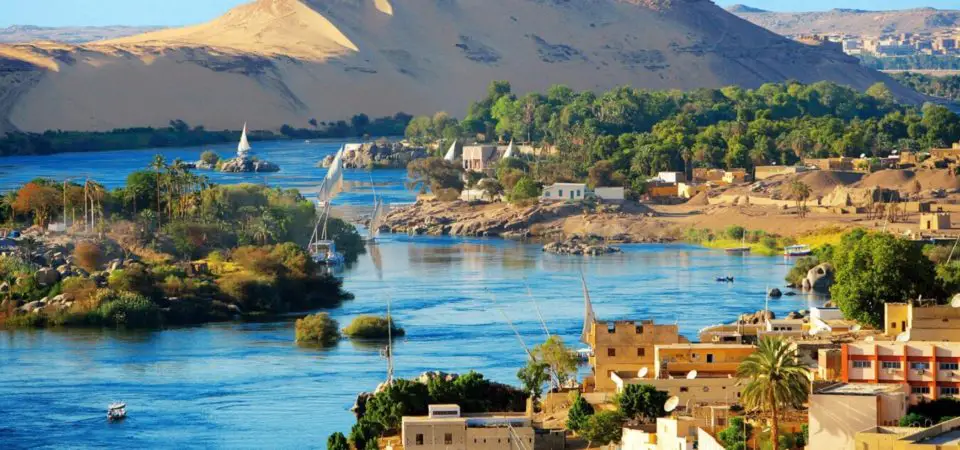
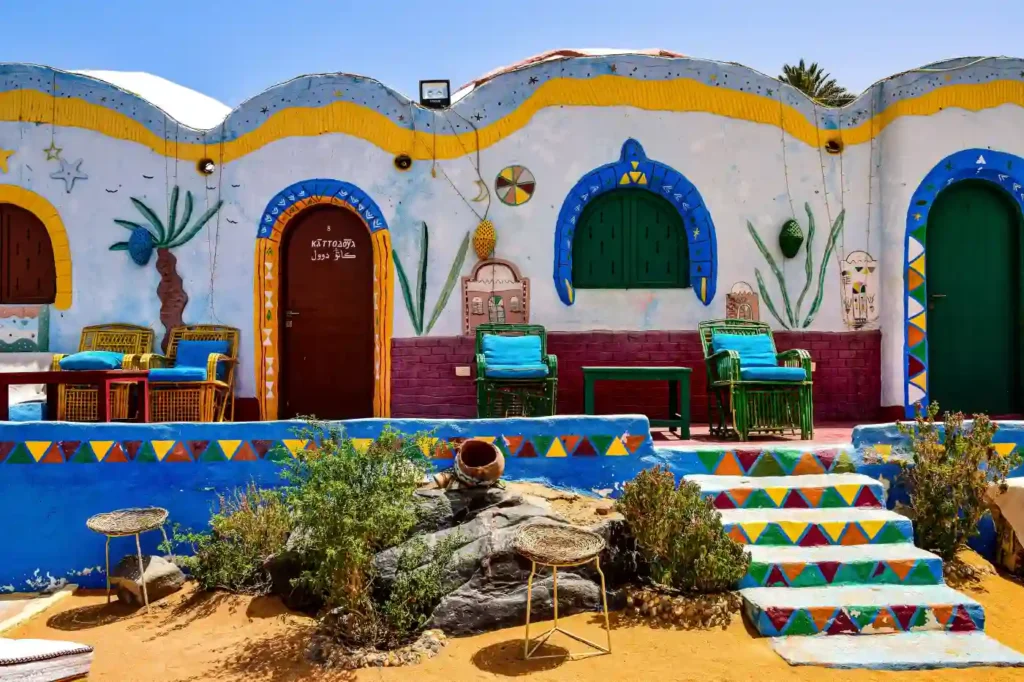
South of Luxor, Aswan shows another side of the Nile: granite rocks, felucca sails and the colourful houses of Nubian culture. If you are planning a longer trip, start with our guides to what to do in Aswan, things to do in Aswan, Egypt, Aswan day tours and Aswan Egypt tours.
Distances matter over the holidays, so check the Luxor to Aswan distance and the Aswan to Cairo distance before you fix your dates. Arriving from the Red Sea? Read about trips to Aswan from El Gouna.
Prefer to travel by water? Compare a Cairo to Aswan cruise or a cruise from Cairo to Luxor and Aswan with our Dahabiya sailing routes: the Luxor to Aswan Dahabiya cruise, the Aswan to Luxor Dahabiya cruise, the Aswan to Esna Dahabiya cruise and the Cairo to Aswan Dahabiya cruise.

More Aswan Guides
- Aswan and Luxor tour – combine two of Upper Egypt’s great cities.
- Nile cruise from Luxor to Aswan – the classic southbound route.
- Nubian Museum in Aswan – understand the region’s heritage.
- Nubian village in Aswan – a closer look at village life.

Spend the Festive Season Sailing the Nile
Turquoise Dahabiya offers private sailing journeys between Luxor and Aswan. Ask about the festive season and let us help you plan a journey around your dates.
Looking for more ideas? Explore our guides to Egypt Christmas 2026, Egypt Christmas tours and Christmas holidays in Egypt.
What Travellers Say About Turquoise Dahabiya on TripAdvisor
Read genuine reviews from guests who have sailed with Turquoise Dahabiya before you plan your own Nile journey.


Frequently Asked Questions About Egypt Christmas Symbols
The Coptic cross, Nativity imagery, religious icons, stars, candles, and incense are among the most important Christian symbols associated with the season. Trees and decorative lights are also common modern festive elements.
The date follows the Coptic Church’s traditional calendar for the Nativity. The difference from Western December 25 celebrations arises from calendar systems.
It represents the Christian faith and connects Christ’s birth with the wider meaning of his life, crucifixion, and resurrection.
The ankh is an ancient Egyptian symbol of life, not a traditional Nativity symbol. Modern Egyptian-themed Christmas ornaments may incorporate it decoratively.
Some Christian families decorate with Christmas trees, lights, stars, Nativity imagery, and seasonal ornaments. Customs vary by household.
A fanoos is a traditional Egyptian lantern most strongly associated with Ramadan. It may inspire festive designs, but it is not a principal Coptic Christmas symbol.
Yes. Christmas trees appear in Christian homes and in many commercial and hospitality settings during the holiday season.
Nativity scenes illustrate the biblical story of Jesus’ birth and help communicate its religious meaning through visual representations.
It is a 43-day fasting period observed in Coptic Orthodox tradition before Christmas, accompanied by prayer and spiritual preparation.
Worshippers participate in prayers, hymns, readings, and the Eucharistic liturgy marking the Nativity.
Baba Noël is the Egyptian name for Father Christmas, the familiar seasonal figure associated with gifts and festive celebrations.
Festive foods can include fattah, meat dishes, and Egyptian biscuits such as kahk. Menus vary between families.
One common greeting is Eid Milad Magid (عيد ميلاد مجيد), meaning Glorious Christmas. Egyptians also use Kol Sana Wenta Tayeb, a broader holiday greeting.
Yes. Some Christian communities observe December 25, while the Coptic Orthodox Church celebrates on January 7.
Modern Egyptian-themed ornaments may feature pyramids, scarabs, ankhs, pharaonic figures, and hieroglyph-inspired patterns. Their presence is decorative rather than evidence of ancient Egyptian Christmas customs.
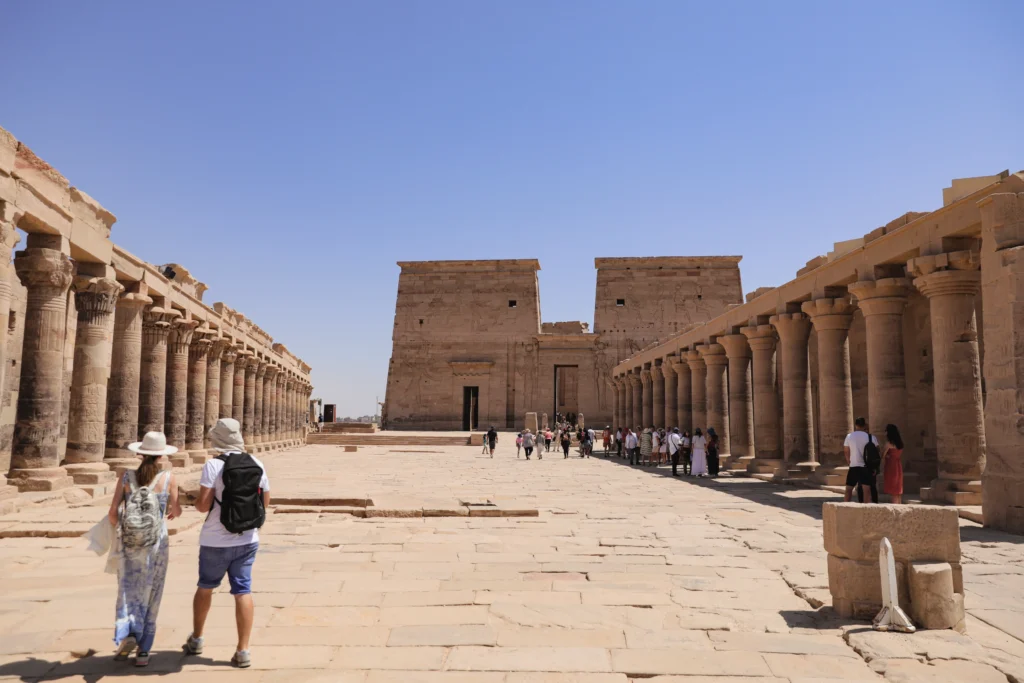
Yes. Aswan combines Nile scenery, Philae Temple and Nubian culture, and it pairs well with a festive trip. See our guides to what to do in Aswan and an Aswan vacation to plan your time.
Conclusion: Understanding Egypt Christmas Symbols
Egypt Christmas symbols reveal a fascinating relationship between religious faith, cultural identity, and modern holiday traditions.
The Coptic cross, Nativity icons, candles, and church incense reflect the spiritual significance of the celebration. Christmas trees, Baba Noël, and colorful seasonal decorations show how international customs have become part of the country’s festive atmosphere.
Ancient Egyptian motifs add another dimension, connecting contemporary decorations with Egypt’s recognizable historical imagery without changing the Christian origins of Christmas.
For travelers, understanding these differences makes the holiday season a meaningful opportunity to explore Egypt’s living traditions alongside its historical treasures.
Plan Your Nile Journey with Turquoise Dahabiya
If your Christmas holiday plans include sailing the Nile, contact Turquoise Dahabiya through the website enquiry form to learn more about its cruise options and discuss a journey suited to your travel dates.