


Eid al-Milad: Egypt’s Christmas, January 7 & Coptic Traditions
Eid al-Milad, January 7, Coptic customs and festive food: everything to know before you travel.
Christmas in Egypt has its own name, traditions, calendar, and cultural significance. While much of the Western world celebrates Christmas on December 25, Egypt’s largest Christian community, the Coptic Orthodox Church, celebrates the Nativity of Jesus Christ on January 7.
So, what does Egypt call Christmas?
Quick Answer
Egyptians call Christmas Eid al-Milad (عيد الميلاد), the Feast of the Nativity. The Coptic Orthodox Church celebrates it on January 7, and the most common greeting is Eid Milad Majid (عيد ميلاد مجيد).
The most common Arabic name is Eid al-Milad (عيد الميلاد), meaning the Feast of the Nativity or Christmas. You may also hear Eid al-Milad al-Majid (عيد الميلاد المجيد), meaning the Glorious Feast of the Nativity.
Egyptians commonly exchange the greeting Eid Milad Majid (عيد ميلاد مجيد), while the expression Kol Sana Wenta Tayeb is another familiar way of offering good wishes during holidays.
Eid al-Milad
The Arabic name for Christmas
January 7
Coptic Christmas Day
43 Days
Nativity Fast before the feast
Understanding these expressions is a wonderful introduction to the religious and cultural traditions surrounding Christmas in Egypt. Whether you are planning to explore Cairo’s historic churches, visit Luxor and Aswan during the festive season, or simply want to understand how Egyptians celebrate, this guide explains the essential details.
What Is Christmas Called in Egypt?
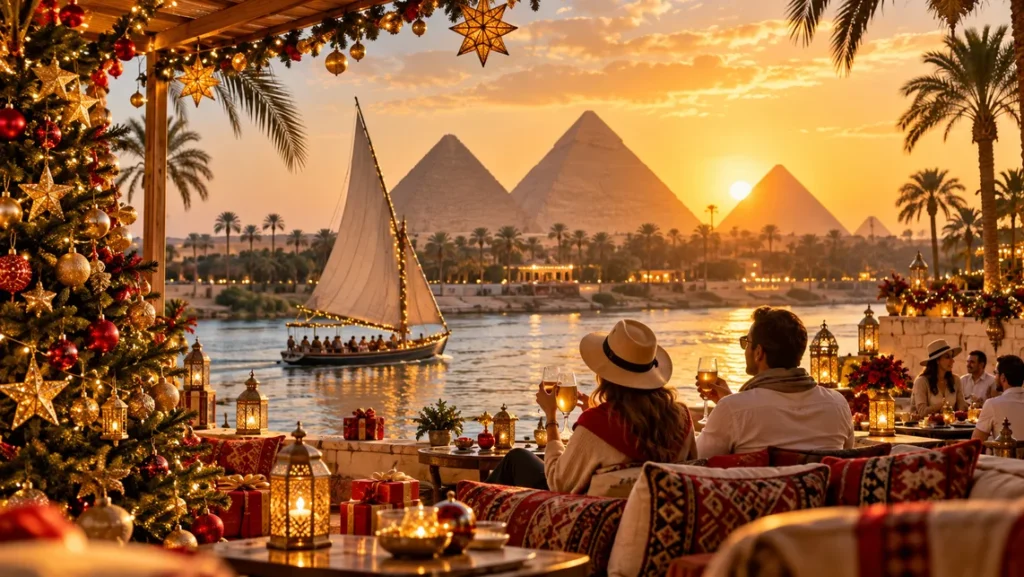
In Egyptian Arabic, Christmas is generally called Eid al-Milad, with the fuller religious expression Eid al-Milad al-Majid commonly used for Christmas celebrations.
The Arabic word Eid means feast or festival, while Milad refers to birth or nativity. Together, the words identify the celebration of the birth of Jesus Christ.
| Arabic expression | Pronunciation | English meaning |
|---|---|---|
| عيد الميلاد | Eid al-Milad | Christmas / Feast of the Nativity |
| عيد الميلاد المجيد | Eid al-Milad al-Majid | Glorious Feast of the Nativity |
| عيد ميلاد مجيد | Eid Milad Majid | Glorious Christmas / Christmas greeting |
| كل سنة وأنت طيب | Kol Sana Wenta Tayeb | Wishing you well year after year |
| ميلاد المسيح | Milad al-Masih | Birth of Christ |
Arabic is spoken by both Muslims and Christians in Egypt, so Christmas greetings are part of the country’s wider social vocabulary, although the feast itself is a Christian religious observance.
How to say Merry Christmas in Egyptian Arabic
عيد ميلاد مجيد
Eid Milad Majid: Glorious Christmas
It is a natural Christmas greeting, particularly in religious or festive contexts.
You can also say:
كل سنة وأنت طيب
Kol Sana Wenta Tayeb: Wishing you well, year after year
This expression literally conveys good wishes for each passing year. It is widely used for birthdays, religious festivals, and other celebrations, rather than exclusively for Christmas.
If you are addressing a woman in colloquial Egyptian Arabic, the expression becomes Kol Sana Wenti Tayeba.
For travelers, knowing even one of these greetings can make conversations during the festive season more meaningful.
When Is Christmas Celebrated in Egypt?
The principal Egyptian Coptic Orthodox Christmas celebration takes place on January 7, with Christmas Eve services on January 6.
The Coptic Church celebrates the Nativity on the 29th day of Kiahk, the fourth month of the Coptic calendar. Its traditional liturgical calendar places this feast on January 7 in the present Gregorian calendar. copticchurch.org+1
However, December 25 is also observed by some Christian communities in Egypt, especially those following Western church calendars.
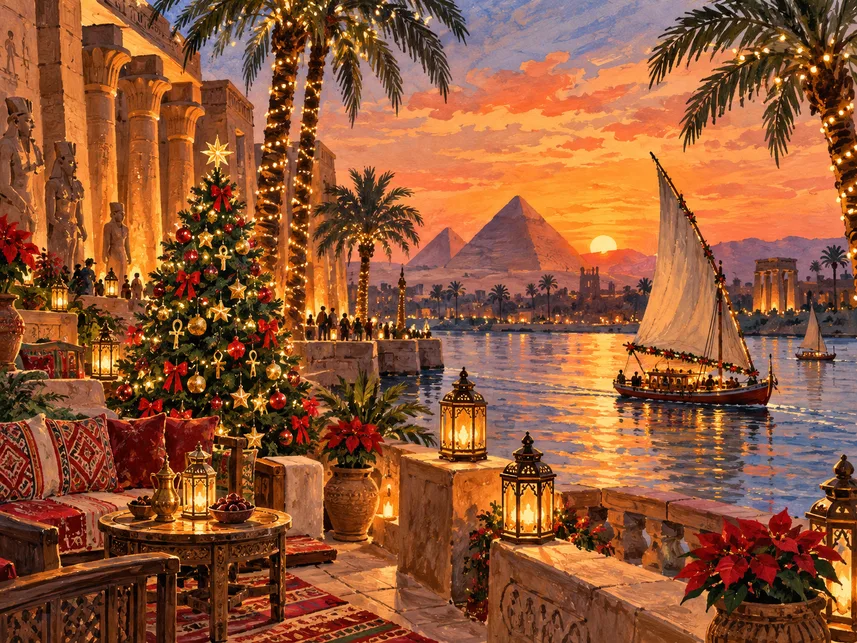
December 25 vs. January 7 in Egypt
| Date | Celebration | Who observes it? |
|---|---|---|
| December 24 | Christmas Eve | Christians following December 25 Christmas |
| December 25 | Christmas Day | Catholic, Protestant and other communities using this date |
| January 6 | Coptic Christmas Eve | Coptic Orthodox Christians |
| January 7 | Coptic Christmas Day | Coptic Orthodox Christians and other Christians following this date |
The difference is connected to church calendars, not to a different understanding of the birth of Jesus.
Why do Coptic Christians celebrate Christmas on January 7?
The Coptic Orthodox Church uses its traditional ecclesiastical calendar, which preserves the older calendar system associated with the Julian reckoning.
The date corresponding to the Coptic feast of 29 Kiahk currently falls on January 7 in the Gregorian calendar used for everyday civil life.
Consequently, travelers arriving in Egypt after Western Christmas can still encounter Christmas celebrations in early January.
The Coptic Orthodox Church officially identifies the Nativity as one of its seven major feasts. copticchurch.org+1
Planning around the festive season? Compare our Egypt Christmas tours and see the Christmas in Egypt date guide before you lock in flights.
Is Christmas a Public Holiday in Egypt?
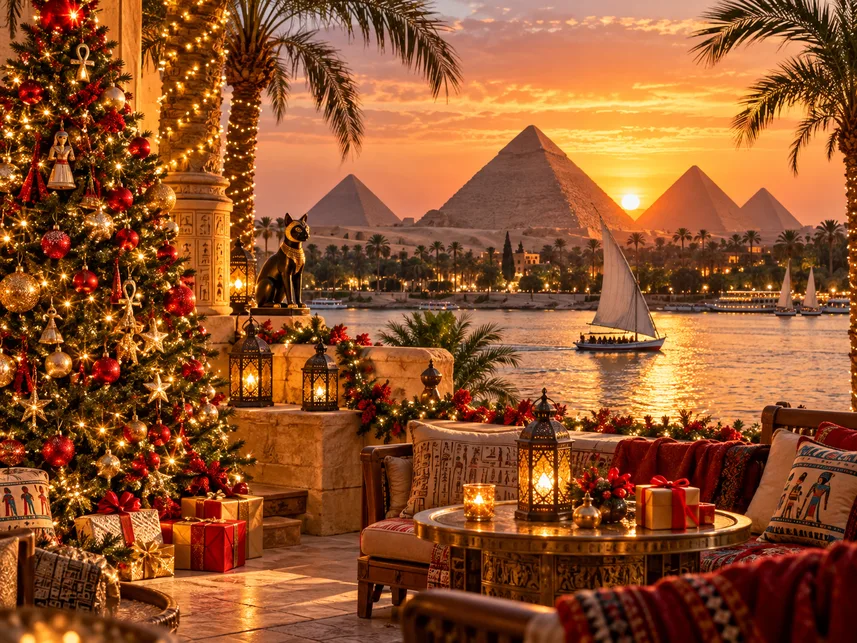
Yes. January 7 is an official public holiday in Egypt, reflecting the national recognition of Coptic Christmas.
For example, the Egyptian Presidency’s published national holiday calendar for 2026 lists Wednesday, January 7, as Coptic Christmas Day. Presidency of Egypt+1
For international visitors, a public holiday does not mean the entire country closes. However, holiday arrangements can affect public offices, banks, transport demand, and individual businesses.
If your visit coincides with January 7, confirm the operating schedules of any attractions, transportation providers, or services you intend to use.
How Do Egyptian Coptic Christians Celebrate Christmas?
Egyptian Coptic Christmas combines religious devotion, family gatherings, and traditions passed down through generations.
Although individual households celebrate differently, several practices are particularly associated with the holiday.
1. The Nativity Fast
For many observant Coptic Orthodox Christians, Christmas preparations begin long before January 7.
The Nativity Fast, also called the Christmas Fast or Fast of the Nativity, traditionally lasts 43 days.
During this period, fasting normally involves abstaining from meat, dairy products, and eggs, with detailed dietary rules and pastoral exceptions determined by church practice.
The fast provides a period of spiritual preparation through worship, reflection, and self-discipline before the celebration of Christ’s birth.
2. Christmas Eve church services
Christmas Eve, January 6, is an important occasion for Coptic Orthodox families.
Churches hold special liturgical services celebrating the Nativity. These include prayers, hymns, Scripture readings, and religious ceremonies.
For practicing Coptic Christians, the church service is the religious center of Christmas, rather than the exchange of presents or commercial festivities.
Christmas liturgy can continue into the evening, and churches may be especially busy during these services.
3. Family gatherings after the fast
After Christmas liturgy and the completion of the fasting period, families traditionally gather to enjoy festive meals.
These occasions bring together relatives and friends, allowing families to reconnect and celebrate.
Food is especially meaningful following weeks of dietary restrictions, and dishes containing meat may return to the family table.
4. Greetings and festive decorations
Churches may be decorated with lights, candles, Christmas trees, and Nativity displays. Families and some commercial districts also put up seasonal decorations.
The extent of decorations varies greatly between neighborhoods and communities.
For visitors, it is important to distinguish between the religious celebration inside churches and the more general festive atmosphere found at shopping areas, hotels, and other public spaces.
The Coptic Church identifies this 43-day observance as a preparation for the Feast of the Nativity. copticchurch.org+1
What Food Is Eaten at Christmas in Egypt?
Food is an important part of Egyptian Christmas traditions, particularly following the Nativity Fast.
Fattah
A traditional Egyptian dish made with layers of bread and rice, typically accompanied by garlic-flavored sauce and meat. It is associated with festive meals and family occasions, including Christmas in some households.
Kahk
Traditional Egyptian biscuits or cookies, sometimes dusted with powdered sugar or filled with nuts or dates. They are closely associated with Egyptian religious celebrations and may also be prepared for Christmas.
Meat and family dishes
After the fast, households may prepare meat, poultry, rice dishes, and favorite family recipes. There is no single Christmas dinner that every Egyptian Christian family follows.
Egypt’s State Information Service also records traditional Christmas sweets, including decorated biscuits, as part of Coptic Christmas food customs. SIS Egypt
These foods offer a useful reminder that religious and culinary traditions overlap in Egyptian culture, even while different communities maintain their own observances.
Where Can Travelers Experience Christmas Traditions in Egypt?
Visitors interested in Egyptian Christmas can discover different aspects of the holiday in Cairo and other destinations across the country.
Coptic Cairo: History and Christian heritage
Coptic Cairo, part of Old Cairo, is one of the most rewarding places to explore Egypt’s Christian heritage.
Its historic churches provide insight into centuries of Egyptian Christian worship, religious art, and architecture.
Two notable landmarks are the Hanging Church (Saint Virgin Mary’s Coptic Orthodox Church) and Church of Saints Sergius and Bacchus.
Both are important historic religious sites. However, visiting a church during regular sightseeing hours is different from attending a Christmas service, and access arrangements may change around major religious celebrations.
Saint Mark’s Cathedral in Abbassia
Saint Mark’s Coptic Orthodox Cathedral is one of the principal centers of the Coptic Orthodox Church in Cairo.
Christmas celebrations associated with major cathedrals can attract large congregations and involve special security arrangements.
Travelers wishing to attend a religious service should contact the church beforehand, rather than assuming that ordinary visitor access applies during Christmas liturgy.
Christmas in Luxor and Aswan

For travelers exploring Upper Egypt, December and January offer an opportunity to discover the region’s archaeological heritage during the wider holiday season.
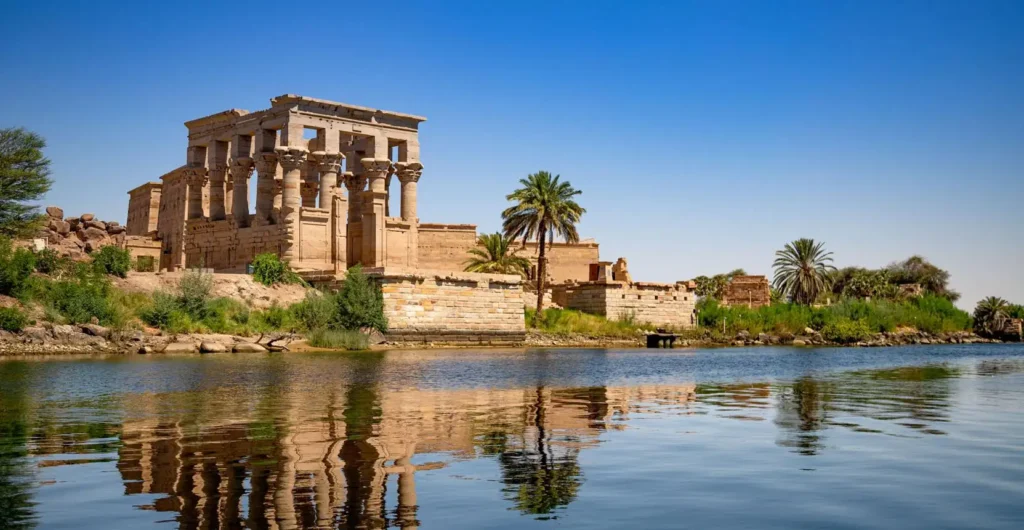
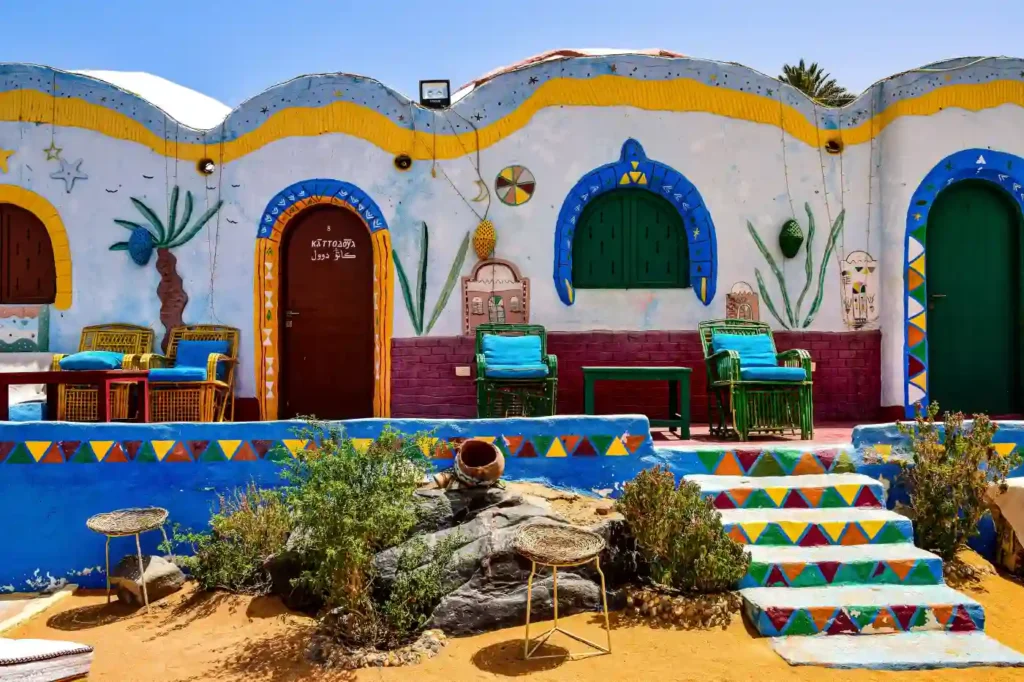
Luxor is famous for its ancient temples and royal tombs, while Aswan offers a contrasting landscape of Nile islands, granite formations, and historical monuments.
These destinations are not primarily Christmas pilgrimage centers, but they can form part of a holiday itinerary that combines cultural sightseeing with time beside the Nile.

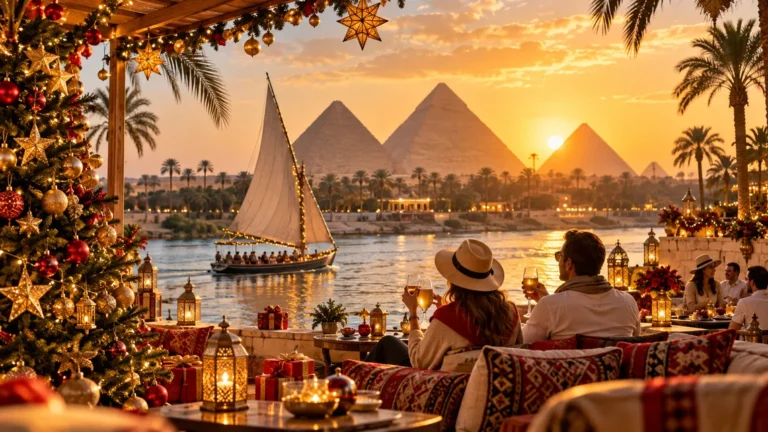
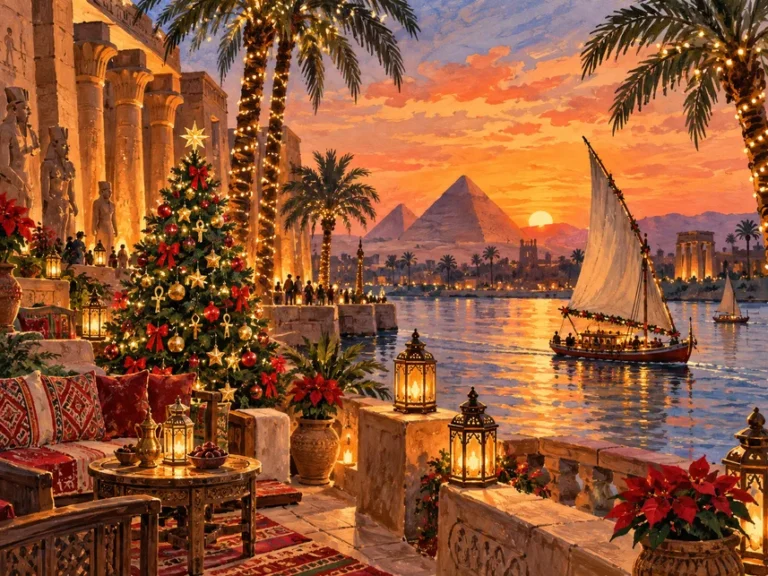
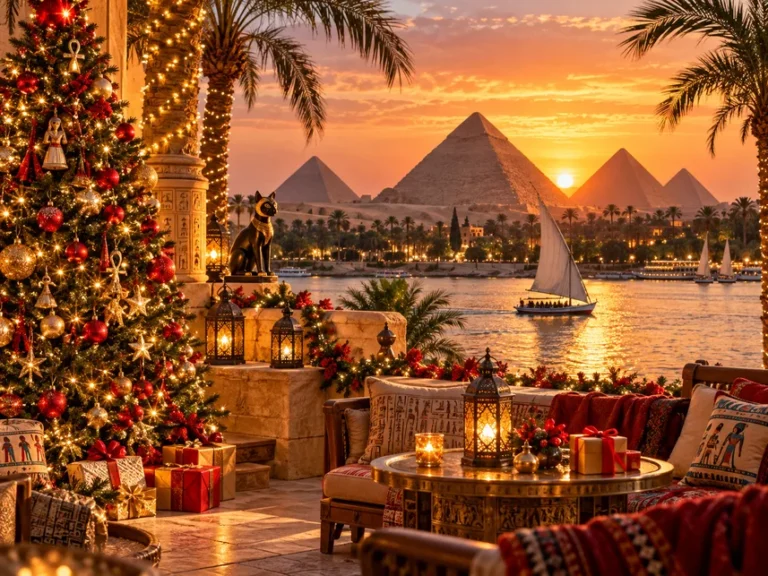
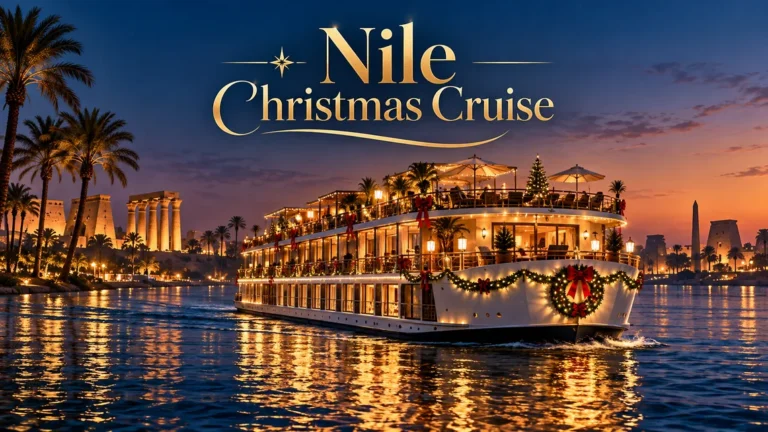
A Dahabiya Nile cruise may appeal to travelers who prefer a slower journey along the Nile rather than a fast-paced sightseeing schedule. Browse our Luxor to Aswan distance guide, the best Aswan tours and our Nile Christmas cruise for ideas.

At Turquoise Dahabiya, we welcome travelers interested in discovering Egypt’s landscapes and cultural heritage. You can explore our website at our website and use our enquiry form to discuss your preferred travel dates and the journey you have in mind.
Practical Tips for Visiting Egypt During Christmas
If you are visiting between late December and early January, a little preparation will help you enjoy both the festive atmosphere and Egypt’s cultural attractions.
- Understand the dates: December 25 and January 7 are observed by different Christian communities.
- Respect religious services: Dress modestly, keep conversations quiet, and ask before photographing worshippers.
- Confirm church access: Special Christmas services may have restricted entry or security procedures.
- Check holiday schedules: January 7 is a national holiday, so confirm opening arrangements directly.
- Pack for winter conditions: Cairo, Luxor, and Aswan can have cooler mornings and evenings than many first-time visitors expect.
- Plan your itinerary around your interests: Combine historical sightseeing with religious heritage visits where appropriate.
Pro Tip
For anyone especially interested in attending Christmas worship, arranging access through the relevant church in advance is essential. Visit Egypt+1
Keep Exploring Egypt at Christmas
What Travelers Say About Turquoise Dahabiya
Real guest reviews from TripAdvisor.


Plan Your Nile Christmas Holiday
Tell us your dates and the journey you have in mind, and our team will reply with a tailored Dahabiya Nile cruise proposal.
Frequently Asked Questions About Christmas in Egypt
Christmas is called Eid al-Milad (عيد الميلاد) in Arabic. The longer expression Eid al-Milad al-Majid means the Glorious Feast of the Nativity.
Say Eid Milad Majid (عيد ميلاد مجيد). It is a standard Christmas greeting in Egypt. OpenArabic.org+1
It means the Feast of the Nativity or Christmas, referring to the celebration of the birth of Jesus Christ.
It means Glorious Christmas or Glorious Feast of the Nativity, and functions as a Christmas greeting.
Most Coptic Orthodox Christians celebrate on January 7, with Christmas Eve services on January 6. Some other Egyptian Christian communities observe December 25.
The Coptic Orthodox Church follows its traditional liturgical calendar, whose Nativity celebration currently corresponds to January 7 on the Gregorian calendar.
Yes. January 7 is recognized as an official Egyptian public holiday. Presidency of Egypt
Yes. Some Egyptian Christian denominations celebrate on December 25, and Christmas decorations or seasonal events may also appear at hotels, shopping centers, and businesses.
Traditional observances include the Nativity Fast, church liturgy, prayers, festive family meals, and gatherings with relatives.
It is called the Nativity Fast or Christmas Fast. It is a period of preparation leading up to the Nativity feast.
Fattah, meat dishes, rice, and traditional sweets may be served, depending on the household. There is no universal Christmas menu.
Visitors can enquire at Coptic Orthodox churches and cathedrals in Cairo, including churches in Old Cairo and Abbassia. Attendance, entry restrictions, and Christmas service times must be confirmed directly with the church.
Conclusion: Understanding the Egyptian Meaning of Christmas
In Egypt, Christmas is known as Eid al-Milad, and the greeting Eid Milad Majid expresses Christmas wishes in Arabic.
The country’s best-known Christmas celebration takes place on January 7, when the Coptic Orthodox Church celebrates the Nativity according to its traditional calendar.
For travelers, understanding Egyptian Christmas offers more than an explanation of an unfamiliar holiday date. It provides a window into Egypt’s living Christian heritage, religious traditions, family customs, and cultural diversity.
If you are considering visiting Egypt during the Christmas and New Year period, you can combine historical exploration with a journey along the Nile.