


Coptic Christmas, festive food, church services and family customs — plus how to pair them with a Nile journey.
Christmas holiday traditions in Egypt bring together centuries of Christian heritage, religious devotion, family gatherings, and distinctive Egyptian food. While much of the Western world celebrates Christmas on December 25, Egypt has another important festive date: January 7, when the Coptic Orthodox Church celebrates the birth of Jesus Christ.
For Egyptian Christian families, Christmas is much more than decorations and exchanging presents. It is a religious occasion shaped by weeks of fasting, special church services, traditional meals, and time spent with loved ones.
For international visitors, Christmas in Egypt offers an opportunity to discover a different side of the country’s culture. Ancient churches, festive streets, and family customs reveal traditions that are quite different from those commonly associated with Christmas in Europe, North America, or Australia.
This guide explores when Christmas is celebrated in Egypt, why the dates differ, what Egyptians traditionally eat, how families observe the holiday, and what travelers can expect during the Christmas season.
Christmas in Egypt at a Glance
January 7
Coptic Orthodox Christmas, observed as a national public holiday.
43-Day Fast
A vegan-style Nativity Fast that prepares families for the feast.
Fatta & Kahk
Rich festive meals and sweets shared after the midnight liturgy.
When Is Christmas Celebrated in Egypt?
Christmas in Egypt is mainly associated with two dates: December 25 and January 7.
The date depends on the Christian denomination and its liturgical calendar.
| Date | Celebration | Who observes it? |
|---|---|---|
| December 25 | Western Christmas | Many Catholic and Protestant communities, along with international visitors |
| January 6 | Coptic Christmas Eve | Coptic Orthodox Christians |
| January 7 | Coptic Orthodox Christmas Day | Coptic Orthodox Christians across Egypt |
January 7 is the principal Christmas celebration for Egypt’s Coptic Orthodox community and is recognized as a national public holiday.
The Egyptian government’
Why Is Coptic Christmas Celebrated on January 7?
The difference comes from the calendars used to determine religious feast days.
The Coptic Orthodox Church celebrates the Nativity on the 29th day of Kiahk, a month in the Coptic calendar. This corresponds to January 7 in the Gregorian calendar during the present period.
The Coptic calendar is historically related to Egypt’s ancient calendar system and maintains its own religious cycle. Its Christmas dating also aligns with the older Julian calendar tradition, currently 13 days behind the Gregorian calendar.
December 25 in the Julian calendar corresponds to January 7 in the Gregorian calendar.
Coptic Christmas Fasting: The 43-Day Spiritual Preparation
One of the most distinctive Egyptian Christmas traditions is the Nativity Fast.
Before Christmas, the Coptic Orthodox Church observes a traditional 43-day fasting period, beginning on November 25 and continuing until the Christmas celebration in January.
For many practicing Copts, this period involves avoiding animal-derived foods, including meat, poultry, eggs, milk, and dairy products. Specific fasting practices can vary according to personal circumstances and religious guidance.
The fast is not simply a dietary custom. Its central purpose is spiritual preparation, emphasizing prayer, reflection, self-discipline, and readiness to celebrate the Nativity.
What Do Egyptian Christians Eat During the Christmas Fast?
Many families prepare plant-based Egyptian dishes during the fasting period.
Common options include ful medames, lentil soup, vegetable stews, rice dishes, and vegetable-based versions of familiar Egyptian meals.
Plant-based meals are particularly useful during the Nativity Fast because they can be prepared without ingredients such as butter, cheese, eggs, or meat.
It is important to distinguish between everyday Egyptian vegetarian foods and dishes prepared specifically for fasting. A meal is suitable for the fast only when its actual ingredients comply with the family’s religious practice.
Christmas Eve in Egypt: Church Services and Religious Traditions
Christmas Eve on January 6 is one of the most important moments of the Coptic festive season.
Many Egyptian Christian families attend a special church liturgy commemorating the birth of Christ. Services include prayers, hymns, biblical readings, and the celebration of the Eucharist.
Churches are often beautifully decorated, and congregations gather for an occasion that carries deep spiritual and family significance.
The Coptic Christmas Liturgy
The Christmas liturgy belongs to the ancient worship traditions of the Coptic Orthodox Church.
During the service, worshippers participate in prayers and hymns associated with the Nativity. Coptic liturgical traditions have preserved elements of the Coptic language, while Arabic is also widely used in church life.
The exact starting and ending times of Christmas services can differ between churches. Visitors should therefore check individual church schedules rather than assume that every service begins at midnight.
What Happens After Christmas Mass?
After attending the Christmas service, many families return home to celebrate together.
For those who have observed the Nativity Fast, the festive meal marks the return to foods that were avoided during the preceding weeks.
This transition from fasting to feasting is one of the defining features of Coptic Christmas celebrations in Egypt.
Traditional Egyptian Christmas Food
Food plays an important role in Egyptian Christmas customs, particularly after the fasting period.
Traditional meals vary between households, but certain dishes are especially associated with Egyptian celebrations.

Fatta: A Traditional Christmas Feast
Fatta is one of the best-known dishes served by many Egyptian Christian families during Christmas celebrations.
The dish traditionally combines layers of bread and rice with meat and a flavorful sauce commonly prepared with garlic and vinegar.
Depending on the household, fatta may feature beef or another meat, and preparation methods can vary.
After weeks of fasting, a substantial meal such as fatta becomes a meaningful part of the family celebration.
Kahk and Egyptian Christmas Sweets
Kahk are traditional Egyptian festive cookies, often finished with powdered sugar and sometimes filled with dates, nuts, or other ingredients.
Although kahk are particularly associated with Eid al-Fitr, they also appear at other family celebrations, including Christmas in some households.
Other desserts may include biscuits, cakes, and homemade sweets.
Not every Egyptian Christian family prepares the same desserts. Regional traditions and family preferences contribute to the variety of festive foods served across the country.
What Does a Traditional Egyptian Christmas Meal Include?
| Food | Description | Festive connection |
|---|---|---|
| Fatta | Rice, bread, meat, and garlic-based sauce | Popular celebratory meal after fasting |
| Roasted or cooked meat | Meat prepared according to family recipes | Return to non-fasting foods |
| Kahk | Egyptian festive cookies | Shared during celebrations in some households |
| Homemade cakes and biscuits | Various family recipes | Hospitality and family gatherings |
| Rice and vegetable dishes | Familiar Egyptian accompaniments | Part of larger family meals |
The most important element is not a fixed menu, but the opportunity for families to gather and share food after the religious observance.
Christmas Decorations, Trees, and Santa Claus in Egypt
Although Coptic Christmas has a strong religious character, modern Christmas decorations are also part of Egypt’s festive atmosphere.
During December and early January, Christmas trees, colorful lights, ornaments, and Santa Claus displays can appear in hotels, shopping centers, restaurants, and Christian households.
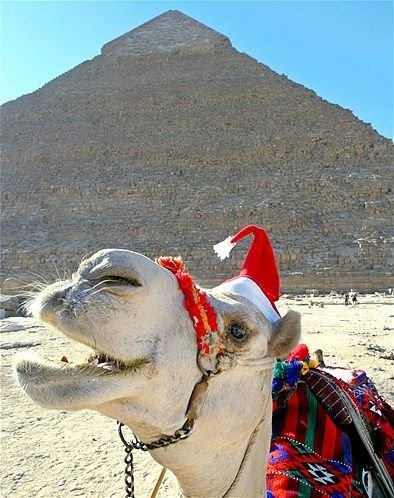
In Egypt, Santa Claus is commonly called Baba Noel, reflecting the French expression Père Noël.
The decoration traditions are particularly visible in large cities and popular tourist destinations. However, the scale of celebrations differs significantly between neighborhoods and communities.
Do Egyptians Exchange Christmas Gifts?
Yes. Some Egyptian Christian families exchange presents, particularly for children. New clothes, sweets, toys, and family visits can also be part of the holiday.
Gift-giving is not necessarily the central feature of Coptic Christmas. Religious services and family meals often carry greater significance.
Christmas in Cairo, Alexandria, and Upper Egypt
The Christmas atmosphere varies according to the destination.
Christmas in Cairo
Cairo provides opportunities to explore Egypt’s Christian heritage, particularly in the historic district of Coptic Cairo.
Visitors interested in religious history can explore the Hanging Church and other historic churches in the area, subject to opening arrangements and access restrictions.
Elsewhere in the city, major hotels, restaurants, and shopping centers may display Christmas decorations and organize seasonal activities.
Christmas in Alexandria
Alexandria has an important place in the history of Egyptian Christianity.
The city is associated with the ancient Patriarchate of Alexandria and the traditions of Saint Mark. Religious heritage remains an important part of its cultural identity.
Visitors can experience historic churches, urban Christmas decorations, and the city’s distinctive Mediterranean setting.
Christmas in Luxor and Aswan
Luxor and Aswan offer a different kind of Christmas holiday experience.
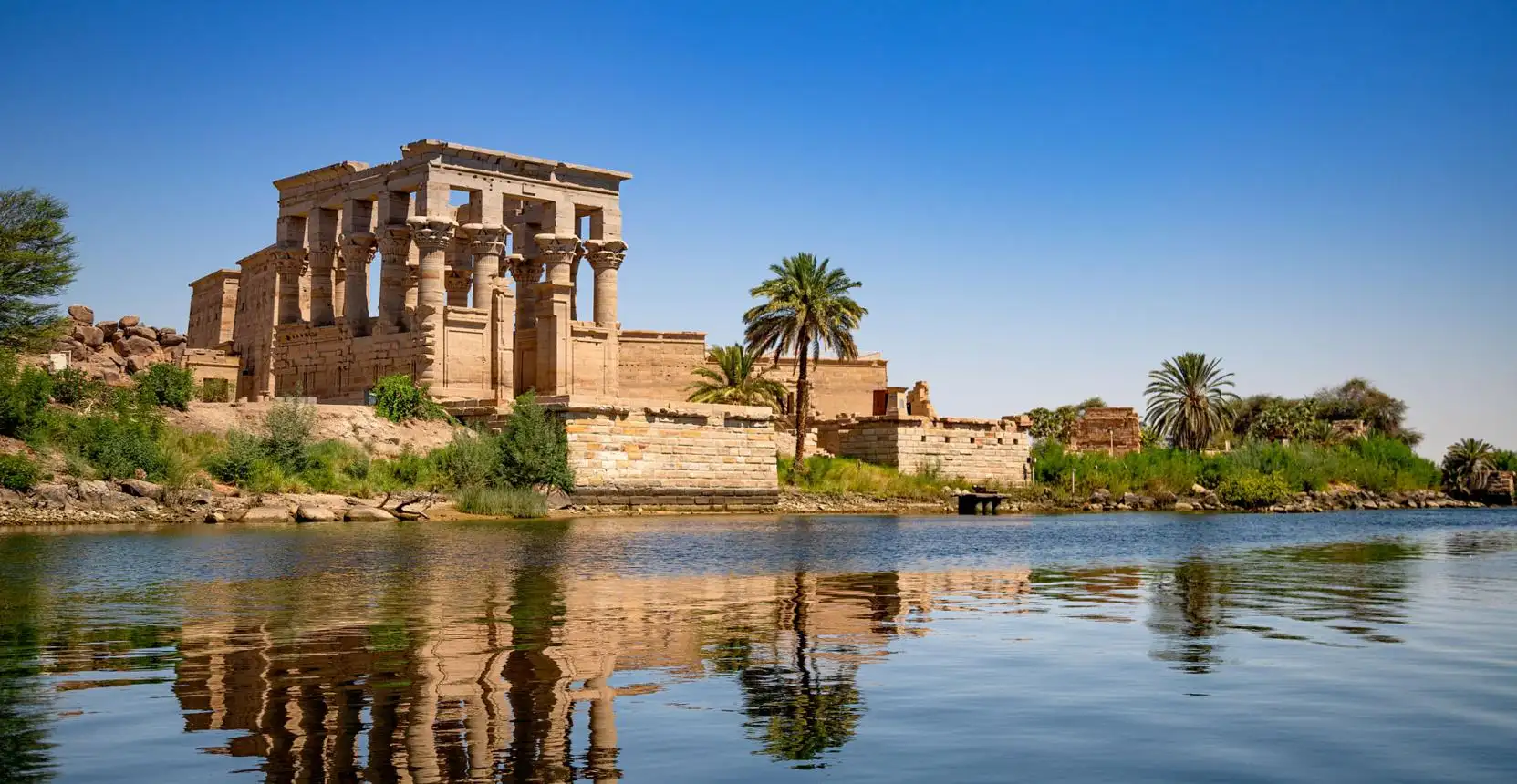
Rather than concentrating exclusively on Christmas events, travelers can combine their festive trip with ancient Egyptian monuments, Nile scenery, historic temples, and opportunities to discover life along the river.
A traditional Dahabiya journey can be an appealing option for travelers who wish to experience the Nile during their Christmas vacation.
At Turquoise Dahabiya’s Nile Christmas Cruise guide, travelers can learn about the cruise formats offered by the company and explore their options for a festive-season Nile journey.
The company publishes several Dahabiya itineraries, but Christmas-specific departures, availability, and festive arrangements must be confirmed individually.



Celebrating Christmas in Egypt as a Tourist
Travelers visiting Egypt between December and January may encounter both international-style Christmas decorations and the traditional Coptic Christmas celebrations.
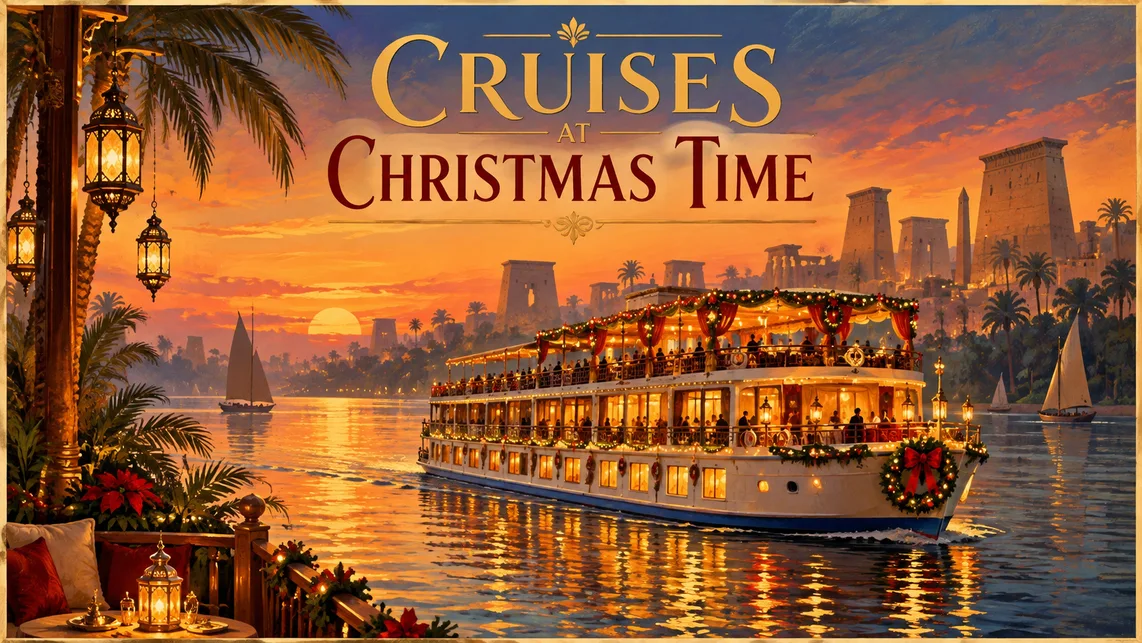
For those particularly interested in religious and cultural heritage, January 6 and 7 are meaningful dates.
For visitors planning a broader holiday, December offers opportunities to combine seasonal celebrations with sightseeing.
Here are some practical considerations:
- Choose your dates carefully. December 25 and January 7 represent different Christmas traditions in Egypt.
- Respect religious customs. Churches are places of worship, and Christmas liturgies are important religious occasions.
- Confirm church access. Major services may have security arrangements, restricted entry, or special procedures.
- Dress appropriately. Modest clothing is recommended when visiting active religious sites.
- Check holiday schedules. Some government services and businesses may have different operating arrangements around January 7.
- Verify seasonal activities. Christmas dinners, markets, concerts, and hotel events can change each year.
Tourists should never assume that attendance at a major Christmas service is guaranteed. Confirm arrangements with the relevant church before planning a visit. Visit Egypt
Is Christmas a Public Holiday in Egypt?
Yes. January 7 is an official public holiday in Egypt.
This applies nationally, although individual workplaces, attractions, and businesses may operate under different arrangements.
The Egyptian government confirmed January 7, 2026,
For visitors planning around the coming Christmas season, January 7, 2027, falls on a Thursday. Specific operating hours and any additional holiday arrangements should be checked closer to the date.
Keep Exploring Christmas and New Year in Egypt
Traditions & Culture
Dates & Planning
Frequently Asked Questions About Christmas Holiday Traditions in Egypt
The Coptic Orthodox Church celebrates Christmas on January 7. Many Catholic and Protestant Christians observe December 25.
The date follows the Coptic Church’s traditional liturgical calendar. The Nativity falls on 29 Kiahk, which currently corresponds to January 7 in the Gregorian calendar.
The Nativity Fast is a traditional 43-day period of spiritual preparation during which many practicing Copts avoid meat, eggs, dairy products, and other animal-derived foods.
Many Christian families attend a special church liturgy on January 6. After the service, those completing the Nativity Fast can celebrate with a festive meal.
Fatta, prepared with rice, bread, meat, and a flavorful sauce, is a well-known Christmas celebration dish. Families may also serve roasted meats, cakes, cookies, and other sweets.
Kahk are traditional Egyptian festive cookies, sometimes filled with dates or nuts and often dusted with powdered sugar. They are associated with several festive occasions, including Christmas in some families.
Yes. Christmas trees and decorations appear in many Christian homes and in hotels, shopping centers, and other commercial settings during the holiday season.
Some families exchange gifts, especially for children. However, religious observances and family gatherings remain central to traditional Coptic Christmas celebrations.
Access may be possible at some churches, but it depends on the service and local arrangements. Visitors should seek permission or confirmation beforehand and respect the congregation’s religious practices.
In recent years, Pope Tawadros II has led major Christmas celebrations at the Cathedral of the Nativity of Christ in Egypt’s New Administrative Capital. The venue and entry arrangements for any particular year should be verified through official church announcements.
Yes. Coptic Christmas is a national public holiday, recognized for Egyptians regardless of their religion.
December can be a suitable time for exploring Egypt, especially for travelers who prefer milder sightseeing conditions than the summer months. Temperatures vary considerably by destination, and nighttime weather can be cool.
Experience Egypt Beyond the Christmas Celebrations
Christmas holiday traditions in Egypt reveal an important dimension of the country’s cultural identity.
From the 43-day Nativity Fast and Christmas Eve liturgies to family meals, decorations, and January 7 celebrations, Coptic Christmas reflects an enduring religious heritage.
For international visitors, understanding these customs makes the holiday season more meaningful. It also provides an opportunity to appreciate the diversity of Egyptian traditions beyond the country’s world-famous ancient monuments.
If your Christmas plans include exploring Luxor, Aswan, and the Nile, consider extending your cultural journey with a Dahabiya cruise.
At Turquoise Dahabiya, we invite you to explore our published Nile cruise journeys and find an itinerary that suits your travel interests.
Visit Turquoise Dahabiya and complete the enquiry form with your preferred travel dates and requirements. Our team can provide information about the relevant journeys, help you check available details, and discuss your plans for spending Christmas in Egypt.
What Travelers Say About Turquoise Dahabiya
Read recent guest reviews from TripAdvisor before you plan your Nile journey.




Plan Your Christmas on the Nile
Tell us your preferred dates and travel interests, and our team will get back to you with suitable Dahabiya options.