

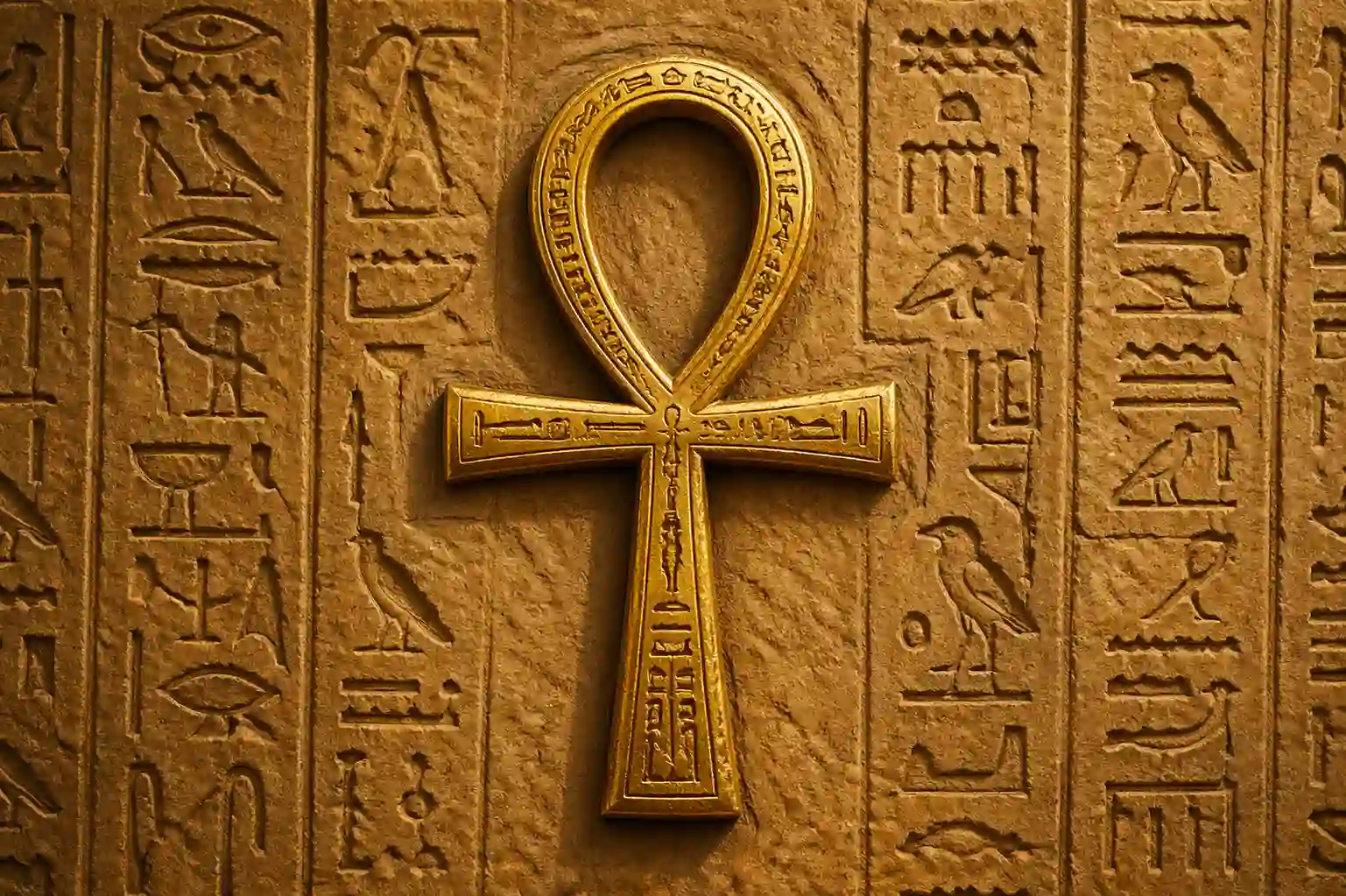
The Ankh (☥) is an ancient Egyptian hieroglyphic symbol that represents the word “life” — both mortal existence and eternal life beyond death. Its shape is distinctive and instantly recognizable: a cross with an oval or teardrop-shaped loop at the top.
Dating back to the First Dynasty (around 3100 BCE), it is one of the oldest symbols in human history — older than the pyramids themselves.
To the ancient Egyptians, life did not end at death. It transformed. The Ankh held within its shape the entire philosophy of that belief: that existence is cyclical, that breath continues beyond the body, and that divine energy flows through all living things.
The Deeper Meaning: Why This Shape?
Here is where it gets genuinely fascinating — and where most travel guides stop short.
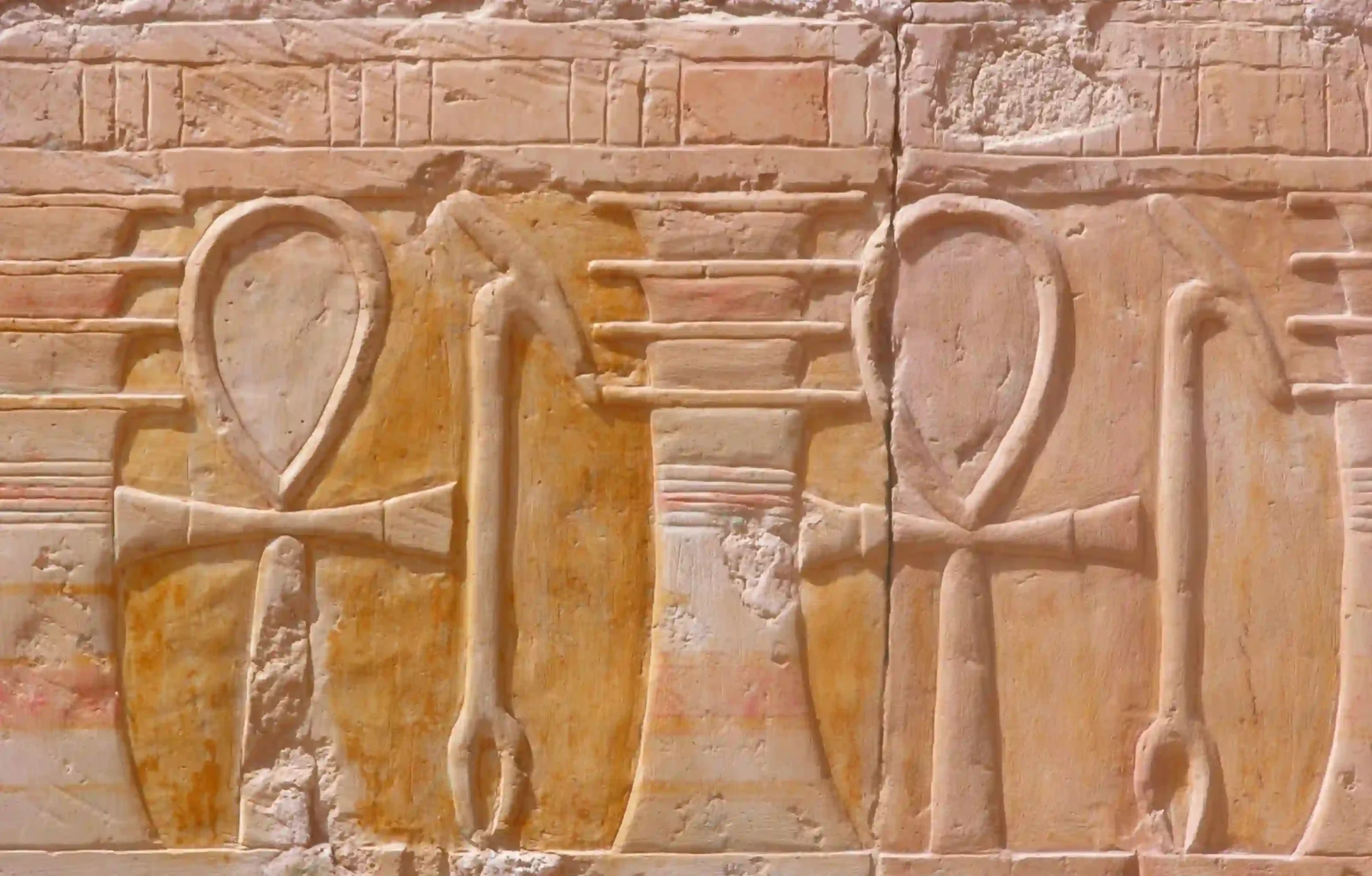
The Ankh’s meaning goes far deeper than a pretty symbol. Egyptologists have debated its origins for over a century, and the leading theories reveal something extraordinary about how ancient Egyptians understood the universe:
1. The Union of Male and Female The vertical bar of the Ankh represented the masculine principle; the horizontal bar, the feminine. The loop above them represented their union — and from that union came life itself. The Ankh was therefore not just about life, it explained where life comes from.
2. The Sun Rising Over the Horizon Another widely held interpretation: the loop represents the sun rising above the horizon line formed by the cross. Since the sun was the source of all life in Egypt — the annual Nile flood, the harvest, the warmth of breath — the Ankh was a visual shorthand for the universe’s life-giving engine.
3. The Knot of Isis Egyptologist E.A. Wallis Budge linked the Ankh to the tjet, known as the “Knot of Isis” — a sacred ceremonial belt symbol associated with the goddess Isis, fertility, and protection. This connection to Isis gives the Ankh its female energy and its link to regeneration and rebirth.
4. The Sandal Strap Theory Sir Alan Gardiner noted that the Egyptian word for sandal — nkh — shares the same root as Ankh. The sandal was a symbol of earthly life; its strap, when drawn in hieroglyphs, resembled the Ankh almost exactly. Life was, in a sense, the ground beneath your feet.
None of these theories cancels the others out. For the ancient Egyptians, symbols were layered — designed to mean many things simultaneously.
The Gods and the Ankh: Who Carried It?
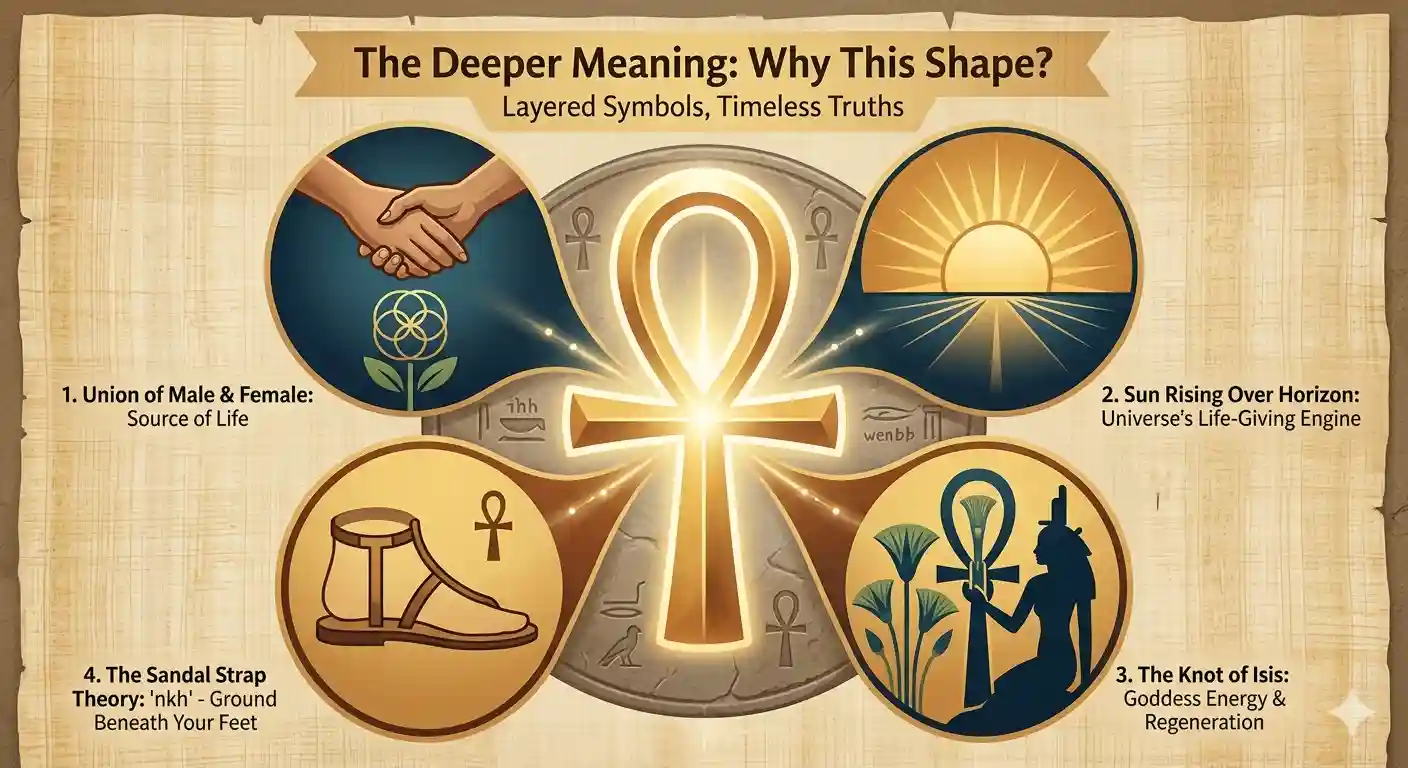
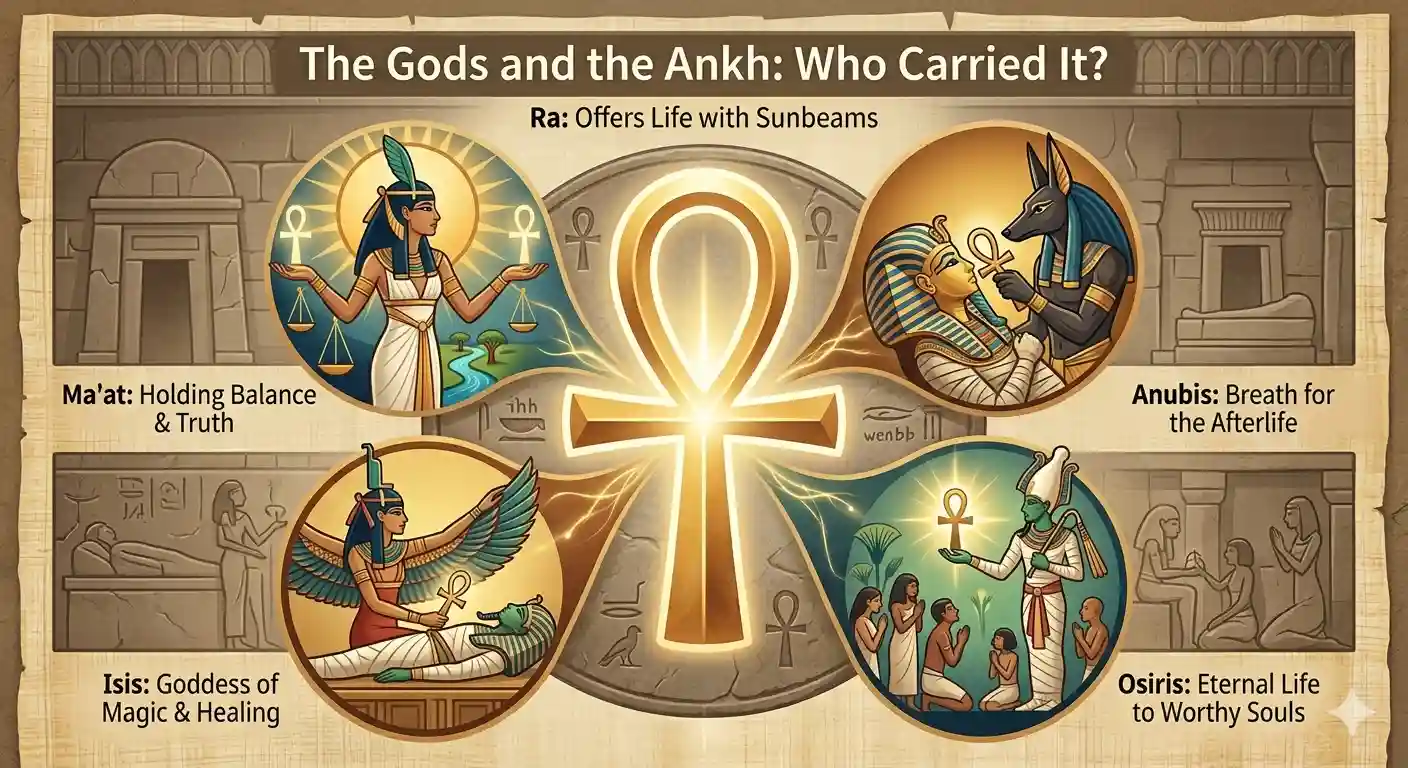
In temple paintings and tomb reliefs across Egypt, the Ankh appears almost exclusively in the hands of gods and goddesses — not ordinary people. This was deliberate. The Ankh represented divine power over life, and only gods could bestow it.
The most iconic image in Egyptian art: a god holding the Ankh by its loop and pressing it to the nostrils of the pharaoh — offering the literal breath of life. This scene is repeated in dozens of temples. When you stand before a temple wall in Luxor or Karnak, you are almost certainly looking at this gesture somewhere.
The gods most closely associated with the Ankh include:
- Osiris — God of the afterlife, who used the Ankh to grant eternal life to worthy souls
- Isis — Goddess of healing and magic, who used it to resurrect her husband Osiris after his death
- Ra — The sun god, who extended the Ankh at the end of sunbeams to offer life to the world
- Anubis — Guide of the dead, who pressed the Ankh to the lips of souls entering the afterlife
- Ma’at — Goddess of truth and balance, often shown holding an Ankh in each hand
The pharaoh himself was connected to the Ankh in a unique way: by receiving life from the gods, he channeled it to all of Egypt. When the gods gave the Ankh to the king, they were sustaining the entire nation.
The Ankh Across Time: From Pharaohs to Coptic Christians
One of the most remarkable aspects of the Egyptian symbol of life is its survival. Most ancient symbols fade with the civilizations that created them. The Ankh did not.
When Egypt became Christian during the 4th century CE, Coptic Christians adopted the Ankh and transformed it into the Crux Ansata — a cross with a circular loop, used in Coptic iconography to this day. The early Copts saw the Ankh not as a pagan symbol to be erased, but as a precursor to their own cross — a symbol of life that pointed toward resurrection.
You can see this evolution clearly in Egyptian churches and monasteries that date from the early Christian era, where the two symbols sometimes appear almost indistinguishably side by side.
Later, in the 1960s and 70s, the Ankh was adopted by the African diaspora as a symbol of cultural identity and pride — and then by spiritual movements around the world. Today it appears on jewelry, tattoos, fashion, and architecture across every continent.
Yet Egypt remains its home.
Where to See the Egyptian Symbol of Life in Egypt
This is where your trip comes alive. The Ankh is not just in textbooks — it is carved into the stone of temples you can visit tomorrow. Here is where to look:
Karnak Temple Complex, Luxor
The greatest religious complex ever built covers over 200 acres in Luxor. Inside its hypostyle hall and inner sanctuaries, the Ankh appears hundreds of times — in the hands of gods offering life to pharaohs, on amulet friezes, and in painted reliefs still vivid after 3,000 years. Stand in front of a carved scene of Amun-Ra extending the Ankh toward Thutmose III, and you are witnessing the core theology of ancient Egypt made visible.
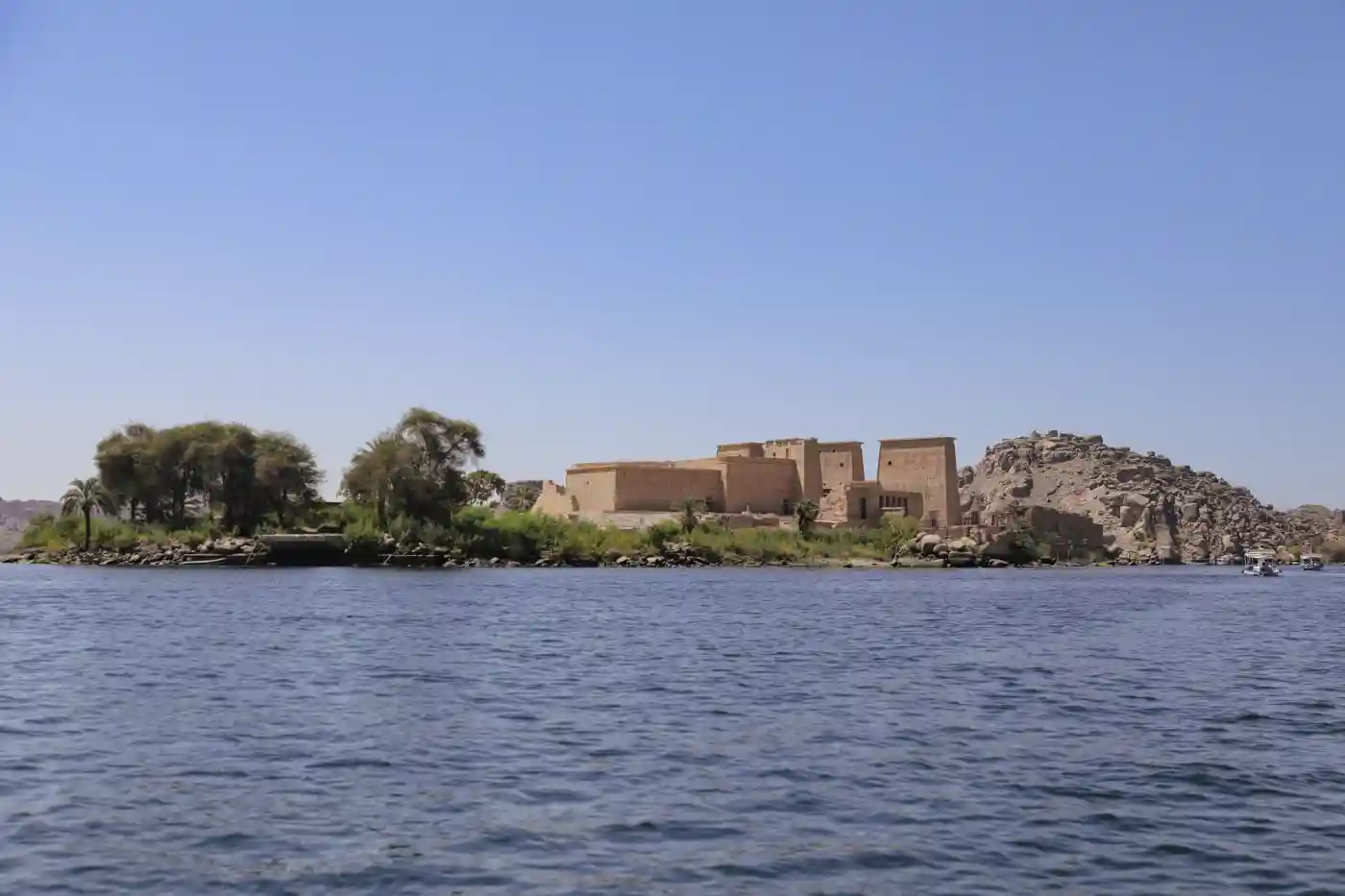
Temple of Isis at Philae, Aswan
The island temple of Philae is considered one of Egypt’s most beautiful sacred sites — and also one of the most Ankh-rich. Its most celebrated scene shows Isis herself holding an Ankh to the lips of Osiris, resurrecting him in the world’s oldest recorded story of resurrection. This single image, carved on a stone wall on a Nile island, contains the entire meaning of the Egyptian symbol of life.
Discover Turquoise’s Aswan and Nile Cruise packages
The Grand Egyptian Museum (GEM), Cairo
Opened in 2023 near the Giza Pyramids, the GEM houses one of the most significant Ankh artifacts in existence: an Ankh-shaped mirror case recovered from Tutankhamun’s tomb, crafted from gold-plated wood. The mirror and the symbol of life — objects designed to show you your own reflection, linked to the force that animated it. There is also a famous relief of the pharaoh Akhenaten receiving sunbeams from the solar disc Aten, with a miniature Ankh at the tip of each ray.
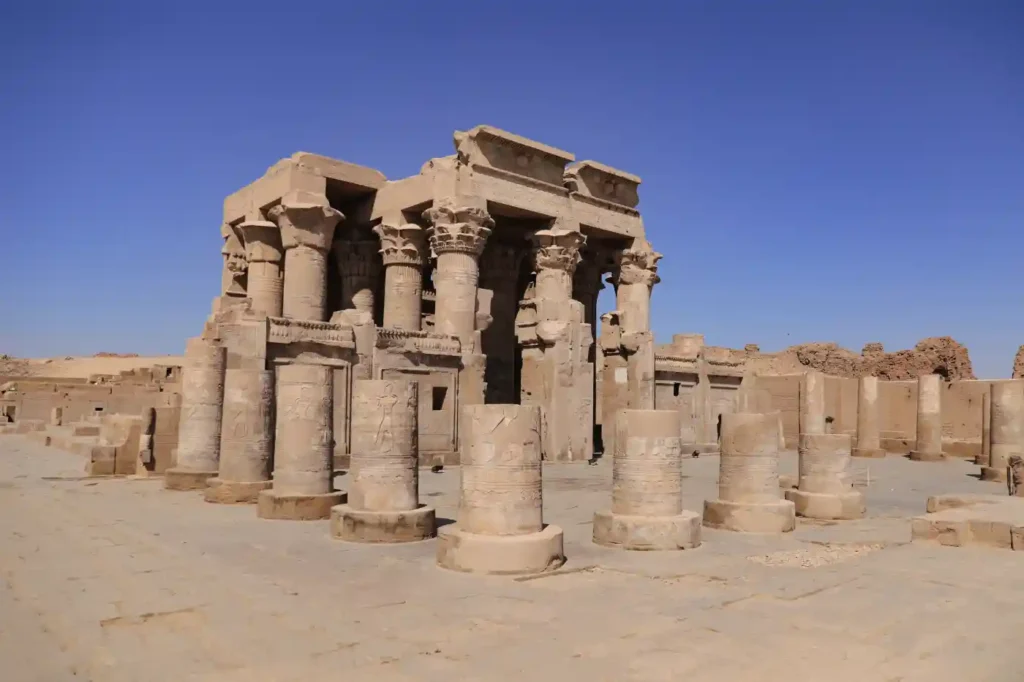
Kom Ombo Temple, between Aswan and Luxor
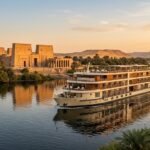
This double temple dedicated to the crocodile god Sobek and the falcon god Haroeris contains wall carvings showing gods pressing the Ankh to the heads and lips of pharaohs — a gesture of divine protection and eternal life. Travelers on Nile cruises between Aswan and Luxor often stop here and are consistently moved by the intimacy of these images.
Valley of the Kings, Luxor West Bank
Inside the royal tombs of Luxor’s West Bank — the burial chambers of Ramesses II, Seti I, Tutankhamun, and others — the Ankh appears as part of the protective spells and divine scenes painted on every wall. These tombs were not decorated for the living; they were instructions for the eternal journey. The Ankh was placed at every critical passage point.
The Ankh as a Living Souvenir
If you visit Egypt, you will almost certainly bring home an Ankh. From the bazaars of Khan El-Khalili in Cairo to the market streets of Luxor and Aswan, the Ankh is the most popular Egyptian souvenir — crafted in gold, silver, faience ceramic, carved stone, papyrus paintings, and hand-hammered brass.
What makes this different from any other souvenir: when you hold an Ankh, you hold a symbol that Egyptians have been making for 5,000 continuous years. The form has barely changed. The faience-blue amulets sold in Aswan’s markets today are almost identical to those found in Eighteenth Dynasty tombs.
That is not nostalgia. That is continuity.
Practical Tips: Spotting the Ankh Like an Expert
Most tourists walk past the Ankh dozens of times without recognizing it. Here is how to see it properly:
- Look at the hands of the gods first. In any painted or carved scene showing gods with the pharaoh, check what the deity is holding. If there is a loop-topped cross, that is your Ankh.
- Check the pharaoh’s nose and lips. The offering of the Ankh is almost always directed at the face — the breath of life enters through the nostrils.
- Look for groupings. The Ankh is often shown alongside the Djed (stability) and the Was scepter (power) — three symbols that together meant “life, stability, and power.” When you see all three, you are looking at Egypt’s core royal blessing.
- Notice the color. Ankh signs in two-dimensional art were typically painted blue or black — the colors of the Nile and fertility.
- Hire an Egyptologist guide. The difference between visiting a temple with a qualified guide and without one is the difference between seeing stone and understanding a language. The Ankh is a hieroglyph — it was meant to be read.
At Turquoise, every guided tour to Luxor, Karnak, Philae, and the Valley of the Kings includes expert Egyptologist guides who can show you exactly where to find the Ankh and explain what the scene around it means in full detail.
Frequently Asked Questions About the Egyptian Symbol of Life
What is the Egyptian symbol of life called?
The Egyptian symbol of life is called the Ankh (also written “ânkh” or “☥”). It is also known as the “Key of Life” or the “Key of the Nile.” It is an ancient Egyptian hieroglyph representing life, eternal existence, and divine power.
What does the Ankh symbol mean spiritually?
The Ankh represents eternal life, the union of masculine and feminine energies, and the breath of life given by the gods. It also symbolizes protection, healing, and the soul’s passage through death into renewed existence.
Where can I see the Ankh in Egypt?
The Ankh appears in Karnak Temple and the Valley of the Kings in Luxor, the Temple of Isis at Philae in Aswan, the Grand Egyptian Museum in Cairo, and Kom Ombo Temple. It is visible on nearly every major temple and tomb wall across Egypt.
Can tourists buy an Ankh in Egypt?
Yes. The Ankh is the most widely available Egyptian souvenir, sold in gold, silver, stone, ceramic, and papyrus form throughout Cairo’s Khan El-Khalili bazaar and markets in Luxor and Aswan.
What is the difference between the Ankh and a Christian cross?
The Ankh predates Christianity by over 3,000 years. When Egypt became Christianized, Coptic Christians adapted the Ankh into the Crux Ansata — a cross with a loop — as a version of the Christian cross. The two symbols share a visual history but hold different theological meanings.
Experience the Ankh Where It Was Born
There is a difference between knowing about the Egyptian symbol of life and standing in front of it.
When you are inside the hypostyle hall at Karnak at golden hour, watching the light fall across a stone column carved with a god extending an Ankh toward a king, the symbol stops being a symbol. It becomes an experience — a moment of contact with one of the oldest ideas in human history: that life is precious, that it continues, and that something divine is invested in keeping it going.
That is what Egypt does to travelers. It does not just show you the past. It makes you feel it.
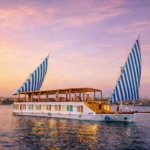
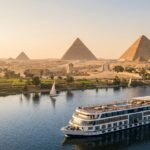
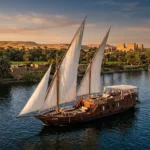
Turquoise offers carefully designed tours across all of Egypt’s great sites — from multi-day Nile cruises where you drift past Ankh-carved temples at sunset, to private guided days in Luxor’s West Bank tombs, to immersive Cairo experiences in the Grand Egyptian Museum. Every itinerary is built around exactly this kind of meaningful encounter.
If you are ready to see the Egyptian symbol of life where it was first carved, first understood, and first held to a pharaoh’s lips, start planning your Egypt trip with Turquoise today →
Looking for inspiration? Explore our itineraries — all crafted for travelers who want more than sightseeing. They want to understand.