


When travelers plan a trip to Luxor, most focus on Karnak Temple, Luxor Temple, and the Valley of the Kings. While these famous landmarks deserve their reputation, many visitors unknowingly skip one of Egypt’s most impressive ancient monuments—Medinet Habu Temple.
With its towering gateways, remarkably preserved reliefs, and peaceful atmosphere, Medinet Habu offers a completely different experience from Luxor’s more crowded attractions. Here, you can admire breathtaking ancient artwork, walk through vast courtyards, and appreciate the grandeur of New Kingdom architecture without constantly competing for space with large tour groups.
If you’re wondering whether Medinet Habu Temple is worth adding to your Luxor itinerary, the answer is an easy yes. Here’s why.
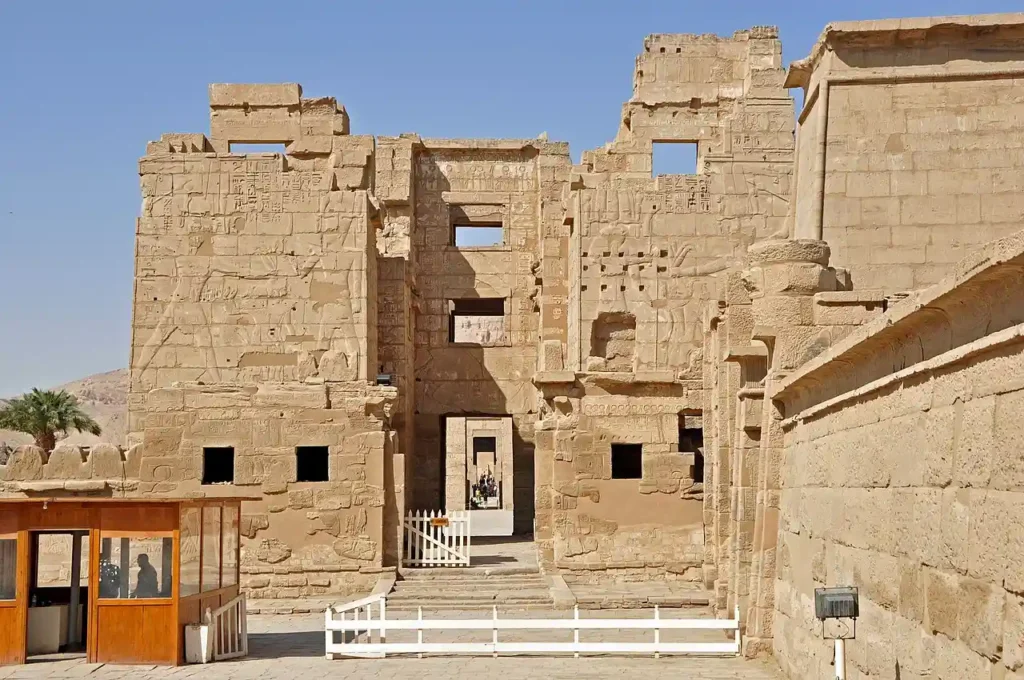
Why Most Travelers Overlook Medinet Habu Temple
Despite being one of the largest and best-preserved temples in Egypt, Medinet Habu often receives less attention than nearby attractions.
There are several reasons for this:
- Most standard tours prioritize Karnak and the Valley of the Kings.
- Many visitors simply aren’t familiar with the temple before arriving in Luxor.
- Travelers with limited time often don’t realize how close it is to other famous West Bank attractions.
The result? Those who make the short journey to Medinet Habu are rewarded with one of the most authentic and enjoyable temple experiences in Egypt.
Instead of crowded walkways and long lines, you’ll find peaceful courtyards where you can truly appreciate the incredible craftsmanship of ancient Egyptian builders.
What Makes Medinet Habu Temple So Special?
Unlike many archaeological sites that have suffered extensive damage over thousands of years, Medinet Habu remains remarkably intact.
Built during the reign of Ramesses III, the temple was designed not only as a place of worship but also as a royal memorial and administrative center.
What makes it stand out today isn’t just its size—it’s the extraordinary level of preservation.
Highlights include:
- Massive sandstone pylons that dominate the entrance.
- Detailed battle scenes carved into the temple walls.
- Original colors that can still be seen in several areas.
- Beautifully preserved columns and courtyards.
- Ancient inscriptions that vividly tell stories of royal victories.
Walking through Medinet Habu feels less like visiting ruins and more like stepping inside a living piece of history.

Is Medinet Habu Temple Worth Visiting?
Absolutely.
If you’ve already planned to visit Karnak Temple or the Valley of the Kings, adding Medinet Habu requires very little extra travel while significantly enriching your experience of Luxor’s West Bank.
Unlike Karnak, where visitors often share the site with large tour groups, Medinet Habu offers a quieter atmosphere that allows you to explore at your own pace.
Many experienced travelers even describe it as one of the most rewarding temples in Egypt because they have the opportunity to admire its artwork without distractions.
For photographers, history lovers, and anyone seeking a deeper connection with ancient Egypt, Medinet Habu is a destination that consistently exceeds expectations.
The Best Things to See Inside Medinet Habu Temple
Although every corner of the temple tells a story, a few highlights deserve special attention.
The First Pylon
The enormous entrance immediately captures your attention with its impressive scale and beautifully carved battle scenes celebrating the military victories of Ramesses III.
The Great Courtyard
Surrounded by towering columns and decorated walls, the courtyard gives visitors an appreciation for the monumental architecture of the New Kingdom.
The Battle Reliefs
Some of Egypt’s finest military carvings can be found here, depicting dramatic victories over the mysterious Sea Peoples in extraordinary detail.
The Hypostyle Hall
Its massive columns and intricate carvings create one of the temple’s most atmospheric spaces, especially during the early morning when sunlight filters through the stone.
The Royal Palace Area
One of Medinet Habu’s unique features is its connection to the royal palace, where the king could observe ceremonies from an elevated ceremonial window.
Medinet Habu vs. Karnak Temple: Which Should You Visit?
The truth is—you don’t have to choose.
While Karnak impresses visitors with its immense size and iconic Great Hypostyle Hall, Medinet Habu offers a more relaxed and immersive experience.
Here’s a quick comparison:
| Karnak Temple | Medinet Habu Temple |
|---|---|
| Larger crowds | Peaceful atmosphere |
| Massive temple complex | Easier to explore in one visit |
| Famous monumental architecture | Exceptional preservation and detailed reliefs |
| Popular with most tour groups | Often overlooked by tourists |
If your schedule allows, visiting both temples provides a much more complete understanding of ancient Egyptian civilization.

How Much Time Do You Need?
Most visitors spend between 1 and 2 hours exploring Medinet Habu.
This gives you enough time to admire the major halls, study the detailed carvings, take photographs, and enjoy the peaceful surroundings without feeling rushed.
Because the temple is located close to the Valley of the Kings, the Temple of Hatshepsut, and the Colossi of Memnon, it’s easy to include several iconic attractions in a single day on Luxor’s West Bank.
Best Time to Visit Medinet Habu Temple
Early morning is widely considered the best time to visit.
You’ll enjoy:
- Cooler temperatures.
- Softer light for photography.
- Fewer visitors.
- A quieter atmosphere that enhances the experience.
Late afternoon is another excellent option, as the warm golden light beautifully illuminates the temple’s sandstone walls.
How to Include Medinet Habu in Your Luxor Itinerary
One of the advantages of exploring Luxor with a carefully planned itinerary is having the flexibility to experience both famous landmarks and lesser-known treasures.
Many luxury Nile cruise itineraries include visits to the Valley of the Kings, the Temple of Hatshepsut, and the Colossi of Memnon. Adding Medinet Habu to the same day creates a more complete journey through Luxor’s remarkable West Bank while avoiding the feeling of rushing from one attraction to another.
For travelers seeking a more personalized experience, boutique Dahabiya cruises offer greater flexibility than large cruise ships, allowing more time to appreciate extraordinary sites like Medinet Habu rather than simply checking them off a list.
Nearby Attractions You Shouldn’t Miss
Since you’re already exploring Luxor’s West Bank, consider visiting these remarkable sites nearby:
- Valley of the Kings – Discover the royal tombs of Egypt’s greatest pharaohs.
- Temple of Hatshepsut – One of Egypt’s most iconic architectural masterpieces.
- Colossi of Memnon – The famous twin statues that have welcomed visitors for over 3,000 years.
- Deir el-Medina – The village where the craftsmen who built the royal tombs once lived.
Together, these attractions create one of the most unforgettable sightseeing days anywhere in Egypt.

Why Medinet Habu Deserves a Place on Every Luxor Itinerary
Some places impress because they’re famous. Others leave lasting memories because they surprise you.
Medinet Habu belongs to the second category.
Its peaceful atmosphere, extraordinary preservation, magnificent artwork, and fascinating history make it one of Luxor’s most rewarding archaeological sites. Whether you’re visiting Egypt for the first time or returning to explore beyond the classic tourist route, this remarkable temple offers a richer and more intimate connection with the ancient world.
For travelers exploring Upper Egypt aboard a luxury Dahabiya, Medinet Habu is more than just another stop—it’s an opportunity to experience one of Luxor’s finest monuments at a slower, more meaningful pace.
Frequently Asked Questions
Is Medinet Habu Temple worth visiting?
Yes. It’s one of Luxor’s best-preserved temples and offers a quieter, more immersive experience than many of the city’s busier attractions.
Who built Medinet Habu Temple?
The temple was built during the reign of Pharaoh Ramesses III in the 20th Dynasty as his mortuary temple and ceremonial complex.
How long should I spend at Medinet Habu?
Most visitors spend between 1 and 2 hours, depending on their interest in ancient history and photography.
Can I visit Medinet Habu and the Valley of the Kings on the same day?
Yes. Both sites are located on Luxor’s West Bank and are commonly combined into a single sightseeing itinerary.
What is the best time to visit Medinet Habu Temple?
Early morning or late afternoon offers the most comfortable temperatures, beautiful lighting, and fewer crowds, making the experience even more enjoyable.