



Private Dahabiya Nile Cruise
Best 7-Night Nile River Cruise in Egypt

 View All Photos
 About This 7 Night Nile River Cruise
Here’s something most people don’t find out until they’re already standing on a crowded sun deck: on the Nile, the boat is the holiday. Not the pool. Not the buffet. The boat.
You can visit the same temples from a 300-passenger floating hotel or from a wooden sailing boat carrying sixteen people, and you will come home with two completely different holidays. One of them involves queuing for the gangplank. The other involves a crew member learning how you take your tea by day two.
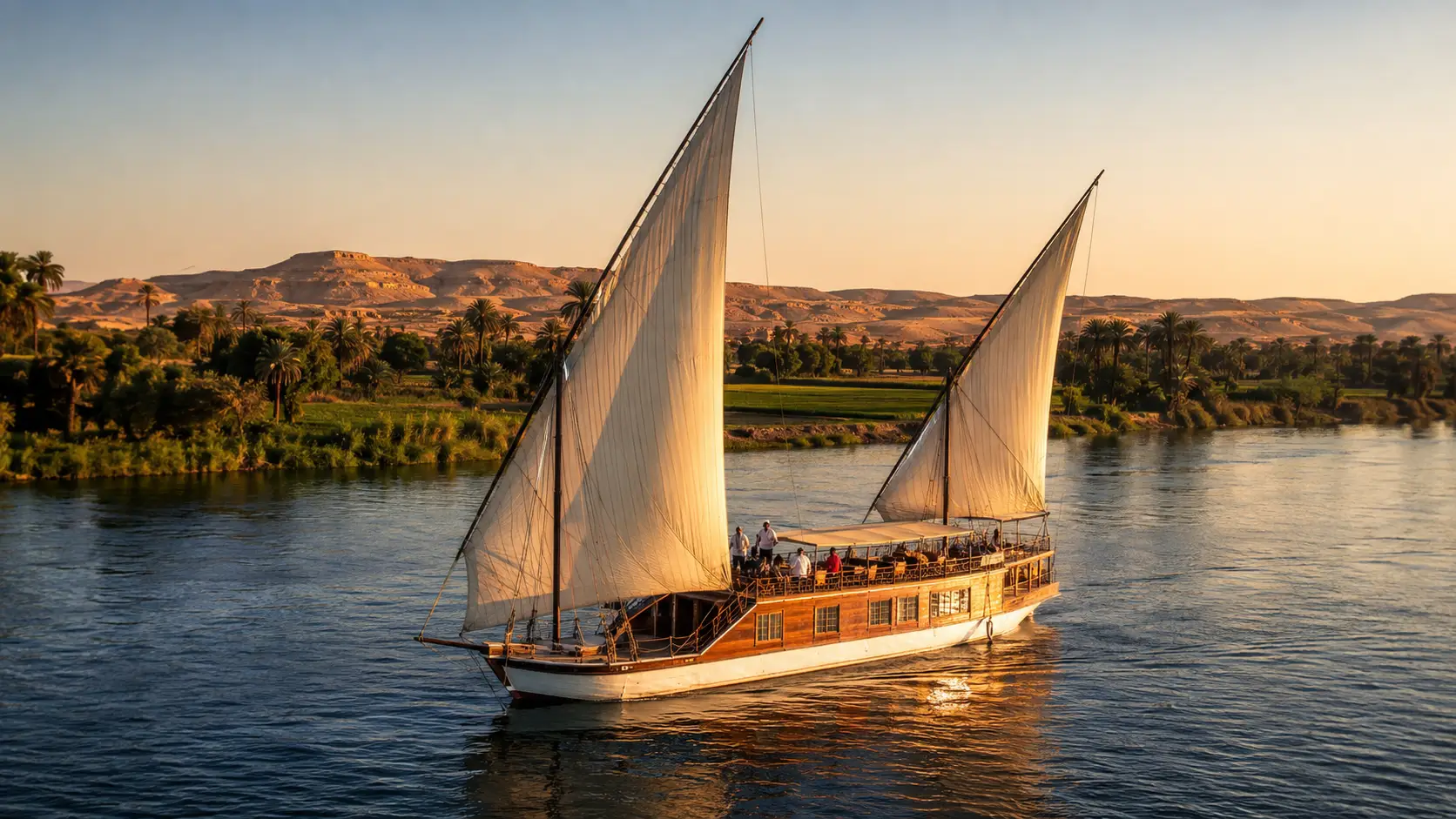
We’re Turquoise Dahabiya, and we sail the second kind. Our 7 night Nile River cruise — the Elegant Scape — runs Luxor → Qena → Aswan on a private dahabiya with a maximum of 16 guests, prices starting from €1,500, and a pace that lets you actually look at things.
This page covers the full 7 day Nile cruise itinerary, what’s included and what isn’t, what it costs, when to come, and what to pack. We’ve been honest about the bits other operators leave vague. It’s a long read. Grab a coffee.
What a 7 Night Nile River Cruise Actually Feels Like
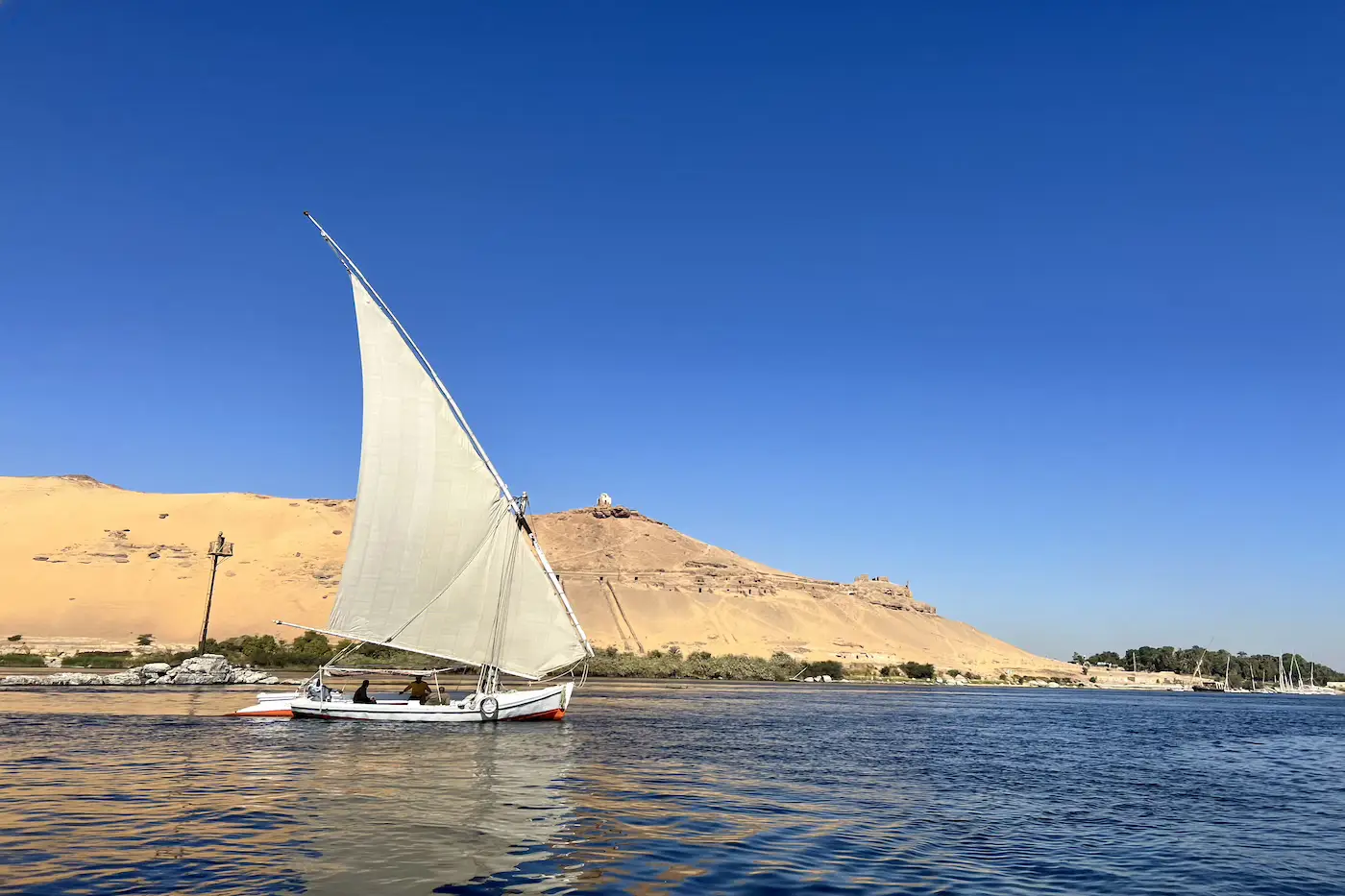
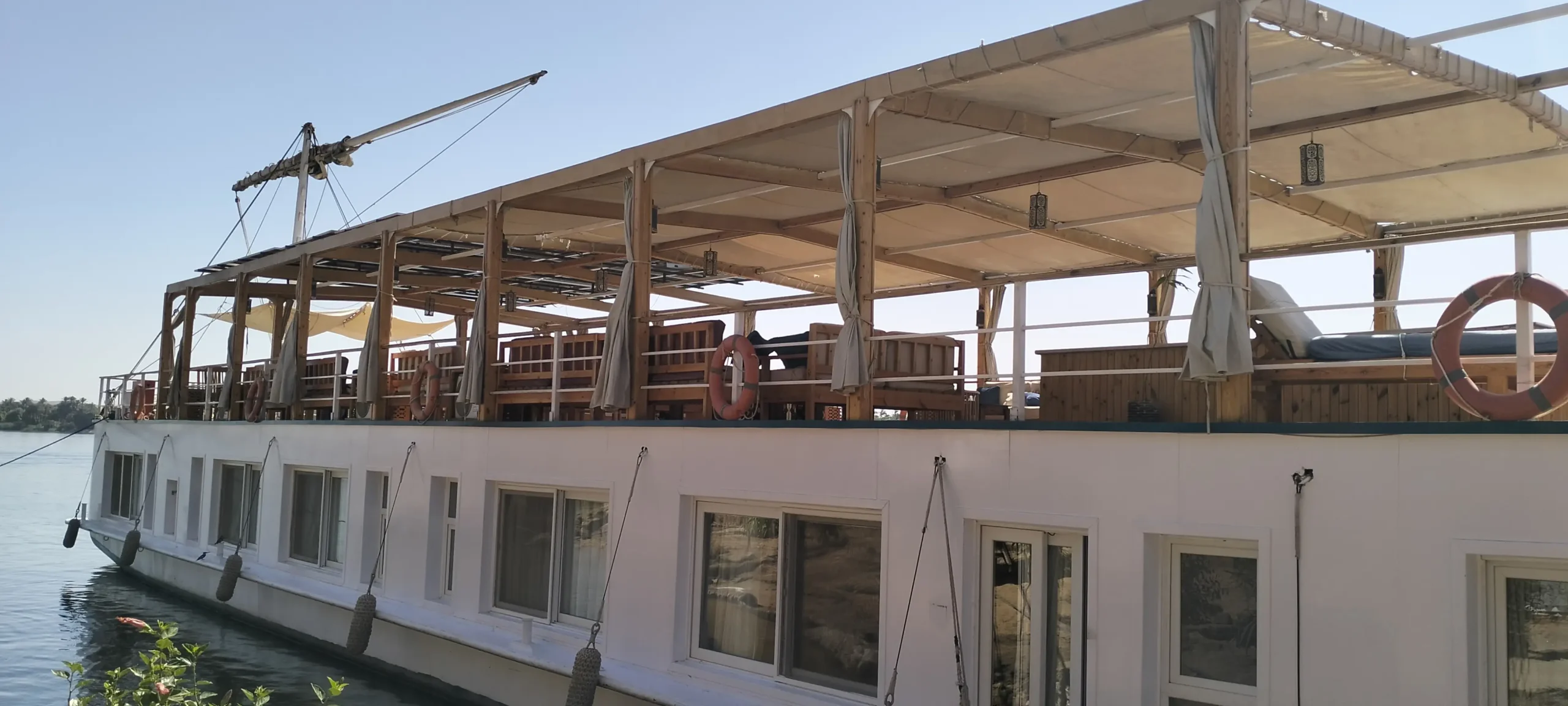
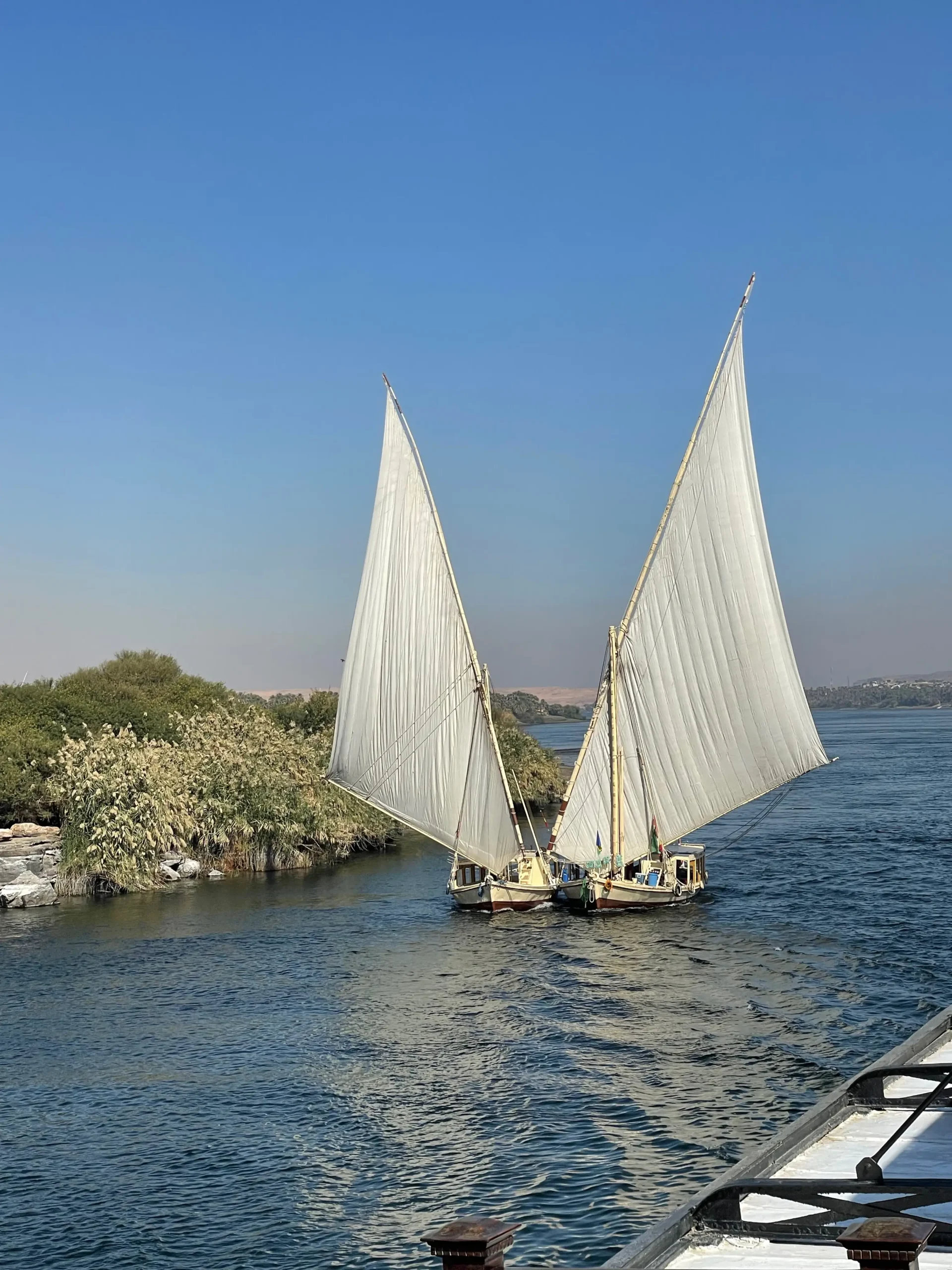
A dahabiya is a traditional two-masted sailing boat. It’s how people travelled the Nile in the 1800s, before diesel and before buffets. Ours has been rebuilt for modern comfort — proper cabins, real beds, hot showers, a shaded deck you’ll never want to leave — but it still moves the old way, with sails and wind and a bit of patience.
That patience is the whole point.
Big cruise ships need deep water and big moorings. They stop where the infrastructure is. A dahabiya slips into places they physically cannot reach: sandbanks, small islands, village landings where the only welcoming committee is a kid on a donkey who wants to know where you’re from.
On a typical evening of your 7 nights Nile cruise with us, you’ll be moored beside an island with no lights on it. Dinner is served on deck. The generator gets switched off. And then there’s this silence that people genuinely struggle to describe afterwards — one of our French guests last winter called it “le silence qui a du poids.” Silence with weight. We’ve been borrowing that line ever since.

Why Seven Nights Instead of Four
We sell shorter cruises too, so we’ll be straight with you.
A 4-night cruise is a highlights reel. Luxor to Aswan one way, the famous temples, done. If you’ve got a week in Egypt total and Cairo is on the list, it’s the right call — and we’d rather sell you the right cruise than the expensive one.
A 7-night Nile cruise is a different animal. You get:
- Dendera and Abydos-side territory north of Luxor that short cruises never touch
- Village stops — Garagos, Bassao Island, the Daraw camel market — that aren’t in any brochure
- Slack time. Whole afternoons where nothing is scheduled and the answer to “what are we doing now” is “nothing, sit down”
- Sailing time. Real sailing, not motoring between two moorings
Ask anyone who’s done both. The four-night guests talk about the temples. The seven-night guests talk about the river.
Your 7 Day Nile Cruise Itinerary: Luxor to Aswan, Day by Day
Departure and return are handled from Luxor, with pickup from your hotel or the airport. Boarding is one hour before sailing. Maximum group size: 16 guests.
- Day 1
Luxor’s East Bank, then Sailing North to Qena
We collect you and go straight to the two giants: Karnak Temple, with its forest of columns that makes every single person tilt their head back and go quiet, and Luxor Temple, carved end to end with battle scenes.
By afternoon you’re on board. Sails up, city behind you, mint tea in hand. We moor at Qena for your first night — dark water, loud stars, zero engine noise.
- Day 2
Dendera Temple and the Village of Garagos
Dendera is, in our honest opinion, the most underrated temple in Egypt. It’s dedicated to Hathor, goddess of love and beauty, and the ceiling — recently cleaned back to its original blues and golds — stops people mid-sentence. Big ships don’t come here. You’ll often have entire halls to yourself.
Then we turn south and stop at Garagos, a pottery village where the pace of life hasn’t changed much in a century. Walk the lanes. Say hello. Buy something wonky and handmade. We moor at Luxor overnight.
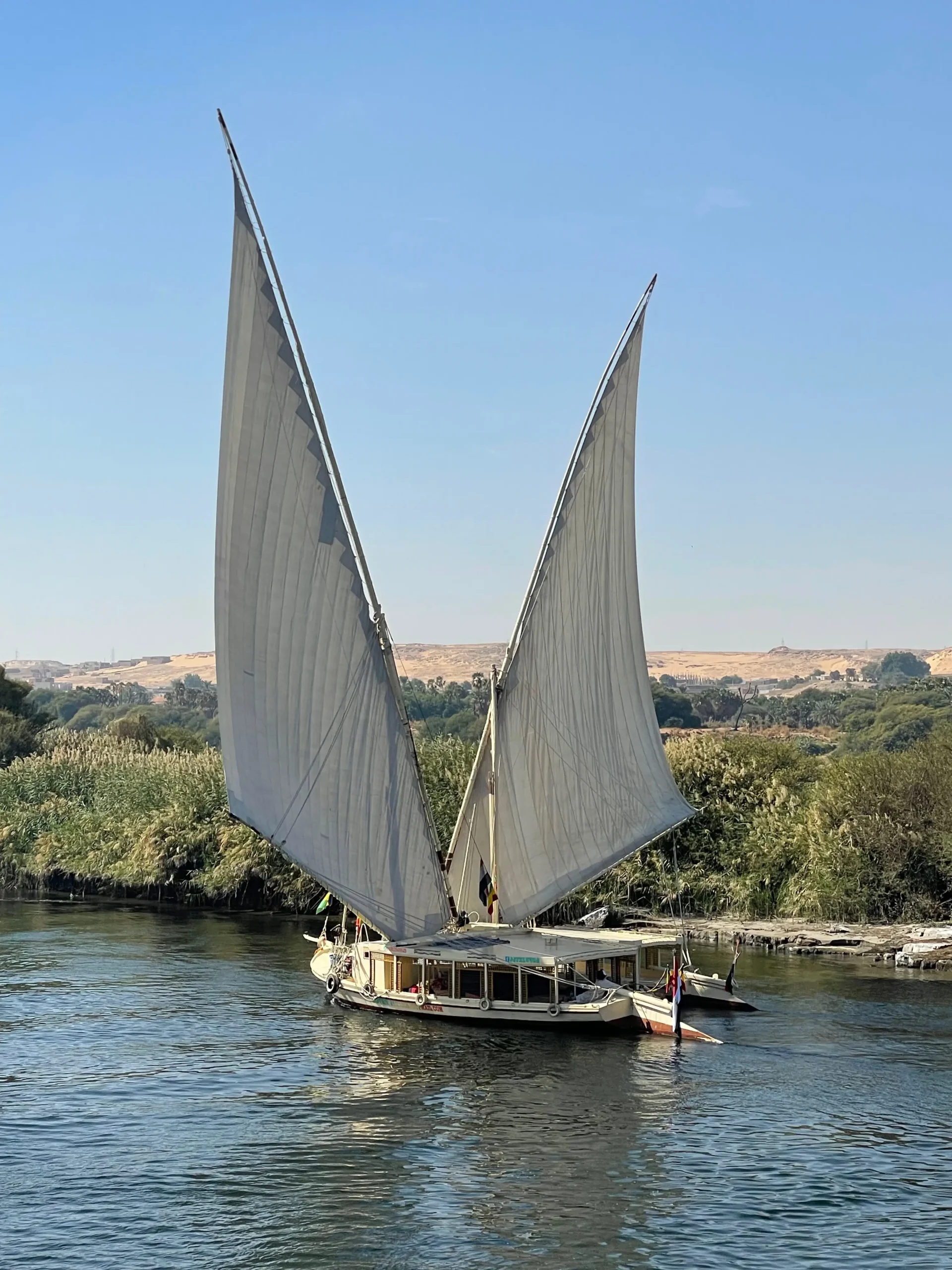
- Day 3
Valley of the Kings, Hatshepsut, and On to Esna
Cross to Luxor’s West Bank — the city of the dead. The Valley of the Kings, where the tombs are cut deep into the rock and the paint still looks wet after 3,000 years. Then Hatshepsut’s Temple, stacked against the cliffs like something a modern architect would be proud of.
Late afternoon, we sail south toward Esna. This is one of our favourite stretches of river. Bring a book you won’t read.
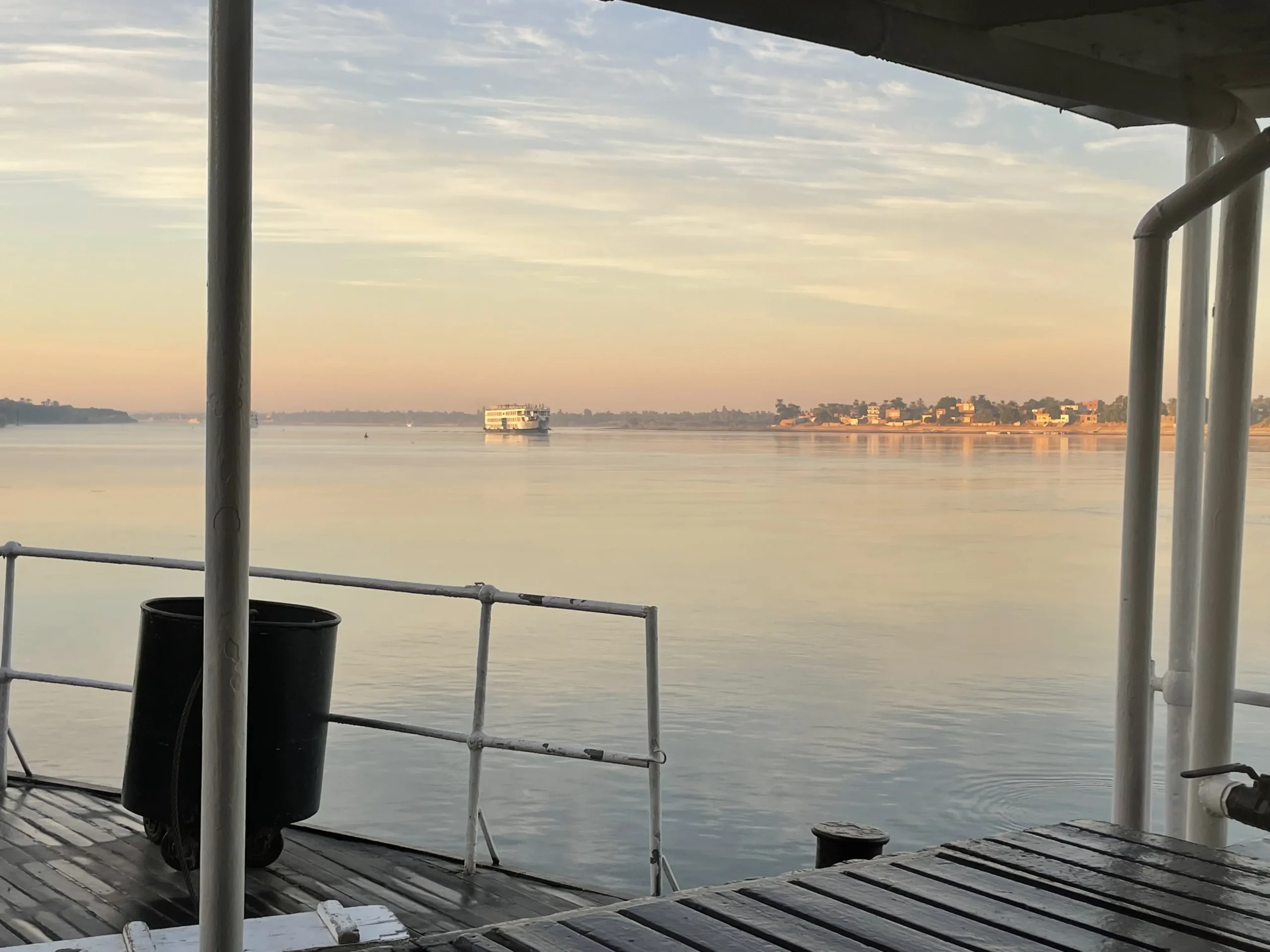
- Day 4
The Esna Lock, El Kab, and Imam Island
Early breakfast, because we’re passing through the Esna Lock — a slow, strange, brilliant bit of theatre where small boats swarm alongside selling tablecloths, and the whole river queues up together. You’ll take more photos here than at some temples.
We visit the Temple of Esna, sunk below street level in the middle of a working town, then sail to El Kab, where tombs are carved straight into the cliff face and the vulture goddess Nekhbet watches over everything.
Night mooring: Imam Island. Nobody else there. Stargazing weather permitting, which in Egypt it usually is.
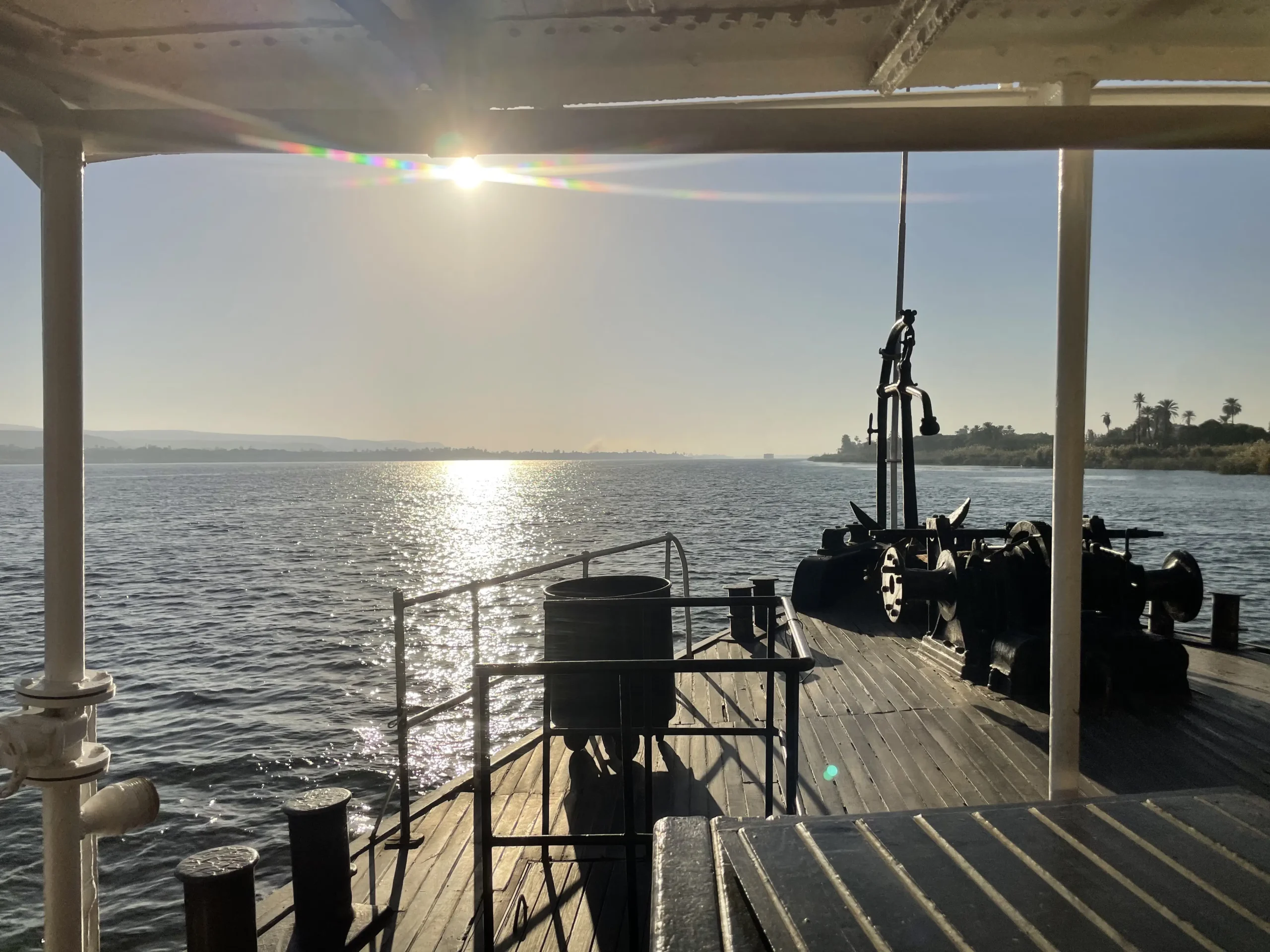
- Day 5
Edfu Temple and Bassao Island
Edfu is the best-preserved temple in the country, and it’s dedicated to Horus. Walking through the pylon feels less like sightseeing and more like trespassing — in the good way.
Afternoon takes you to Bassao Island, a farming community where the fields are worked by hand and the welcome is genuine. We moor for the night near the sandstone cliffs of Gebel El Silsila.
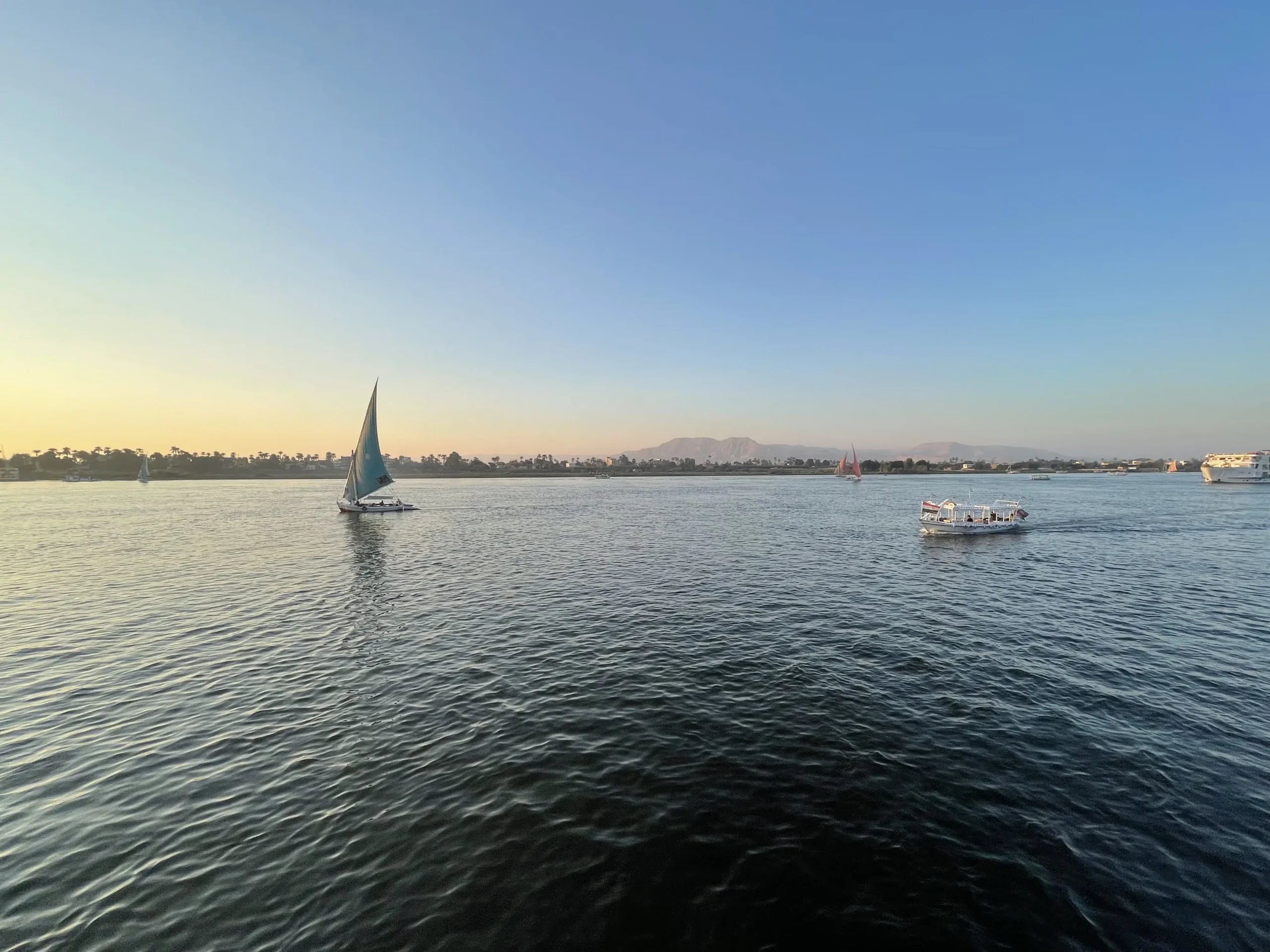
- Day 6
Gebel El Silsila, Kom Ombo, and the Daraw Camel Market
Morning at the El Silsila quarries — the sandstone for half the temples you’ve already seen was cut right here, and you can still see the chisel marks and unfinished blocks.
Then Kom Ombo, the only double temple in Egypt, split down the middle between Sobek the crocodile god and Horus the falcon. There’s a mummified crocodile museum next door. It’s exactly as good as it sounds.
We finish the day at the Daraw camel market, one of the largest in Africa and one of the most unfiltered things you’ll see in Egypt. Overnight at Herdiab Island.
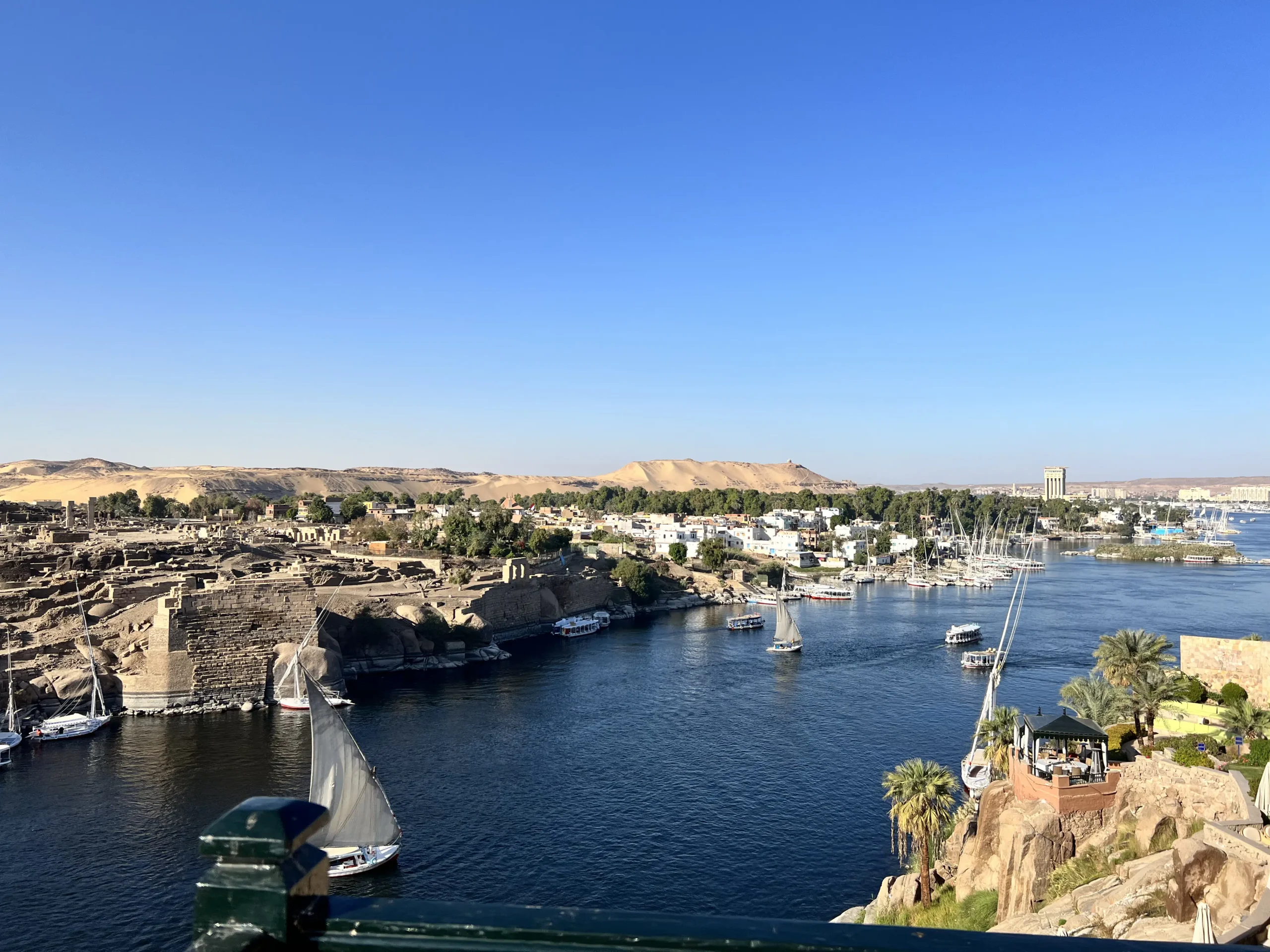
- Day 7
Arrival in Aswan — The Final Chapter
And here’s where we stop typing.
The final day and the seventh night of this journey are the part we’d rather explain to you personally, because how we handle the ending depends entirely on you — your onward flights, whether you’re adding Abu Simbel, and how you want the last chapter to land. There’s a temple involved. It sits alone on an island. That’s all you’re getting here.
7 Day Nile Cruise Itinerary at a Glance
| Day | Main Sights | Overnight Mooring |
|---|---|---|
| 1 | Karnak Temple, Luxor Temple | Qena |
| 2 | Dendera Temple, Garagos village | Luxor |
| 3 | Valley of the Kings, Hatshepsut Temple | Esna |
| 4 | Esna Lock, Esna Temple, El Kab tombs | Imam Island |
| 5 | Edfu Temple, Bassao Island | Gebel El Silsila |
| 6 | El Silsila quarries, Kom Ombo, Daraw market | Herdiab Island |
| 7 | Aswan arrival — details on request | Ask us |
What Is Included in Your Nile Cruise (and What Isn’t)
Half the complaints we hear about other operators come down to one thing: people didn’t know what “all inclusive” meant until the bill arrived. So here’s ours, plainly.
✅ Included
- Full board on board — breakfast, lunch, dinner
- Expert archaeologist guide for all sightseeing
- Entrance fees to every site in the itinerary
- All transfers in modern air-conditioned vehicles
- Unlimited soft drinks throughout the journey
- Onboard activities and evening entertainment
❌ Not Included
- Gratuities for crew and guides
- Alcoholic drinks
- Personal expenses and shopping
- International and domestic flights
- Egypt entry visa
- Optional extras (Abu Simbel, hot air balloon)
A note on honesty: The Elegant Scape programme is a 7-day itinerary with 6 nights of full board on board. The seventh night is arranged around your onward plans — Aswan, Abu Simbel, an extension to Cairo, or a flight out. Entrance fees are included. That’s not standard. Read the fine print on any Nile cruise package you’re comparing, including ours.
Nile Cruise Prices: What You’re Actually Paying For
Nile cruise cost across the market swings wildly. Budget group cruises start around $750 per person. Standard five-star packages run to roughly $2,700. Private, small-boat itineraries generally sit above $1,000 per person and go up from there.
Our 7 night Nile River cruise starts from €1,500.
What moves the number:
| Factor | Effect on Price |
|---|---|
| Season | Winter (Oct–Apr) is peak. Christmas and New Year are peak-peak. |
| Cabin type | Standard rooms vs. suites |
| Occupancy | Solo travellers pay a supplement; couples and pairs get the best rate |
| Group size | Full private charter of all 16 berths changes the maths considerably |
| Add-ons | Abu Simbel, hot air balloon over the West Bank, Cairo and Giza extensions |
Here’s the comparison that we think actually helps:
| Large 5-Star Cruise Ship | Turquoise Dahabiya | |
|---|---|---|
| Guests | 150–300 | Maximum 16 |
| Propulsion | Engine | Sail (engine assist as needed) |
| Moorings | Fixed docks, often rafted 4 boats deep | Islands, sandbanks, villages |
| Temple timing | Fixed group schedule | Flexible — we go when it’s quiet |
| Crew ratio | You’re a cabin number | The crew knows your name by day two |
| Nights | Engine hum, neighbouring boats | Silence |
We’re not going to pretend a dahabiya is cheaper than a budget group cruise. It isn’t. It’s a different product at a different price, and we’d rather you understand the difference than book us by accident.
Best Time for a Nile Cruise
| Season | Months | What to Expect |
|---|---|---|
| Peak | Nov – Feb | Cool, comfortable sightseeing weather. Highest prices around Christmas and New Year. Book early. |
| Shoulder | Oct, Mar – Apr | Our personal favourite. Warm, long days, softer light, fewer people. |
| Hot | May – Sep | Very hot midday. We shift excursions early and lean on shaded deck time. Best rates of the year. |
The cooler months are generally preferred because the daytime heat is manageable while you’re walking around open temple complexes. But we sail year-round, and a summer sail with a proper breeze and a 6am Valley of the Kings start is nobody’s idea of suffering.
What to Pack for a 7 Night Nile Cruise
Keep it simple:
- Lightweight, breathable clothing — cotton and linen, layers
- Comfortable walking shoes with grip. Temple floors are uneven, ancient, and unforgiving
- Sun protection — high-factor sunscreen, sunglasses, a proper wide-brimmed hat
- Modest clothing for religious sites — shoulders and knees covered
- Swimwear for deck and river moments
- A light jacket or shawl — desert nights get cooler than people expect
- Personal medication, insect repellent, and a small day bag
- A power bank. You will take more photos than you planned
Dress code on board is relaxed. No formal nights, no dinner jackets. Ashore, modest and covered is both respectful and cooler in the heat.
Is a Nile Cruise Safe? And Do I Need a Visa?
Egypt’s tourism corridor between Luxor and Aswan is well-established and heavily travelled. Our crew are local, long-serving, and know this river the way you know your own street. Standard travel sense applies here as anywhere: stay hydrated, listen to your guide, and don’t wander off at the camel market.
Visa: most Western travellers can obtain an Egypt e-visa online in advance or a visa on arrival. Requirements change, so check your own government’s current guidance close to travel — and if you’re unsure, ask us. We handle this question weekly.
Who This Cruise Suits
Couples. The private mooring, the deck dinners, the absence of a poolside DJ. This is a honeymoon boat and always has been.
Families. Absolutely — with planning. Check cabin configurations with us, ask about excursion lengths, and be honest with us about your kids’ ages. Some days involve early starts and real walking in heat. We’d rather adjust the plan than have a miserable eight-year-old at Kom Ombo.
Older travellers. A dahabiya is smaller, which means fewer decks and shorter distances — but boarding is via gangplank and some temples involve uneven ground and steps. Tell us about mobility needs before you book, not after. We will tell you honestly whether this itinerary works for you, and if it doesn’t, we’ll say so.
Private groups. Sixteen berths. Book them all and the boat is yours, the schedule is yours, and the menu is negotiable.
Frequently Asked Questions
With us: full-board meals, an archaeologist guide, all entrance fees in the itinerary, air-conditioned transfers, soft drinks, and onboard entertainment. Excluded: alcohol, tips, personal spending, flights, visa. Across the wider market, inclusions vary enormously — some listings charge sightseeing separately from the cabin rate. Always compare the “included” and “excluded” lists side by side.
Most run Luxor → Edfu → Kom Ombo → Aswan and back. Ours goes further north first, to Qena and Dendera, before turning south — which is why we reach places the standard route skips.
Better for slow travel, round-trip routing, free time, and add-ons like Abu Simbel. A 4-night cruise is better if your total Egypt time is short.
Rarely in the way people assume. “All inclusive” often excludes alcohol, bottled water, tips, visas, flights and entrance tickets. Ours includes entrance fees and soft drinks; it does not include alcohol or gratuities.
Both directions see the same temples. Nile cruise Luxor to Aswan is the traditional and most advertised route — ours departs from Luxor. The right choice usually comes down to your flights and hotel bookings.
Not as standard. It’s an optional add-on requiring separate transport and a very early start. Get it confirmed in writing — with us or with anyone else.
It varies. Some days we sail between sites; some days we sail overnight; some days you’ll be on deck for hours doing nothing at all. That’s the design, not a scheduling gap.
Yes to both, with the caveats above. Talk to us first.
You May Also Like
Travel With Confidence
Local Expertise
Based in Luxor, with a team that knows the Nile, its temples and its rhythms first-hand.
Personalized Service
Small private groups mean itineraries and pace that can flex around you.
Small-Scale Experience
A maximum of 16 guests per departure, well below a standard Nile cruise ship.
Direct Assistance
Our team replies personally to every enquiry, before and during your trip.
Ready to Sail the Nile at a Slower Pace?
A 7 night Nile River cruise is the version of Egypt that people describe years later without meaning to bring it up.
Plan Your Dahabiya Cruise
Our team will reply with availability and trip details.
