


Best Nile Cruise Ships: How to Pick the Boat Before You Pick the Trip
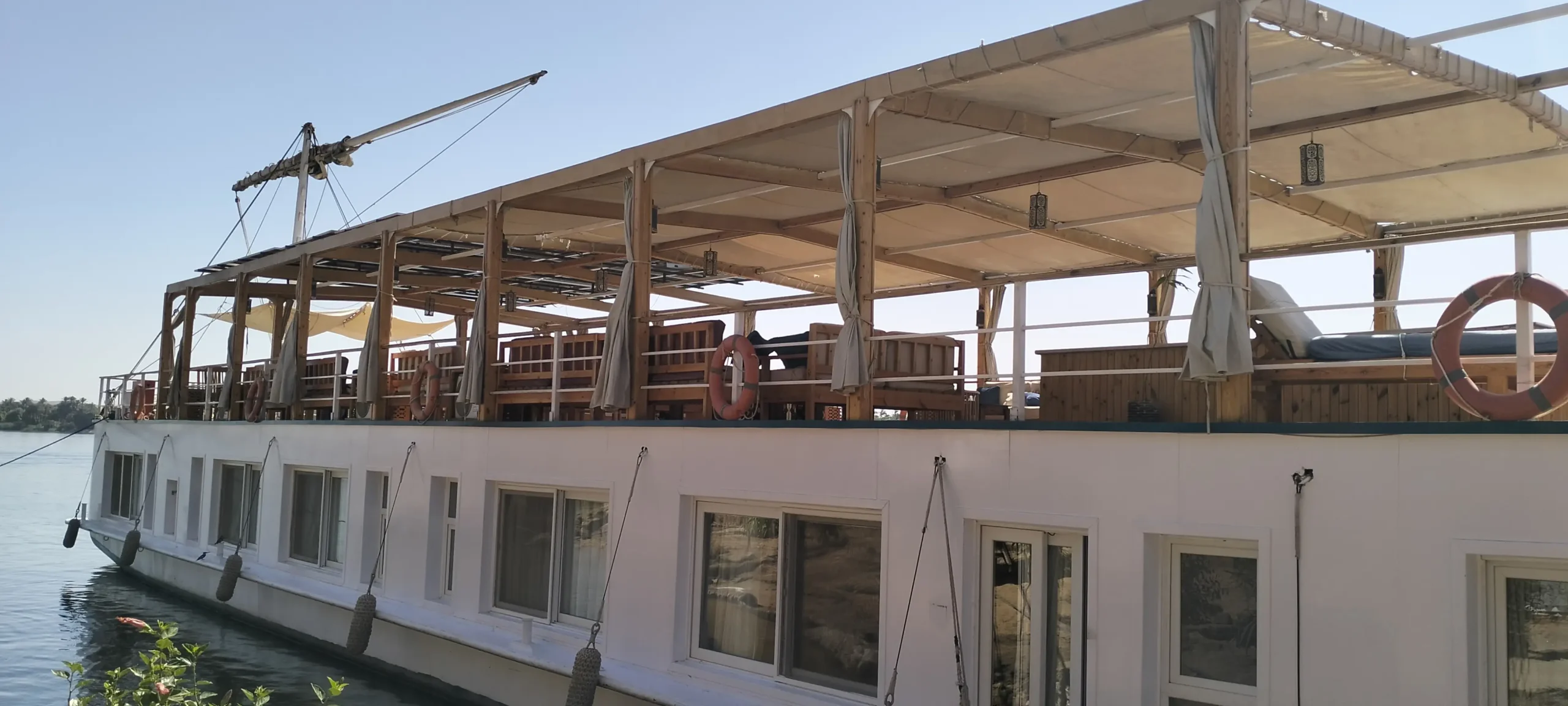
Here is something almost nobody tells you while you are planning Egypt: the temples are fixed, but your experience of them is not. Karnak is the same Karnak whether you arrive with 12 people or 300. What changes — completely — is the hour you get there, how long you stay, whether anyone is talking over your guide, and what you do for the eleven hours afterwards.
That is why the search for the best Nile cruise ships matters more than most travellers realise when they start it. You are not really shopping for a bed. You are choosing the pace of your entire week in Egypt.
We are Turquoise Dahabiya, and we should be upfront about our position: we do not operate a fleet of large vessels. We sail one traditional wooden dahabiya between Luxor and Aswan, with a small number of guests on board. So this page does two jobs. First, it explains — plainly, without spin — how the different classes of Nile vessel actually differ, so you can judge any boat you are offered. Second, it shows you our own journeys, with real routes, real durations and real starting prices, so you can decide whether the small-boat version is the one you want.
Choosing a Nile cruise ship: the short version
- Four broad classes sail the Nile: large 5-star ships, mid-range 3- and 4-star ships, traditional dahabiyas, and feluccas
- The number that changes everything: how many guests share the boat with you
- Our boat: a private traditional dahabiya, with a maximum of 16 guests on our main journeys
- Routes we sail: Luxor, Esna, Qena and Aswan — plus two longer journeys continuing to Cairo
- Durations: 4, 5, 7, 11 and 14 days, plus a fixed-date 2027 eclipse sailing
- Meals: full board on board, with complimentary soft drinks
- Guiding: an expert archaeologist accompanies your sightseeing
- Tickets: entrance fees to every attraction listed in your itinerary are inside the price
- Prices from: €750 for 4 days, rising to €3,500 for 14 days
- Best months: broadly October to April, when temperatures sit around 20–28°C





Five Things That Decide Whether a Nile Cruise Ship Is Any Good
Star ratings, brochure adjectives and stock photography of sunsets all blur together after the third booking site. These five questions do not. Ask them about any vessel you are considering — ours included.
- How many guests? This single number quietly sets the temperature of the whole trip: how fast you clear a temple gate, whether you eat when you are hungry or when the second sitting is called, how well the crew know your name by day three.
- How many nights do you genuinely sleep on board? A “7-day cruise” that puts you in hotels at both ends is a shorter cruise than it sounds. Count the nights on the water, not the days in the title.
- Are entrance fees and guiding inside the price? Egypt sells temple tickets site by site, and a serious itinerary stacks them fast. If they sit outside the headline number, that number is not the number.
- Where can the boat physically stop? Large vessels need commercial quays. Smaller sailing boats can moor at islands and villages, which is a different country entirely.
- Sailed or driven? Motorised ships run to a timetable. A dahabiya works with the wind and moors where the crew judges best — quieter, slower, and occasionally gloriously unscheduled.
The honest counterweight, before you read any further
A large 5-star ship gives you a full-size swimming pool, a much bigger public deck, a nightly entertainment programme and departures on a fixed weekly grid. If those four sit at the top of your list, a big vessel may genuinely be the better booking for you — and we would rather say so here than sell you the wrong holiday. What we offer instead is small, quiet and private. Our comparison of a dahabiya versus a standard Nile cruise goes through the trade-offs in detail.
The Four Kinds of Vessel You Will Be Offered
Almost every “top Nile cruise vessels” list you will read is really a list of four categories with different names attached. Here is how they separate.
| Vessel type | Scale & feel | Strongest for | Main trade-off |
|---|---|---|---|
| Large 5-star cruise ship | Hundreds of guests, hotel-style decks, pool, nightly programme | First-timers on a tight schedule who want facilities and fixed departures | Group pacing at every site; moorings limited to commercial quays |
| 3 to 4-star cruise ship | Same shape, simpler finish and fewer extras | Budget-conscious travellers who mainly want the temple circuit covered | Inclusions vary a lot between operators — read the exclusions list twice |
| Traditional dahabiya | A small wooden sailing boat, a handful of cabins, private charter feel | Couples, families and small groups who want quiet, flexibility and access | No large-ship facilities; limited cabins, so dates close early |
| Felucca | An open sailing boat, no cabins, sleeping on deck | Young, adventurous travellers on a very short budget | Basic by design — see felucca versus dahabiya |
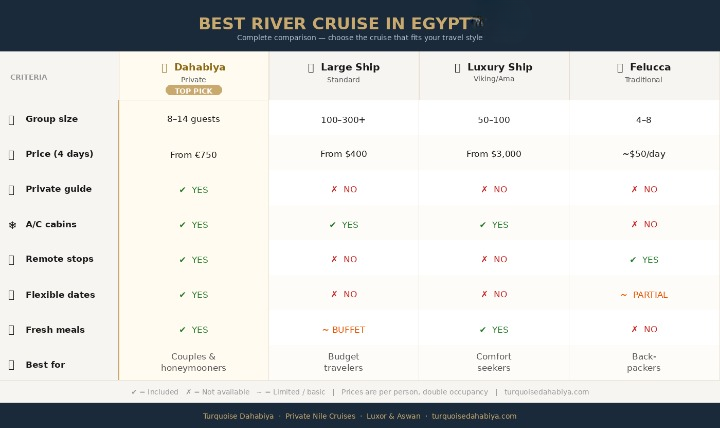
Notice what the table does not do: declare a winner. There isn’t one in the abstract. There is only the boat that matches how you want to spend the week — which is exactly why the enquiry form at the bottom of this page asks about your travel style before it asks about anything else.
Where the Big-Name Ships Fit In
Search for the best Nile cruise ships and the same brand names surface again and again — Oberoi, Sonesta, Mövenpick, Steigenberger, Sanctuary, Viking. They are the large-vessel end of the market, and travellers routinely compare them against small-boat operators like us.
We are not going to publish a ranking of other companies’ boats. We have not sailed on them, and a review written by a competitor is worth exactly nothing to you. What we will do is hand you the comparison method, because it works on any vessel, any brand, any brochure:
- Ask for the guest count, not the cabin count.
- Ask how many nights are actually spent on the water.
- Ask whether entrance fees and guiding are in or out.
- Ask where the boat moors — quays only, or islands and villages too.
- Ask what happens if the group wants an extra hour at a site.
For our own boat, the answers are: a maximum of 16 guests on our main journeys; every night of the sailing spent on board; entrance fees to all listed attractions and an expert archaeologist guide included; moorings at islands and villages large ships cannot reach; and a small enough group that an extra hour is a conversation, not a logistics problem. Put the same five questions to anyone else you are considering — the answers separate boats far better than a star count does.
3-Star, 4-Star, 5-Star: What the Ratings Actually Tell You
The honest answer is: less than you would hope. Nile cruise star ratings describe the standard of the vessel’s fittings and services — cabin finish, dining, public spaces, onboard facilities. They are a reasonable shorthand for comfort. They say almost nothing about the two things travellers care most about afterwards.
| What the star rating covers well | What it does not cover at all |
|---|---|
| Cabin finish and bathroom standard | How many people you share the temple visit with |
| Dining style and onboard facilities | Whether the itinerary can flex by an hour |
| Size and comfort of public decks | Where the boat is permitted to moor overnight |
| Service formality | Whether the guide stays with you all week |
Which is why a beautifully rated ship and a small sailing boat can produce completely different holidays at the same price point. If you would like our full argument on this, we made it at length in our guide to the best river cruise in Egypt, and in our look at the old-fashioned way of sailing the Nile.
Our Nile Journeys, and Who Each One Is For
Six journeys, one boat, five different lengths. They are ordered here by how many travellers choose them, starting with our most-booked week.
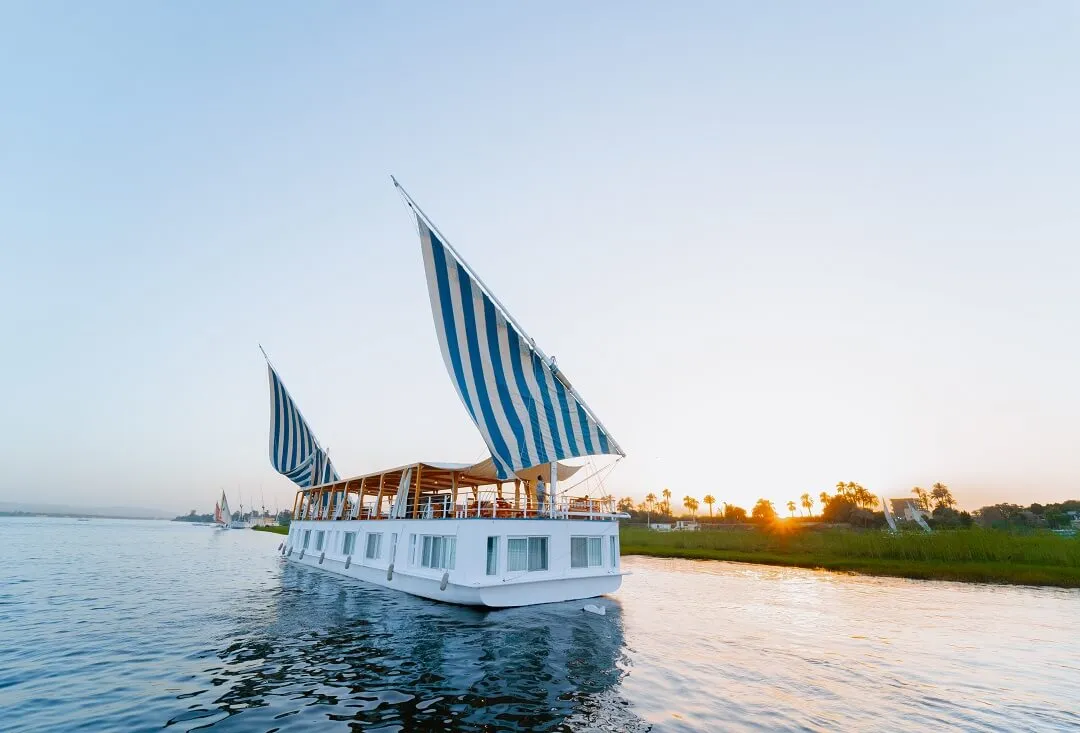 7 Days / 6 Nights
 Elegant Scape
Luxor → Qena → AswanThe complete southern river, and the journey most first-time visitors book. It heads north to Qena first so that Dendera lands in the same week as Kom Ombo, then turns south for the classic temple run.
 5 Days / 4 Nights
 Serenity Retreat
Luxor / Esna → AswanFour nights afloat is roughly the point where a boat stops feeling like transport and starts feeling like the holiday. Short enough to leave room for Cairo at either end, long enough to stop checking the time.
 4 Days / 3 Nights
 Sacred Waters
Aswan → EsnaThe shortest sailing we run, heading north with the current from Aswan. It slots into a larger Egypt itinerary rather than replacing one — which is precisely why travellers pick it.
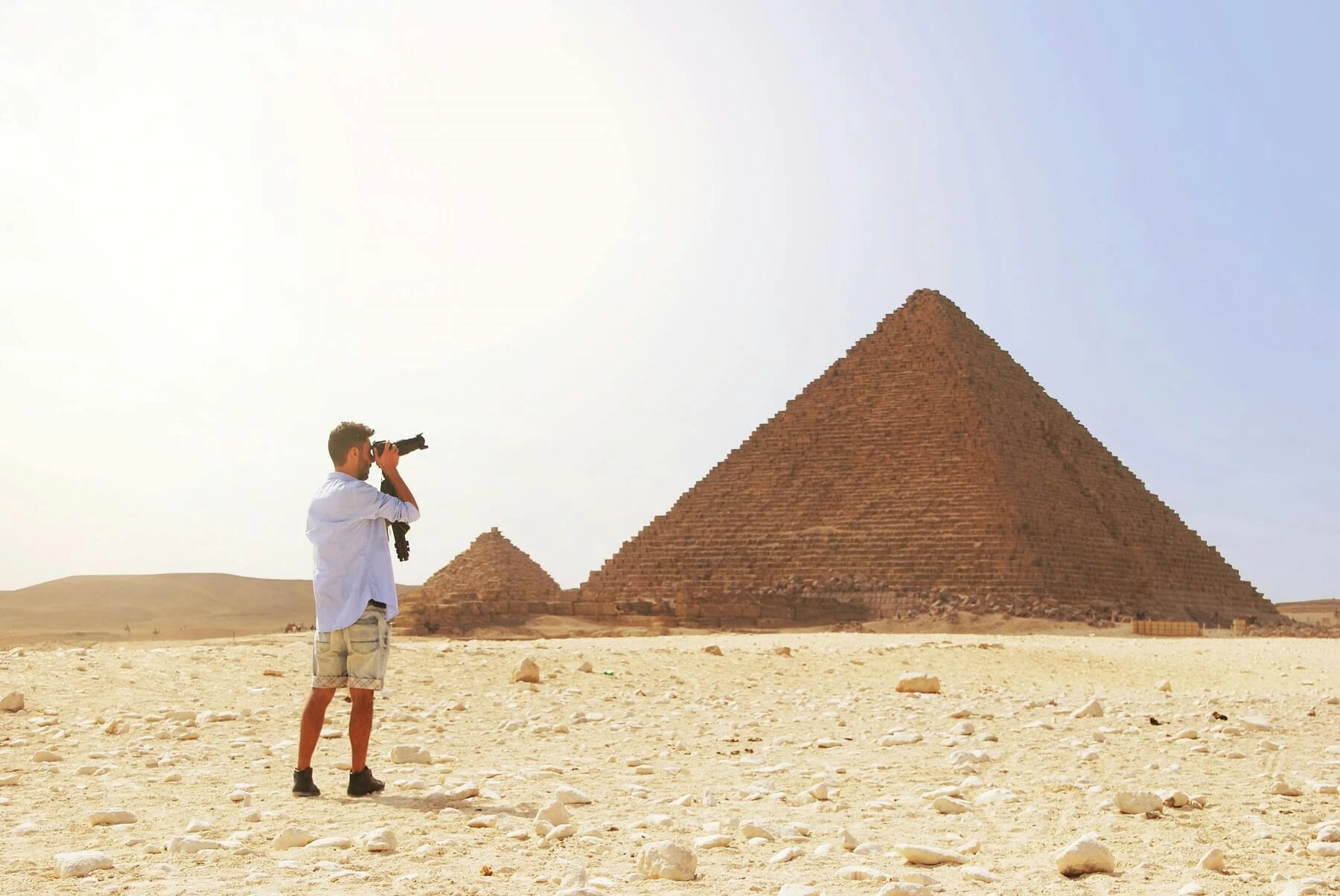 14 Days / 13 Nights
 Golden Horizons
Aswan → CairoOur longest journey: it begins at the southern end of the country and does not stop until Cairo. Two weeks, one cabin, and the whole length of the river rather than a highlights reel of it.
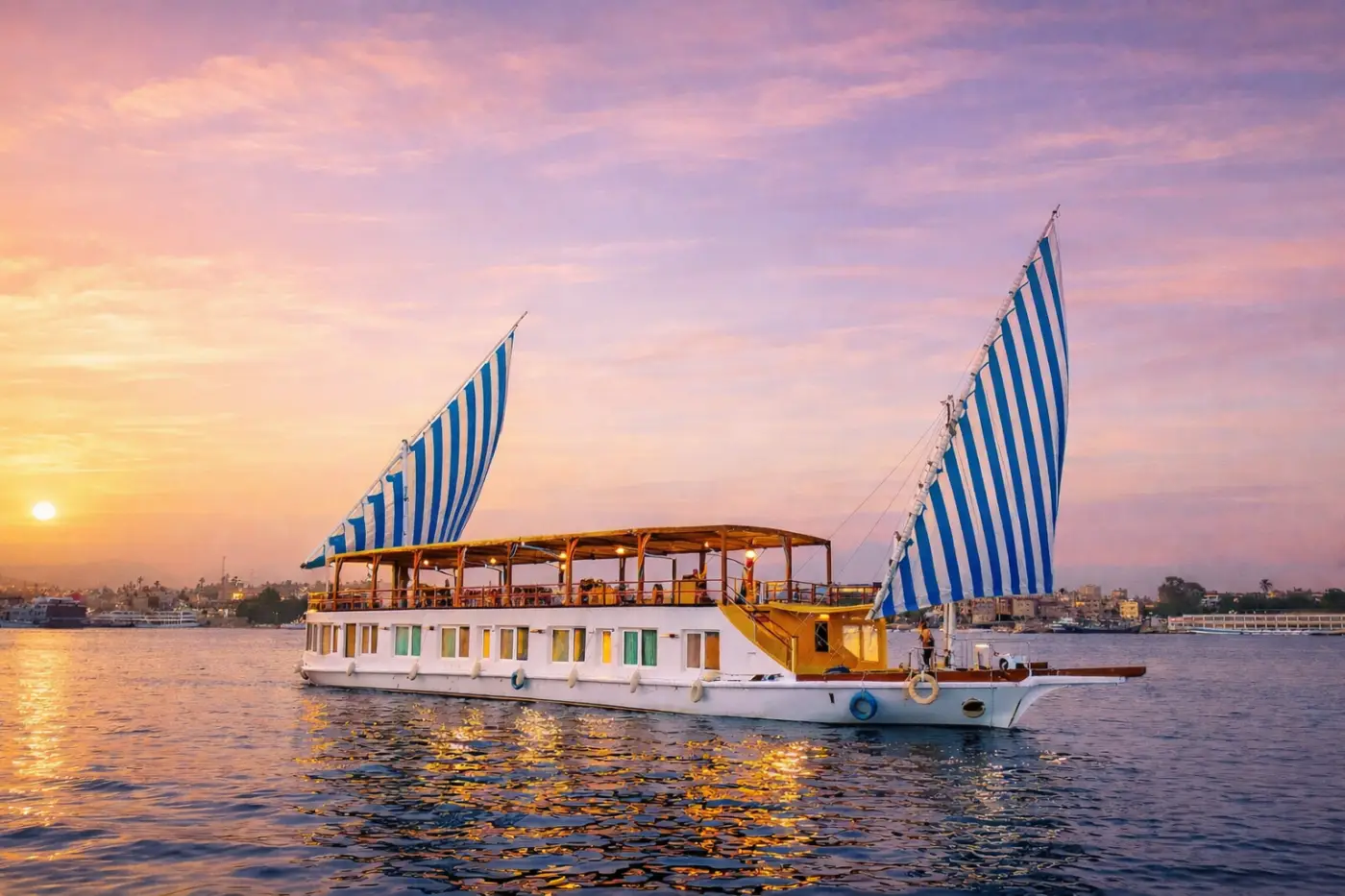 11 Days / 10 Nights
 Royal Nile Escape
Luxor → CairoEleven days sailing north to the capital, crossing the stretch of country between Upper Egypt and Cairo that almost no visitor sees at ground level — and you cross it slowly, from the deck.
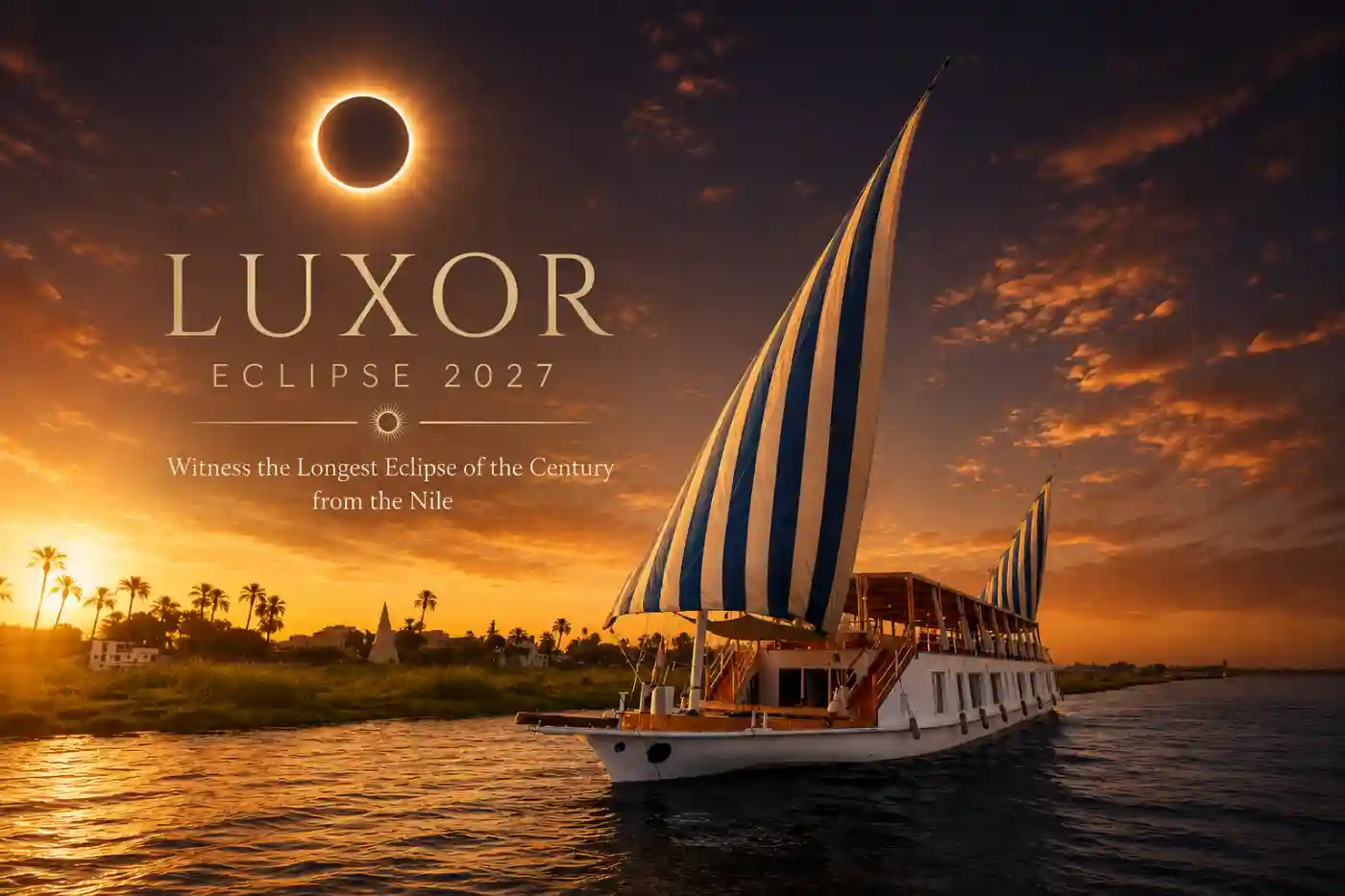 8 Days · 2027
 Egypt Solar Eclipse Cruise
Aswan → Luxor West BankBuilt around the total solar eclipse of 2 August 2027, with maximum totality at 1:10 PM lasting 6 minutes and 23 seconds, viewed from the Luxor West Bank.
Still narrowing it down? Read the detail on the Luxor to Aswan route, compare all our cruise packages, see what is running in Nile cruises 2026, or spend five minutes in the gallery — photographs settle more arguments than paragraphs do.
Nile Cruise Ship Prices: What Ours Cost, and Why “From” Matters
We can only speak honestly about our own boat, so here is our full price list in one place. These are starting prices per person, not quotes.
| Journey | Duration | Route | Pickup | From |
|---|---|---|---|---|
| Sacred Waters | 4 days / 3 nights | Aswan → Esna | Aswan | €750 |
| Serenity Retreat | 5 days / 4 nights | Luxor / Esna → Aswan | Luxor | €1,000 |
| Elegant Scape | 7 days / 6 nights | Luxor → Qena → Aswan | Luxor | €1,500 |
| Royal Nile Escape | 11 days / 10 nights | Luxor → Cairo | Luxor | €3,000 |
| Egypt Solar Eclipse Cruise | 8 days / 7 nights (2027) | Aswan → Luxor West Bank | Aswan | €3,300 |
| Golden Horizons | 14 days / 13 nights | Aswan → Cairo | Aswan | €3,500 |
Three things move a starting price into a final one:
- Cabin category. A suite and a standard cabin are not the same number. Look at both: suites and standard rooms.
- Party size. Two people and a group of ten do not price identically — and a group large enough to fill the boat changes the conversation entirely.
- Travel window. Demand across the season is uneven. Pretending otherwise would help nobody.
We would far rather send you a real figure for your dates than let you plan a trip around an average found on a comparison site.
What “All Inclusive” Means on Our Boat

“All inclusive” is the vaguest phrase in travel, so here is precisely where we draw the line. The list below reflects our 7-day programme, the one most travellers book. Inclusions vary a little between journeys, so confirm yours when you enquire.
| Inside the price | Not inside the price |
|---|---|
| Full board on board — breakfast, lunch and dinner | International and domestic flights |
| An expert archaeologist guide on all sightseeing tours | Alcoholic drinks |
| Entrance fees to every attraction listed in the itinerary | Gratuities |
| All transfers in a modern, air-conditioned deluxe vehicle | Personal expenses |
| Complimentary soft drinks throughout the journey | |
| Onboard activities and evening entertainment |
Two of those lines do most of the work on your budget. The entrance fees, because Egypt charges site by site and nobody enjoys doing currency arithmetic at a ticket window in the afternoon heat. And the archaeologist, because one guide who stays with you across the whole itinerary is the difference between photographing a wall and understanding what is carved into it.
Cabins, Decks and the Bits of the Boat You Will Actually Live On

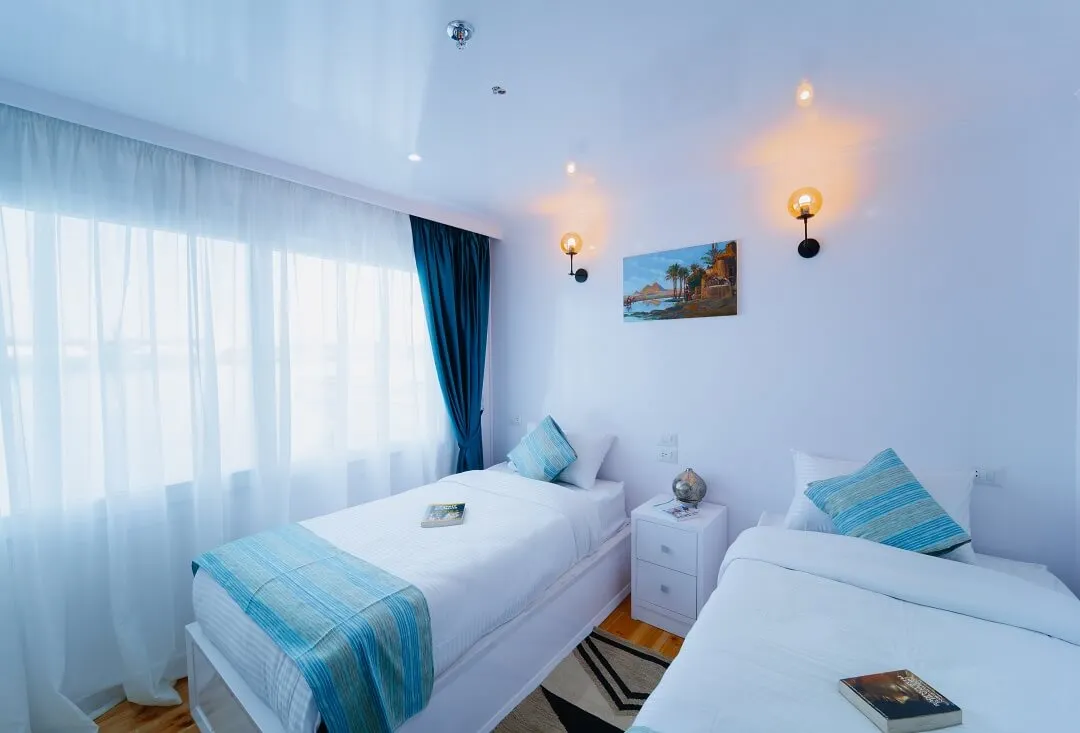
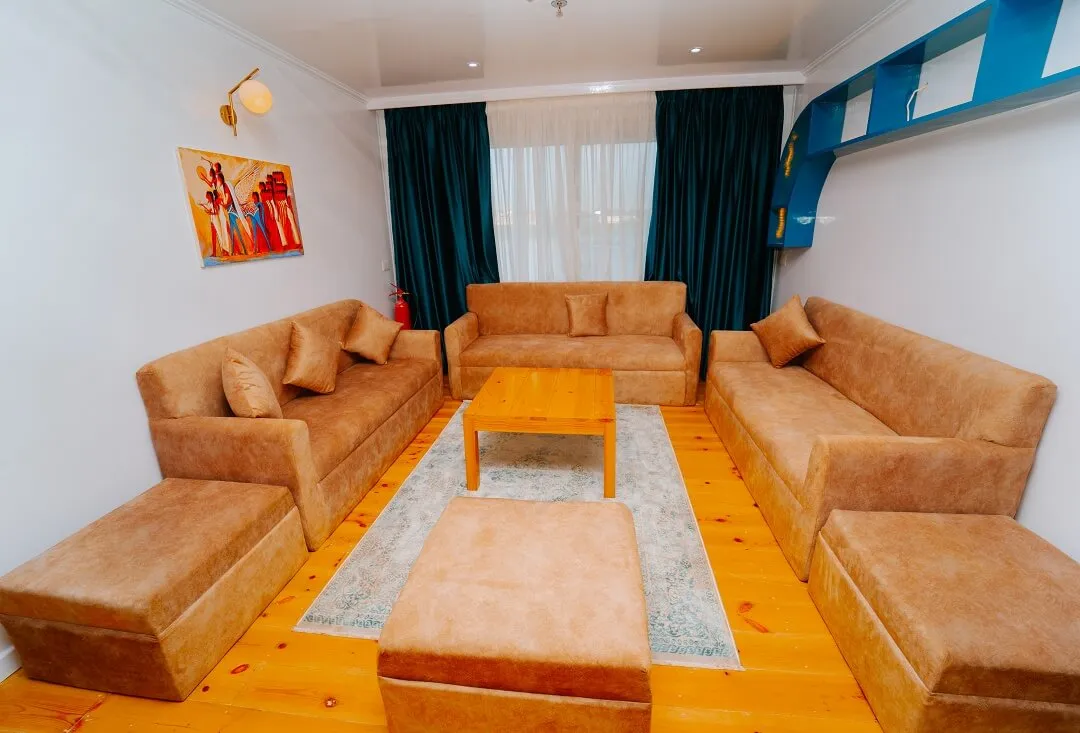
Cabin questions come up in almost every enquiry, and reasonably so — it is where a third of your trip happens. Our accommodation splits into two categories: suites and standard rooms, both with their own pages and photographs so you can judge them rather than take our word for it.
Above deck is where the day is spent. The sun deck carries the seating, the loungers and the dining table, and it is the one part of a dahabiya that consistently surprises people who expected a small boat to feel cramped. There is also a small swimming pool — modest by large-ship standards, and we say so plainly, but a welcome thing after a morning in the Valley of the Kings.
The rhythm of a day settles quickly: sightseeing while it is cool, sailing while it is hot, long evenings on deck once the temples are behind you, with onboard activities and evening entertainment for anyone who wants them. Our page on life on board walks through it properly, and if the environmental side matters to you, so does our note on the eco-friendly way to cruise the Nile.

The Egypt You Meet From the Deck
Egypt’s monuments were built along a river for a reason, and sailing remains the only way to meet them roughly in the order their builders intended. Here is what sits on our Luxor–Aswan run.
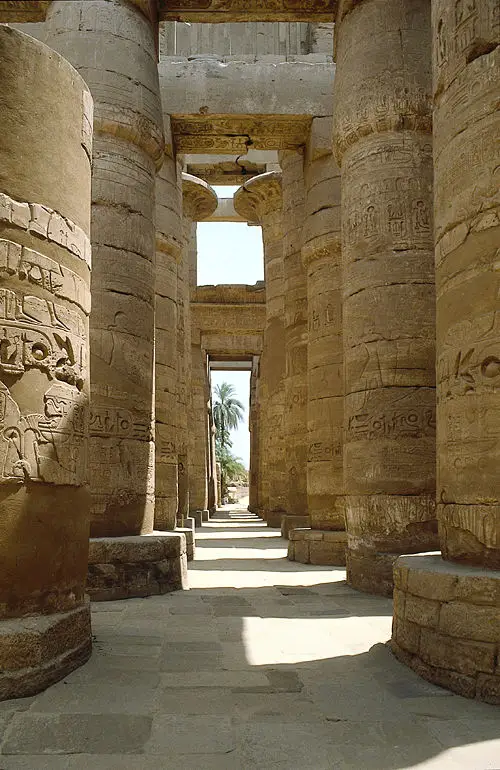
Karnak and Luxor Temple open the seven-day route. Karnak does not survive the trip into a photograph — the scale only registers when you are standing underneath the columns with your head tilted back. Background reading, if you want it: visiting Karnak, Luxor Temple, and the wider Luxor East Bank.
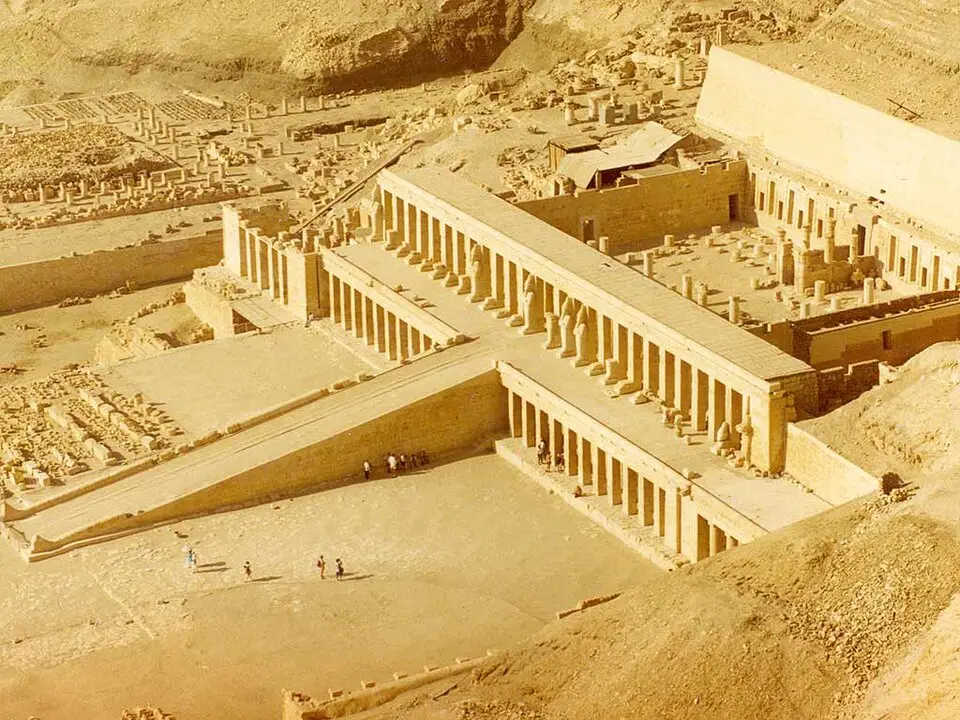
Across the water is the West Bank: the Valley of the Kings with its painted burial chambers cut deep into rock, Hatshepsut’s terraced temple rising out of the cliff face, and the Colossi of Memnon standing guard over an empty field. It is usually the morning when the history stops feeling general and turns personal. More in our guides to the Luxor West Bank and the best tombs to visit.
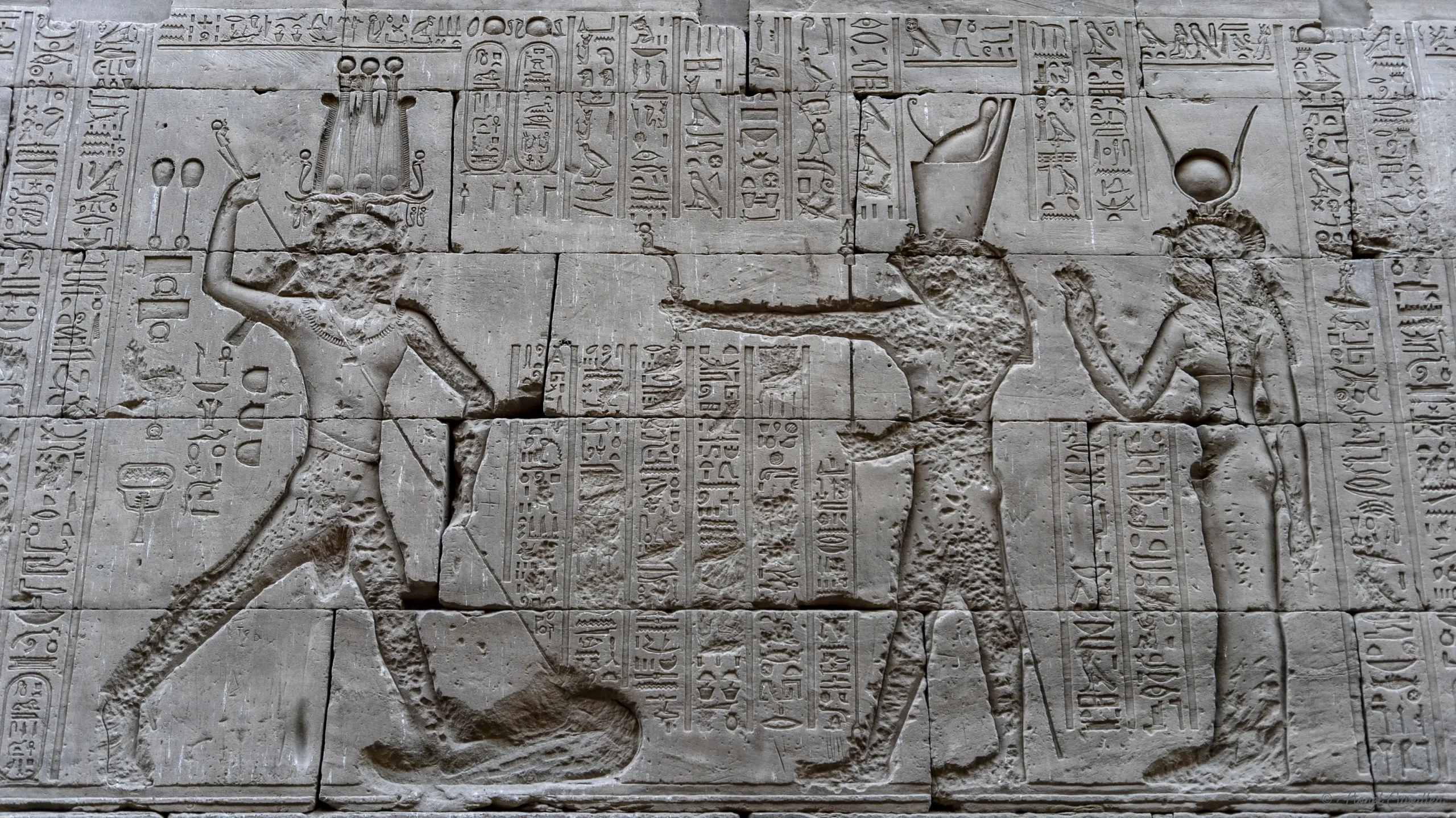
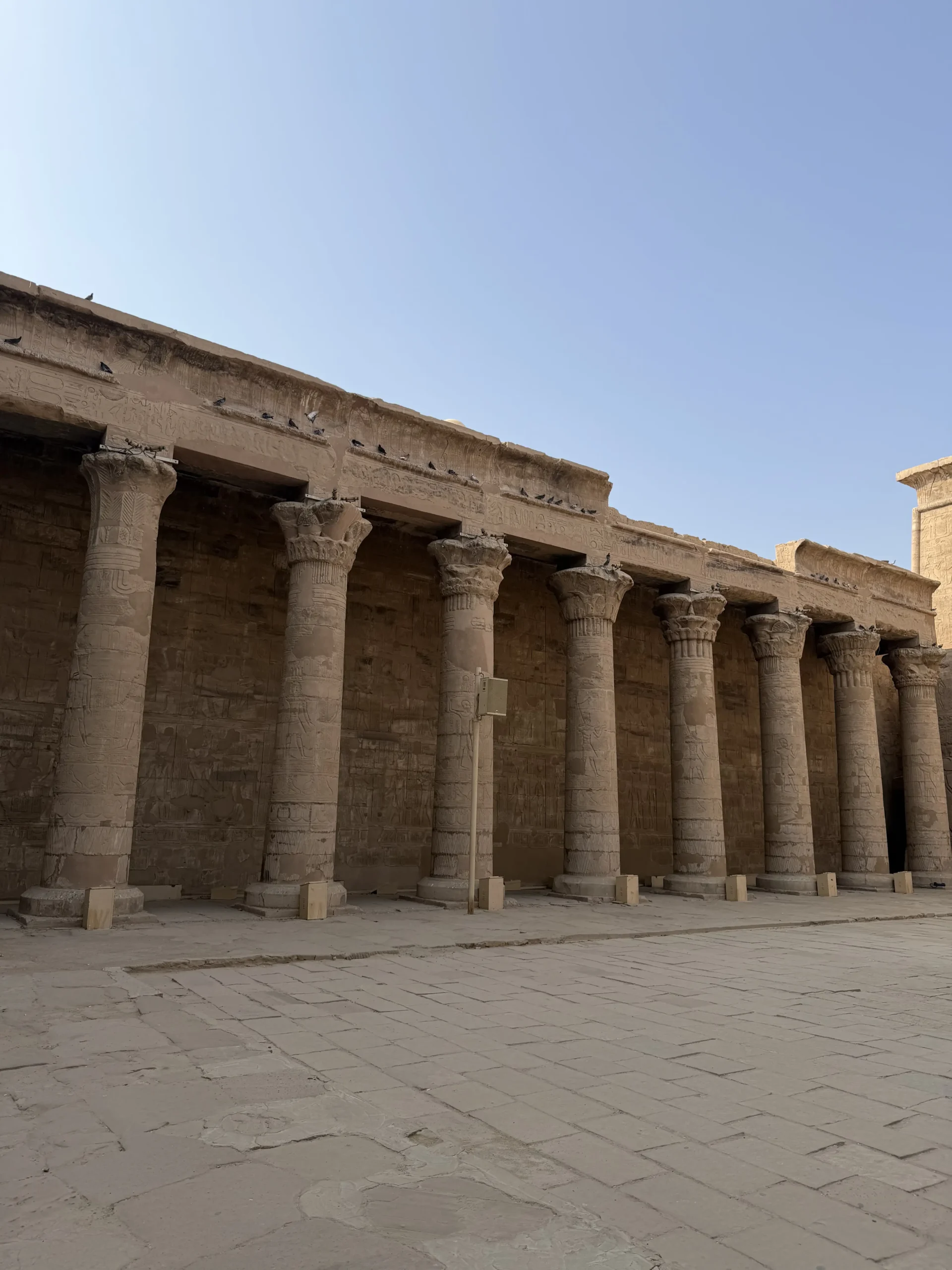
Sailing south, the river hands you one thing after another: Esna and its lock, which is slow, strange and oddly gripping theatre with daily life playing out on both banks; the cliff tombs of El Kab; and the near-complete Temple of Edfu.
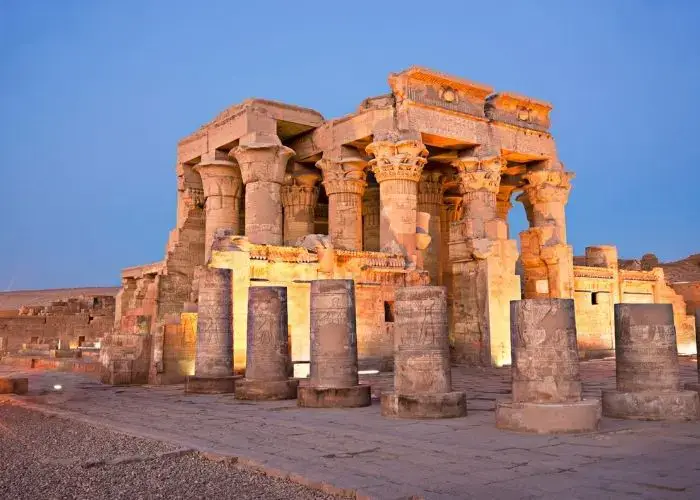
Then Kom Ombo, unusual for being split down the middle between Sobek the crocodile and Horus the falcon — two gods, one building, no compromise ever reached. The camel market at Daraw runs at full volume, and the southern stretch closes at Philae Temple, marooned on its island outside Aswan.
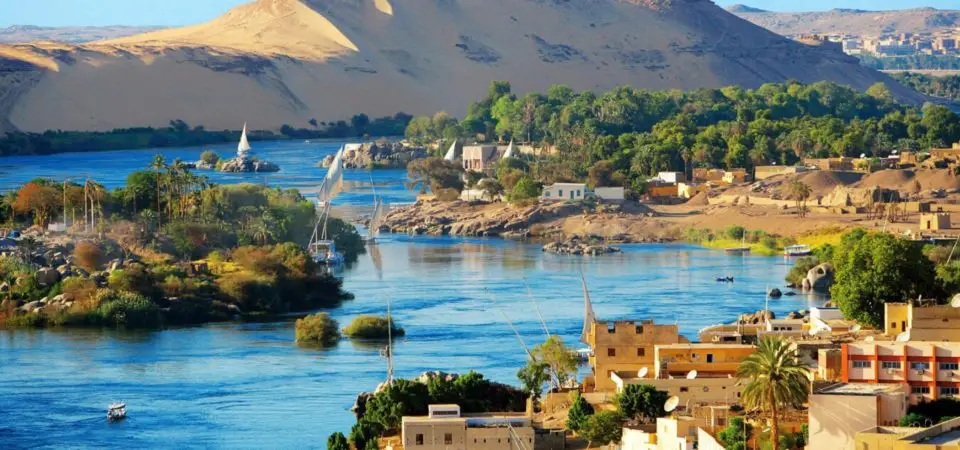
What never appears on a large-ship itinerary are the moorings in between — the islands, the sandbanks, the villages with no quay. Remote, silent, and about as good as Nile stargazing gets. If you like reading ahead, try the attractions along the Nile, the Egyptian countryside, or things to do in Aswan.
When to Sail — and Why Small Boats Sell Out First
October to April is the prime window, with temperatures broadly in the 20–28°C range — comfortable for temple visits and long hours on the sun deck. December and January are the peak months, and because dahabiyas carry a limited number of cabins, booking two to three months ahead is sensible rather than cautious.
May to September is hotter, roughly 35–42°C, but also quieter and more affordable. Air-conditioned cabins and a shaded deck make it manageable if sightseeing is scheduled for early morning and late afternoon — which is exactly how we run it.
There is a structural point worth understanding here. A large fleet has cabins somewhere, almost always. One small boat does not. Availability closes, and then it is simply closed. The unglamorous advice that actually works: send us two or three possible date ranges instead of one, and enquire earlier than feels necessary. Our guide to the best time to go to Egypt for a Nile cruise covers the seasons in more detail, and there are dedicated notes on a winter cruise in Egypt and a Christmas Nile cruise.
Which Boat Suits Which Traveller
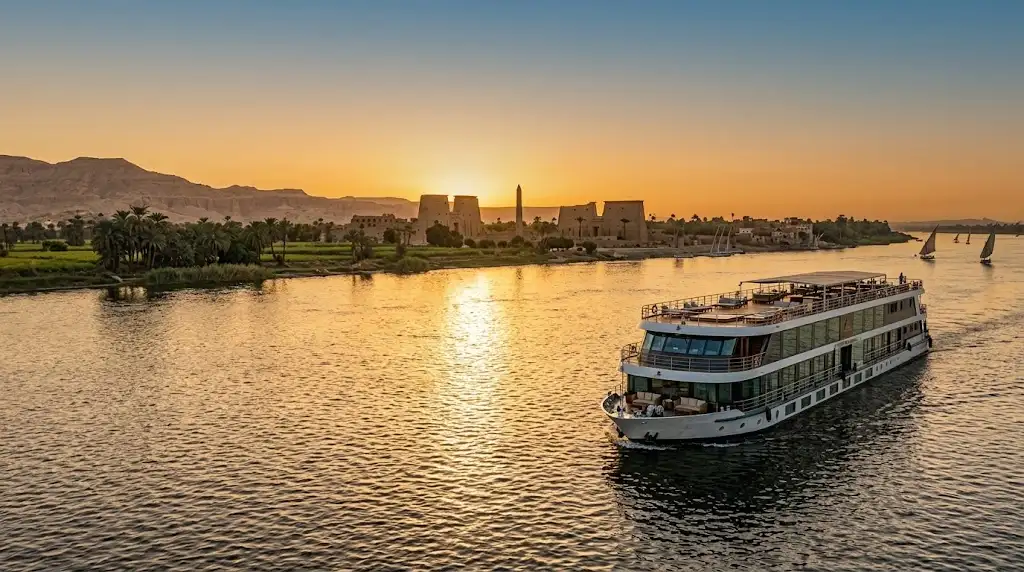
- Couples and honeymooners. Small guest numbers, quiet moorings, dinner on deck and nobody running a quiz night. See our Egypt honeymoon itinerary.
- Families. A lock crossing, a camel market and tombs cut into a cliff hold children’s attention in a way a museum circuit rarely manages. Cabin configuration is the real planning question, so send us your children’s ages. More on family cruising.
- Small groups and private charters. With 16 the ceiling on our main journeys, a family or a group of friends can take the whole boat and set the week’s pace themselves.
- Solo travellers. Small-boat sociability without the obligation — join the table or take your book to the far end of the deck. See cruising solo.
- First-time visitors. Every headline site sits on the route, plus a handful of places most first-timers never hear of until they are moored beside them. Start with a week in Egypt.
- Returning travellers. If you have already done the standard circuit, the village stops, island nights and northern leg to Dendera are the reason to come back. See our off the beaten path itinerary.
On safety, briefly and honestly
Conditions change, and we are not going to publish a blanket reassurance that might be out of date by the time you read it. Check the current travel advice issued by your own government, read our notes on travelling in Egypt, and then ask us directly about the specific route and dates you are considering. You will get a straight answer about our own sailings rather than a comforting generality. Our practical Nile cruise tips cover the day-to-day side.
Best Nile Cruise Ships: Your Questions, Answered
Pick the Boat, and the Rest of Egypt Follows
To recap: the vessel classes differ far more than the brochures suggest, star ratings cover comfort rather than experience, and the guest count tells you more about your week than any other number on the page. Our own answer is a private traditional dahabiya — six journeys between 4 and 14 days, a maximum of 16 guests on the main routes, full board throughout, an archaeologist at the temples, entrance fees covered on every listed site, and prices starting at €750.
What a web page cannot tell you is what your trip looks like: which journey fits your dates, which cabin suits your party, what is still open in the season you are aiming at, and what the real figure comes to once we have done the sums for your group.
So ask us. Fill in the enquiry form with your travel dates, your party size and the length of sailing you have in mind. Our team will come back with confirmed details, current availability and an honest view on whether one of our Nile journeys is the right fit for the trip you are planning.
The river has been running a while. The form takes about a minute.
Explore more: 7-Day Elegant Scape · 5-Day Serenity Retreat · Dahabiya vs Nile Cruise · Best River Cruise in Egypt · Life On Board · Gallery · About Us
