
There are Nile cruises, and then there is Dahabiya Nile sailing.
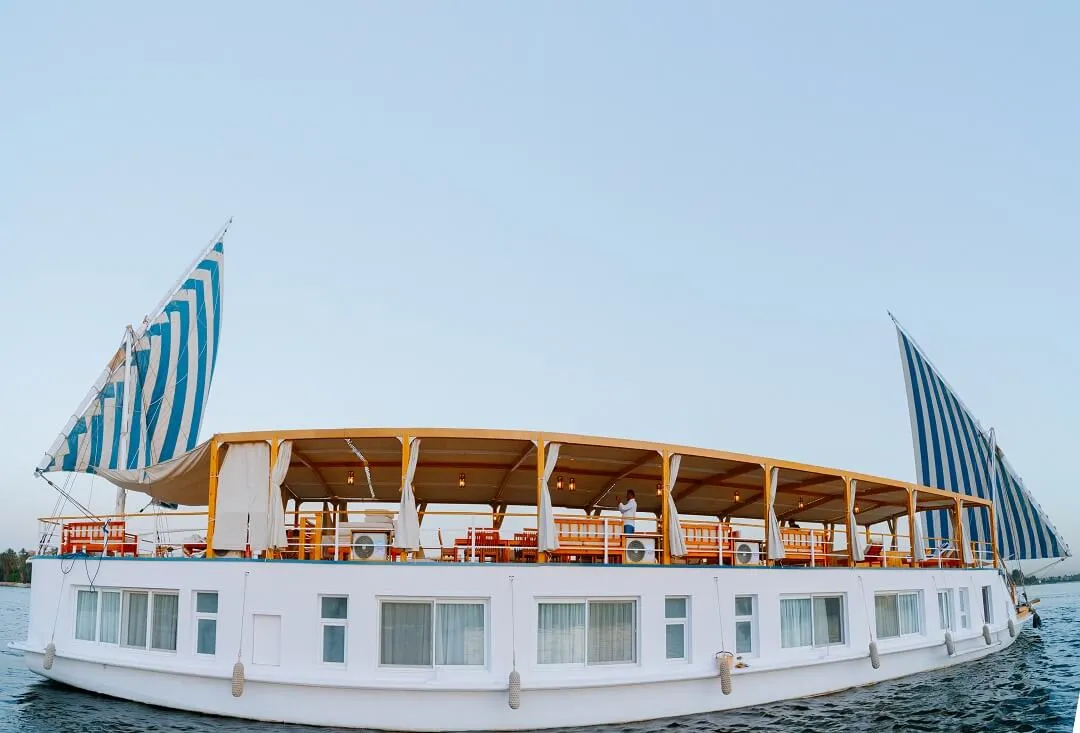
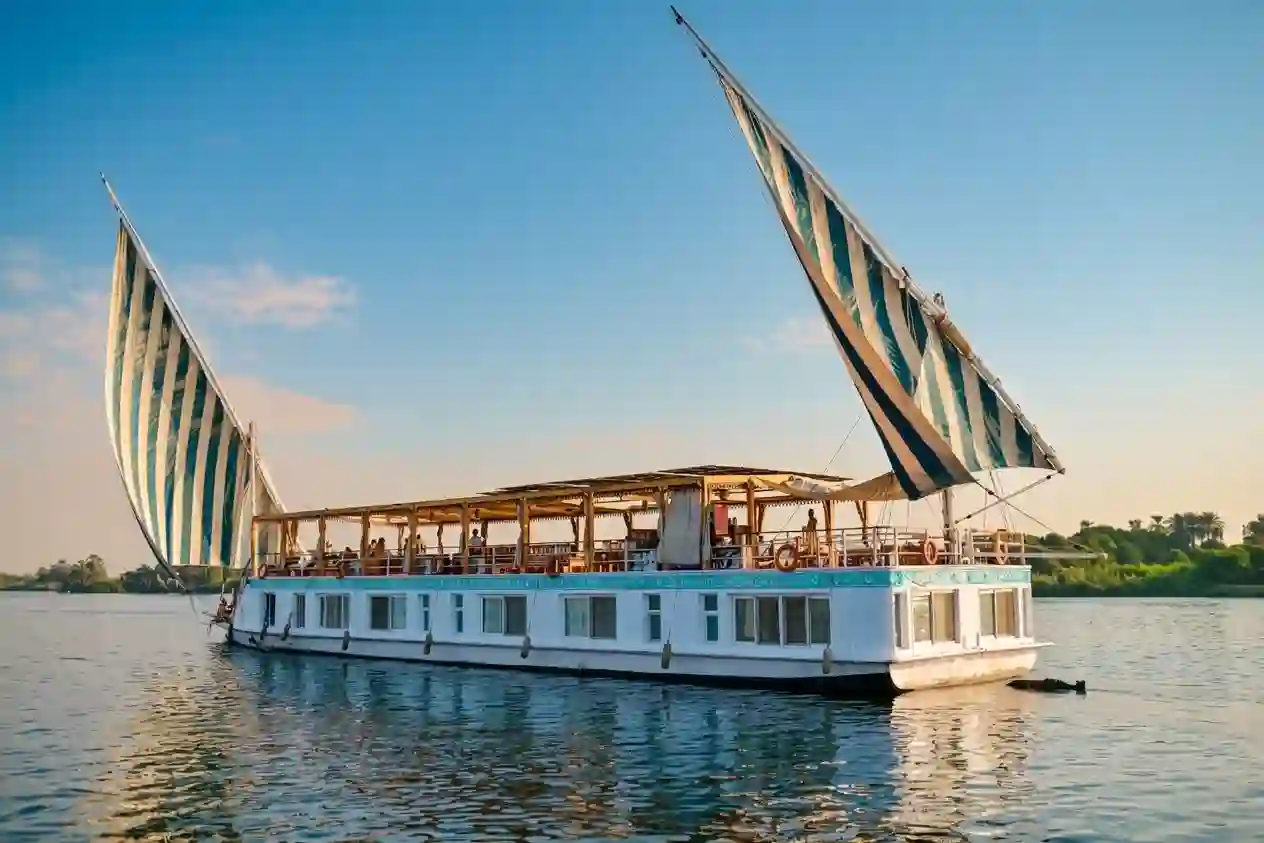
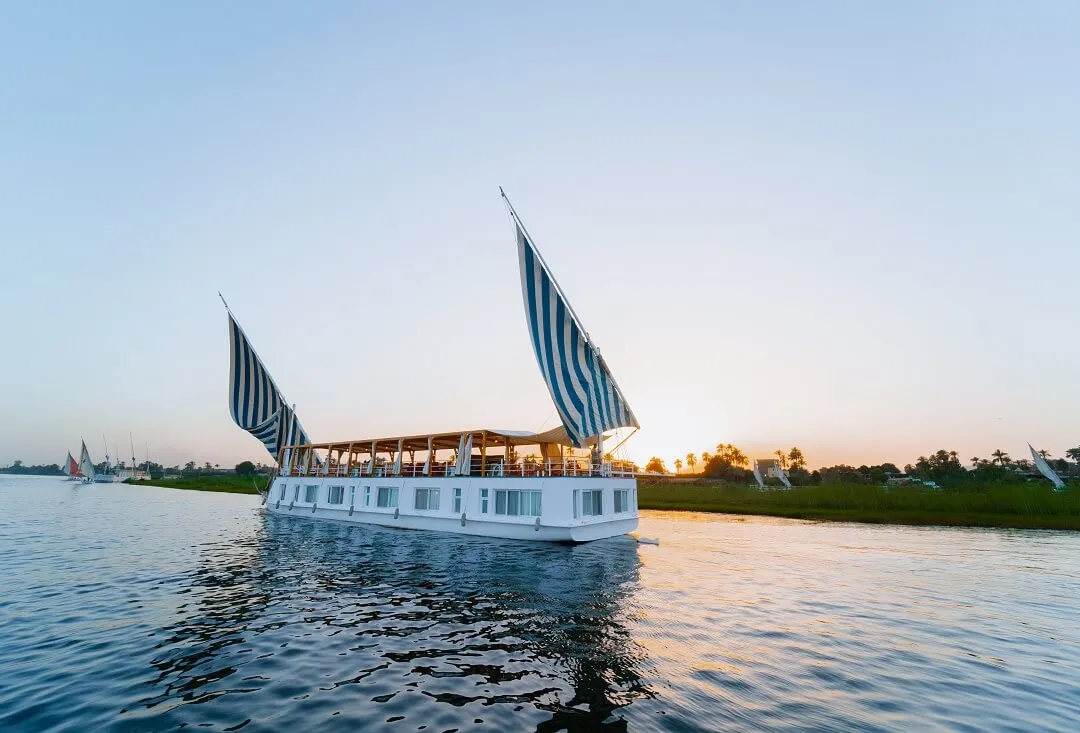
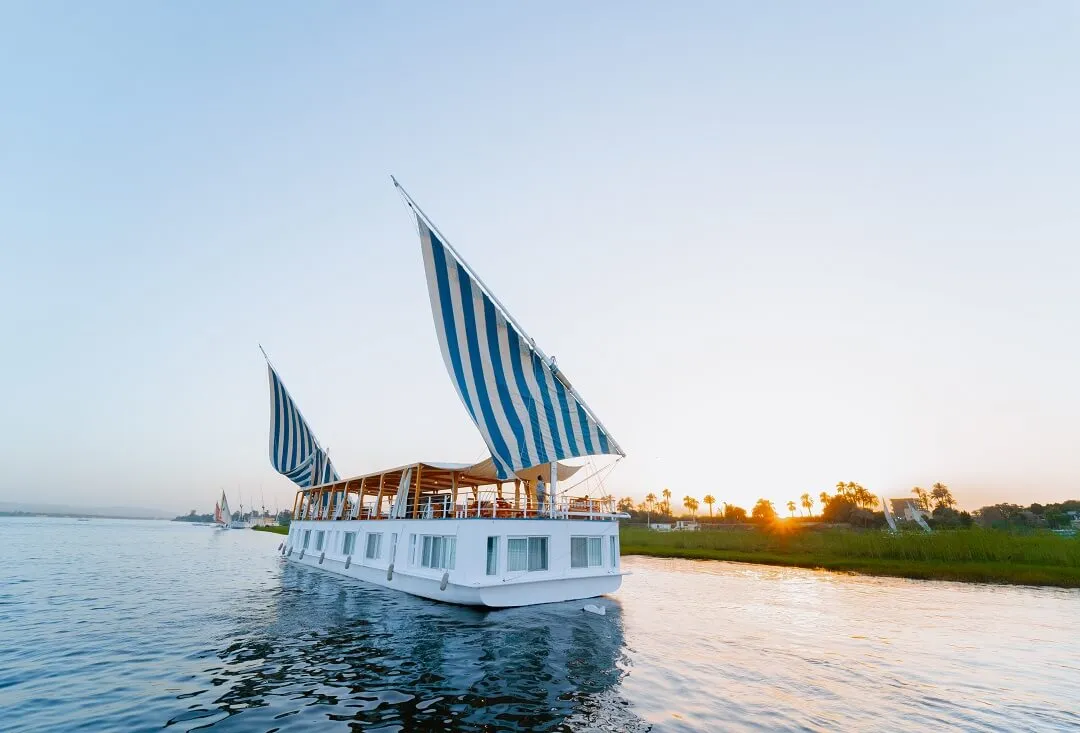
Instead of experiencing the river from a large cruise ship, a Dahabiya brings you much closer to the landscape. It is a traditional two-masted sailing boat designed for a smaller number of guests, combining the character of classic Nile travel with modern guest facilities.
The difference is not simply the size of the vessel. It is the rhythm of the journey.
A Dahabiya gives you time to watch farmland unfold along the riverbanks, approach archaeological sites from quieter stretches of the Nile, visit villages, and spend evenings moored away from the atmosphere of larger cruise terminals.
At Turquoise Dahabiya, our current sailing programs range from shorter journeys between Aswan and Esna to longer routes connecting Luxor with Cairo. Travelers can therefore choose between a compact introduction to Nile sailing and an extended journey through Upper and Middle Egypt.
Whether you are planning your first trip to Egypt, a honeymoon, a cultural journey with friends, or a private family holiday, the aim is the same: travel at a more measured pace and see the Nile as part of the experience rather than simply the road between monuments.

What Is a Dahabiya Nile Sailing Cruise?
A Dahabiya Nile cruise is a small-boat journey aboard a traditional two-masted sailing vessel.
Unlike a conventional Nile cruise ship, the Dahabiya experience is built around a smaller-scale setting. The supplied travel information describes Dahabiyas as traditional sailing boats fitted with modern guest facilities, with common routes operating between Esna and Aswan in both directions.
For travelers, that creates a distinctive style of journey.
You still explore major archaeological sites, but the sailing itself becomes an important part of the trip. Mornings may begin with breakfast aboard the boat, afternoons can be spent sailing between temples and villages, and evenings are often spent beside quieter riverbanks.
On Turquoise Dahabiya’s longer programs, the route can extend far beyond the usual Luxor–Aswan corridor. Our 11-day itinerary, for example, runs from Luxor to Cairo, while the 14-day program covers a much longer Nile journey.
That variety means there is no single universal Dahabiya cruise itinerary. The right route depends on how much time you have and how deeply you want to explore. If you are comparing options, our guide to the best Nile cruise itinerary is a useful starting point.
Dahabiya Nile Sailing Routes Available with Turquoise Dahabiya
Our current collection provides several different approaches to Nile sailing in Egypt.
| Sailing option | Route shown in our collection | Published starting price |
| Sacred Waters | 4 days, Aswan to Esna | From €750 |
| Serenity Retreat | 5 days, Esna to Aswan | Check current tour details |
| Elegant Scape | 7 days, Luxor to Aswan | From €1,500 |
| Royal Nile Escape | 11 days, Luxor to Cairo | From €3,000 |
| Golden Horizons | 14 days | From €3,500 |
The uploaded tour pages display the €750 starting price for the 4-day journey, €1,500 for the 7-day private cruise, €3,000 for the 11-day journey, and €3,500 for the longer program. These are published starting prices rather than a promise that every departure or cabin category will cost the same.
Our 5-day program is specifically presented as a 5 Day Nile Cruise on a Luxury Dahabiya from Esna to Aswan.






4-Day Dahabiya Nile Cruise: Aswan to Esna
For travelers with limited time, the 4-day itinerary offers three nights aboard the Dahabiya.
The tour page describes a sailing journey from Aswan toward Esna, combining river scenery with archaeological and local experiences. The published program includes full-board accommodation, with breakfast, lunch, and dinner, as well as sightseeing arrangements detailed in the itinerary.
The current published starting price is €750.
This shorter format can work particularly well when a Dahabiya cruise forms one part of a larger Egypt itinerary. You can read more about the destinations on this route in our guides to Philae Temple and Kom Ombo Temple.
5-Day Dahabiya Nile Cruise: Esna to Aswan
The five-day program travels in the opposite direction, from Esna toward Aswan.
It is presented as a 4-night, 5-day journey and extends the amount of time available for sailing and stops along the river. You can read more about the embarkation town in our guide to Esna, Egypt.
For many travelers researching a classic Dahabiya Luxor to Aswan experience, this type of route is important to understand: the actual sailing section may begin at Esna rather than central Luxor.
That distinction is worth checking when you compare cruises, especially when arranging hotels, flights, or transfers before embarkation. If you are still mapping out the route, our overview of a Nile cruise from Luxor to Aswan is worth reading.

Private 7-Day Dahabiya Nile Cruise: Luxor to Aswan
Travelers wanting a deeper journey can consider the 7-day private Dahabiya Nile cruise.
The supplied itinerary begins in Luxor and includes Karnak Temple and Luxor Temple before the boat sails toward Qena. It then incorporates Dendera, Garagos village, Luxor’s West Bank, the Valley of the Kings, Hatshepsut’s Temple, Esna, El Kab, Edfu, Bassao Island, El Selsela, Kom Ombo, Daraw and finally Aswan and Philae Temple.
The program is listed for a maximum of 16 people and has a published starting price of €1,500.
Its supplied inclusions specify six nights on a full-board basis, an archaeological guide for sightseeing, entrance fees to attractions named in the itinerary, transfers by air-conditioned vehicle, soft drinks, and onboard activities and evening entertainment.
This is the type of itinerary that makes a Dahabiya particularly interesting for travelers who do not want their entire holiday reduced to the best-known temples. Major sites are combined with smaller villages and stretches of the Nile where everyday river life becomes part of the experience. You can explore rural Egypt and places like Daraw as part of the route.
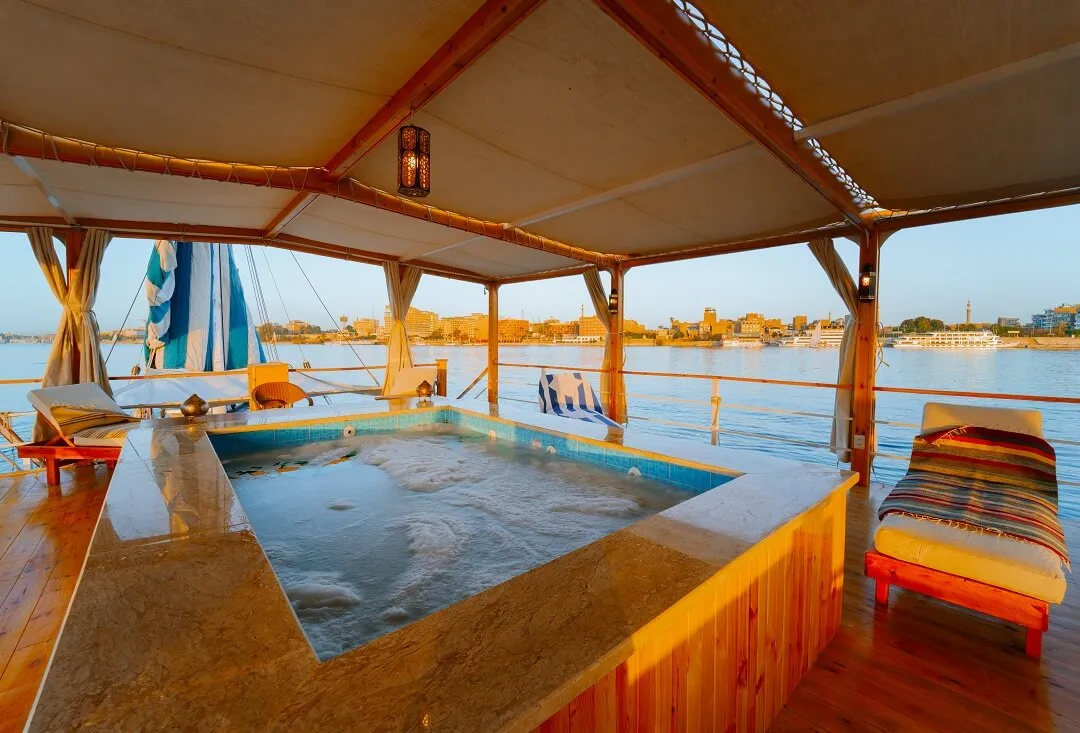
11-Day Dahabiya Nile Cruise: Luxor to Cairo
For something far longer than the usual Luxor–Aswan cruise, Turquoise Dahabiya also offers an 11-day Luxor-to-Cairo journey.
The supplied tour information describes ten nights on a full-board basis, expert-led sightseeing, entrance fees to attractions included in the itinerary, transfers and complimentary soft beverages.
The route begins in Luxor and proceeds north.
Its early itinerary includes Karnak, the Valley of the Kings, Qena, Dendera and Abydos before continuing farther along the Nile. If you want more background on the sites, see our guides to Karnak Temple and the Valley of the Kings.
The currently published starting price is €3,000.
This type of journey is very different from simply adding a few extra nights to a classic cruise. It changes the scale of the experience by making the Nile itself a major part of your Egypt itinerary.
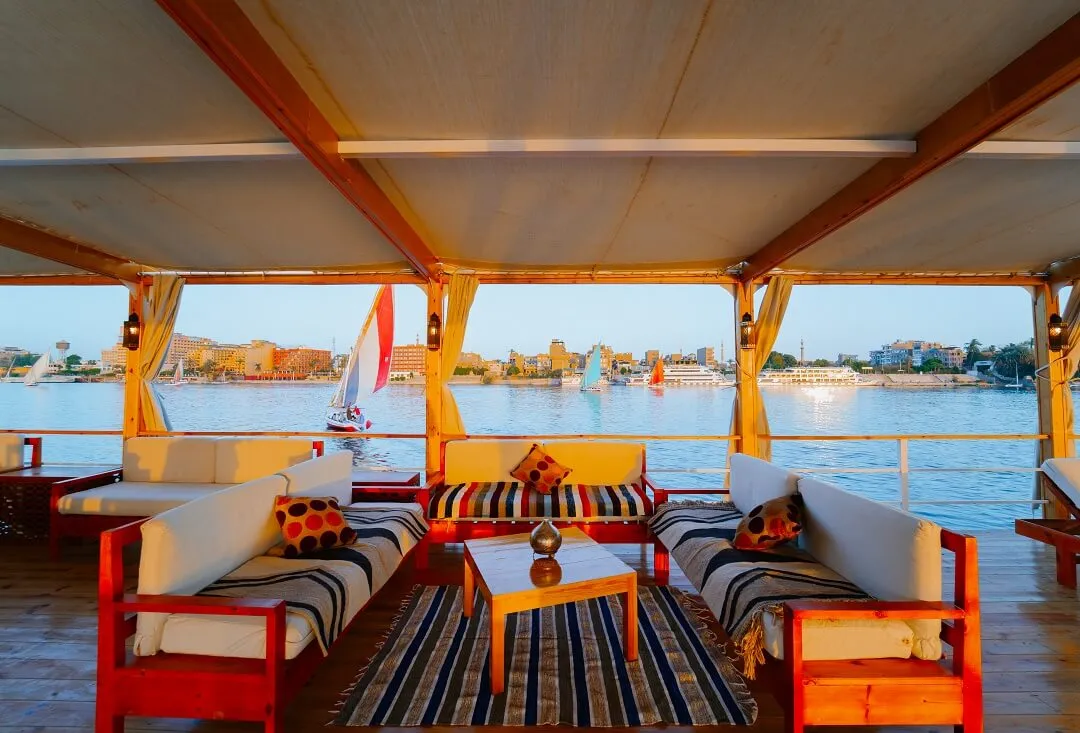
14-Day Cairo and Dahabiya Nile Cruise
The longest standard program in the supplied collection is a 14-day Cairo and Dahabiya Nile Cruise, published from €3,500.
The itinerary begins in Aswan and gradually moves north.
The supplied program includes places such as Philae, the Aswan High Dam, Kom Ombo, Gebel El Silsila, Bassao Island, Edfu, El Kab, Esna, Karnak, Luxor Temple, Dendera, Abydos and later destinations farther north. You can read more about Gebel El Silsila and Edfu Temple in our dedicated guides.
Its inclusion list specifies 13 nights on a full-board basis, an expert archaeological guide, entrance fees for attractions named in the itinerary, transfers by modern air-conditioned vehicle, complimentary soft drinks, and onboard activities.
For travelers who genuinely enjoy slow travel, this is the other end of the spectrum from a short Nile cruise: Egypt unfolds gradually instead of being compressed into a few days.
What Can You See During a Dahabiya Nile Cruise?
There is no single list that applies to every itinerary.
According to the route information supplied for the different programs, possible archaeological and cultural stops include:
- Karnak Temple
- Luxor Temple
- Valley of the Kings
- Hatshepsut’s Temple
- Dendera Temple
- Esna and the Temple of Khnum
- El Kab
- Edfu Temple
- Gebel El Silsila
- Kom Ombo Temple
- Philae Temple
- villages and islands along the Nile
- Abydos on selected longer programs
- destinations farther north on extended Luxor–Cairo journeys
The general Dahabiya information supplied with the brief also identifies Edfu, Kom Ombo, Gebel El Silsila, Philae, Karnak and the Valley of the Kings among commonly visited attractions.
This is one reason you should compare itineraries rather than simply comparing the number of nights.
Two five- or seven-day cruises may not contain exactly the same stops.
Plan Your Nile Journey
Dahabiya vs Standard Nile Cruise Ship
The simplest difference is scale.
A Dahabiya is smaller and is designed around a quieter, more intimate style of Nile travel. Conventional cruise ships generally offer more cabins and larger onboard facilities, while a Dahabiya puts greater emphasis on small-scale sailing. Our comparison of Dahabiya vs Nile cruise covers this in more detail.
For travelers, that changes the character of the holiday.
A boutique Nile cruise is particularly appealing when you want the journey between the temples to matter as much as the temples themselves.
Rather than treating the Nile as scenery outside your cabin window, you spend more time watching the changing riverbanks, sitting on deck and approaching different destinations at a slower pace.
It is not a question of one format being universally right for everyone. A large cruise ship may appeal to travelers who specifically want extensive resort-style facilities. A Dahabiya suits travelers drawn to smaller groups, traditional sailing and a more personal river experience. If you are also weighing a Dahabiya against a felucca, see felucca vs Dahabiya.
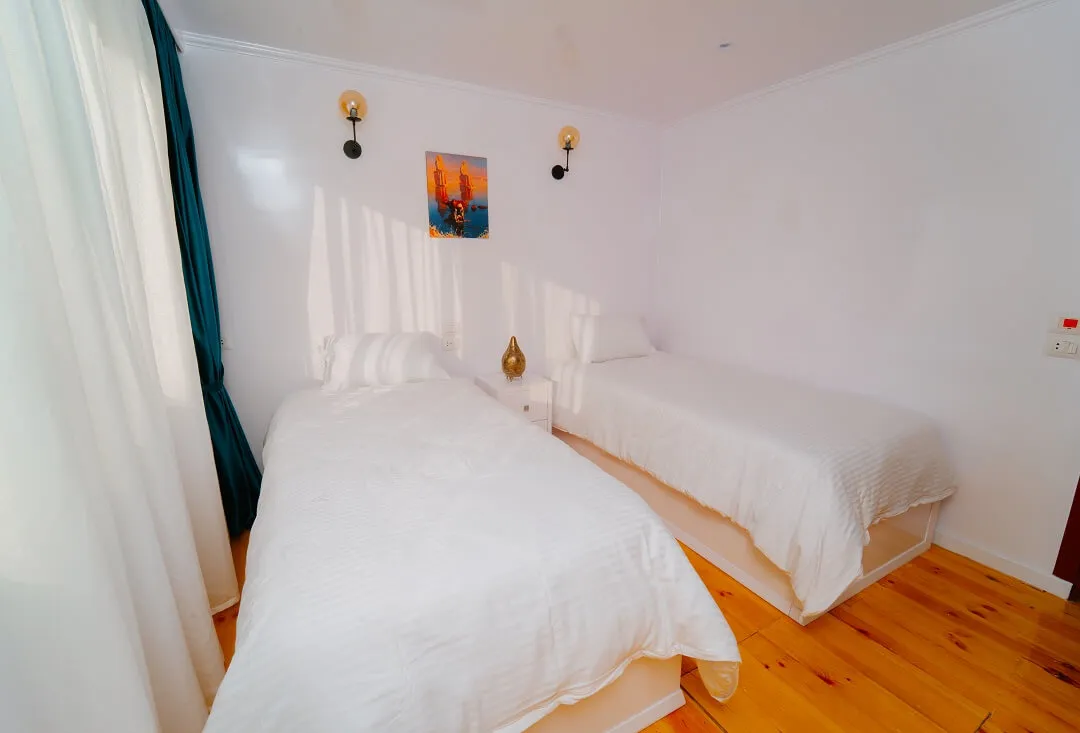
Accommodation and Life on Board
Accommodation varies by vessel and itinerary.
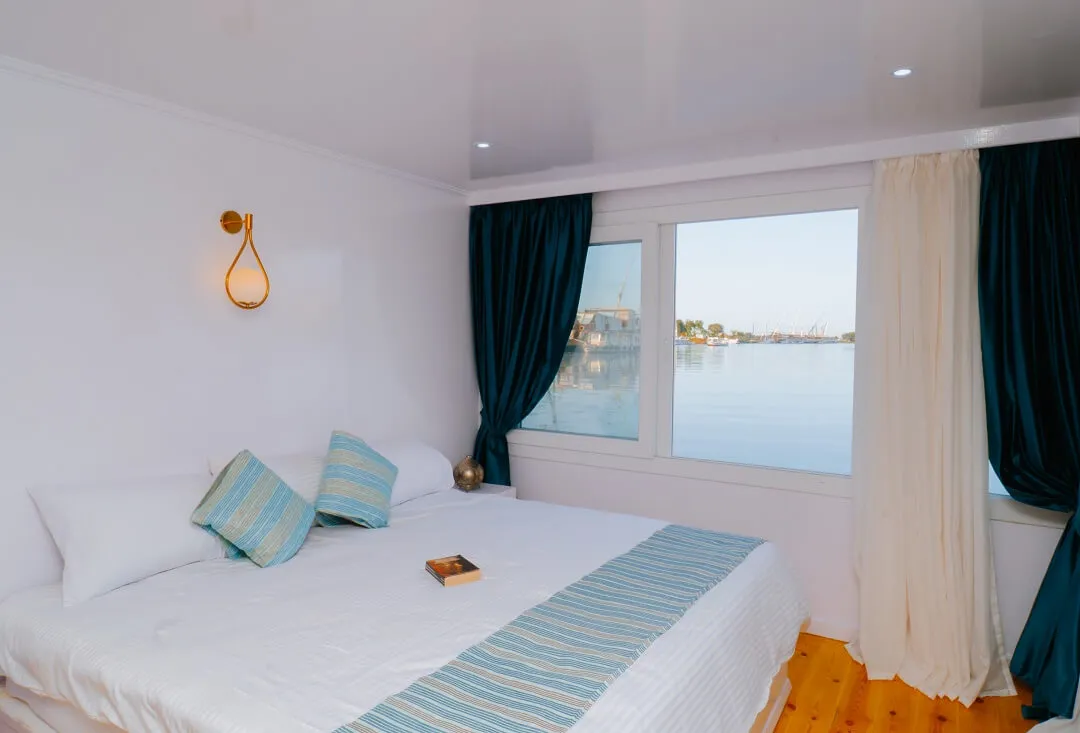
The supplied Dahabiya information notes that boats can offer cabins and suites, and the Turquoise Dahabiya site itself lists both Suites and Standard Rooms among its accommodation categories.
Several of the uploaded Turquoise Dahabiya itineraries are offered on a full-board basis.
For example, the seven-day journey includes six nights with breakfast, lunch and dinner, while longer programs similarly list full-board accommodation.
When choosing your cruise, do not look only at the word “luxury.” Ask what the cabin category actually includes and what is covered by the quoted rate. You can also explore life on board for a fuller picture.
That leads us neatly to pricing.
How Much Does a Dahabiya Nile Cruise Cost?
There is no meaningful single price for every Dahabiya cruise Egypt experience.
The supplied research notes that pricing varies according to factors such as the boat, season, cabin category, duration and inclusions.
Turquoise Dahabiya’s supplied pages demonstrate that variation clearly: published starting prices within the provided collection range from €750 for the four-day program to €3,500 for the longer 14-day itinerary.
Longer journeys naturally cover a very different amount of sailing, sightseeing and accommodation than shorter cruises.
Before making a comparison, check:
- number of nights aboard;
- exact route;
- cabin or suite category;
- meal plan;
- sightseeing included;
- entrance fees;
- transfers;
- guide service;
- drinks;
- whether the journey is private or shared;
- and anything specifically listed as excluded.
Comparing nothing but the headline price can be rather like comparing two hotels because they both have beds. Technically possible. Not terribly useful.
What Is Usually Included?
In general, inclusion policies vary between operators and itineraries, so the exact booking conditions should always take priority.
Within the supplied Turquoise Dahabiya programs, various itineraries specifically list combinations of:
- full-board accommodation;
- breakfast, lunch and dinner;
- expert archaeological guiding for sightseeing;
- entrance fees to attractions named in the itinerary;
- transfers by air-conditioned vehicles;
- complimentary soft drinks;
- onboard activities or evening entertainment on selected programs.
Do not assume that an inclusion on one itinerary automatically applies to every other cruise.
Likewise, exclusions differ.
For example, the supplied seven-day program lists gratuities, private expenses and alcoholic drinks as exclusions, while the 11-day itinerary separately identifies international and domestic airfare and gratuities among its exclusions.
The safest approach is simple: read the individual itinerary before confirming your Dahabiya cruise booking.
Is a Dahabiya Good for Couples, Families and Private Groups?
Dahabiyas are particularly relevant to travelers looking for smaller-scale travel.
The research supplied for this page notes that Dahabiyas generally carry fewer passengers than large Nile cruise ships and can suit couples, families, small groups and private charters. If you are considering a romantic trip, our guide to an Egypt honeymoon itinerary may help.
Turquoise Dahabiya’s seven-day itinerary, for example, is listed with a maximum of 16 people.
For a honeymoon, anniversary or family journey, the attraction is less about having dozens of onboard facilities and more about sharing the Nile in a smaller setting.
For groups, a private Dahabiya can also create a journey centred around the people you are travelling with rather than around a large passenger schedule.
Frequently Asked Questions About Dahabiya Nile Sailing
What is a Dahabiya Nile sailing cruise?
It is a small-boat journey on the Nile aboard a traditional two-masted sailing vessel fitted with modern guest facilities.
What is the most popular Dahabiya route?
The supplied research identifies Esna to Aswan as one of the most common routes. Cruises may still be marketed as Luxor-to-Aswan journeys because Luxor sightseeing or transfers can form part of the program.
Can I sail from Luxor to Aswan by Dahabiya?
Yes. The Turquoise Dahabiya collection includes Luxor-to-Aswan programs, including its seven-day itinerary.
Can I sail from Aswan toward Luxor?
Yes. South-to-north Dahabiya routes are available, commonly sailing from Aswan toward Esna before onward arrangements to Luxor.
How long does a Dahabiya cruise take?
There is no fixed duration. The general research supplied in the brief identifies common 4-day/3-night and 5-day/4-night journeys as well as longer programs. Turquoise Dahabiya’s supplied collection extends to 7-, 11- and 14-day itineraries.
Is a Dahabiya motorized?
Traditional Dahabiyas are designed around sailing. The supplied research notes that wind conditions and itinerary requirements can affect how vessels operate, so travelers looking specifically for a “Nile cruise without motor” should confirm the operational details of the exact boat rather than assume.
Are meals included?
Several Turquoise Dahabiya programs explicitly operate on a full-board basis, but you should check the exact itinerary you are considering.
Are archaeological tours included?
Several supplied Turquoise Dahabiya programs specifically include an archaeological tour guide and entrance fees to attractions named in their itineraries. However, inclusions should always be confirmed for the selected cruise.
What accommodation can I book?
The Turquoise Dahabiya site lists both Suites and Standard Rooms.
Do Dahabiya cruises depart every day?
Not necessarily. Sailing schedules vary by itinerary, boat and operator. Some operate on scheduled departure days, while private arrangements can work differently.
Is a Dahabiya suitable for a honeymoon?
The smaller passenger capacity, quieter atmosphere and slower sailing style make this form of Nile travel relevant to couples and honeymooners looking for a more intimate journey.
Can I charter a Dahabiya privately?
Private charters are available in the wider Dahabiya market, subject to vessel availability, and Turquoise Dahabiya’s collection includes a dedicated private seven-day program.
What should I check before booking?
Confirm the exact route, embarkation point, duration, cabin type, meal plan, guide arrangements, transfers, entrance fees, sailing dates, exclusions and pricing basis before confirming your cruise.
Choosing the Right Dahabiya Nile Sailing Experience
Start with time.
If you have only a few days for the river, a 4- or 5-day journey concentrates the experience between Aswan and Esna.
If you want more cultural stops and more nights sailing, the seven-day Luxor–Aswan program provides a substantially broader itinerary.
And if the Nile itself is one of the main reasons for visiting Egypt, an 11- or 14-day journey takes the concept of slow travel on the Nile much further, extending the route north beyond the classic Upper Egypt cruise corridor. If you already know you want a full week on the water, see our guide to the best 7-night Nile river cruise.
Then think about what matters most to you.
Is it archaeological sightseeing?
Village experiences?
Privacy?
More days sailing?
A private group?
A particular cabin or suite?
There is no reason to choose a cruise simply because it has the longest itinerary or the lowest advertised price. The best choice is the one whose route and inclusions actually fit the way you want to experience Egypt.
Plan Your Dahabiya Nile Sailing Journey
A Dahabiya Nile sailing journey gives you another way to see Egypt: not only through temples and archaeological sites, but through the river connecting them.
From a short Aswan–Esna sailing to a private seven-day Luxor–Aswan experience or an extended journey toward Cairo, Turquoise Dahabiya offers several different ways to build the Nile into your wider Egypt itinerary.
If you are considering a cruise, fill out the enquiry form with your preferred travel dates, number of travelers and the type of journey you are interested in.
Our Turquoise Dahabiya team can then provide the available details for the relevant itinerary and help you discuss which sailing option fits your plans. You can also read more of our Egypt Nile cruise tips or browse the Egypt travel blog for further inspiration.