
The Aswan River is not a separate river. It is the Nile River as it flows through Aswan, a historic city in southern Egypt where ancient monuments, granite islands, traditional sailing boats, and Nubian villages meet on the water.
Unlike the heavily developed riverfronts of some larger cities, the Nile in Aswan is known for its distinctive landscape. Palm-covered islands interrupt the broad blue river, golden dunes rise along the western bank, and white-sailed feluccas drift past smooth granite boulders.
For travelers, the Aswan Nile River is much more than a scenic backdrop. It provides access to historic islands, boat excursions, cultural experiences, and Nile cruises connecting Aswan with Luxor.
Whether you want to enjoy a sunset felucca ride, visit Elephantine Island, discover Philae Temple, or consider an Aswan to Luxor Nile cruise, understanding the river and its attractions will help you plan your time in this fascinating part of Egypt.
- Location: Southern Egypt, close to the First Cataract of the Nile.
- Best for: Felucca rides, island visits, Nubian culture, and Nile cruises on the Aswan River.
- Best season: The cooler months, when outdoor sightseeing is most comfortable.
Where Is the Aswan River Located?
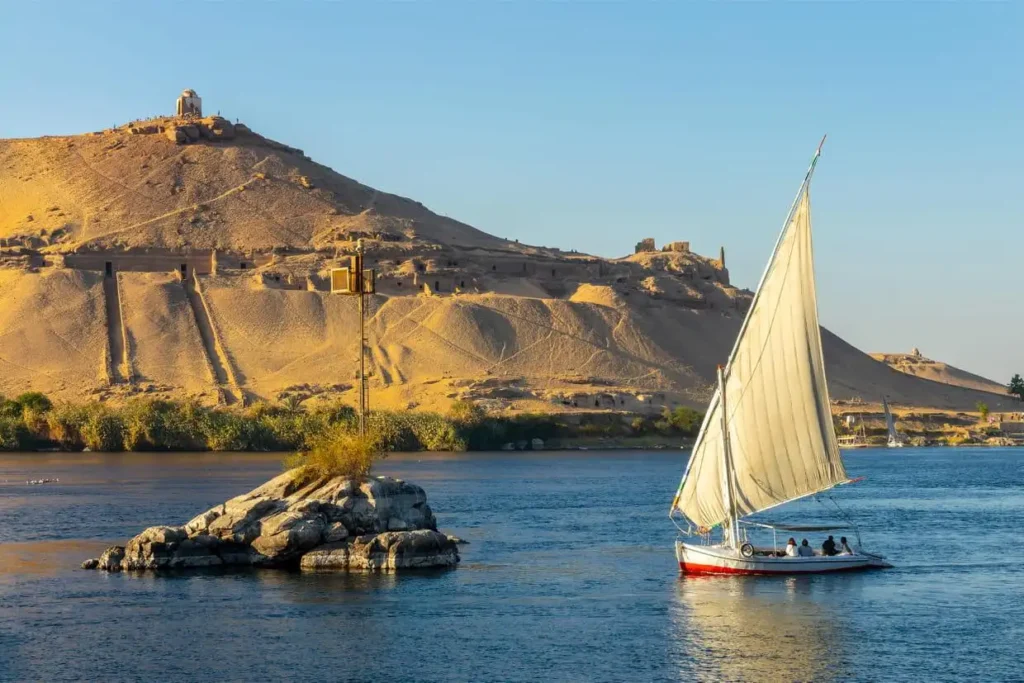
The Aswan River refers to the section of the Nile flowing through Aswan Governorate in southern Egypt, close to the country’s historic borderlands with Nubia.
Aswan developed as an important connection between Egypt and regions farther south. Its position near the First Cataract made it significant for trade, transportation, and the movement of people and goods.
The ancient city was a gateway to Nubia, and its surviving monuments reflect centuries of commercial, religious, and cultural exchange.
Today, the river forms the geographical heart of Aswan. Much of the city’s visitor experience revolves around the eastern riverbank, nearby islands, the western desert shoreline, and the historic attractions accessible by boat. For more ideas beyond the water, see our guide to Nile tourist attractions.
Why Is the Nile River in Aswan So Special?
Three features give the Aswan Nile River its distinctive character.
Its natural setting
The river flows between granite formations, green islands, cultivated riverbanks, and the surrounding desert. This combination creates some of the most recognizable river landscapes in southern Egypt.
Its historical importance
Aswan was an ancient frontier city and trading center. Elephantine Island, the granite quarries, and nearby monuments reveal how closely the region’s history was connected to the Nile.
Its living culture
The river remains closely associated with Nubian communities, traditional boats, and everyday local life. Visiting offers a chance to learn about this heritage rather than simply observe the scenery.
Best Things to Do on the Nile River in Aswan
From a quiet sail at sunset to a boat trip to a temple on an island, these five experiences show the Aswan River at its best.
1. Experience an Aswan Felucca Ride
A felucca is a traditional sailing boat that uses wind power to travel along the Aswan River.
Taking an Aswan felucca ride is one of the simplest ways to experience the Aswan River without committing to a multi-day cruise. Depending on the sailing route and conditions, you may travel around the islands, admire the western riverbank, or enjoy the changing colors of the landscape.
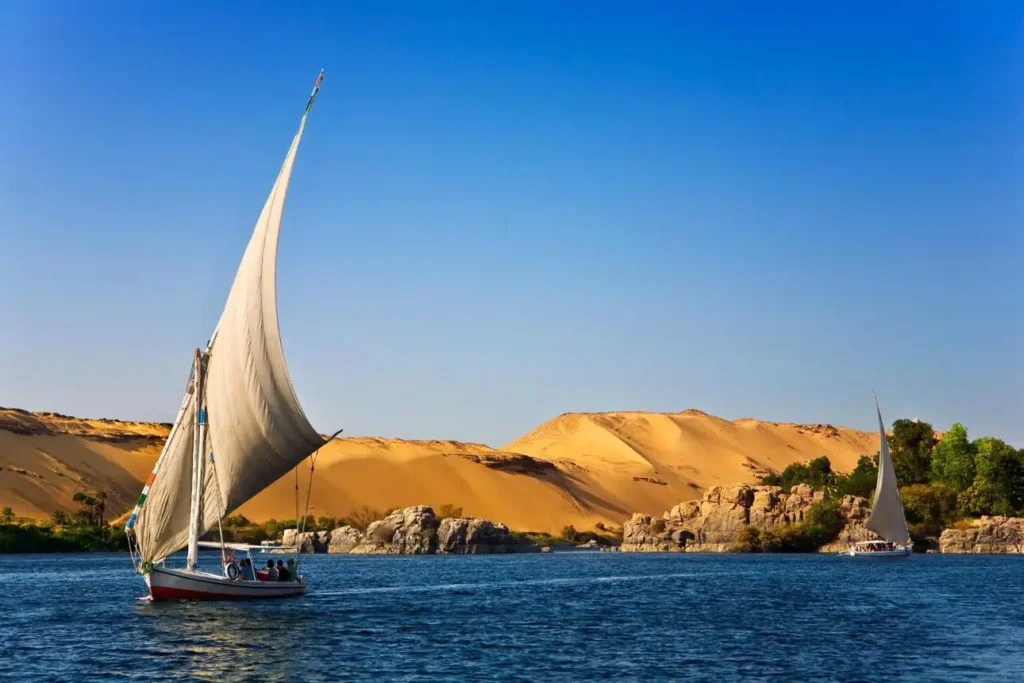
A sunset felucca ride is particularly appealing to travelers interested in photography and a quiet sailing experience.
Before you book a felucca
Confirm the sailing duration, number of passengers, whether the boat is private or shared, and the agreed price. Wind conditions can affect the route and timing.
2. Explore Elephantine Island on the Aswan River

Elephantine Island is one of Aswan’s most important historical landmarks.
Situated in the Nile opposite the city, the island played a significant role in ancient Egyptian trade and administration. Its position made it a strategic point for connections with Nubia.
Visitors interested in archaeology can explore the remains of ancient settlements and temples associated with Khnum and Satet, deities connected with the Nile and its annual flood. The island also contains a Nilometer, an ancient installation used to observe Nile water levels.
Egypt’s Ministry of Tourism and Antiquities identifies Elephantine as part of the UNESCO-listed Nubian Monuments from Abu Simbel to Philae. Access is by boat from Aswan, so allow enough time to explore the archaeological area rather than treating the island only as a photography stop.
3. Visit Aswan Botanical Garden on Kitchener’s Island

Aswan Botanical Garden offers a different kind of experience.
Located on an island in the Aswan River, the garden provides a green setting where visitors can walk among trees and plants away from the busier parts of the city.
It is a suitable option for travelers who enjoy nature, photography, and leisurely sightseeing.
Reaching the garden requires a boat journey. It can be considered alongside other Aswan River experiences, although the exact combination depends on the boat arrangement and time available. Egypt’s official tourism portal highlights the botanical garden among Aswan’s notable experiences.
4. Discover Nubian Culture Along the Nile
Nubian culture is an essential part of Aswan’s identity. A Nubian village boat excursion on the Aswan River can introduce visitors to the architecture, local traditions, food, crafts, and communities associated with the region.
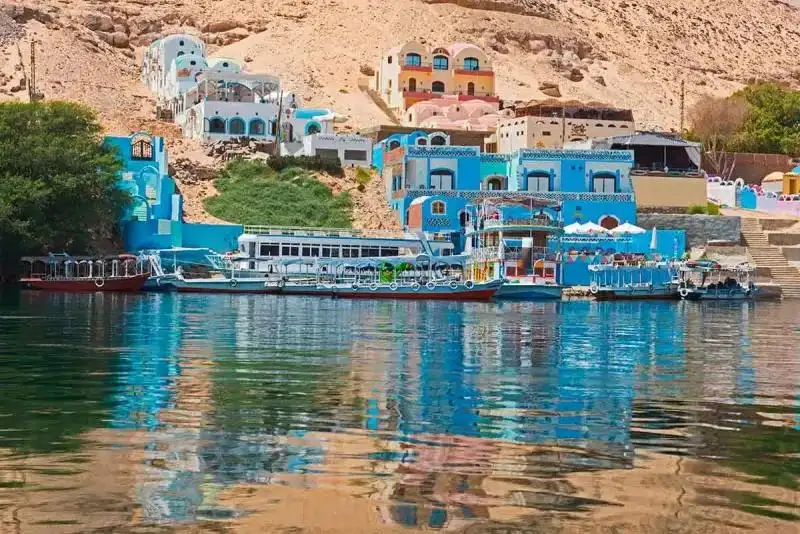
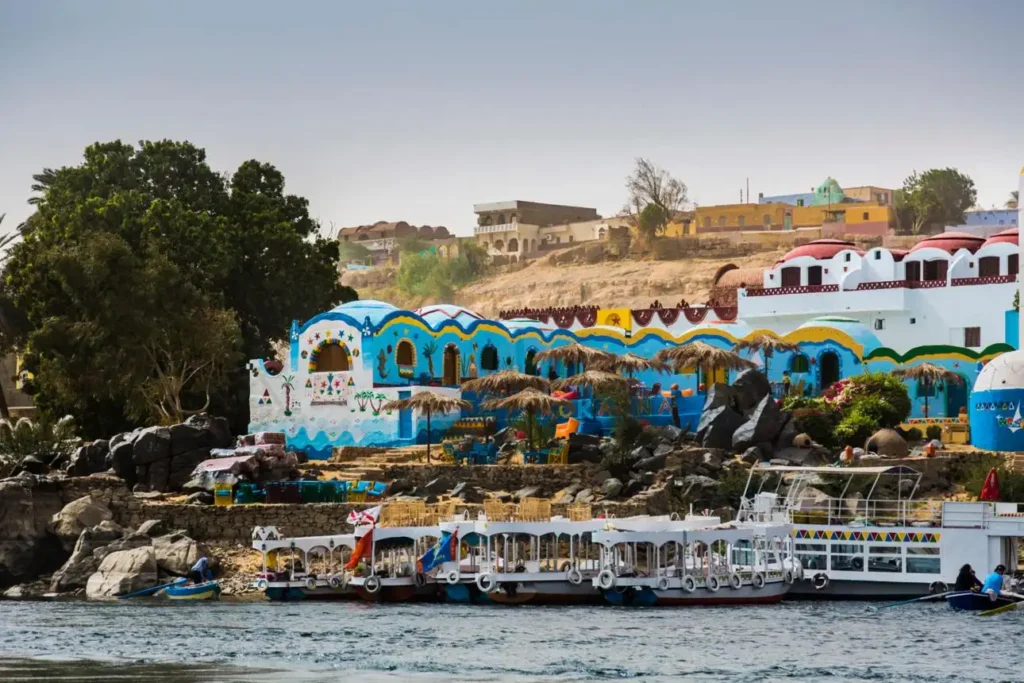
Colorfully decorated buildings and the surrounding river landscapes often form part of the experience, but the cultural significance extends far beyond their visual appeal. Travelers should approach village visits respectfully, recognize that these are living communities, and ask permission before photographing residents or private homes. To explore the heritage further, read about Nubian traditional clothing.
5. Take a Boat Trip to Philae Temple
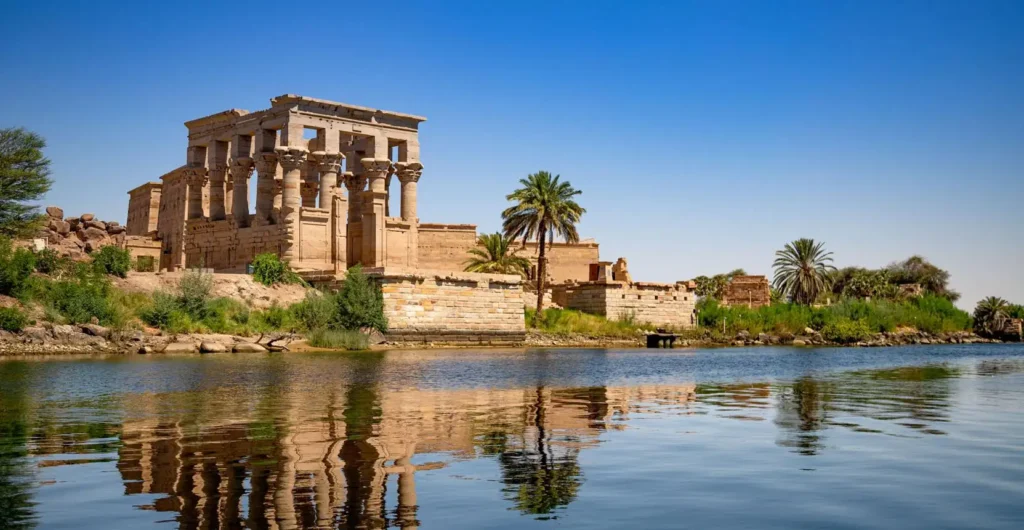
One of the most historically significant excursions near Aswan is a visit to Philae Temple.
The temple complex, primarily associated with the goddess Isis, stands on Agilkia Island. Its monuments include the Temple of Isis and the famous Kiosk of Trajan.
Today, visitors reach the temple complex by boat from the designated landing area south of Aswan.
The sanctuary originally stood on another island, but the monuments were relocated to Agilkia during the international campaign to protect Nubian heritage from flooding associated with the Aswan dams. For travelers interested in ancient Egyptian religion and architecture, this excursion connects the river’s modern landscape with its historical importance.
Aswan Nile Cruises: Exploring the River Between Aswan and Luxor
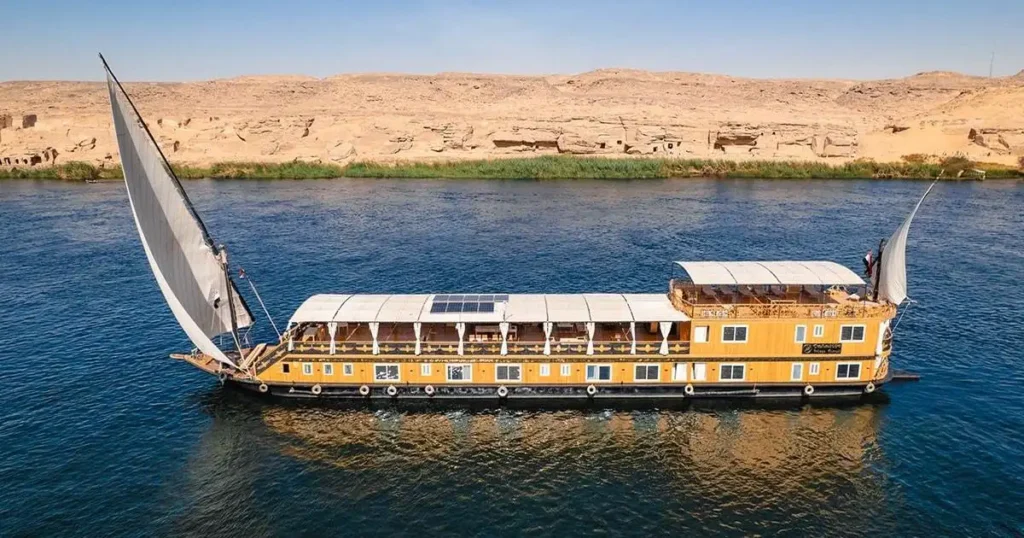
Sail the Nile the slow, private way
Explore temples, islands, and riverbanks between Aswan and Luxor aboard a private dahabiya.
While short boat journeys are ideal for experiencing the Aswan River itself, a multi-day cruise allows travelers to explore a much longer section of the river.
The Aswan–Luxor route is one of Egypt’s established river-cruising corridors. Travelers can encounter river landscapes, towns, and important archaeological destinations along the journey. Commonly visited locations include Kom Ombo, Edfu, and the historical sites of Luxor, although the exact stops depend on the cruise program.
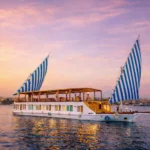
Turquoise Dahabiya sails this stretch of the Nile on private dahabiya journeys, from the 3 night Aswan to Esna cruise to longer itineraries such as the 5 day Serenity Retreat and the 7 day Elegant Scape.
Aswan to Luxor or Luxor to Aswan?
Both directions can provide opportunities to explore Upper Egypt. Neither is automatically better for every traveler. The best choice depends on your arrival city, departure arrangements, preferred attractions, cruise availability, and overall Egypt itinerary.
Aswan to Luxor
Begins in southern Egypt and travels north, following the Nile’s general downstream direction.
Luxor to Aswan
Follows the opposite route, letting you start in Luxor and finish in Aswan.
Rather than selecting a cruise based solely on its direction, review the actual sightseeing schedule and time allocated to each destination.
Felucca vs Dahabiya vs Nile Cruise Ship
Three distinct types of boats are associated with Aswan River and Nile travel.
| Boat | What to expect and who it suits |
|---|---|
| Felucca | A traditional wind-powered sailing boat, best for short scenic outings on the river. |
| Dahabiya | A smaller traditional-style Nile cruising vessel, with facilities varying by boat. Suits travelers seeking a smaller-scale multi-day journey. |
| Nile cruise ship | A larger vessel with guest cabins and onboard amenities. Suits travelers wanting a conventional multi-day cruise. |
A felucca ride around Aswan is not equivalent to a multi-day Nile cruise. Similarly, dahabiyas and conventional cruise ships can differ substantially in size, facilities, scheduling, and atmosphere.
When comparing options, examine the vessel specifications, included sightseeing, meals, accommodation arrangements, and total price rather than relying only on descriptions such as luxury or traditional. For travelers particularly interested in a smaller-scale river experience, a dahabiya Nile cruise is an option worth researching, and our guide to dahabiya cruise prices explains what affects the cost.
Aswan River and Lake Nasser: What Is the Difference?
Although the Aswan River and Lake Nasser are directly connected, they offer different visitor experiences. The Aswan High Dam created Lake Nasser, a vast reservoir extending southward from the dam.
The Aswan River
Associated with the city’s islands, riverbanks, traditional sailing boats, and local excursions.
Lake Nasser
Known for its large reservoir landscape and access to significant Nubian archaeological monuments, including sites linked to the UNESCO rescue campaign.
A Lake Nasser cruise and an Aswan–Luxor Nile cruise therefore cover different geographical areas. Travelers should not assume the same temples or destinations are included in both.
Best Time to Visit the Aswan River
Aswan can be visited throughout the year, but conditions vary considerably by season. For many international travelers, the cooler months offer more comfortable temperatures for archaeological visits and outdoor activities. The warmer months can make extended sightseeing demanding, particularly around exposed archaeological sites.
A practical approach is to schedule outdoor visits earlier in the day during hotter periods and reserve late afternoon for appropriate river activities. For sunset photography, check the sunset time for your travel dates. Our guide to the best time for a Nile cruise in Egypt goes into more detail.
How to Plan Your Time on the Aswan River
A short stay can combine cultural sightseeing with time on the water. For example, you might devote one part of the day to Elephantine Island or Philae Temple and another to a felucca ride. Travelers with additional time can explore Nubian culture, the botanical garden, the west bank, and other historical attractions.
Before making arrangements, consider the following
- Confirm which activities require separate boat transportation.
- Check current archaeological-site opening hours and admission fees.
- Ask whether boat costs are included in any quoted excursion price.
- Leave flexibility for sailing conditions and transport delays.
- Verify the actual departure and arrival points of any Nile cruise.
These details can have a greater impact on the quality of your visit than trying to include as many attractions as possible. More practical advice is available in our Nile cruise tips.
What Travelers Say About Turquoise Dahabiya
Read recent guest experiences from Tripadvisor before you choose how to explore the Aswan River.


Plan Your Aswan River Journey With Us
Planning to explore the Aswan River? Tell us your travel dates, group size, and the experiences you would like to include. Our team will reply with suggested itineraries, availability, and pricing.
Frequently Asked Questions About the Aswan River
The Nile River flows through Aswan. The phrase Aswan River is commonly used as a search term for the Nile in and around the city.
Aswan is in southern Egypt, historically near the First Cataract of the Nile. It served as an important gateway between Egypt and Nubia.
Popular experiences include felucca sailing, visiting Elephantine Island, exploring the botanical garden, arranging a Nubian village excursion, and traveling by boat to Philae Temple.
Yes. Sunset felucca excursions are offered in Aswan. Routes, departure times, group sizes, and prices vary between operators.
There is no single fixed price applicable to every operator and journey. The cost depends on the duration, private or shared arrangement, route, and any included services. Request a current quotation before confirming.
It depends on the vessel and itinerary. Three-night and four-day programs are among the advertised options, but travelers should verify the exact embarkation, sightseeing, and disembarkation schedule.
A felucca is generally a simpler sailing craft, often used for short outings. A dahabiya is a larger vessel designed for more extensive Nile travel, with accommodation and facilities depending on the individual boat.
Yes. The temple complex is on Agilkia Island and is reached by boat from the designated landing point.
Visitors use local boat services from Aswan. The appropriate landing point depends on which part of the island they intend to visit.
No. Lake Nasser is the reservoir created by the Aswan High Dam. While connected to the Nile, it is a distinct area with different cruise routes and attractions.
Final Thoughts: Discovering the Aswan River
The Aswan River offers a remarkable combination of geography, archaeology, and living culture. Its islands preserve evidence of ancient Egyptian civilization, while its waterways continue to connect communities and attract travelers seeking to understand southern Egypt.
A felucca ride can reveal the landscape from a traditional sailing boat. A visit to Elephantine Island or Philae Temple brings the region’s historical importance into focus. A longer Nile cruise offers another perspective on the Aswan River and the destinations along its banks.
For travelers considering a longer journey, Turquoise Dahabiya can be your starting point for enquiries about its Nile cruising experiences. Complete the enquiry form above to discuss your travel plans, request details of available journeys, and confirm the itinerary, accommodation, inclusions, and pricing before making a decision.