Christmas is one of the world’s most widely celebrated religious holidays, but what does it have to do with the civilization of the pharaohs? The subject of Ancient Egypt Christmas often raises intriguing questions about Egyptian gods, winter festivals, December 25, and the historical origins of Christian traditions.
The essential fact is simple: the ancient Egyptians did not celebrate Christmas. Christmas commemorates the birth of Jesus Christ and developed as a Christian religious observance many centuries after the earliest Egyptian temples, religious festivals, and mythological traditions.
Yet ancient Egypt offers a fascinating context for exploring how different civilizations understood light, rebirth, divine birth, and the changing seasons. From the mythology of Isis and Horus to the winter-solstice alignment at Karnak Temple, these subjects reveal how closely ancient Egyptian religion was connected to the natural world.
Today, Egypt also has a rich Christian heritage, particularly within the Coptic Orthodox Church, whose Christmas celebrations take place in January. If you want the modern side of the story, see our guide on whether Egypt celebrates Christmas.
The Short Answer
No. There is no established historical evidence that the pharaohs celebrated Christmas. Ancient Egypt had its own sun-centered religion, temple festivals, and myths of rebirth, but these belong to a different religious world from the Christian Nativity.
Did Ancient Egyptians Celebrate Christmas?
No. There is no established historical evidence that the pharaohs celebrated Christmas or observed a festival equivalent to the Christian Nativity.
Ancient Egyptian religion developed around a large and varied collection of deities, including Ra, Amun, Osiris, Isis, Horus, and Hathor. Religious ceremonies marked important events in mythology, agriculture, kingship, and the annual cycle of nature.
The ancient Egyptians observed numerous festivals involving temple rituals, offerings, sacred processions, and celebrations honoring particular gods. According to University College London’s Digital Egypt research resource, Egyptian religious festivals followed an official 365-day calendar, with celebrations taking place on designated days throughout the year.
The distinction between ancient Egyptian festivals and Christmas is important. Although both traditions sometimes feature themes of divine life, renewal, or light, similarities in symbolism do not establish a shared festival or a direct historical origin.
Ancient Egypt Winter Solstice: The Importance of the Sun
The winter solstice occurs in the Northern Hemisphere around December 21 or 22, marking the shortest day and longest night of the year. After the solstice, daylight gradually increases. For agricultural societies that closely observed seasonal changes, the annual movement of the sun had practical and symbolic significance.
In ancient Egypt, the sun was especially important because of its association with divine power, the maintenance of cosmic order, and the daily renewal of life.
Ra: The Ancient Egyptian Sun God
Ra was one of ancient Egypt’s principal solar deities. Egyptian religious traditions described the sun’s daily journey across the sky and its nighttime passage through the underworld. This recurring journey reflected the continuity of life and the triumph of renewal over darkness.
Solar symbolism also became closely connected with royal authority and major religious centers, particularly through the worship of Amun-Ra at Karnak.
However, it would be misleading to describe the winter solstice as an ancient Egyptian Christmas or to claim that Egyptians celebrated the birth of Ra on December 25. Evidence for solar worship is extensive, but it does not show a Christmas-style birthday festival for the sun god.
Did Ancient Egyptians Celebrate the Return of the Sun?
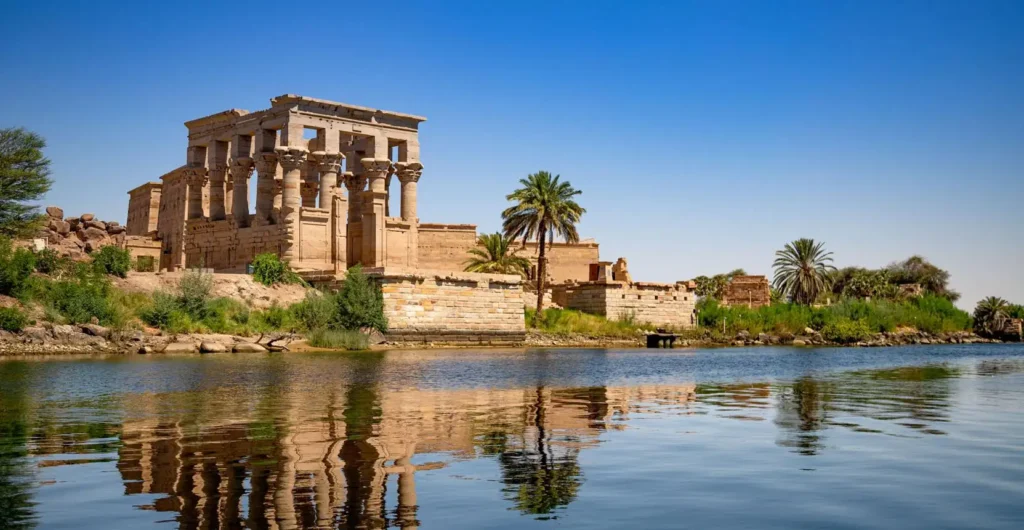
Ancient Egyptians certainly recognized important solar events, and some temples were oriented in relation to the sun’s seasonal movements. One of the clearest examples is Karnak Temple in Luxor.
A UNESCO-associated study of astronomical heritage identifies the main orientation of Karnak with the winter-solstice sunrise. Its analysis connects temple architecture with celestial observation and ancient Egyptian religious concepts.
This does not necessarily mean that every winter solstice was accompanied by a specific public festival resembling modern Christmas. It does, however, demonstrate the importance of astronomical knowledge in Egyptian sacred architecture.
Karnak Temple and the Winter Solstice

One of Egypt’s most compelling connections between ancient religion and the December season can be found at Karnak Temple.
This extensive religious complex was dedicated primarily to the Theban divine triad of Amun, Mut, and Khonsu, although many other gods were worshipped within its temples.
Around the winter solstice, the rising sun aligns with the principal axis of the Temple of Amun-Ra. Sunlight enters the temple complex and illuminates parts of its ceremonial architecture, creating an observable connection between the ancient building and the annual movement of the sun.
Egypt’s Ministry of Tourism and Antiquities has documented this annual alignment, including the event on December 21, 2024. For visitors interested in ancient Egyptian astronomy, religious symbolism, or winter travel, Karnak provides an unusually tangible example of how architecture and nature were connected.
Planning to see the solstice alignment?
The precise visitor arrangements for observing a particular year’s alignment should be checked with the site’s official authorities.
Was December 25 Important in Ancient Egypt?
Claims that ancient Egyptians celebrated the birth of a solar deity on December 25 are widespread online. However, the evidence is frequently oversimplified.
The ancient Egyptian civil calendar consisted of twelve months of thirty days, followed by five additional days. Because it lacked the regular leap-day correction used in modern calendars, its dates gradually shifted relative to the seasons. Consequently, assigning a modern Gregorian date such as December 25 to a recurring ancient Egyptian religious festival requires considerable historical care.
Where Did the December 25 Connection Come From?
The history of Christmas on December 25 is more closely associated with the development of Christianity within the Roman Empire. By the fourth century CE, December 25 was established as a date for commemorating the Nativity in Rome.
Historians have considered several explanations for this choice, including Christian theological calculations and the cultural context of Roman midwinter festivals, particularly the celebration of Sol Invictus, the Unconquered Sun. There is no single universally established explanation for how the date was chosen, and a direct borrowing from ancient Egyptian religion has not been demonstrated. For the modern date question, read our Christmas in Egypt date guide.
Horus and Christmas: Is There a Historical Connection?

A particularly popular theory compares the birth of Jesus with the mythology of Horus, the falcon-associated Egyptian god. Horus was one of the most important deities in ancient Egyptian religion and was strongly associated with kingship.
In the well-known Osiris myth, Osiris was killed by his brother Seth. Isis, the wife of Osiris, restored him sufficiently to conceive Horus. After Horus was born, Isis protected him from danger until he could challenge Seth and claim his inheritance. The Metropolitan Museum of Art explains this mythology in connection with its collection of ancient representations of Isis nursing the infant Horus.
Was Horus Born on December 25?
There is no reliable evidence establishing December 25 as the historical festival date of Horus’s birth across ancient Egyptian religious traditions.
Online comparisons sometimes claim that Horus and Jesus shared numerous identical biographical events, but those claims must be evaluated individually against ancient texts rather than accepted as historical facts.
Images of Isis holding the infant Horus have been compared with Christian images of Mary and the infant Jesus, but visual resemblance does not prove direct copying.
While the resemblance is notable and scholars study possible artistic influences across Egyptian and Mediterranean traditions, it does not establish that the Christian Nativity narrative was copied directly from the Horus myth.
Isis, Osiris, and the Meaning of Rebirth
The mythology of Isis and Osiris is especially associated with restoration, protection, legitimate kingship, death, and renewed life.
Osiris
Osiris became a central figure in Egyptian beliefs about the afterlife.
Isis
Isis was celebrated for her protective and restorative powers.
These ideas offer interesting points of comparison with themes found in later religious traditions. However, comparisons are most useful when the differences between the religions are understood alongside their similarities.
Ancient Egyptian Festivals vs. Modern Christmas
| Subject | Ancient Egyptian religion | Modern Christian Christmas |
|---|---|---|
| Central purpose | Honoring deities and maintaining religious and cosmic order | Commemorating the birth of Jesus |
| Religious figures | Ra, Osiris, Isis, Horus, Amun and others | Jesus Christ |
| Calendar | Ancient Egyptian civil and religious calendars | Christian liturgical calendars |
| Seasonal symbolism | Solar cycles, agriculture, renewal | Nativity, divine incarnation, hope and light |
| Ceremonies | Temple offerings, processions and rituals | Church services, prayer and family celebrations |
| December 25 | No established universal Egyptian Nativity festival | Christmas in many Christian denominations |
These are broad comparisons. Religious practices varied over the long history of ancient Egypt, just as contemporary Christmas customs differ between Christian communities.

Coptic Christmas: How Egypt Celebrates Christmas Today
Egypt’s Christian history creates a meaningful connection between the ancient civilization and modern Christmas, although the religious traditions belong to different historical periods.
The Coptic Orthodox Church is one of Egypt’s most important Christian institutions. Its religious heritage developed within Egypt, using a calendar system that preserves elements of the country’s older chronological traditions. Explore more in our guide to Egypt Christmas customs.
43 days
Nativity Fast before Christmas
January 7
Coptic Christmas today
29 Kiahk
Traditional Nativity date
Kahk
Festive Egyptian sweet
Why Is Coptic Christmas Celebrated on January 7?
Most Coptic Orthodox Christians celebrate Christmas on January 7 rather than December 25. The difference largely reflects historical calendar systems. The Coptic Church’s Nativity observance is traditionally associated with 29 Kiahk, corresponding to January 7 in the modern calendar during the relevant period.
The Coptic Orthodox Church identifies the Nativity as one of its major religious feasts. For many international travelers, this distinction provides an opportunity to learn about two Christmas observances within a single Egyptian winter holiday. See also what Egypt calls Christmas.
Coptic Christmas Traditions and Food
Christmas celebrations in Egyptian Coptic communities center on religious worship, family gatherings, and festive meals. A distinctive feature is the Nativity Fast, traditionally observed for 43 days before Christmas. During this period, many observant Christians avoid particular animal products according to their church’s fasting rules and individual circumstances.
After the Christmas liturgy, families may gather to share meals that include meat and other foods not consumed during the fast. Traditional Egyptian sweets such as kahk can also appear during Christmas celebrations. Our guide to Egypt Christmas food covers the dishes in more detail.
These are living Christian customs, rather than direct continuations of an ancient Egyptian Christmas celebration.
Discovering Egypt’s Ancient Heritage During Christmas
For travelers spending Christmas in Egypt, the holiday season offers opportunities to explore the country’s monuments and cultural traditions. Three destinations are particularly relevant to the history discussed in this article.
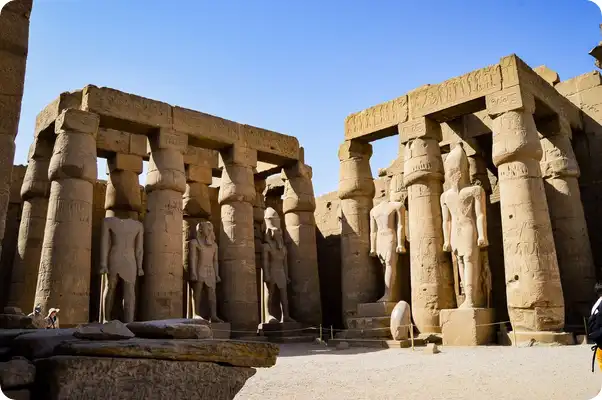
Luxor and Karnak
Explore one of ancient Egypt’s most significant religious centers and learn about the relationship between the sun, temple orientation, and Egyptian religious beliefs. Start with our Luxor Nile cruise guide.
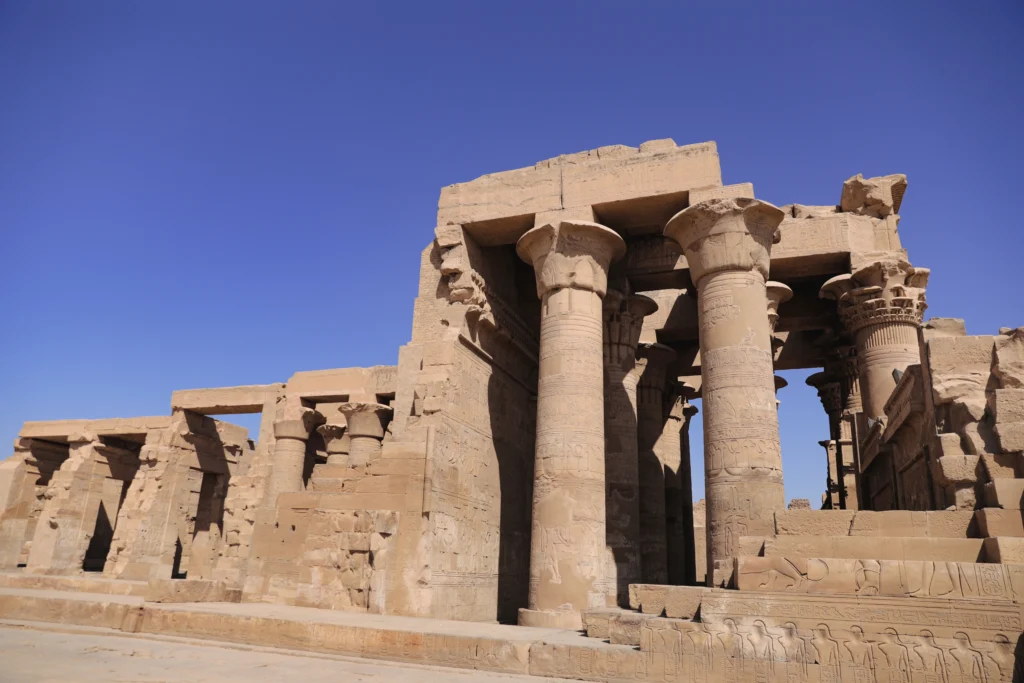
Edfu Temple
Discover the cult of Horus through the architecture and religious decorations of a major temple dedicated to the falcon god.
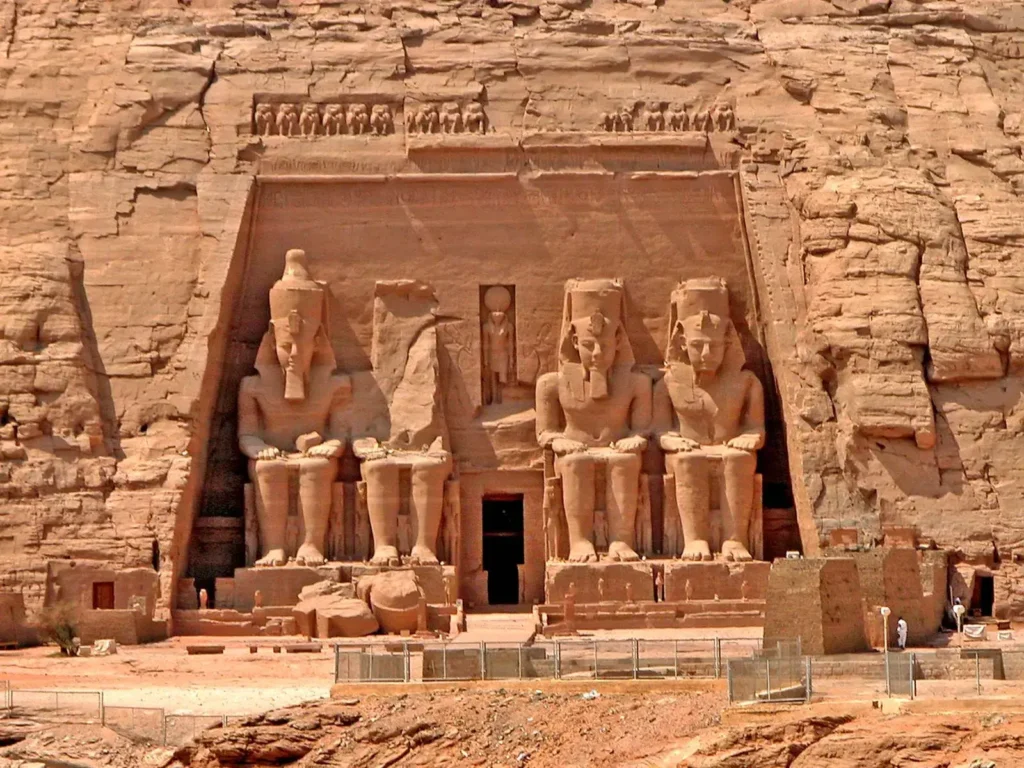
Abu Simbel
Examine the impressive solar symbolism of the temples built by Ramesses II. Its famous sanctuary illumination occurs around February 22 and October 22, not during the December winter solstice.
Planning a winter trip? Check Egypt Christmas weather and our overview of holidays to Egypt in December before you travel.
Exploring the Nile with Turquoise Dahabiya
Travelers interested in combining archaeological discovery with a Nile journey can explore the itineraries published by Turquoise Dahabiya. Our Nile Christmas Cruise guide introduces available cruise styles and travel-planning considerations for the festive season.
A Dahabiya journey can provide an opportunity to enjoy the Nile’s scenery while considering visits to the historical destinations along the river. Browse our Dahabiya Nile cruise from Luxor to Aswan or discover the luxury Dahabiya Nile cruise experience. Individual itineraries, departure dates, and included archaeological visits should always be verified before planning a specific trip.
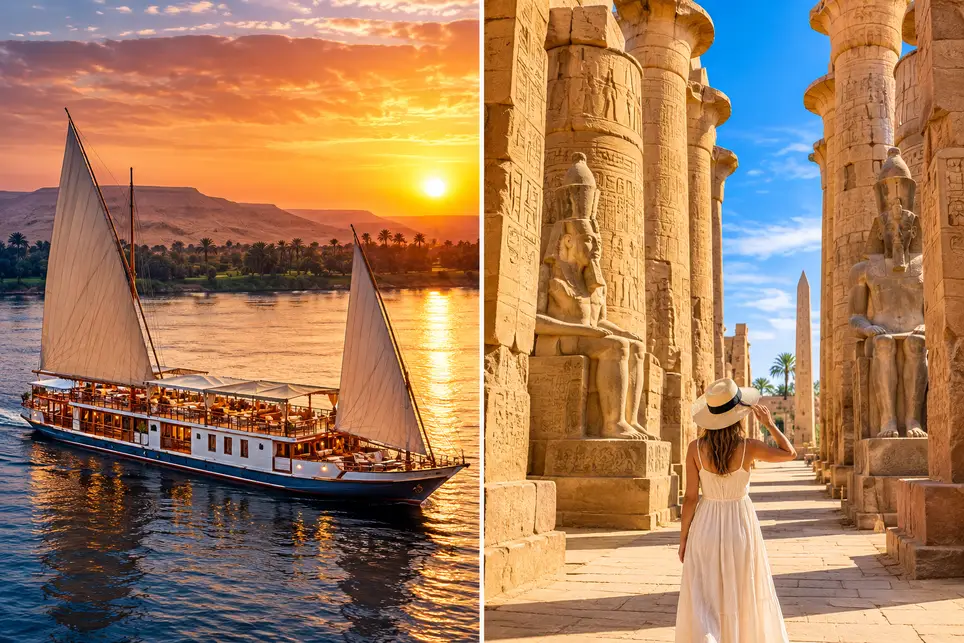


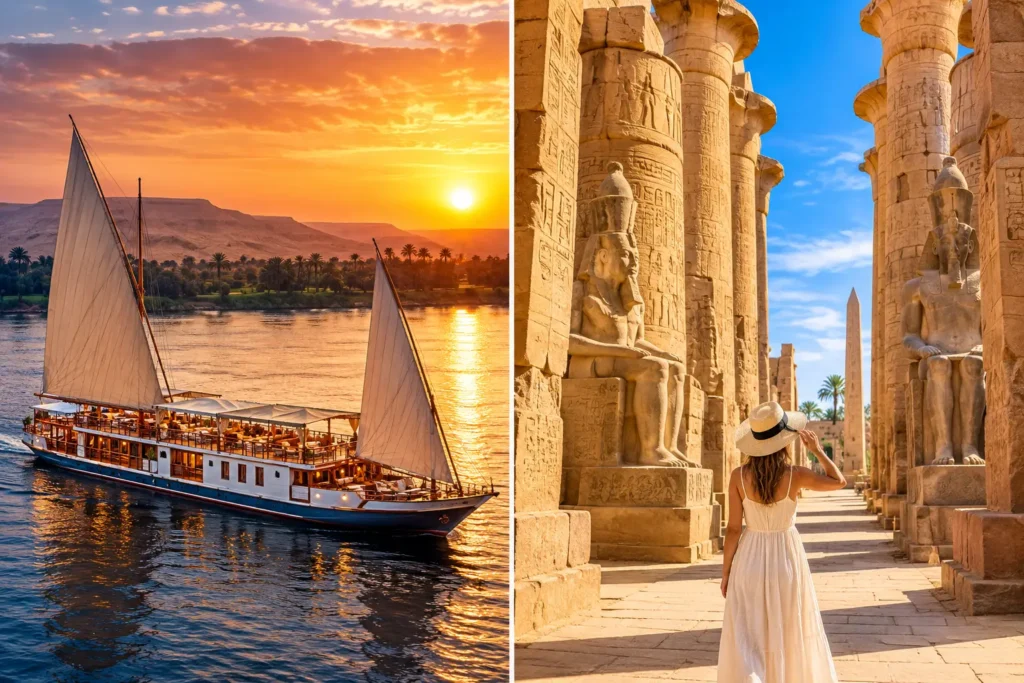
Sail the Nile Through Egypt’s Ancient Heritage
Temples, sunsets, and quiet river days aboard a private Dahabiya.
What Travelers Say About Turquoise Dahabiya on TripAdvisor
Read genuine guest experiences from travelers who have sailed the Nile with us.


Frequently Asked Questions About Ancient Egypt and Christmas
Did ancient Egyptians celebrate Christmas?
No. Ancient Egyptians followed their own religious festivals and did not celebrate the Christian Nativity.
Did ancient Egyptians celebrate the winter solstice?
They understood important solar cycles, and some temples exhibit solstice-related orientations. However, a universal ancient Egyptian winter-solstice festival equivalent to Christmas is not established.
Was Horus born on December 25?
There is no reliable historical evidence establishing December 25 as the birth date of Horus.
Did Christmas originate in ancient Egypt?
A direct origin in ancient Egyptian religion has not been demonstrated. Christmas developed within early Christianity, although it arose in a world containing many earlier religious traditions.
Did ancient Egyptians worship Ra during winter?
Ra was an important solar deity worshipped throughout the year. Solar symbolism was significant, but a specific December 25 celebration of his birth is not established.
Which Egyptian temple is associated with the winter solstice?
Karnak Temple in Luxor is among the best-documented examples of an ancient Egyptian temple complex with a winter-solstice sunrise alignment.
Is Abu Simbel aligned with the winter solstice?
No. Its famous sanctuary illumination occurs around February 22 and October 22, rather than the December solstice.
Did ancient Egyptians have Christmas trees?
There is no convincing evidence that the ancient Egyptians practiced the modern Christmas-tree tradition. Ancient Egyptian plant symbolism should not be confused with the history of decorated Christmas trees.
Why do Coptic Christians celebrate Christmas on January 7?
The difference is associated with the Coptic Church’s historical liturgical calendar and its relationship to the older Julian calendar.
What are traditional Egyptian Christmas foods?
Festive meals vary by family, but they may include meat dishes after the Nativity Fast and sweets such as kahk.
Is Egyptian Christmas the same as Western Christmas?
Both commemorate the birth of Jesus, but dates, liturgical practices, and cultural traditions can differ.
Can tourists visit Egypt during Christmas?
Yes. Egypt receives international visitors throughout the winter. Specific archaeological site hours, cruise schedules, and holiday arrangements should be confirmed when planning.
Conclusion: Understanding the Real Connection Between Ancient Egypt and Christmas
The relationship between ancient Egypt and Christmas is more interesting when historical facts are separated from popular myths. The pharaohs did not celebrate Christmas, and claims that the holiday originated directly from Horus, Ra, or an ancient Egyptian December 25 festival are not established by reliable evidence.
Nevertheless, ancient Egyptian beliefs about the sun, cosmic order, rebirth, and divine protection remain important subjects for understanding the civilization’s religious history. The winter-solstice alignment at Karnak provides a particularly memorable example of how the Egyptians connected sacred architecture with the natural world, while Coptic Christmas shows how Egypt’s living Christian heritage continues today. Visiting these places along the Nile lets you see both stories for yourself, and our Egypt Christmas facts page offers more context.
Plan Your Nile Journey With Us
Tell us your travel dates and interests, and our team will help you plan a private Dahabiya cruise past Egypt’s greatest temples.
Sources and Further Reading
- University College London, Digital Egypt: Egyptian festival calendar
- UNESCO-associated thematic study on astronomical heritage: Karnak orientation
- Egypt’s Ministry of Tourism and Antiquities: Karnak solstice alignment
- The Metropolitan Museum of Art: Isis nursing the infant Horus
- The Walters Art Museum: Isis with Horus the Child
- Coptic Orthodox Church: Nativity feast and fasting