


The Best Egypt River Cruise Is the One Built Around You — Here’s How to Find It
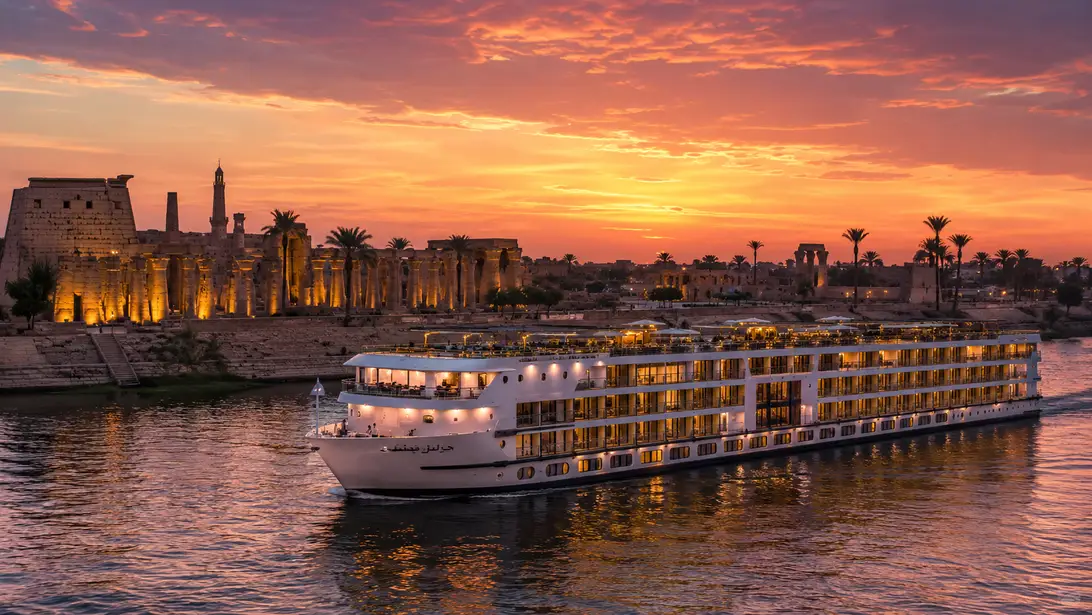
Search for the best Egypt river cruise and you will be handed a hundred confident answers, most of them written by someone who has never untied a rope on the Nile. Five stars here. Award-winning there. Everybody’s boat, apparently, is the finest thing afloat.
We would rather do something less flattering and more useful. Below is what we actually operate, what it costs, how long it takes, what is inside the price and what is not — plus a few honest notes on when a different kind of boat might suit you better than ours. You can then decide for yourself which journey deserves the word “best” in your case, because a honeymooning couple, a family of five and a returning Egyptophile are never looking for the same week.
We are Turquoise Dahabiya. We sail one traditional wooden dahabiya between Luxor and Aswan, and on our longest programmes we carry on north until the river delivers you to Cairo. Small boat, small numbers, no floating nightclub. Everything on this page comes from our own journeys; where a detail depends on your dates or your group, we say so and invite you to ask rather than guessing in public.
Best Egypt river cruise: the short answer
- The boat: one private traditional dahabiya — sailed, not driven
- The classic route: Luxor and Esna to Aswan, or Aswan north to Esna
- Journeys available: 4, 5, 7, 11 and 14 days, plus an 8-day 2027 eclipse sailing
- Reach Cairo by water: the 11-day Luxor–Cairo and the 14-day Aswan–Cairo
- Guests on board: a maximum of 16 on the 7-day programme, 12 on the eclipse sailing
- Meals: full board — breakfast, lunch and dinner, with complimentary soft drinks
- Guiding: an expert archaeologist accompanies the sightseeing
- Tickets: entrance fees to every attraction listed in your itinerary are included
- Not included: flights, alcoholic drinks, gratuities, personal expenses
- Prices from: €750 for 4 days, rising to €3,500 for 14 days
- Comfortable season: broadly October to April





First, Decide What “Best” Means to You
Nobody books a river cruise in the abstract. They book it for a reason, and the reason quietly decides everything else — the boat, the route, the number of nights, the budget. In our experience the reasons sort themselves into four camps.
- Privacy and quiet. You want a deck where you recognise everyone, and moorings where nothing is happening except the river. This points to a small sailing boat.
- Coverage. You want the temples, all of them, ideally in the order the ancients arranged them along the water. This points to a longer itinerary, not a fancier one.
- Facilities. You want a big pool, a wide public deck and a departure every week of the year. Be honest with yourself here — a large five-star vessel does this better than we do, and we would rather say so.
- Time. You have five days, not fifteen, and you want the river to be the memorable part of a wider Egypt trip. That is a real constraint, and it has a real answer.
Rank those four in your own order and the rest of this page more or less reads itself.
Dahabiya, Cruise Ship or Felucca? The Honest Comparison

Three very different things sail this river, and confusing them is the single most common planning mistake we see. Here is the shape of each.
| Dahabiya (what we sail) | Large Nile cruise ship | Felucca | |
|---|---|---|---|
| Guests on board | A small group — a maximum of 16 on our 7-day journey | Typically well over a hundred | A handful |
| How it moves | Sails, with the river doing much of the work | Engine-driven, to a fixed timetable | Sails, over short distances |
| Where it stops | Villages, islands and small temple sites as well as the headline monuments | Commercial quays at the main towns | Riverbanks, usually near Aswan |
| Sleeping | Private cabins and suites with en-suite bathrooms | Cabins across several decks | Usually on deck, simply |
| Atmosphere | Quiet, private, more house party than hotel | Sociable, busier, more facilities | Rustic and adventurous |
| Suits | Couples, families, small groups, returning travellers | Travellers who want a pool and weekly fixed departures | Young, flexible travellers on short hops |
If you want that comparison in more depth, we have written it out properly: dahabiya versus a standard Nile cruise and felucca versus dahabiya. Neither page tries to talk you out of the alternative. The wrong boat is a long week for everybody, and we would rather you spent it on the right one, ours or not.
The counterweight, stated plainly
A large five-star cruiser gives you a swimming pool, a much bigger public deck and departures on a dependable weekly grid. If those three sit at the top of your list, book one — genuinely. What we offer instead is a small, quiet, private boat that can moor where a big vessel simply cannot go, and a guest list short enough that the crew learn how you take your coffee by day two.
Our Nile River Cruise Journeys, Ranked by How Most People Choose
Six journeys, one boat, one river. They are ordered here the way our enquiries usually run — the classic Luxor–Aswan sailings first, then the long north-bound programmes, then the one date on the calendar that cannot be moved.
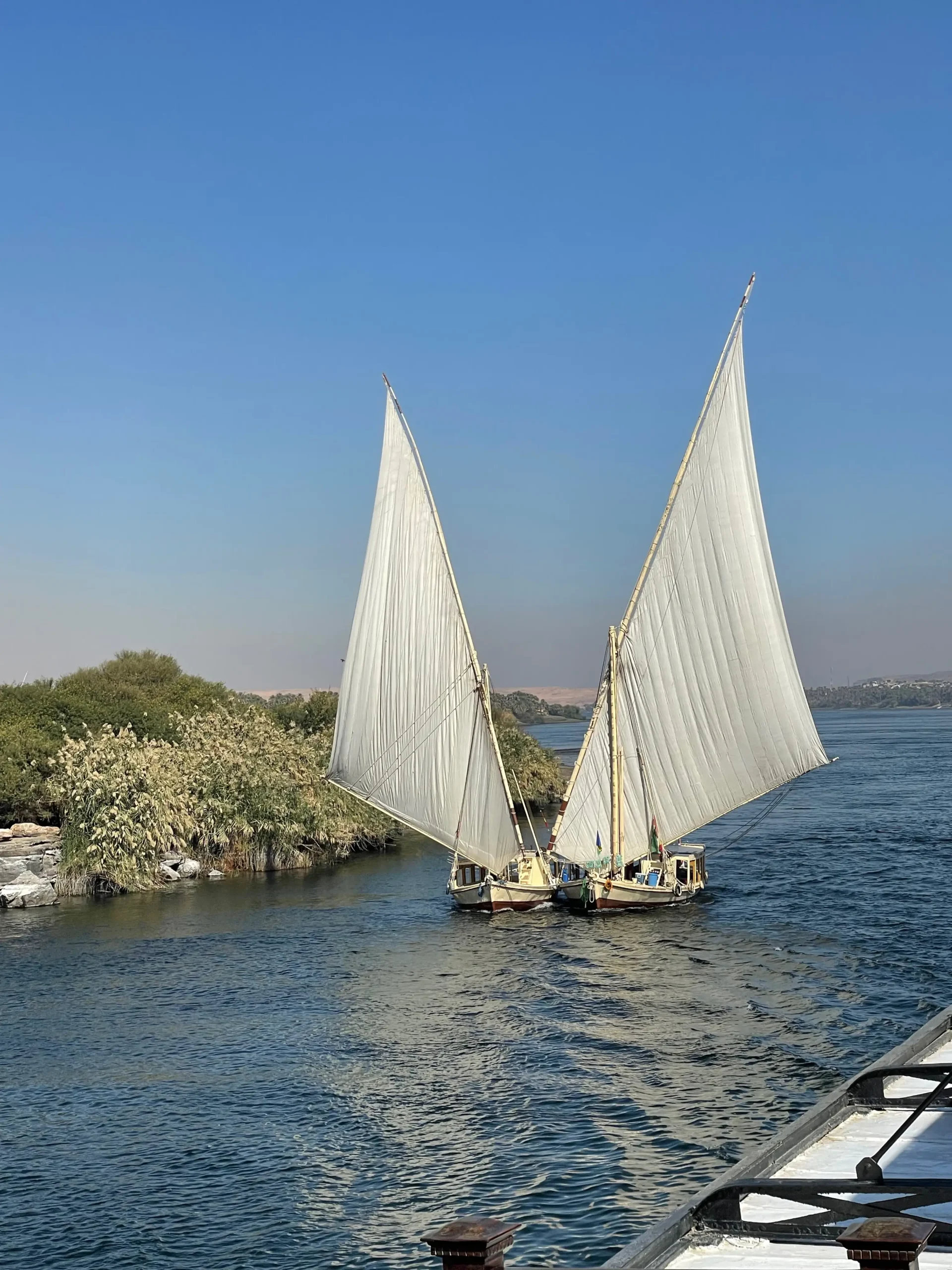 7 Days
 Elegant Scape
Luxor → Qena → AswanOur most-booked week and, for most travellers, the honest answer to “which is the best Egypt river cruise?” It opens in Luxor, detours north for Dendera, then runs the full temple line south to Aswan.
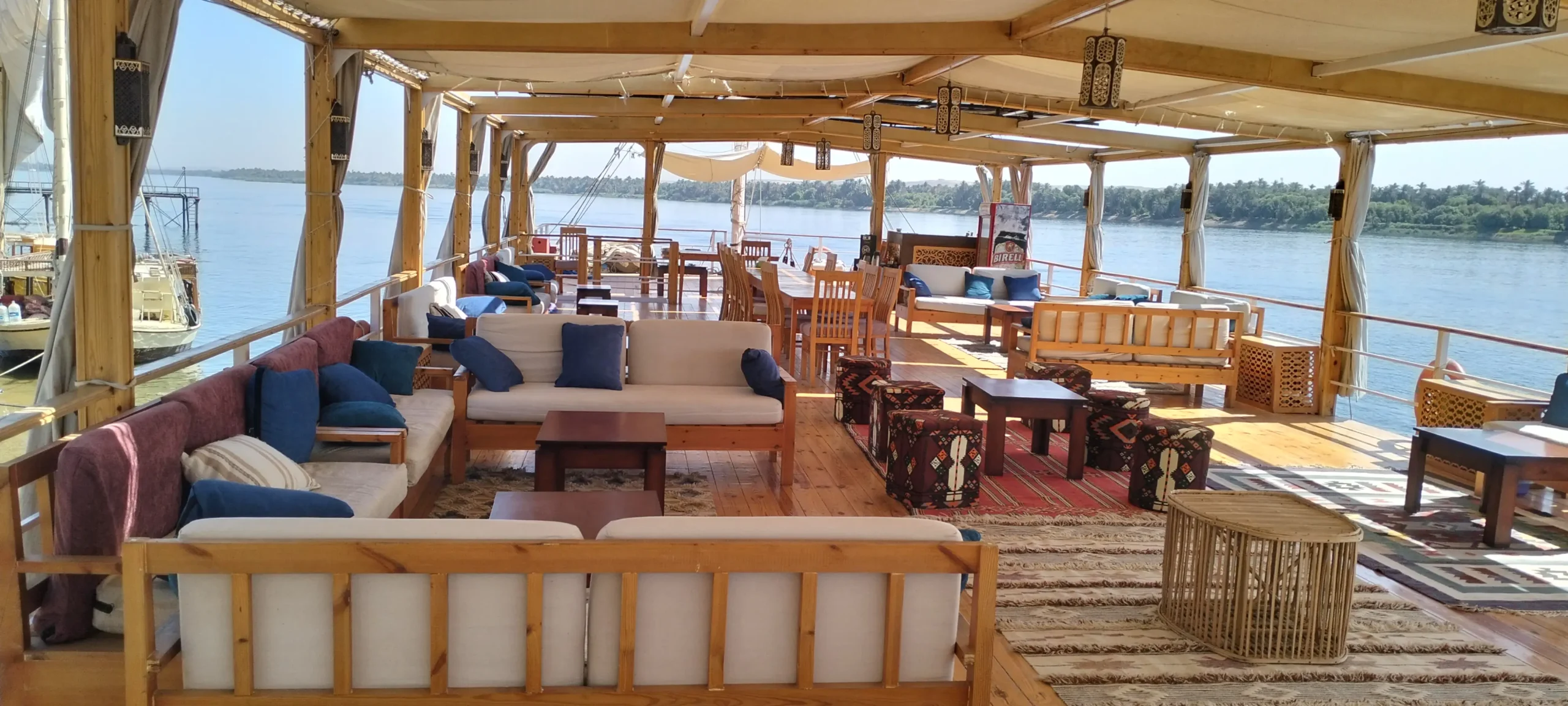 5 Days
 Serenity Retreat
Luxor / Esna → AswanFour nights on the water — the point at which a boat stops being transport and starts being the holiday. Short enough to leave you several days for Cairo or the Red Sea afterwards.
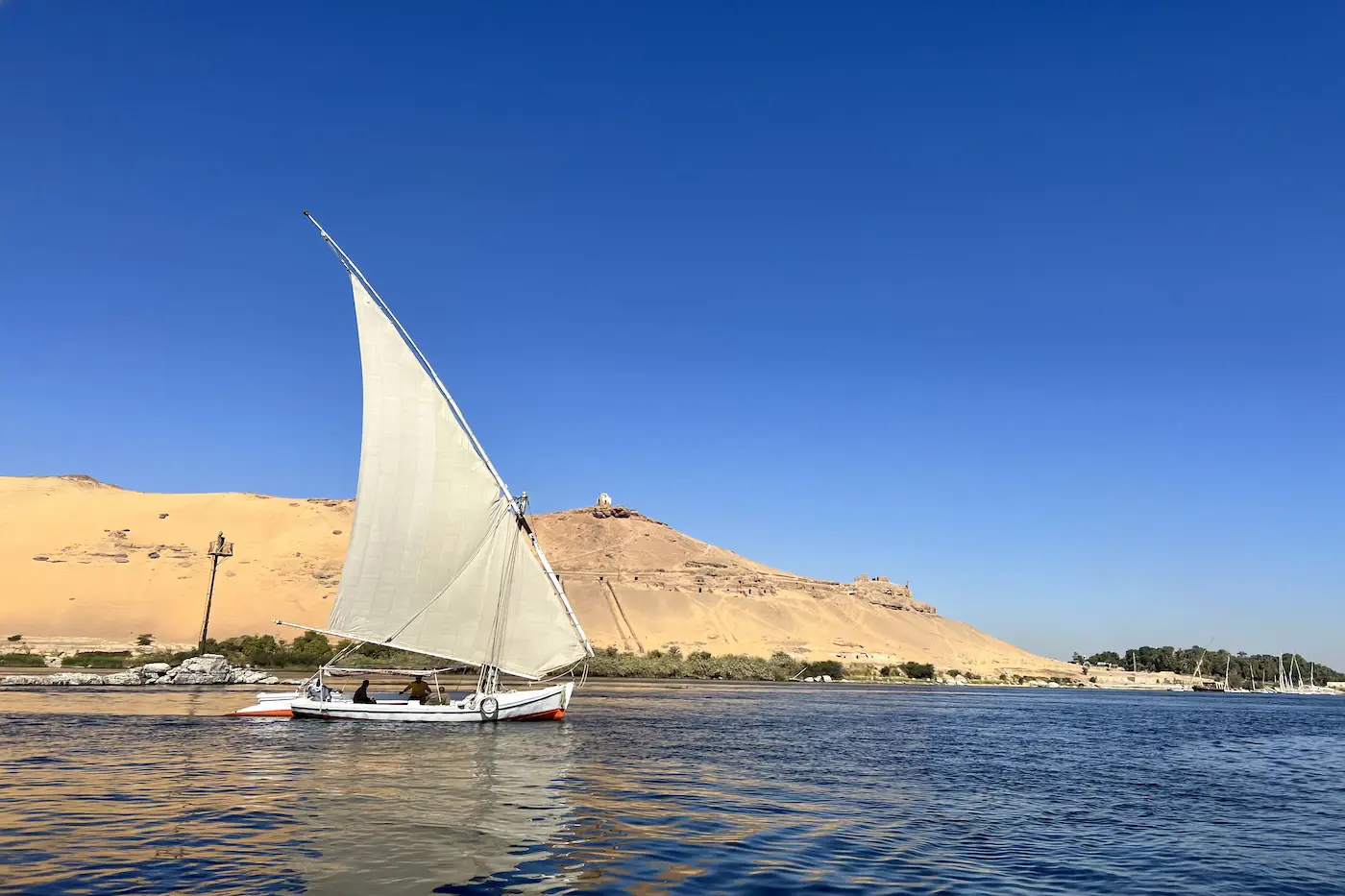 4 Days
 Sacred Waters
Aswan → EsnaThe shortest sailing we run, heading downstream from Aswan. It is designed to slot into a bigger Egypt itinerary rather than replace one — which is exactly why travellers pick it.
 11 Days
 Royal Nile Escape
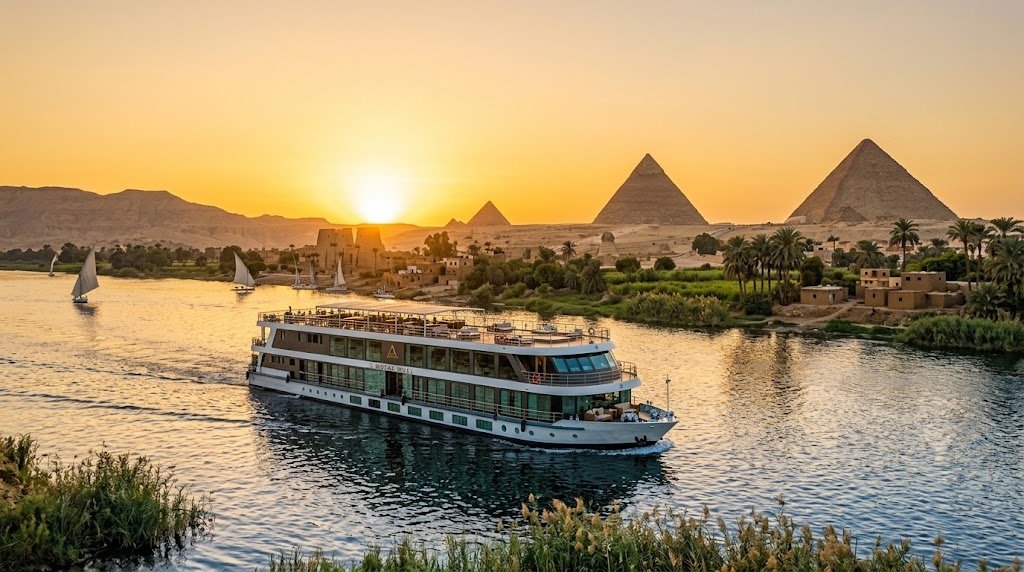
Luxor → CairoEleven days sailing north until the journey simply arrives in the capital. The country between Upper Egypt and Cairo is the stretch almost no visitor sees at water level — and you cross all of it slowly.
 14 Days
 Golden Horizons
Aswan → CairoOur longest journey, and the only one that begins at the southern border of the Nile Valley and does not stop until Cairo. Two weeks, one cabin, the whole river.
 8 Days · 2027
 Egypt Solar Eclipse Cruise
Aswan → Luxor → QenaBuilt around the total solar eclipse over Luxor on 2 August 2027, sailing 28 July to 4 August, with viewing on the Luxor West Bank.
Want to go deeper before you choose? Read the Luxor to Aswan route in detail, compare our view of the best Nile cruise itinerary, browse all our cruise packages, or spend five minutes in the gallery — photographs settle more arguments than paragraphs ever will.
Luxor to Aswan, or Aswan to Luxor? It Matters Less Than You Think
This question comes up in almost every enquiry, so here is the plain version: you see the same river either way, and the same monuments. What changes is the rhythm and the logistics.
Sailing south, Luxor towards Aswan, means you begin with the heaviest hitters — Karnak, Luxor Temple, the West Bank — and then settle into a gentler run of smaller sites as the landscape opens out. It is a front-loaded week, and it works beautifully if you arrive full of energy.
Sailing north, Aswan towards Esna, works with the current and finishes near Luxor, which suits travellers who plan to continue on to Cairo or the Red Sea. Our 4-day Sacred Waters runs this direction; the 14-day Golden Horizons starts here too and simply keeps going.
The practical tiebreaker is usually your flights and what comes before and after the cruise, not the sightseeing. Send us the shape of your trip and we will tell you which direction saves you a transfer or a wasted day.
How Many Days Do You Actually Need?
Length is the decision that quietly determines every other one — budget, route, how much of Egypt you meet. Scan the table, then read the notes underneath.
| Journey | Days | Route | Reaches Cairo? | From |
|---|---|---|---|---|
| Sacred Waters | 4 | Aswan → Esna | No | €750 |
| Serenity Retreat | 5 | Luxor / Esna → Aswan | No | €1,000 |
| Elegant Scape | 7 | Luxor → Qena → Aswan | No | €1,500 |
| Egypt Solar Eclipse Cruise | 8 (2027) | Aswan → Luxor → Qena | No | €3,300 |
| Royal Nile Escape | 11 | Luxor → Cairo | Yes | €3,000 |
| Golden Horizons | 14 | Aswan → Cairo | Yes | €3,500 |
Four to five days: the river as one chapter
Take Sacred Waters or Serenity Retreat when the cruise is a part of a wider plan rather than the whole of it. Four nights aboard on the 5-day journey is genuinely enough to stop counting days and start noticing the light on the water — and it still leaves room for Cairo at one end.
Seven days: the complete southern river
Elegant Scape is the one we would put forward if you asked us for a single recommendation. It sails north first so that Dendera lands in the same week as Kom Ombo, then turns south for the long temple run to Philae. Six nights on board, sixteen guests at most, nothing rushed.
Eleven to fourteen days: the whole country by water
Royal Nile Escape and Golden Horizons do something almost nobody offers — they treat the Nile as the spine of the entire holiday rather than a segment inside it. You watch Upper Egypt become Middle Egypt become the capital, at roughly the speed the country was built to be crossed. If you have the annual leave, this is the version people are still describing to friends years later.
What Sits Inside the Price — and What Does Not
“All inclusive” is the vaguest phrase in travel, so here is exactly where we draw the line. The table below reflects our 7-day programme, the one most travellers book. Inclusions vary a little between journeys, so confirm yours when you enquire.
| Inside the price | Not inside the price |
|---|---|
| Full board on board — breakfast, lunch and dinner | International and domestic flights |
| An expert archaeologist guide on all sightseeing tours | Alcoholic drinks |
| Entrance fees to every attraction listed in the itinerary | Gratuities |
| All transfers in a modern, air-conditioned deluxe vehicle | Personal expenses |
| Complimentary soft drinks throughout the journey | |
| Onboard activities and evening entertainment |
Two lines in that left-hand column do most of the work on your budget, and they are the two travellers most often forget to check elsewhere.
Entrance fees. Egypt sells tickets site by site, and a serious temple itinerary stacks them up fast. Bundling them into one number means nobody in your party is doing currency arithmetic at a ticket window in the middle of a hot afternoon.
The archaeologist. One expert guide staying with you across the sightseeing, rather than a fresh face at every gate. Across a dozen monuments, that is the difference between photographing a wall and understanding what is carved into it.
On the word “luxury”
Every operator on this river claims it, so judge ours on specifics instead: a private boat, full board, a ceiling of sixteen guests on our flagship week, onboard WiFi, and moorings beside villages and islands rather than a commercial quay. Inspect the accommodation yourself in our suites and standard rooms, or see how an ordinary day unfolds on life on board.
The Egypt You Meet From the Deck
Egypt’s monuments were built along a river for a reason, and sailing remains the only way to meet them roughly in the order their builders intended. Here is what sits on our Luxor–Aswan run.
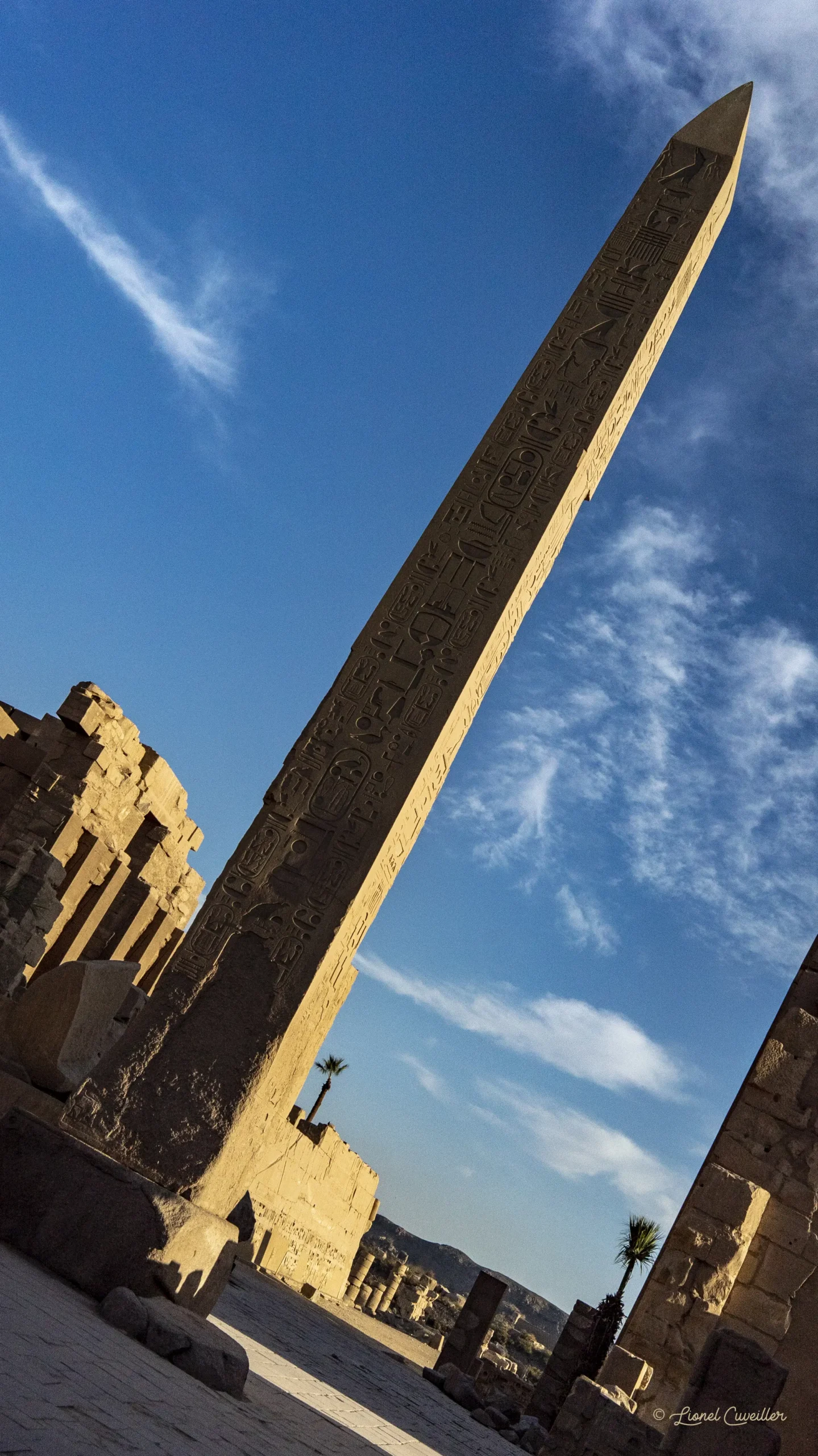
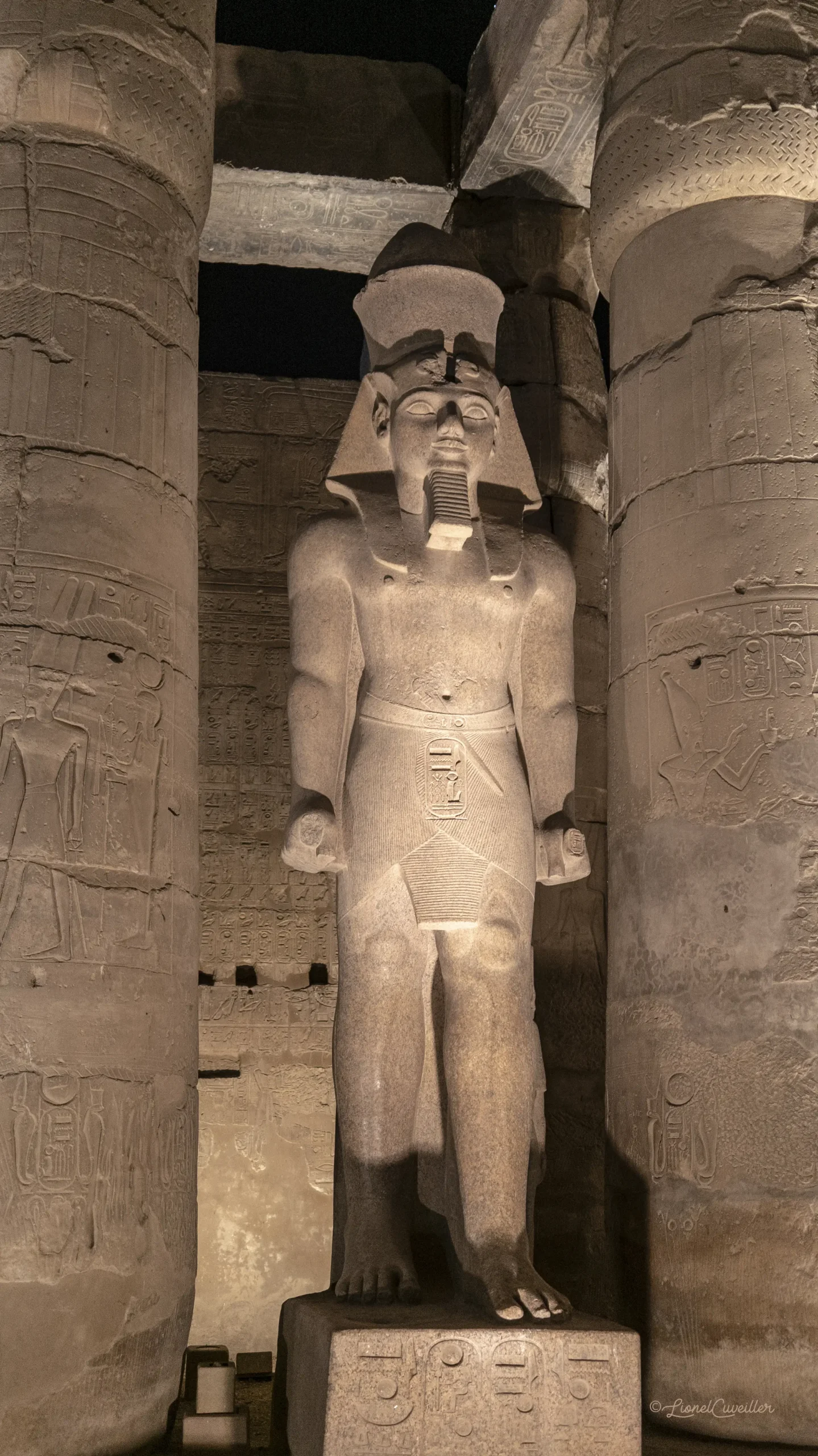
Karnak and Luxor Temple open the seven-day route. Karnak does not survive the trip into a photograph; the scale only registers when you are standing underneath those columns with your head tilted back. Luxor Temple, a short way south, reads like a stone press release from a civilisation determined to keep the record straight. Background reading, if you want it: visiting Karnak and the wider Luxor East Bank.
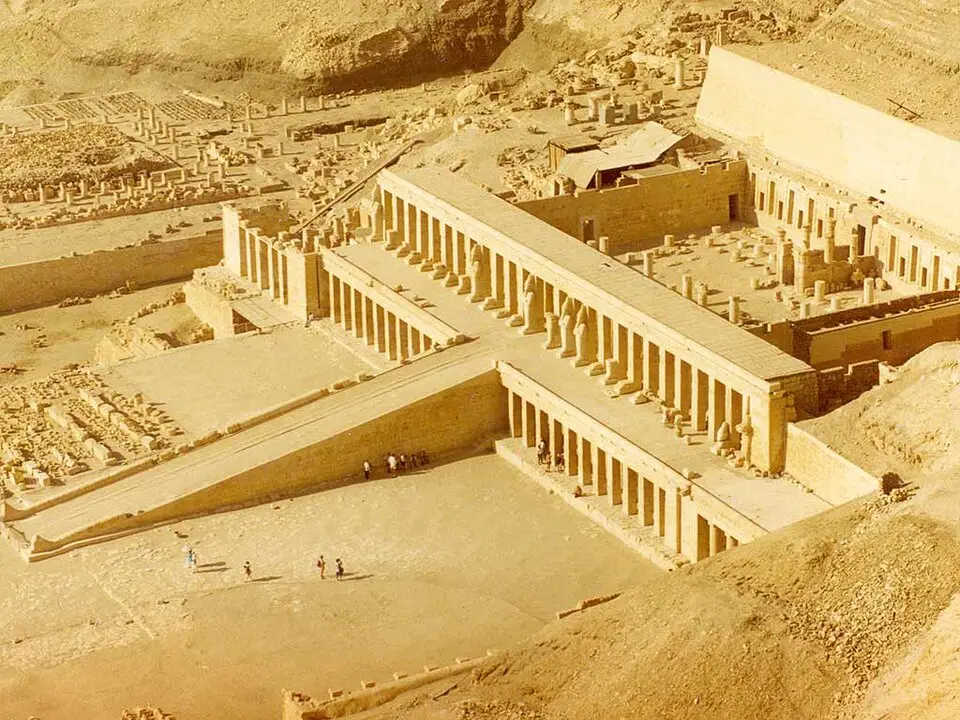
Across the water lies the West Bank: the Valley of the Kings, with painted burial chambers cut deep into the rock, and Hatshepsut’s terraced temple rising straight out of the cliff face, built for a woman who ruled as king. It is usually the day the history stops being general and turns personal. More detail in our Luxor West Bank guide.
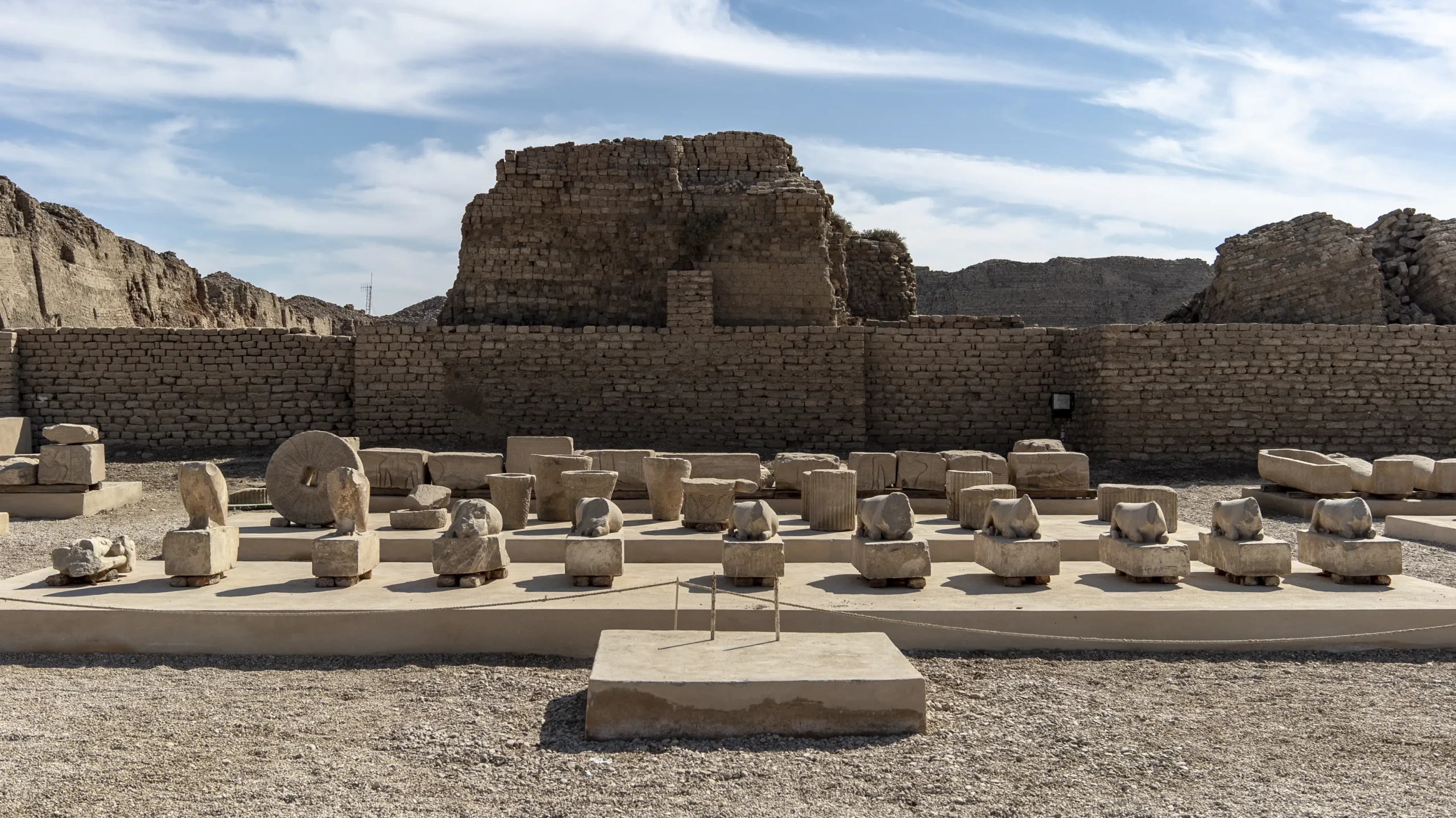
Dendera, reached on the northern leg towards Qena, is the reason our seven-day route deliberately sails the “wrong” way for a day. Dedicated to Hathor, it is among the best-preserved complexes in the country, and those painted ceilings are why a certain kind of traveller books a second trip before the first one has ended. Nearby, the riverside village of Garagos shows the unstaged Egypt running quietly alongside the monumental one.
Sailing south, the river hands you one thing after another: Esna and its lock — slow, strange and oddly gripping theatre, with daily life playing out on both banks; the cliff tombs of El Kab; the near-complete Temple of Edfu; and the sandstone quarries of El Selsela, which supplied the stone for half the monuments you have already walked through.
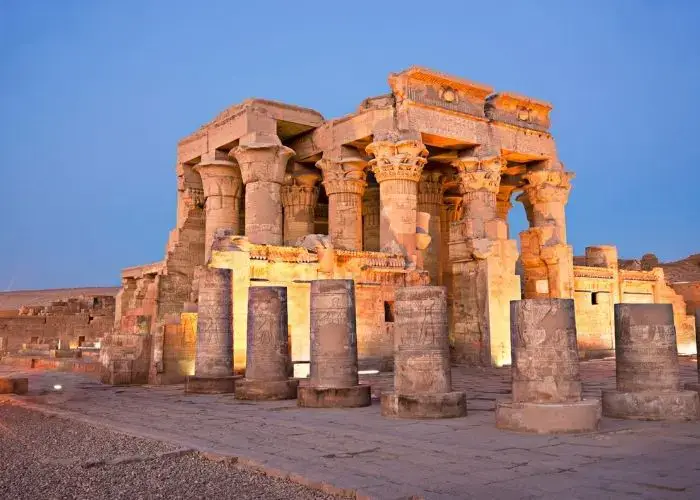
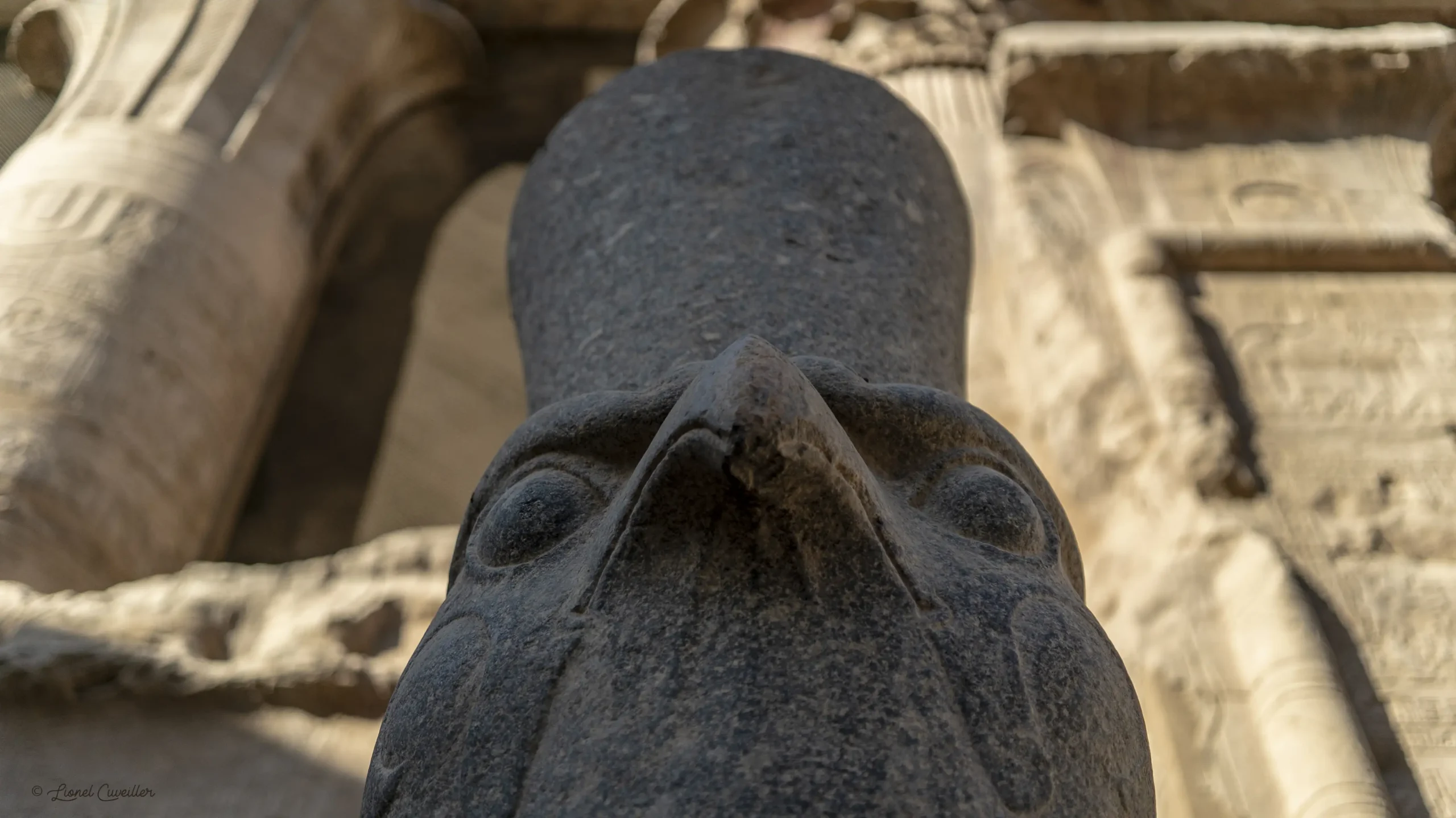
Then Kom Ombo, unusual for being split down the middle between Sobek the crocodile and Horus the falcon — two gods, one building, no compromise ever reached. The camel market at Daraw runs at full volume. And the southern stretch closes at Philae Temple, marooned on its island outside Aswan.
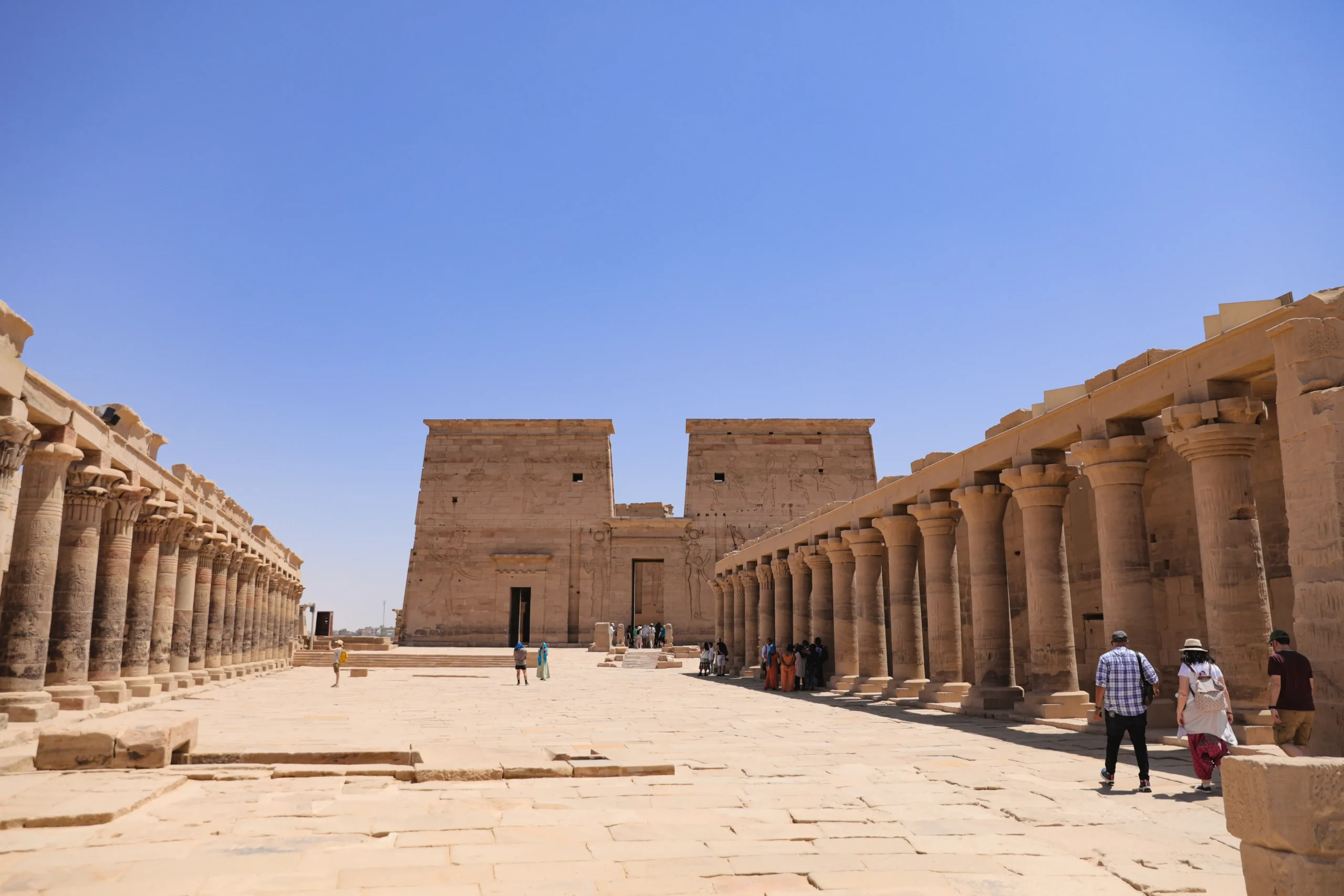
What never appears on a large-ship itinerary are the moorings in between — Imam Island, Bassao Island, Herdiab Island. Remote, silent, and about as good as Nile stargazing gets. If you like reading ahead, try the Egyptian countryside, the attractions along the Nile, or things to do in Aswan.
What a Nile River Cruise Costs, and What “From” Really Means
Our journeys start at €750 for the four-day Sacred Waters and rise to €3,500 for the fourteen-day Golden Horizons. Those are starting points per person, not quotes, and three things move them:
- Cabin category. A suite and a standard cabin are not the same number.
- Party size. A couple and a group of ten do not price identically.
- Travel window. Demand across the season is uneven, and pretending otherwise helps nobody.
Notice too what is already inside those figures: full board, entrance fees on every listed site, transfers and an archaeologist guide. A cheaper headline price elsewhere sometimes buys the same week with the tickets and the guiding waiting for you at the end, so it is worth comparing like for like before deciding what is expensive.
We would rather send you a real figure for your dates than let you plan around an average. Tell us when you want to travel and how many of you there are, and we will do the arithmetic properly.
When to Sail — and Why Our Winter Closes Early
Broadly, Egypt’s cooler months — roughly October through April — are the most comfortable for long days on your feet at temples and inside tombs. Summer is a great deal hotter, and heat matters more than first-time visitors expect when you are climbing uneven stone at midday.
Which creates a practical problem worth understanding before you start choosing dates. We operate one boat with a small number of cabins. Availability does not behave the way it does across a fleet — it closes, and then it is closed. The advice is unglamorous but it works: send us two or three possible date ranges rather than one, and enquire earlier than feels necessary. There is more seasonal detail in our guide to the best time to go to Egypt for a Nile cruise, and if you are eyeing the cold months specifically, our notes on a winter cruise in Egypt and a Christmas Nile cruise cover that ground.
One date sits outside the normal calendar entirely. Our Egypt Solar Eclipse Cruise is built around the total solar eclipse over Luxor on 2 August 2027, sailing 28 July to 4 August, with viewing on the Luxor West Bank and a limit of twelve guests. That itinerary cannot move, because the moon is not open to negotiation.
Life on Board, and What to Put in the Bag
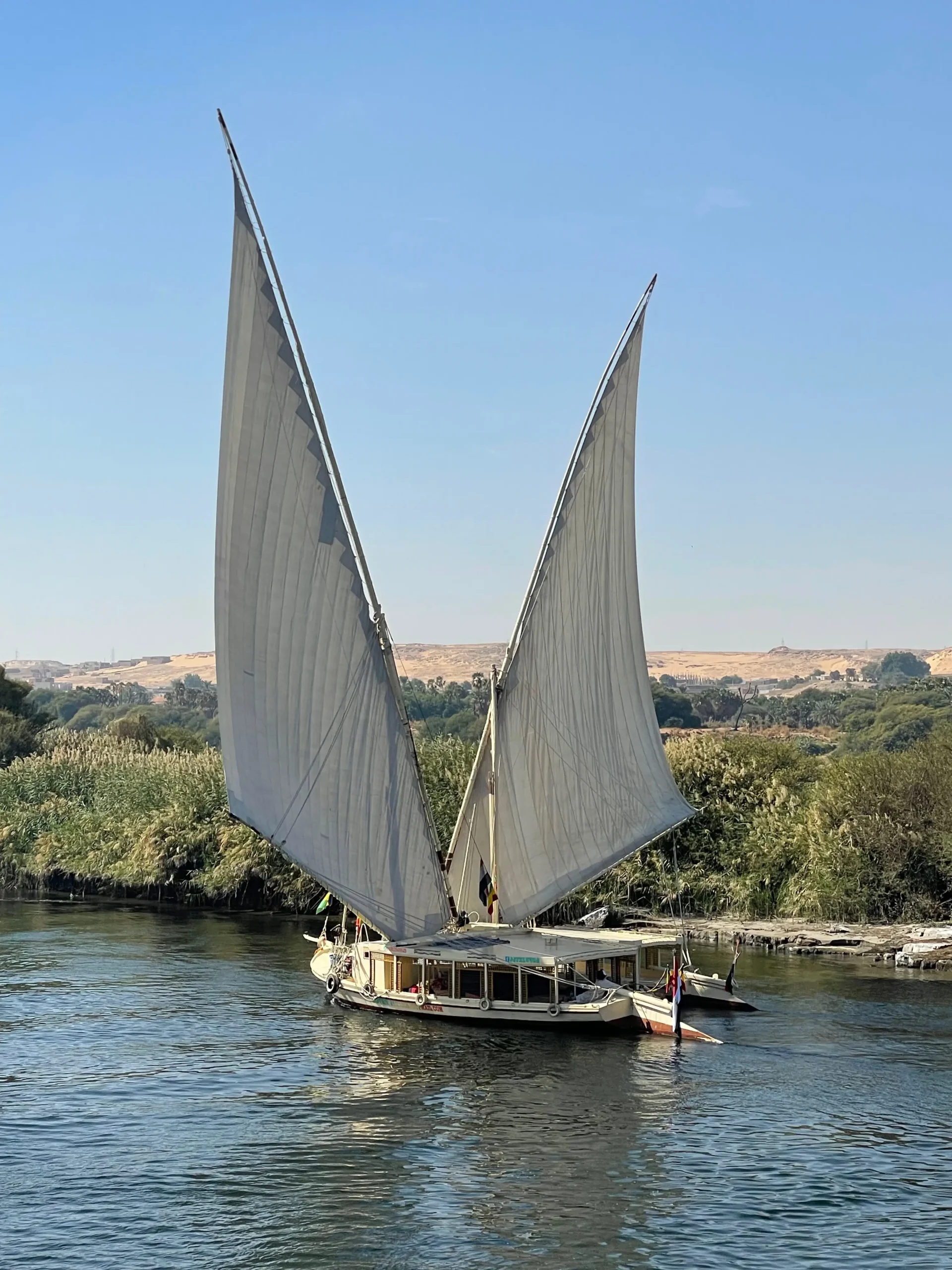
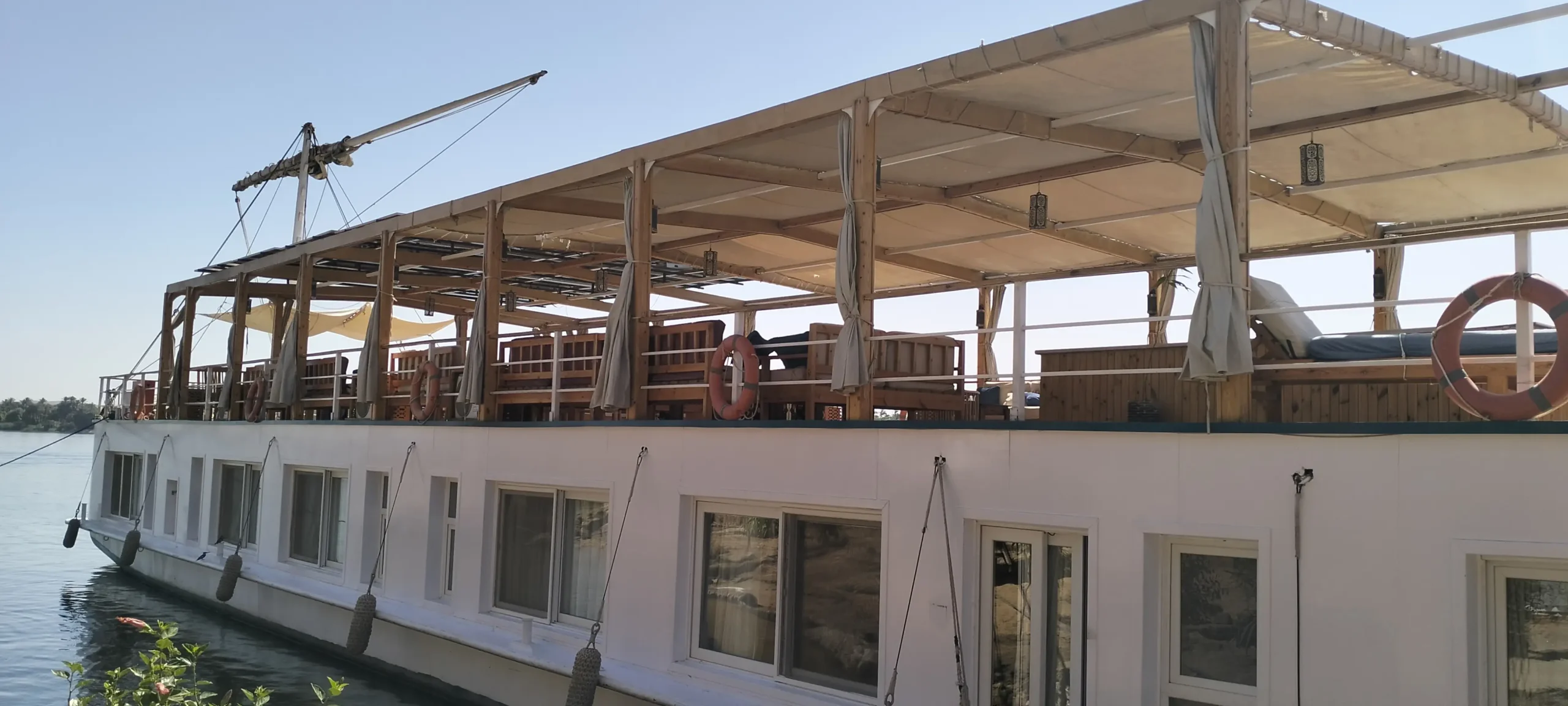
Days on a dahabiya follow a simple shape: sightseeing while it is cool, sailing while it is hot, and long evenings on deck with the engine off. Meals are served on board, soft drinks are complimentary, WiFi is available, and there are onboard activities and evening entertainment once the day’s temples are behind you. You can see the accommodation in our suites and standard rooms, and read about the rhythm of a day on life on board.
On packing and dress, we will not invent a rulebook. Sensible general advice for anyone travelling this stretch of river: shoes you can walk on uneven stone in, clothing that covers shoulders and knees for temples and villages, sun protection you will actually reapply, a layer for evenings on deck once the sun drops, and a small torch for tomb interiors. Our Nile cruise tips page goes further, and we send practical guidance to guests before departure.
On safety we take the same line. We are not going to publish sweeping claims about conditions that can change: check your own government’s current travel advice, read our notes on travelling in Egypt, and ask us directly about the specific route and dates you are considering. You will get a straight answer about our own sailings rather than a comfortable generality.
Who Books a Journey Like This
- Couples and honeymooners. Private sailing, quiet moorings, dinner on deck, and nobody running a quiz night. See our Egypt honeymoon itinerary.
- Families. A lock crossing, a camel market and tombs cut into a cliff hold children’s attention in a way a museum circuit rarely manages. Cabin configuration is the real planning question, so send us your children’s ages. More on family cruising.
- Small groups and private charters. With sixteen the ceiling on the seven-day journey, a family or a group of friends can take the whole boat and set the pace of the week themselves.
- Solo travellers. Small-boat sociability without the obligation — join the table or take your book to the far end of the deck. See cruising solo.
- First-time visitors. Every headline site sits on the route, plus a handful of places most first-timers never hear of until they are moored beside them. Start with our week in Egypt guide.
- Returning travellers. If you have already done the standard circuit, the village stops, island nights and the northern leg to Dendera are the reason to come back. Try our off the beaten path itinerary.
- Older travellers and anyone with mobility questions. Egypt’s temples involve uneven stone, steps and, in places, a long walk from the mooring. Tell us honestly what is comfortable for your group and we will tell you honestly which sites and which journey work — that conversation is far more useful than a generic accessibility badge.
Best Egypt River Cruise: Your Questions, Answered
Now Make It Your Trip
To recap: six journeys between 4 and 14 days on the same private dahabiya, sailing the Nile between Luxor and Aswan — and, on the two longest programmes, all the way to Cairo. Full board throughout, an archaeologist at the temples, entrance fees covered on every listed site, transfers in air-conditioned vehicles, and no more than sixteen people sharing the deck with you. Prices start at €750 per person.
What a web page cannot tell you is what your cruise looks like — which journey fits your dates, which cabin suits your party, what is still open in the season you are aiming at, and what the real number comes to once we have done the sums for your group.
So ask us. Fill in the enquiry form with your travel dates, your party size and the length of sailing you have in mind. Our team will come back with confirmed details, current availability and an honest view on whether one of our journeys is genuinely the best Egypt river cruise for the trip you are planning.
The river has been running for a while. The form takes about a minute.
Explore more: 7-Day Luxor to Aswan · 5-Day Nile Cruise · Best River Cruise in Egypt · Life On Board · Gallery · Egypt Travel Blog · About Us
