

Is the King Seti I Tomb really the most beautiful tomb in Egypt?
Hidden deep within Luxor’s Valley of the Kings, the famous KV17 Tomb of Seti I is known for its breathtaking astronomical ceiling, vivid wall paintings, and remarkable state of preservation. Many Egyptologists consider it the finest royal tomb ever discovered. In this guide, you’ll learn what makes the tomb special, what you’ll see inside, and how to include it in your Luxor itinerary or Dahabiya Nile Cruise adventure.
King Seti I Tomb Summary
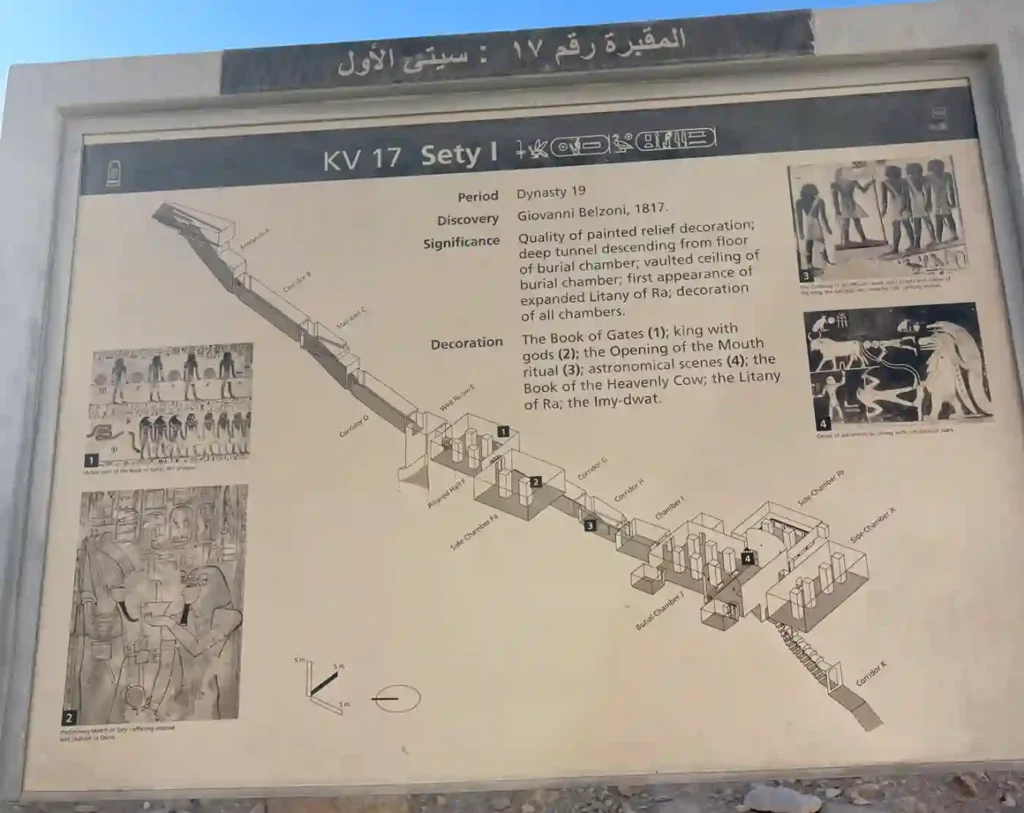
The King Seti I Tomb (KV17) is a royal tomb located in the Valley of the Kings on Luxor’s West Bank. Built during Egypt’s 19th Dynasty, it is famous for its exceptional artwork, religious inscriptions, and stunning astronomical ceiling. Stretching more than 130 meters underground, KV17 is widely regarded as one of the greatest masterpieces of ancient Egyptian architecture and tomb decoration.
King Seti I Tomb: Quick Facts
| Detail | Information |
|---|---|
| Tomb Number | KV17 |
| Owner | King Seti I |
| Dynasty | 19th Dynasty |
| Location | Valley of the Kings, Luxor |
| Length | Approximately 137 meters |
| Best For | Ancient Egyptian Art & History |
| Visit Duration | 30–45 Minutes |
| Photography | Usually Restricted |
| Ticket Type | Separate Premium Ticket |
Who Was King Seti I?
King Seti I ruled Egypt between approximately 1294 and 1279 BC during the New Kingdom. He was the father of Ramesses II and one of the most successful military rulers of the 19th Dynasty.
His reign is remembered for restoring Egypt’s power, expanding its influence, and supporting major building projects throughout the country. Visitors exploring the King Seti I Tomb quickly discover why historians regard him as one of Egypt’s greatest pharaohs.
Many of the artistic achievements that flourished under his rule can still be seen today at the Valley of the Kings, Karnak Temple, and Abydos.
Why Is the King Seti I Tomb So Famous?
The Valley of the Kings contains dozens of royal tombs, but the King Seti I Tomb stands apart for several reasons.
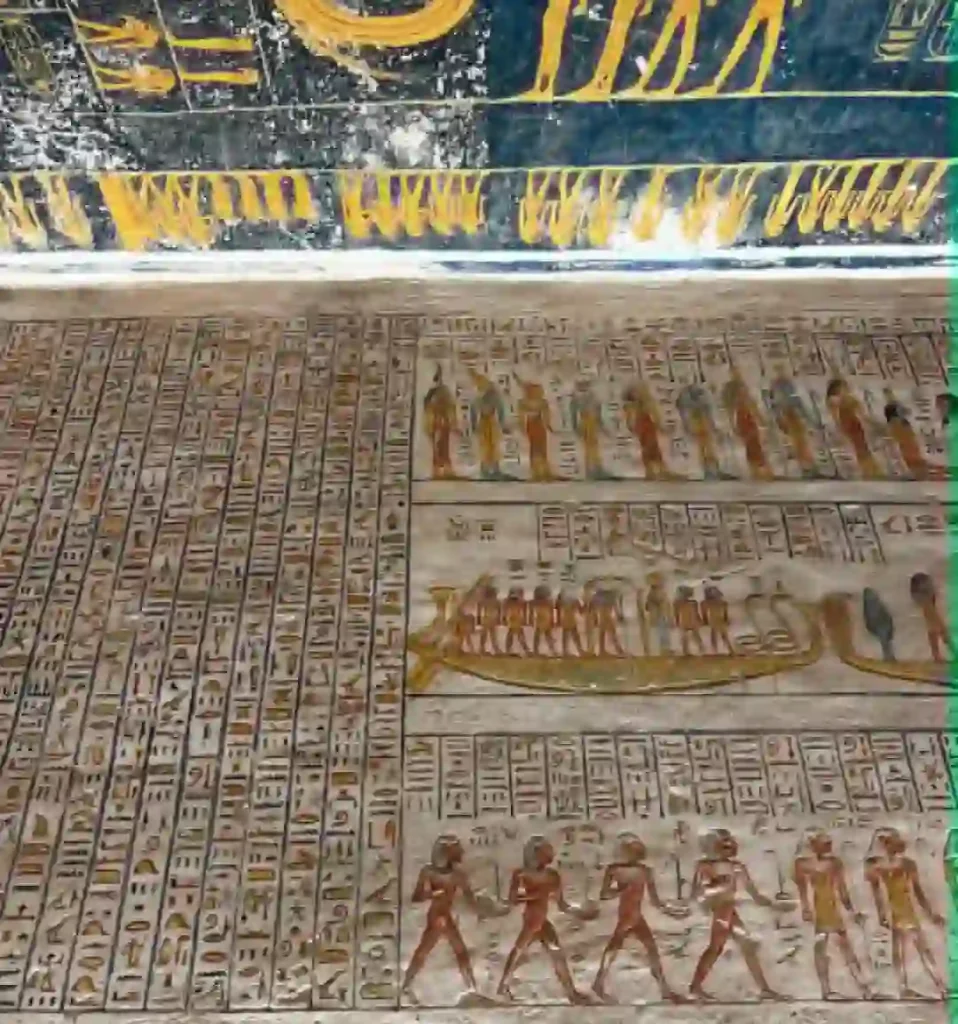
Unlike many other tombs, nearly every chamber is decorated with intricate carvings and colorful paintings that remain remarkably well preserved after more than 3,300 years.
Visitors come to see:
- The famous astronomical ceiling
- The Litany of Ra
- The Book of Gates
- The Amduat
- Outstanding wall paintings
- One of Egypt’s longest royal tombs
The quality of the artwork inside the KV17 Tomb of Seti I is often considered superior even to many more famous attractions in Egypt.
Why Visit the King Seti I Tomb?
Many travelers wonder whether the additional ticket is worth the cost.
The answer is simple: absolutely.
Reasons visitors love the King Seti I Tomb include:
- Some of the best-preserved colors in Egypt
- Fewer crowds than many major attractions
- Incredible astronomical artwork
- Detailed religious texts covering nearly every wall
- A deeper understanding of ancient Egyptian beliefs
If you enjoy history, photography, archaeology, or ancient art, the King Seti I Tomb is one of the most rewarding sites in Luxor.
Discovery of the KV17 Tomb of Seti I
The KV17 Tomb of Seti I remained hidden until 1817, when it was discovered by explorer Giovanni Belzoni.
The discovery immediately attracted worldwide attention because of the tomb’s extraordinary condition. Unlike many royal tombs that had suffered extensive damage, KV17 retained much of its original decoration.
Belzoni also discovered the king’s magnificent alabaster sarcophagus, which is now displayed in London.
Today, the tomb remains one of the most important archaeological discoveries in Egyptian history.
What Will You See Inside KV17?
Walking through the King Seti I Tomb feels like entering a sacred underground palace.
Entrance Corridors
The first corridors feature scenes from the Litany of Ra, showing the king’s relationship with the sun god and his journey into eternity.
The Well Shaft
This chamber symbolized the transition between the world of the living and the underworld while also helping protect the tomb.
Pillared Hall
One of the most impressive rooms, decorated with scenes from the Book of Gates that describe the sun’s journey through the night.
Side Chambers
Several smaller rooms contain additional religious texts and representations of gods who protected the king during his journey through the afterlife.
Burial Chamber
The burial chamber is the undisputed highlight of the entire tomb.
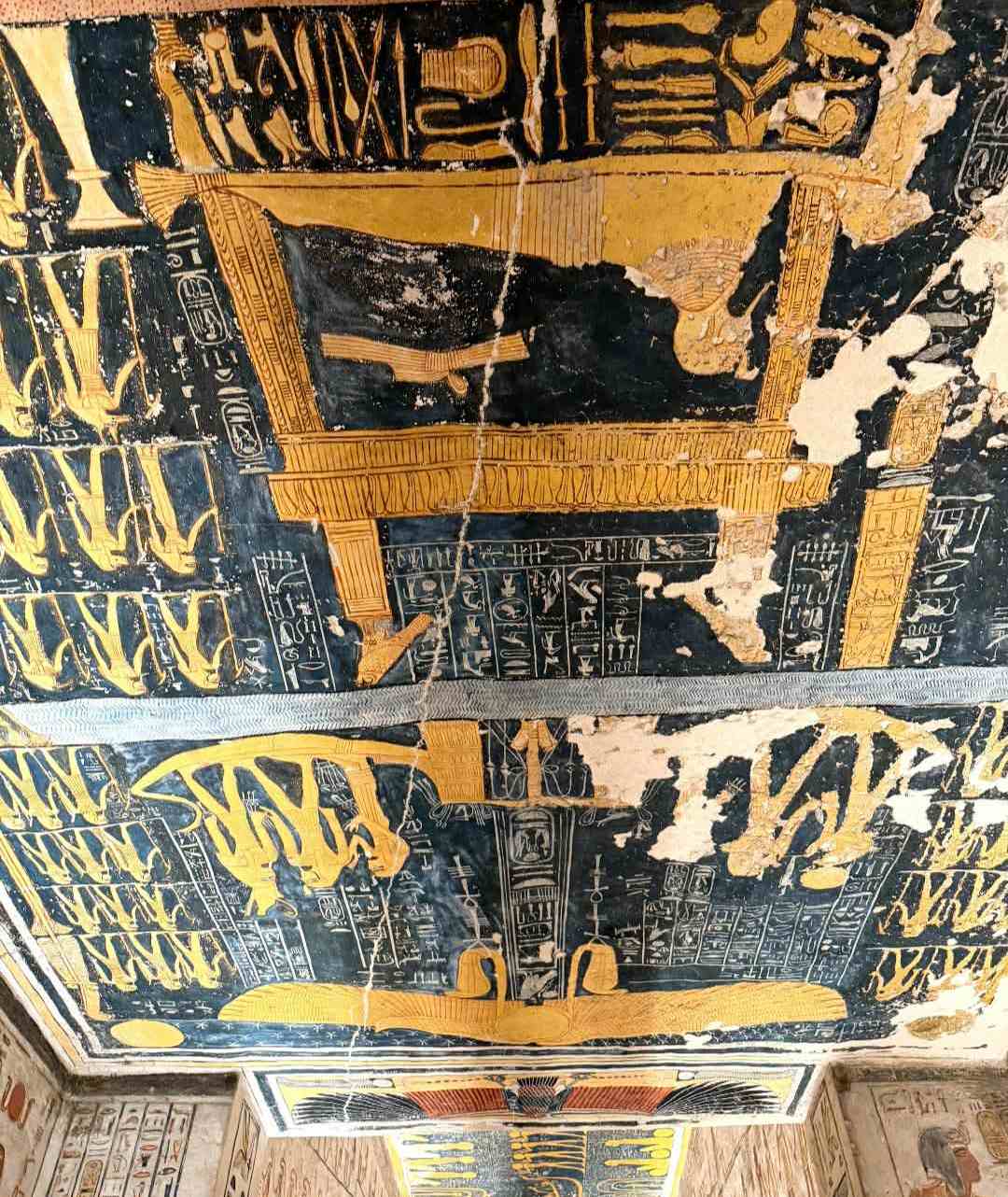
Its magnificent ceiling creates one of the most memorable experiences in Egypt.
The Stunning Astronomical Ceiling of KV17
The astronomical ceiling is the feature most visitors remember long after leaving Luxor.
Painted in deep midnight blue and covered with golden stars, the ceiling reflects the ancient Egyptians’ understanding of the heavens and their connection to the afterlife.
The artwork combines religion, astronomy, and symbolism into a masterpiece unlike anything else in the Valley of the Kings.
Standing beneath this ceiling is often described as the defining moment of a visit to the King Seti I Tomb.
King Seti I Tomb vs Tutankhamun’s Tomb
Many visitors compare these two famous tombs before deciding which to visit.
| Feature | King Seti I Tomb (KV17) | Tutankhamun’s Tomb |
|---|---|---|
| Size | Much Larger | Smaller |
| Artwork | Exceptional | Limited |
| Preservation | Outstanding | Good |
| Famous For | Decoration & Architecture | Treasure Discovery |
| Visitor Experience | Immersive | Historical Significance |
While Tutankhamun’s tomb is world-famous because of its treasures, many travelers find the King Seti I Tomb more visually impressive.
Planning a Luxor visit?
A luxury Dahabiya Nile Cruise allows you to explore both the Valley of the Kings and Luxor’s most famous temples at a comfortable pace with an expert Egyptologist guide.
How to Visit the King Seti I Tomb
The King Seti I Tomb is located within the Valley of the Kings on Luxor’s West Bank.
For the best experience:
- Arrive shortly after opening time.
- Visit during cooler morning hours.
- Allow 30–45 minutes inside.
- Purchase the required premium ticket.
- Bring a knowledgeable guide whenever possible.
Many travelers combine their visit with nearby attractions such as:
- Valley of the Kings
- Temple of Hatshepsut
- Colossi of Memnon
- Karnak Temple
- Luxor Temple
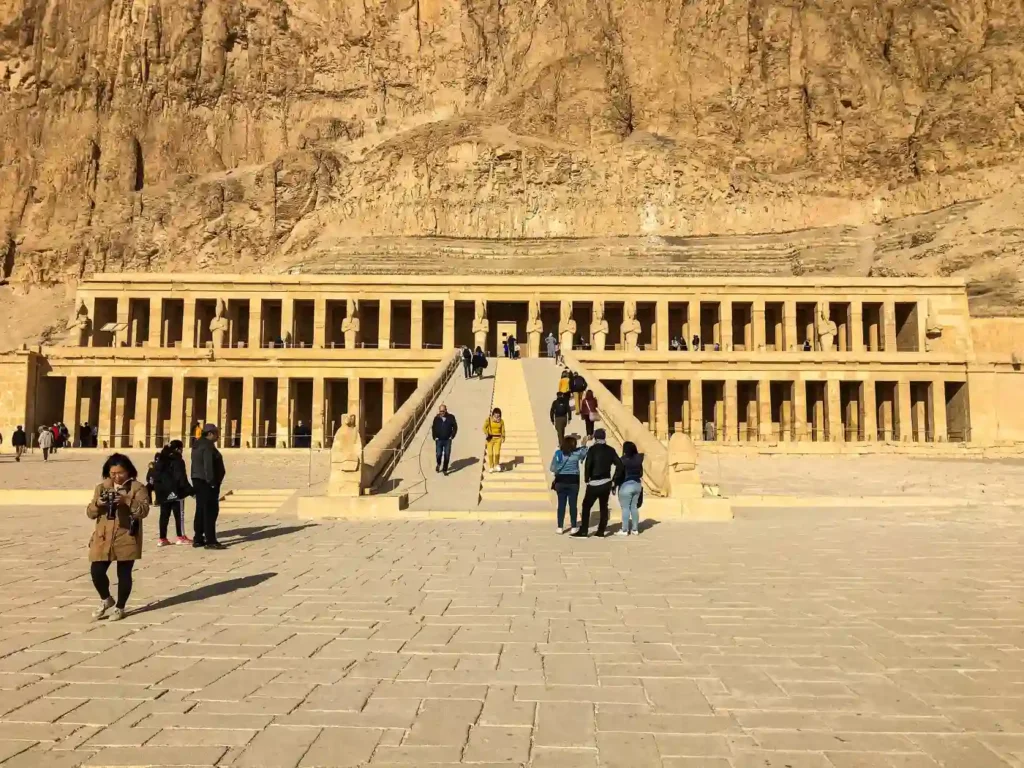
Experience the King Seti I Tomb on a Dahabiya Nile Cruise
Exploring Luxor should never feel rushed.
One of the best ways to visit the King Seti I Tomb is as part of a luxury Dahabiya Nile Cruise. Instead of rushing through multiple sites in a single day, you can enjoy a carefully planned itinerary that combines history, comfort, and authentic Nile sailing.
Guests aboard Turquoise Dahabiya can explore Luxor’s most important sites before continuing south toward Esna, Edfu, Kom Ombo, and Aswan.
Our Egyptologist guides help bring the stories behind the wall paintings and religious texts to life, transforming a simple visit into a memorable cultural experience.
Explore our Dahabiya Nile Cruise itineraries and discover Egypt at a slower, more authentic pace.
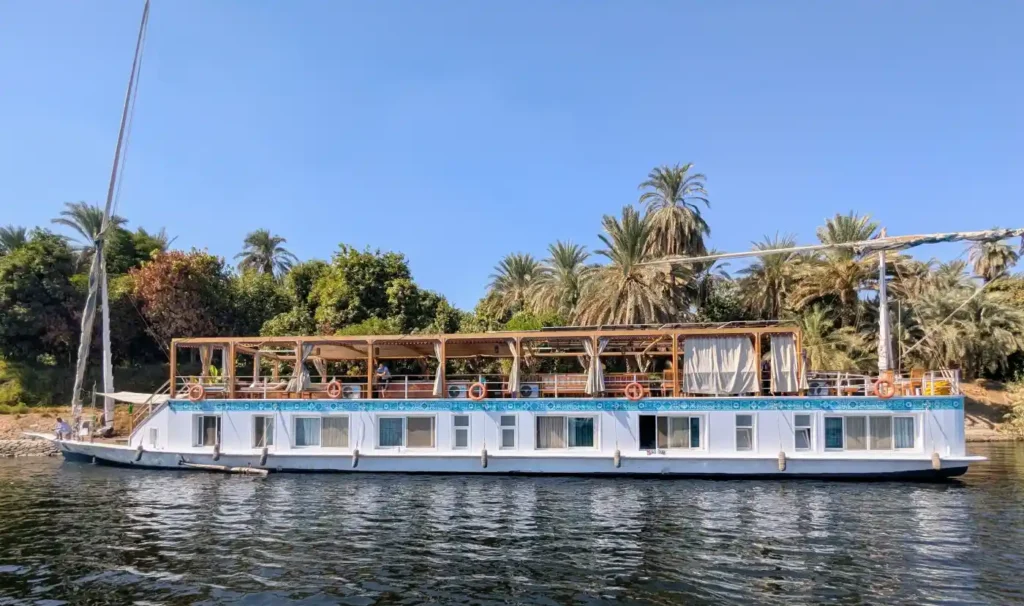
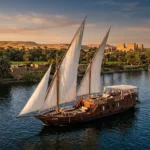
Turquoise Dahabiya sailing near Luxor at sunset
Frequently Asked Questions
Is the King Seti I Tomb worth visiting?
Yes. Many experts consider it the finest decorated tomb in the Valley of the Kings.
How long does a visit take?
Most visitors spend 30–45 minutes exploring the tomb.
Can visitors take photographs inside KV17?
Photography policies vary, but restrictions are common to protect the artwork.
Why is KV17 considered one of Egypt’s best tombs?
Its artwork, preservation, astronomical ceiling, and religious texts are among the finest in ancient Egypt.
Discover One of Luxor’s Greatest Treasures
The King Seti I Tomb is more than a royal burial site. It is a masterpiece of ancient Egyptian art, religion, and architecture that continues to amaze visitors more than three millennia after it was created.
From its beautifully decorated corridors to its world-famous astronomical ceiling, the KV17 Tomb of Seti I offers one of the most unforgettable experiences in Luxor.
If you’re planning a trip to Egypt, consider experiencing this remarkable site as part of a luxury Dahabiya Nile Cruise. With expert guides, carefully curated itineraries, and the timeless beauty of the Nile, you’ll discover why Luxor remains one of the world’s greatest archaeological destinations.
Contact Turquoise Dahabiya today and start planning your journey through the heart of ancient Egypt.