

Somewhere between Luxor and Aswan, you’ll notice it. A man in a crisp, wide-sleeved robe walks along the corniche with a quiet kind of confidence. A woman in a flowing black wrap crosses a village road. A wedding party passes in a blur of color, and you suddenly want to know who made that dress and what the embroidery means.
That’s Upper Egypt traditional clothing at work. It isn’t a costume or a museum piece. For many families in the south, it’s still how people dress for the field, the mosque, the market and the biggest days of their lives.
At turquoisedahabiyas, we love helping travelers see Egypt beyond the temple walls. Clothing is one of the best ways in. So here’s your guide to Saidi dress: what it is, what it’s made of, what it says about the people who wear it, and how to be a respectful, curious traveler when you meet it.
What Is Upper Egypt Traditional Clothing?
“Upper Egypt” is the southern part of the country, the stretch of the Nile Valley that runs from around Asyut down through Sohag, Qena, Luxor and Aswan. (It’s called “Upper” because the Nile flows north, so the south sits upstream.) The people of this region are known as the Saidis, and the word Saidi is also used for their dialect, music, food and dress.
So what is a Saidi dress? It’s the traditional attire of Upper Egypt, characterized by wide sleeves, vibrant embroidery and layered garments that reflect both the climate and a person’s social role. Think of it as clothing designed by the Nile Valley itself: loose for the heat, modest by custom, and decorated when the occasion calls for it.
You’ll also see it described as Saidi folk dress, Saidi cultural attire or Saidi heritage clothing. These all point to the same idea: dress as a living part of regional identity. For a wider look at Egyptian dress traditions, see our guide to Egyptian traditional clothes.
The Most Common Traditional Clothing in Upper Egypt
If you only remember two things, make it these:
- For men: the galabiya, a long, loose robe.
- For women: layered dresses, topped with an outer wrap such as the black abaya or the jirjar.
Everything else, from color to fabric to embroidery, builds on that foundation.
| Wearer | Core Garment | Typical Add-Ons |
| Men | Galabiya (long robe) | Over-robe (jibbeh), headcloth (ʿamma) |
| Women | Layered dress | Black abaya, jirjar, head covering, embroidery |
The Saidi Men’s Galabiya
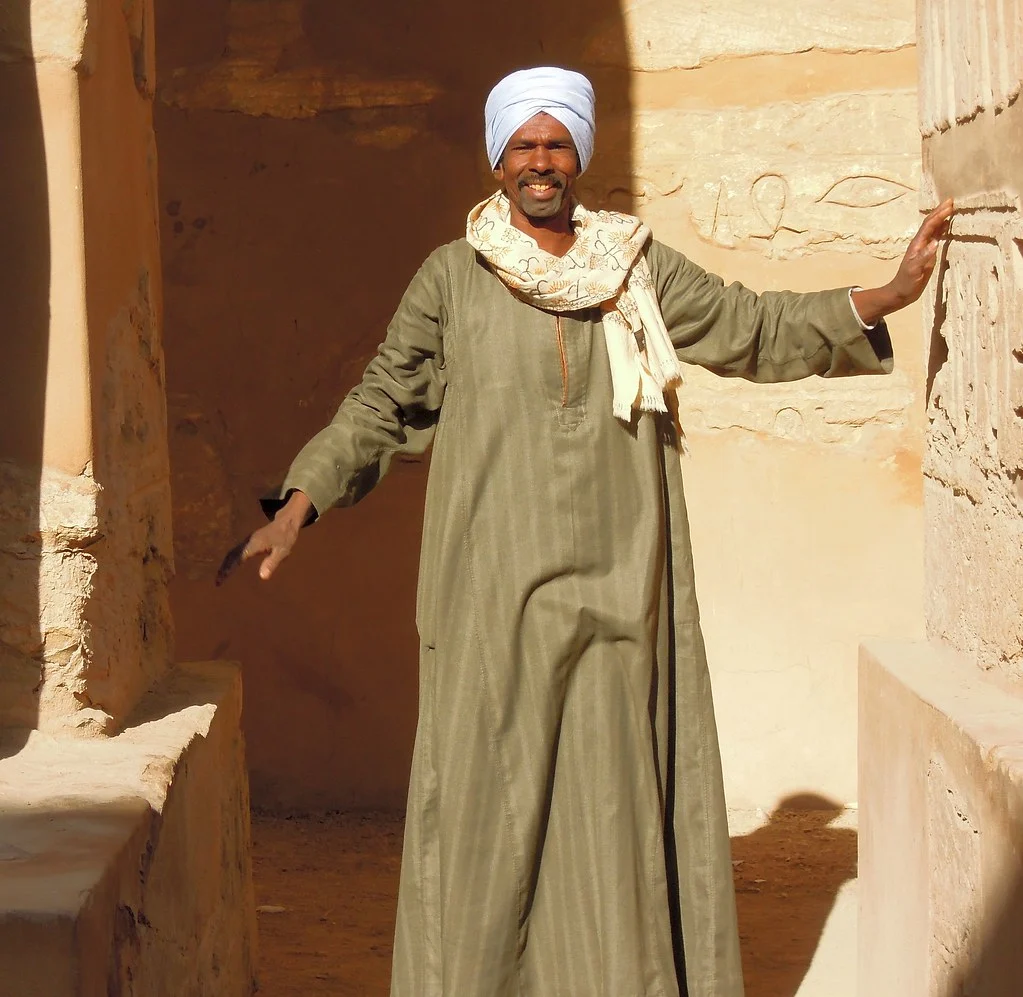
The Saidi men’s galabiya is probably the first thing you’ll see on a Nile-side street. It’s a full-length robe, generally with a loose cut and generous sleeves. In everyday life it’s worn without fuss, whether the man is farming, shopping, driving or drinking tea with friends.
Why Wide Sleeves?
This is one of the questions we hear most. Wide sleeves help air move around the body, which matters when the southern sun is strong. They are also linked to older, Mamluk-era styles, and many people see them as a sign of dignity and regional pride. Practical and proud: not a bad combination for a garment.
Summer vs. Winter
Upper Egypt has a hot climate for much of the year, but winter mornings and nights can feel properly cool, especially near the river and in the desert air. Saidi dress responds to both.
| Season | Garment | Typical Fabric |
| Summer | Saidi summer galabiya, Saidi cotton galabiya | Lightweight cotton or linen |
| Winter | Saidi winter jibbeh (over-robe), wool robes | Wool |
The Saidi cotton galabiya is the everyday workhorse: breathable and easy to wash. The Saidi winter jibbeh is the more formal, cold-weather layer, and it often signals that the wearer is dressed up for the occasion.

The ʿAmma: The Saidi Headcloth
If the galabiya is the foundation, the ʿamma is the finishing touch. This wrapped headcloth is worn by men in Upper Egypt and carries serious symbolism: honor, readiness to stand up for family and community, and a strong sense of regional belonging.
When people ask about Saidi men’s headwear, this is what they mean. The way it’s wrapped and the colors chosen can vary, and for many wearers it’s a point of real pride. As a visitor, treat it the way you’d treat any cultural symbol: admire it, ask politely about it, and don’t touch it or try it on without being invited.
Saidi Women’s Dress
Now to the other half of the story. Saidi women’s dress is built around layering, modesty and, on special days, beautiful decoration.
Everyday Layers
Women traditionally wear layered dresses with an outer wrap. The Saidi black abaya is among the most recognizable pieces, especially among older women, and it’s closely tied to modesty and dignity. Another outer wrap you may hear about is the jirjar.
A Saidi layered dress isn’t layered just for show. Layers help with sun protection, modesty and, in cooler months, warmth. They can also say something about the occasion: the more formal the event, the more care goes into the ensemble.
Head Coverings
The Saidi women’s head covering varies with age, region and occasion. Older women often wear black shawls, while younger women may add color through embroidery on their garments. You’ll see differences from village to village, which is part of what makes the region so rich to explore.
Ceremonial Silk
For ceremonial garments, silk enters the picture. The Saidi silk malas is a ceremonial women’s robe that appears in heritage exhibitions and is associated with special occasions. If you ever visit a cultural display in Egypt, look out for it.

Talli Embroidery: The Art of Metallic Thread
If one detail could win over every textile lover, it would be Talli embroidery.
Talli is a traditional metallic-thread embroidery technique from Upper Egypt, especially associated with Asyut and Sohag. It is used to decorate women’s ceremonial dresses. Under the light, the metallic thread catches and shimmers, which is why Talli pieces tend to stop people in their tracks.
This is where Saidi embroidery becomes more than decoration. Each piece takes patience and skill, and the work is part of a craft tradition passed from one set of hands to the next. For anyone interested in handmade Saidi garments, handwoven Saidi fabric or Saidi craft textile, Talli is the headline act.

Fabrics at a Glance
| Fabric | Where You’ll See It |
| Cotton | Everyday galabiyas, summer wear |
| Linen | Light, breathable summer robes |
| Wool | Winter robes such as the jibbeh and abaya |
| Silk | Ceremonial women’s garments such as the malas |
The pattern is simple and sensible: light fabrics for heat, wool for chill, silk for celebration.

Colors, Age and Status
Do colors mean anything in Saidi dress? Yes, often.
- Elderly men commonly wear black, red or brown over-robes.
- Young men tend to wear lighter colors.
- Older women wear black shawls.
- Younger women may wear more colored embroidery.
This is the idea behind Saidi status clothing and Saidi elder attire. Clothing can quietly signal age, family role and social standing. It’s a gentle, unspoken language, and once you start noticing it, you can’t stop.
That’s also why people talk about Saidi symbolic dress and Saidi identity clothing. Colors, layers and accessories all work as small cultural signals about who someone is and where they belong.
Clothing for Different Occasions
Traditional dress in Upper Egypt isn’t one-size-fits-all. It shifts with the moment.
| Occasion | What to Expect |
| Weddings | Elaborate dress, embroidery and ceremonial layering for the bride |
| Mawlids (religious festivals) | Often colorful and ornate festival attire |
| Funerals and mourning | Dark, modest garments |
| Family gatherings and celebrations | Traditional dress, especially among older generations |
A Saidi wedding dress is a good example of how much care goes into ceremonial clothing. Traditional Saidi wedding attire often features rich embroidery, and the bridal look is one of the most visually striking examples of Saidi heritage.
At the other end of the emotional range, Saidi mourning dress and Saidi funeral attire are dark and modest, chosen to show respect. (If you ever find yourself near a funeral or condolence gathering, a quiet, respectful distance is the right approach.)

Do People Still Wear Traditional Saidi Clothing Today?
Yes. It’s most common among older generations and at special occasions: weddings, funerals, mawlids and family gatherings. In daily life, you’ll see a mix. Some people wear the galabiya every day, while others, particularly younger people in the cities, wear Western-style clothes most of the time and bring out traditional dress for important moments.
There’s also a quiet revival of interest in Saidi cultural fashion. Designers and craft lovers are drawing on traditional motifs, and Saidi youth fashion traditional looks, modern takes on heritage dress, are part of that conversation. It’s a reminder that tradition isn’t frozen; it keeps being reinterpreted.
How Saidi Dress Differs From Northern Egyptian Dress
Travelers often ask whether all Egyptians dress the same way. They don’t. Saidi garments are typically more colorful, more heavily embroidered and more layered, with distinctive headwear like the ʿamma. Styles in the Nile Delta in the north tend to be simpler.
It’s a good example of how varied Egypt is. A trip along the Nile Valley, from the Delta to Upper Egypt, shows a country of many regional identities rather than one single look. For more on regional and traditional Egyptian dress, see our article on Egyptian traditional clothes.

Local Variations Across Upper Egypt
Upper Egypt is a big region, and styles differ from place to place.
- Asyut: Strongly associated with Talli embroidery.
- Sohag: Also linked to Talli work and ethnographic interest in folk costume.
- Qena: A place where heritage dress ties closely to cultural tourism.
- Luxor: A major travel destination where Saidi dress is easy to spot in daily life.
You’ll notice that people use phrases like Asyut traditional clothing, Sohag folk costume, Qena heritage dress and Luxor traditional attire to pin down local flavor. As a traveler, you don’t need to memorize the differences. Just keep your eyes open.

Rural Life and Working Dress
Not every Saidi outfit is ceremonial. Saidi rural dress is practical first. In the countryside, farming families wear clothing suited to the work: lighter garments, sometimes vests, and short sleeves where needed for movement. This is the world of the Saidi fellaheen costume and Saidi agricultural worker dress, and it’s every bit as authentic as a wedding robe. It’s simply dressed for a different job. For a wider look at life outside the cities, see our article on countryside Egypt.
Where Can You Buy Authentic Saidi Traditional Clothing?
If you’d like to bring something home, look for authentic pieces in local markets in Asyut, Sohag, Qena and Luxor. You can also look to heritage craft cooperatives and specialized online Egyptian cultural stores.
A few simple tips:
- Ask who made it. Handmade pieces are a real craft, and the maker’s story is part of the value.
- Check the fabric. Cotton, linen, wool and silk each have a feel; the right fabric should match the item.
- Look closely at embroidery. Neat, consistent stitching is a good sign of care.
- Be fair on price. Handwork takes time, and paying fairly keeps the craft alive.

Traveler Etiquette: Enjoying Saidi Culture Respectfully
Seeing traditional dress up close is one of the great pleasures of traveling in Upper Egypt. A few easy habits go a long way:
- Ask before taking photos of people. A smile and a polite question usually open doors.
- Dress modestly yourself. Loose, lightweight clothing that covers shoulders and knees is comfortable in the heat and shows respect.
- Don’t treat traditional dress as a costume. For many people it’s everyday life or a sacred family moment.
- Show interest. Most people are happy to explain a garment if you ask with genuine curiosity.
Quick FAQs
What is the most common traditional clothing in Upper Egypt?
The galabiya is the standard garment for men, while women traditionally wear layered dresses with outer wraps like the black abaya or jirjar.
What is a Saidi dress?
It’s the traditional attire of Upper (Southern) Egypt, with wide sleeves, vibrant embroidery and layered garments that reflect climate and social status.
Why do Saidi men wear wide-sleeved galabiyas?
Wide sleeves improve airflow in hot weather and reflect historical Mamluk-era styles that remain symbols of dignity and regional identity.
What is Talli embroidery?
A traditional metallic-thread embroidery technique from Upper Egypt, especially Asyut and Sohag, used to decorate women’s ceremonial dresses.
Do people still wear traditional Saidi clothing today?
Yes, especially among older generations and at weddings, funerals, mawlids and family gatherings.
What is the ʿamma headcloth?
A wrapped headcloth worn by men in Upper Egypt, symbolizing honor, readiness for sacrifice and strong regional identity.
How does Saidi dress differ from Northern Egyptian dress?
Saidi garments are typically more colorful, heavily embroidered and layered, with distinct headwear like the ʿamma, unlike the simpler styles of the Nile Delta.
What fabrics are used in traditional Saidi clothing?
Cotton and linen for summer; wool for winter robes like the jibbeh and abaya; silk for ceremonial women’s garments such as the malas.
Are there colors linked to age or status in Saidi dress?
Yes. Elderly men often wear black, red or brown over-robes; young men wear lighter colors; older women wear black shawls, while younger women may wear colored embroidery.
Where can I buy authentic Saidi traditional clothing?
In local markets in Asyut, Sohag, Qena and Luxor, or through heritage craft cooperatives and specialized online Egyptian cultural stores.
Final Thoughts
Upper Egypt traditional clothing tells a story in every layer: a wide sleeve that answers the heat, a headcloth that speaks of honor, a thread of metal catching the light on a bridal dress. It’s practical, proud and deeply tied to the Nile Valley.
The best way to understand it is to go and see it for yourself, in the markets, villages and riverside towns where it’s still part of daily life. Once you’ve noticed it, you’ll start reading Egypt differently.

Ready to Explore Upper Egypt With Us?
If this guide has made you curious about southern Egypt and the people who call it home, we’d love to help you plan your journey. Fill out the enquiry form, tell us what interests you, and our team at turquoisedahabiyas will get back to you with more information and help you shape the trip that fits you. You can also read our Egypt Nile cruise tips or browse the Egypt travel blog for more inspiration.